UV Laser Coder
How the UV Laser Coder Enhances Uptime for Seafood Producers
Key Takeaways
- UV laser coding applies permanent, high-contrast marks on wet or chilled seafood packaging without ink.
- FP-1000 Series eliminates consumables (ink, ribbons), reducing maintenance and unplanned downtime.
- Non-contact UV marking resists smearing, abrasion, freezing/defrost cycles and supports traceability.
- Flexible stand-off mounting and high linear speed (up to 4,000 mm/s 157.48″/s ) maintain throughput across SKUs.
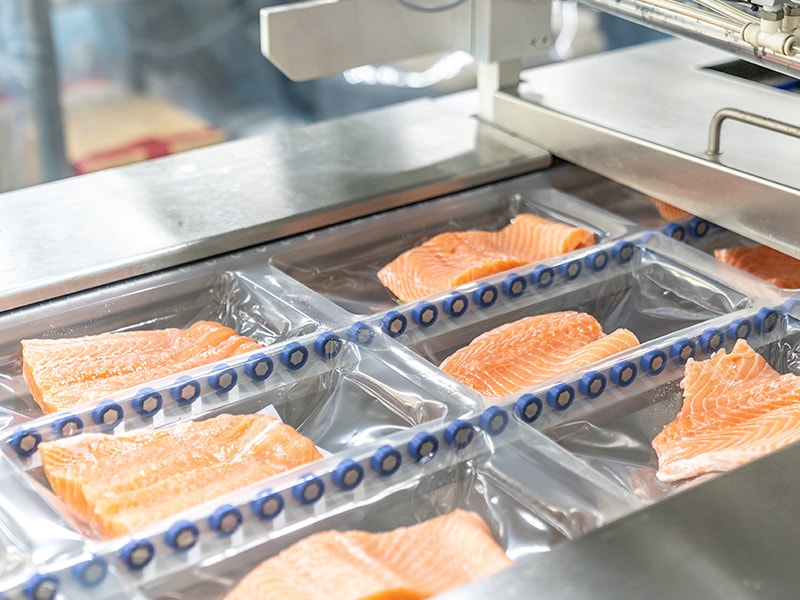
Seafood production lines handle everything from fillets sealed in film to frozen seafood that is boxed and then shipped worldwide. Regardless of packaging and destination, each product must carry permanent, legible codes, and these markings (batch numbers, best-before dates, origin data) travel with the product through cold-chain environments. The FP-1000 Series UV Laser Coder is designed to meet those conditions without slowing down production or introducing the downtime that often comes with consumables and printhead wear.
In facilities where a single line stoppage can back up multiple shifts, traditional coding systems struggle to keep up. UV laser coding for seafood offers a cleaner, more stable approach. A UV laser coder applies permanent marks using a non-contact, dry process, which is ideal for wet environments and flexible packaging materials that dominate seafood production. By eliminating consumables and minimizing intervention, producers can focus on throughput, not maintenance cycles.

Key Benefits of Using a UV Laser Coder in Seafood Production
Seafood processors face unique conditions. Packaging lines may operate in chilled rooms where condensation is common. Films are often slick, variable in texture, or exposed to water and brine.
A UV Laser Coder produces high-contrast, abrasion-resistant marks on packaging films without relying on ink or ribbons. This cold marking process activates a photochemical reaction with the pigment in the film, which leaves a sharp and visible result.
Unlike systems that transfer ink or heat through contact, UV laser coders avoid causing surface damage. They also eliminate the risk of ink smearing or label migration.
Seafood packaging must meet stringent hygiene expectations. Any code applied has to remain legible through every step of transportation. A faded batch number compromises traceability, and a missing expiration date disrupts compliance.
The FP-1000 Series’ stand-off capability allows for flexible mounting, which accommodates a variety of conveyor layouts and package geometries. That adaptability is a great fit for seafood operations where equipment often shares limited floor space and production lines may run multiple SKUs. From individual portions to large-volume cartons, the system applies consistent codes with minimal line disruption.
How a UV Laser Coder Improves Maintenance Efficiency for Seafood Producers
Seafood processing doesn’t pause for ribbon changes or nozzle cleanings. Traditional coders, especially ink-based systems, come with recurring tasks: replacing cartridges, unclogging heads, recalibrating for surface conditions. Each task takes time. Over the course of a shift, or a season, those delays add up.
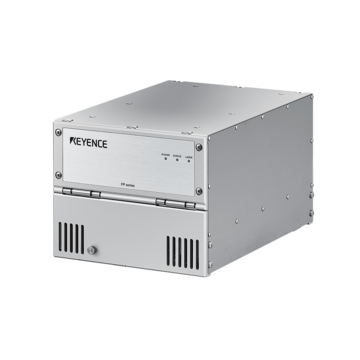
The FP-1000 Series UV Laser Coder is built for zero-consumable operation. It doesn’t require ink refills, solvents, or printhead maintenance. This reduction in upkeep not only helps reduce maintenance in seafood industry applications but also reduces operator burden. Fewer interventions mean fewer errors and fewer moments when a package goes out the door without a code. With fewer moving parts and no fluid systems, the KEYENCE UV laser coder supports longer runtime without performance degradation.
Proven Results: Boosting Uptime and Operational Efficiency in the Seafood Industry
Seafood production lines often run extended hours, cycling between different formats, weights, and packaging types. So, when seafood packaging is exposed to cold-room condensation or thermal variation, traditional ink-based systems struggle to maintain mark quality. Misprints result in rework. Stoppages delay fulfillment. The FP-1000 Series counters this with high-speed, high-fidelity marking on film, delivering up to 4,000 mm/s 157.48″/s in linear speed without sacrificing legibility.
In one seafood operation, FP-1000 Series UV Laser Coders replaced more than twenty aging coders. The result: fewer service calls, no ribbon inventory, and increased uptime in seafood production across every shift. Marking moved from a maintenance concern to a solved problem, which was one less variable for supervisors to manage during busy export windows or frozen product runs.
The FP-1000 Series’ code quality holds up across long-distance logistics and refrigeration cycles. That consistency gives quality teams cleaner audit trails and faster compliance reporting. Lot numbers, expiration dates, and origin data need to stay readable through packaging, cold storage, and transport, without fading or rubbing off.
Comparing the KEYENCE UV Laser Coder with Traditional Coding Methods in Seafood
Inkjet and thermal transfer printers have long served seafood facilities. But they come with tradeoffs like cumbersome fluid systems, disposable ribbons, downtime for servicing, and vulnerability to water and oils on the packaging surface. Seafood production coding solutions need to be more resilient.
Thermal printers, for example, rely on ribbon contact and precise alignment. Even a slight shift caused by a moist film or packaging curl can result in partial codes and ink systems often clogging in cold environments or smearing during high-speed transfer.
UV laser coding for seafood offers a clear alternative. The FP-1000 Series’ dry, non-contact approach means there’s no ink to smear, no ribbon to snap, and no printhead to clean. The mark appears instantly, unaffected by line speed or packaging surface.
The UV Laser Coder also introduces a cleaner environmental profile with no cartridges, no waste ribbons, and no solvent storage. Not only is that shift more eco-focused, but it also helps reduce maintenance in seafood industry settings and supports long-term sustainability initiatives.
Real-World Case Study: FP-1000 Series’ Impact on Maintenance and Performance
A seafood processing plant that operates multiple frozen and chilled lines needed a new seafood production coding solution to address the increase in rework caused by faded codes and maintenance-intensive printers. The facility was dealing with frequent ribbon replacements, slowdowns due to cleaning cycles, and inconsistencies across packaging types.
After deploying the FP-1000 Series UV Laser Coder by KEYENCE across high-volume lines, the maintenance team reported a measurable drop in service tickets related to coding. Packaging defects tied to illegible codes dropped, and line speeds were maintained without interruptions for ribbon changeouts. Operators were able to move between SKUs without time-consuming recalibrations.
The plant’s QA lead noted that traceability checks became faster, with fewer flagged items during internal audits. The permanent codes applied by the FP-1000 Series held up through freezing, transit, and defrost cycles without deterioration. As the seafood producer increased output, the FP-1000 Series kept pace, without adding maintenance labor or material costs.
Why the FP-1000 Series Is the Optimal Choice for Seafood Industry Marking
The FP-1000 Series UV laser coder addresses the need to increase uptime in seafood production directly by eliminating consumables, simplifying line integration, and producing reliable, permanent codes across variable packaging surfaces.
UV laser coding for seafood offers a new approach to the longstanding challenge of how operators apply batch and date codes that can hold up. As well as the need not to introduce extra risk or complexity. The FP-1000 Series delivers a focused solution: a high-speed system designed for modern seafood lines, capable of replacing legacy equipment without the footprint or upkeep.
For facilities seeking seafood production coding solutions that increase uptime and reduce rework, the FP-1000 Series UV Laser Coder offers both a technical and operational advantage. See how it can transform your production line. Request a free demo to experience our food-safe marking solutions for seafood production.

FAQs
What Makes a UV Laser Coder Ideal for the Seafood Industry?
It delivers permanent, clean marks on flexible packaging in wet or cold environments without ink or ribbons.
What Are the Advantages of Using UV Laser Coding Over Traditional Methods?
UV laser coding eliminates consumables, reduces maintenance, and improves durability on packaging films.
How Does a UV Laser Coder Reduce Maintenance Costs for Seafood Production?
No ink, ribbons, or printheads means less downtime, fewer service calls, and a simplified workflow.
![UV Laser Marker Usage Guide [Food, Pharmaceutical, and Cosmetics Industry Edition]](/img/asset/AS_98694_L.jpg)
![Process-specific Marking Applications [Food/Pharmaceutical Industry]](/img/asset/AS_133442_L.jpg)