Marking / Coding
Cut, etch and engrave barcodes, date codes, serial numbers and logos on a variety of surfaces.
Lineup
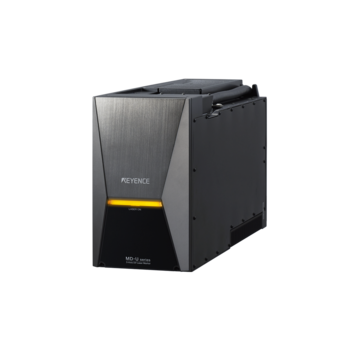
A characteristic of UV lasers (with a wavelength of 355 nm) is their extremely high absorption rate for various materials. UV lasers allow for high-contrast and damage-free marking and processing in applications where materials with poor visibility and the effect of heat are concerns with conventional standard-wavelength (1064 nm) laser markers. Furthermore, the distance sensor and multi-function camera built into the laser head enable automatic correction of deviations in the distance to the target and in the position while the target is moving. Additionally, the ability to monitor the laser output and to monitor for dirt on the lens prevents marking errors prior to use, allowing for stable operation.
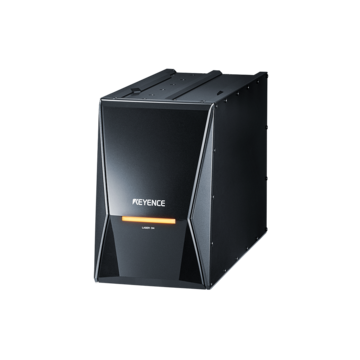
MD-X laser markers are versatile, general-purpose systems for marking and processing a wide range of materials. These powerful hybrid marking systems boast an internal vision system, full-field autofocus and marking analytics tools.
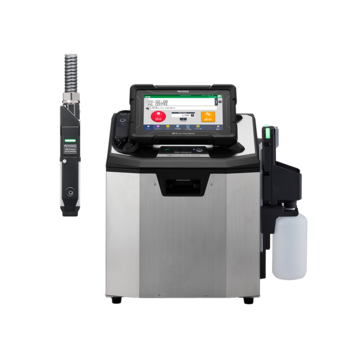
The MK-G Series is the world's first self-troubleshooting continuous inkjet printer, eliminating the guesswork of inkjet maintenance and enabling operation without specialized product knowledge or skills. By incorporating KEYENCE sensor technologies to enhance its self-diagnostic capabilities, the MK-G Series can automatically perform maintenance and troubleshooting, much like a trained inkjet technician. The unit also features automatic cleaning before every shutdown, even in the event of a power disruption, as well as remote monitoring and operation from a PC or smartphone.
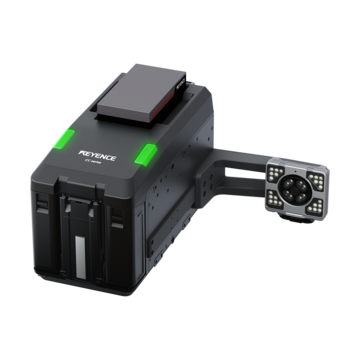
KEYENCE has been an innovative leader in the inkjet printing industry since the early 1990s. By integrating proprietary sensor and machine vision technologies, the CC-1000 Series provides a complete secondary packaging solution for high-quality printing and inspection. Designed to solve conventional box printing challenges, the CC-1000 simplifies setup and maintenance while delivering crisp, reliable codes and consistent print quality.
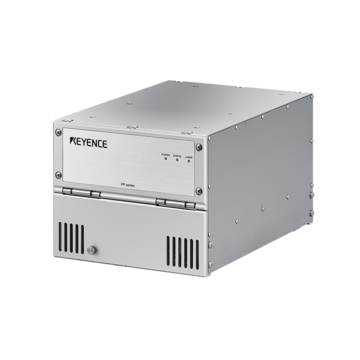
UV Laser Coders are designed as a direct replacement for thermal transfer overprinters (TTO). This light-based marking eliminates the need for ink ribbons required to transfer ink to the surface of the film with conventional thermal printers. The result is permanent, highly visible and damage-free marking without the need for special films.
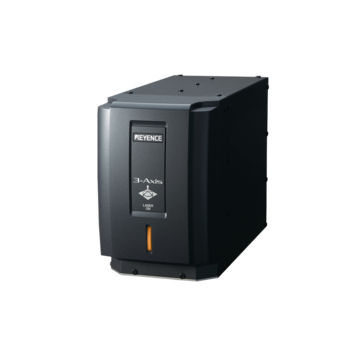
MD-F fiber laser markers are high-powered machines designed for deep engraving and high-speed processing. 3-Axis scanning and on-the-fly focal adjustments give the MD-F series a leg-up over conventional laser engravers.
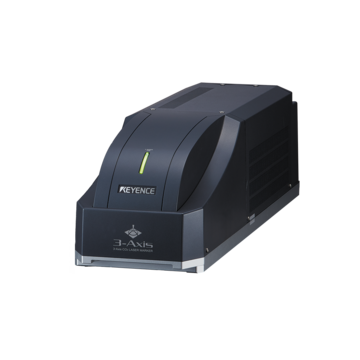
ML-Z CO₂ laser markers are incredibly versatile. They can mark opaque objects like paper, wood, rubber, ceramics, and transparent objects like glass. CO₂ lasers are also used for gate cutting, drilling, and decapsulation.
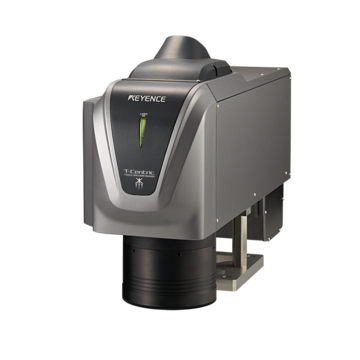
MD-T green laser markers use an integrated telecentric lens to keep the laser beam perpendicular across the entire marking surface. This ensures micron-level marking and processing throughout the target area.