Continuous Inkjet Printers / Case Coder
Inkjet Printing on PET Plastic Bottles
A modern inkjet printer for plastic bottle production has to mark readable dates, lot identifiers, and barcodes on bottles as they move continuously through all of their stages of production. Inkjet printing on plastic bottle surfaces also must hold up after handling and condensation exposure. That’s why many beverage, personal care, and consumer product lines rely on dedicated inkjet bottle coders that can print non-contact on curved PET while keeping changeovers and maintenance predictable.
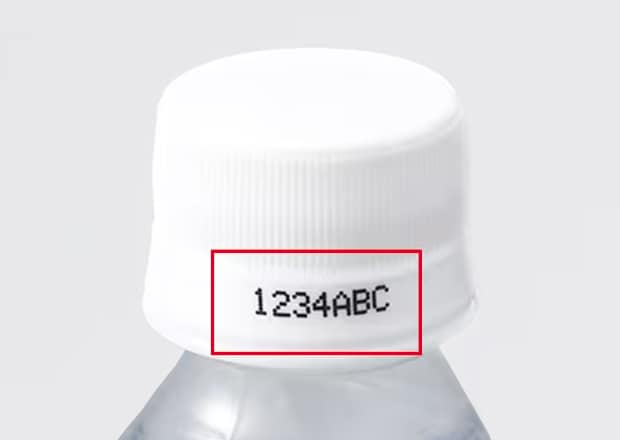
PET bottles
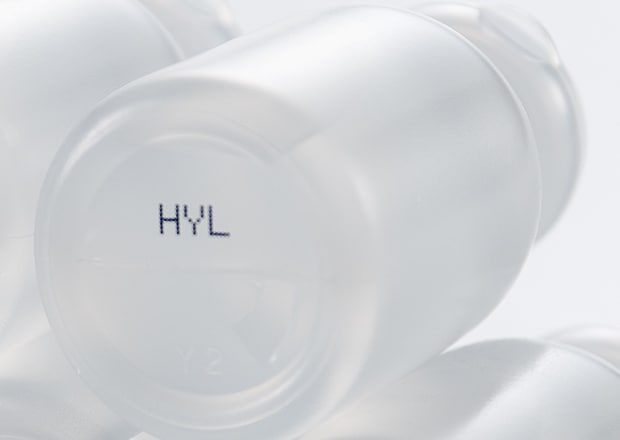
Cosmetics containers
CIJ Printers for High‑Speed Plastic Bottle Coding
Printing on bottles—especially in beverage and packaging environments—requires coding equipment that can keep pace with high-speed production lines while maintaining consistent print quality. Continuous inkjet (CIJ) printers are widely used for PET bottle coding because they apply marks without contacting the bottle surface, helping to prevent smearing on curved or moving containers.
KEYENCE CIJ printers are designed to support reliable coding on plastic bottles by combining fast printing performance with inks formulated for adhesion on PET and other plastics. This makes them well suited for beverage and packaging operations where bottles move quickly through filling, capping, and labeling stages and downtime must be minimized.
Performance Factors That Matter for Plastic Bottle Coding
When comparing CIJ printers for plastic bottle applications, manufacturers often evaluate performance based on line speed, ink adhesion, and maintenance requirements. High‑speed bottling lines demand printers that can apply crisp codes without slowing production, while plastic substrates require inks that dry quickly and adhere reliably.
KEYENCE CIJ printers address these needs through non‑contact printing and automated monitoring features that help maintain stable print quality over long production runs. This approach supports consistent coding on PET bottles while reducing the need for manual intervention in demanding beverage and packaging environments.
To support these performance requirements, the MK‑G Series offers technical capabilities suited for PET bottle coding, including character heights from 1.2–15 mm 0.05–0.59″, throw distance of up to 35 mm 1.38″, with speeds of up to 2,525 characters/s depending on model.
Environmental durability includes IP55, vibration‑resistant construction, and operating temperatures from 0–45°C, making the system suitable for wet, high‑speed beverage lines. Additional features such as automated cleaning, nozzle monitoring, and optional operation‑assist cameras help maintain consistent print quality with reduced operator intervention.
Designed for Demanding Beverage and Packaging Lines
CIJ printers used in beverage and packaging facilities must perform reliably in environments where moisture, vibration, and continuous operation are common. KEYENCE CIJ printers are built to operate in these conditions, making them a practical choice for plastic bottle coding where uptime, durability, and code clarity directly impact productivity and product traceability.
Challenges of Coding PET Plastic Bottles
PET bottles are rarely the most ideal to print on, as bottles typically have narrow necks and lightweight sidewalls. These obstacles all influence where ink droplets land, and as bottles move at various speeds through the production process, the spacing between them can shift. An industrial inkjet printer for bottle coding must remain legible regardless of motion or geometry changes.
Environmental issues can also become an issue. Cold-fill operations can introduce condensation and dust from caps or corrugate that may settle on containers before printing. Vibration from guide rails can affect alignment. Their inkjet bottle coders have to take these conditions into account without compromising code clarity.
Differences in materials also introduce other challenges. Virgin PET provides a strong transparency, while rPET (recycled PET) may exhibit slight haze or a shift in color. Those differences can affect contrast when printing small characters or dense 2D codes.
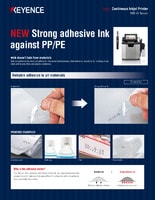
Reliable Adhesion to All Materials
Standard Ink
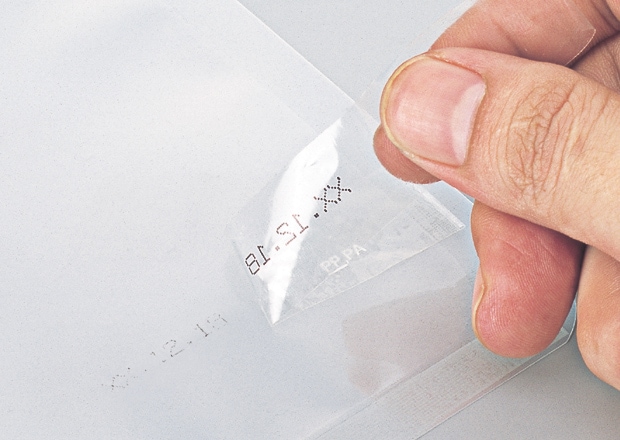
PP material film
Strong Adhesive Ink
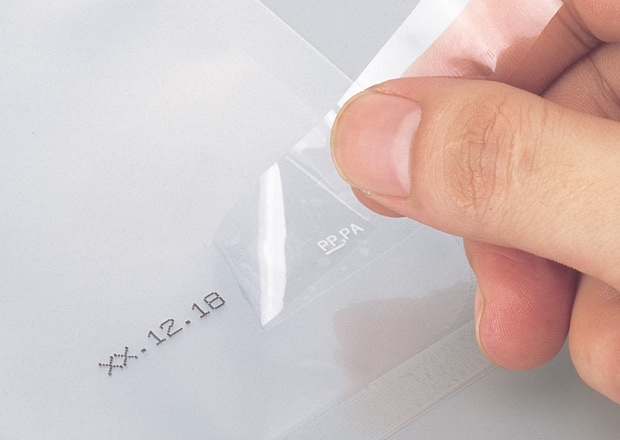
PP material film
Advantages of Using an Inkjet Printer for Plastic Bottles
Continuous inkjet printers for plastic bottles alleviate most of the challenges associated with printing on plastic bottles and containers, and they're typically most commonly used for printing text, such as expiration and packaging dates, as well as lot and date codes.
These printers are rather versatile, as they can use various types of ink, which additionally makes them suitable for printing on a wide variety of substrates. They're capable of producing clear and legible prints, ensuring readability and accuracy of the printed text or barcode.
They provide a non-contact printing method with plenty of customization and flexibility, which is great if your production line has to deliver small batches from time to time. CIJ printers are not only reliable, but they're also quite fast, with some models printing up to 500 meters 1640′ of single-line text in as little as one minute. And they're quite easy and affordable to maintain.
Here are a few common applications using CIJ on plastic in the food, pharma, and cosmetics industries.
Printing on Plastic Film from a Vertical Form Fill and Seal Packaging Machine
An inkjet printer is used to mark best-by dates and lot numbers on the packaging films for snacks, frozen food, and condiments. When installed on a pillow-type packaging machine or rotary filler, an inkjet printer can help prevent printing mistakes while improving manufacturing productivity.
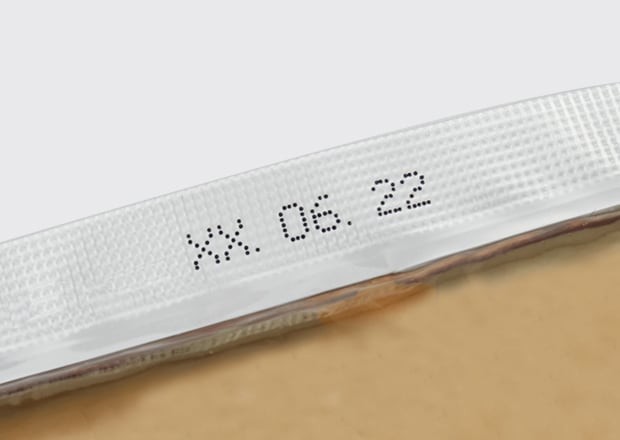
Printing example
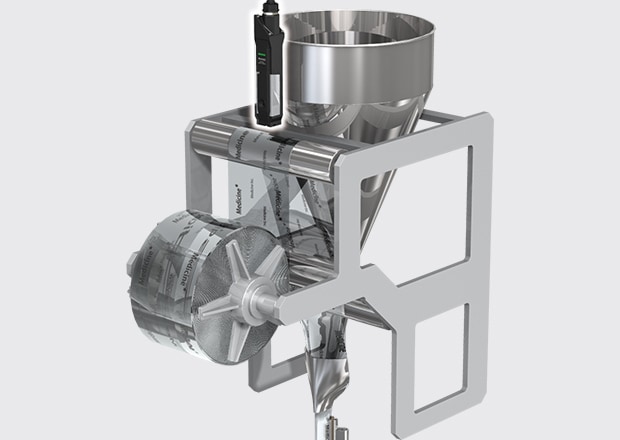
Installation example
Printing on Plastic Film from a Horizontal Form Fill and Seal Packaging Machine
Packets containing wet paper tissues can be marked by installing an inkjet printer on the pillow-type packaging machine. An inkjet printer is ideal for printing on wet paper tissue packets due to its high-speed printing capability as the packets flow rapidly through the packaging machine. A hot air blower may be used for quicker drying.
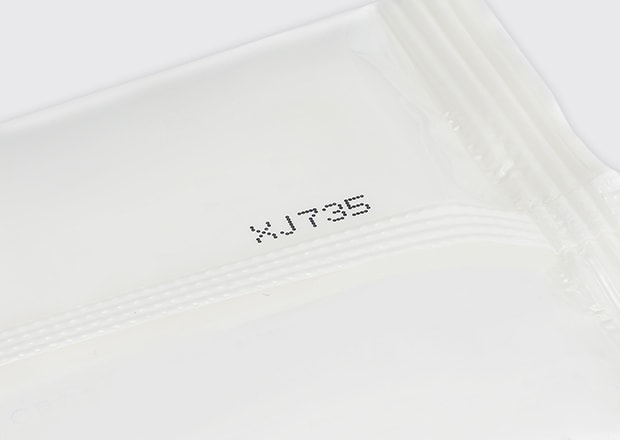
Printing example
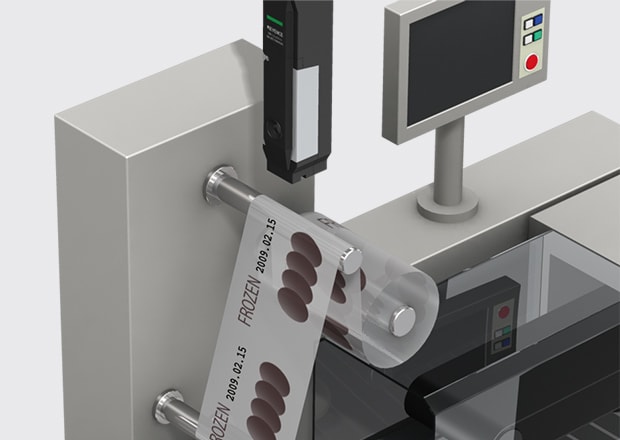
Installation example
Printing on Plastic/Cardboard Packages on a Cartoner
The inkjet printer can be installed on cartoners for packing products into boxes. It even supports high-speed cartoners that produce up to 100 cartons per minute. Ink dries in a matter of seconds, even on coated printing surfaces, providing clean, smudge-free marking on product boxes.
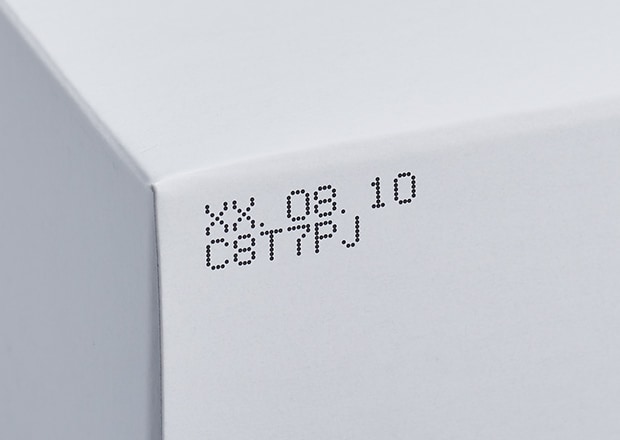
Printing example
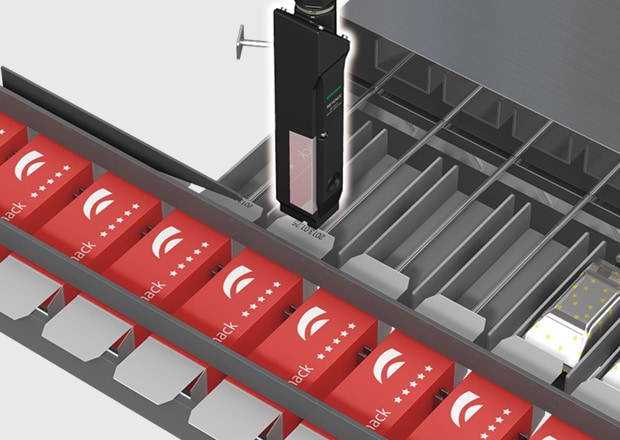
Installation example
Bottom Coding the Underside of a Cosmetic Product Bottle on a Double Conveyor Belt
An inkjet printer is used to mark best-by dates and lot numbers on container bottles for pharmaceutical and cosmetic products. By installing an inkjet printer on the conveyor belt carrying filled bottles, information can be marked on the curved side or bottom of the bottles, which are difficult to mark with stamps.
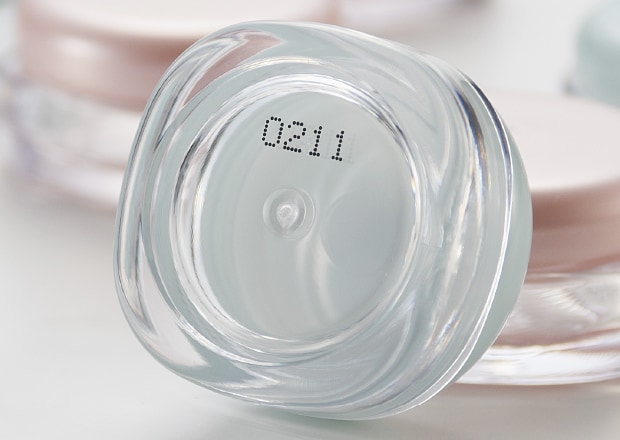
Printing example
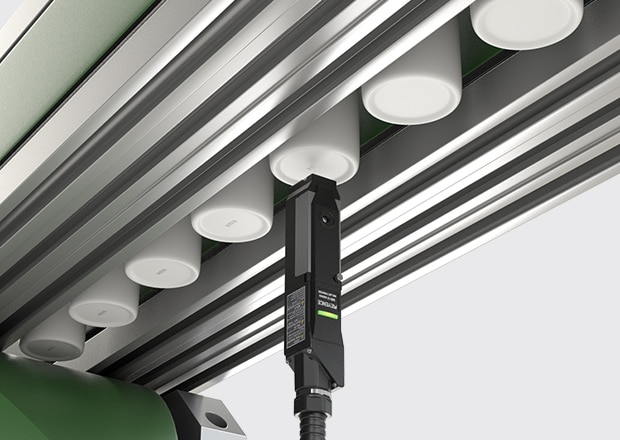
Installation example
Printing on Plastic Bottles with a Filler
An inkjet printer is used to mark best-by dates and lot numbers on beverage bottles and other plastic bottles. By installing an inkjet printer on the conveyor belt carrying filled bottles, hundreds of bottles can be rapidly marked in a minute.
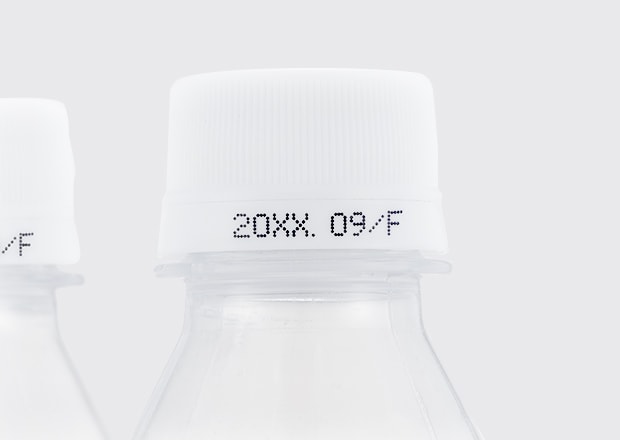
Printing example
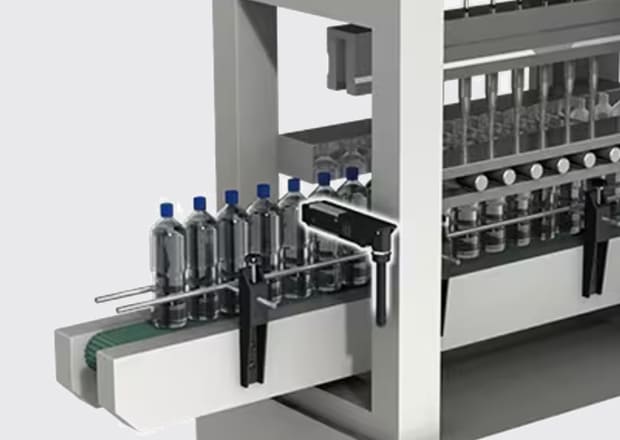
Installation example
Printing on Plastic Containers and Caps with a Cup Sealer
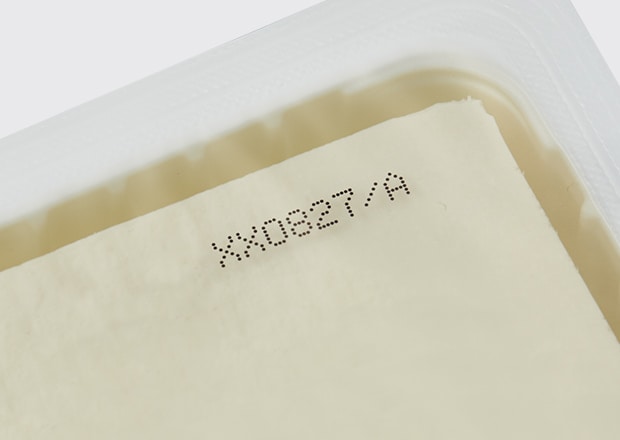
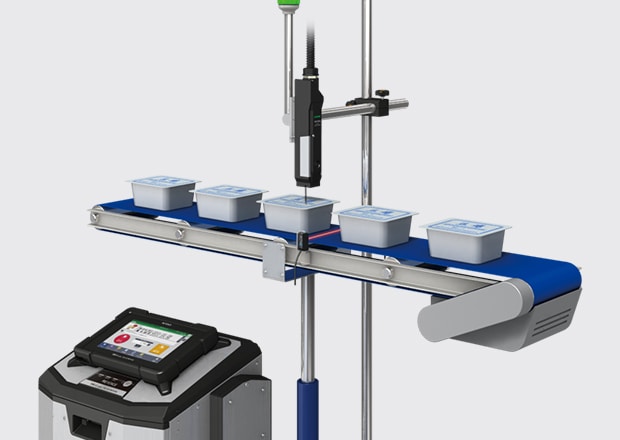
Use the inkjet printer to mark best-by dates and lot numbers on pudding, yogurt, and jelly cups filled by a cup sealer or deep-drawing packaging machine. Products filled in parallel can also be marked by traversing the inkjet print head.
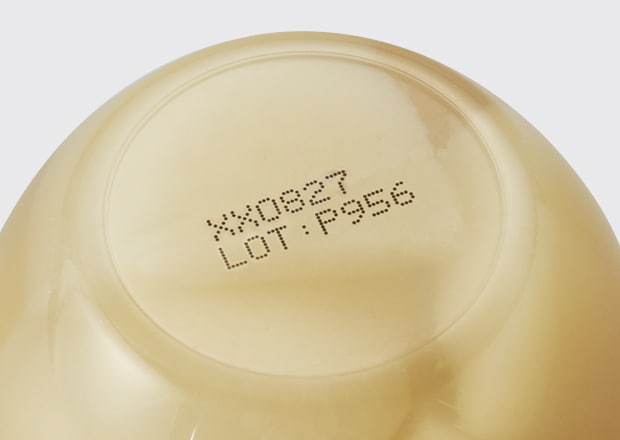
Printing example
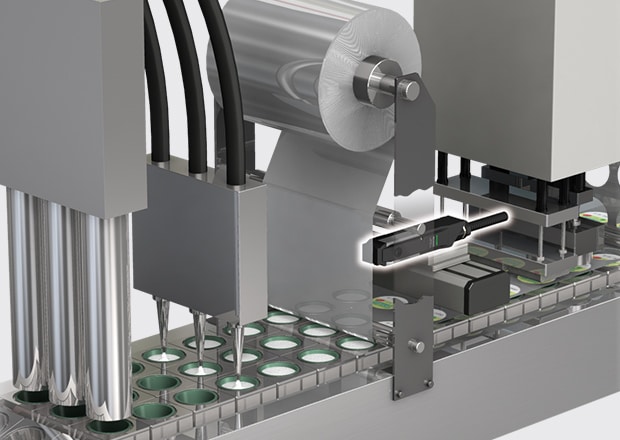
Installation example
Print on Any Small Plastic Products with a Dedicated Conveyor Belt
For small lots that require printing, a simple setup using our inkjet printer installed on the dedicated conveyor belt is very effective. A meter-long dedicated conveyor is a space-saving solution that can be laid out in the shipping zone.
Printing example
Installation example
Printing on Plastic Packaging Along with a Heat Sealer
A conveyor belt-type heat sealer is used primarily when manufacturing products in small lots. This naturally calls for more frequent changes in best-by dates. With an inkjet printer, users can quickly change the best-by date, which helps minimize the mistakes accompanying product changeovers.
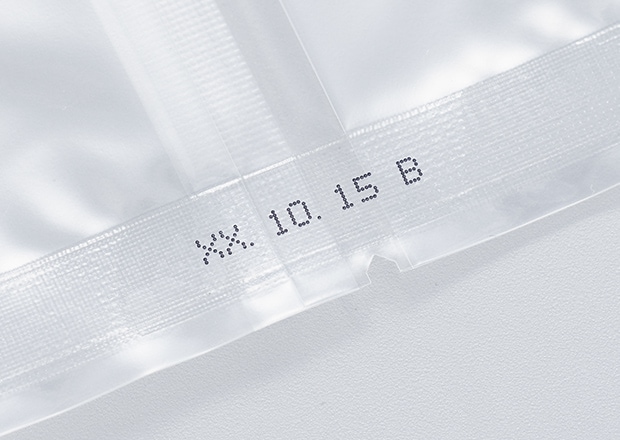
Printing example
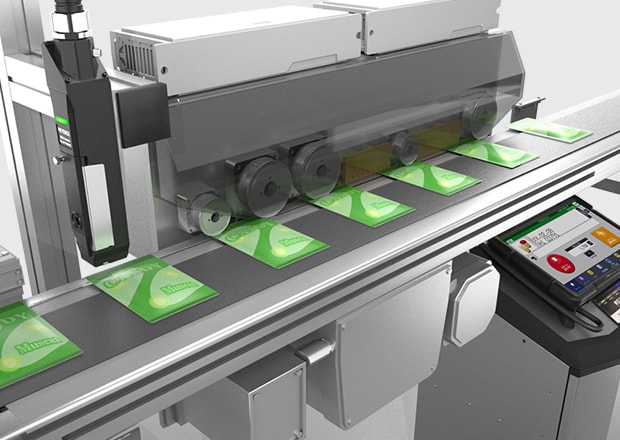
Installation example
CIJ Inkjet Printers for PET Bottle Lines
Continuous inkjet (CIJ) technology is widely adopted as an inkjet bottle coder because it prints without touching the container. A non-contact industrial inkjet printer for bottle lines can mark curved PET surfaces while products remain in motion.
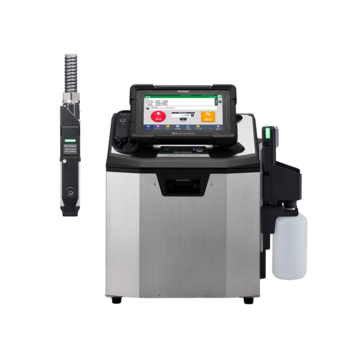
The MK-G Series by KEYENCE works as an inkjet printer for plastic bottle production with integrated diagnostics that guide operators through routine maintenance and support remote monitoring to provide status checks without the operator having to return to the print location.
The MK-G Series platform also supports high-speed character output that exceeds 2,500 characters per second, which enables multiple lines of alphanumeric data and barcodes without needing to reduce production speeds. This allows an inkjet coder machine for plastic bottles to print information like manufacturing date and lot numbers in a single pass along the neck or shoulder region of the PET plastic bottle.
Ink Performance on PET Plastic Surfaces
Ink selection plays a very central role in inkjet printing on plastic bottles. PET is smooth and non-porous, which influences how inks bleed and spread. If the ink is not formulated correctly for the surface, any printed marks can suffer from low contrast or smearing.
Dye-based inks are typically used for their rapid dry times, which benefits high-speed inkjet bottle coders. Pigment-based inks adhere to the surface and offer a strong resistance to fading, though they may require circulation to prevent pigments from settling. An inkjet coder for plastic bottles has to be able to manage viscosity and flow to maintain droplet size throughout long production runs.
High-Speed Bottle Coding Applications
On beverage lines, inkjet printing on plastic bottles often takes place immediately after filling or capping. Bottles move in close succession and, at times, the spacing between them may fluctuate. An inkjet printer for plastic bottle coding must preserve character definition at production speed. Common printed content for PET bottles includes: manufacturing dates, best-before dates, batch identifiers, and 2D barcodes. An inkjet bottle coder, like the MK-G Series, can print on the neck, shoulder, or base of the bottle, depending on the design. Since the process is non-contact, the printer doesn’t interfere with the motion or require the product to stop on the line.
Selecting an Inkjet Printer for PET Bottles
Selecting an inkjet printer for plastic bottle production begins with the type of plastic and code size. PET and rPET may call for different ink characteristics to maintain contrast and durability. If barcodes are required, the industrial inkjet printer for bottle applications must maintain the utmost clarity regardless of operating speed.
An inkjet printer for plastic bottles also needs to be easily integrated with production lines, as the printer may need to synchronize with conveyor speeds rather than running through a stop-and-go labeling machine.
When these and other factors are addressed at the selection stage, inkjet printing on plastic bottle packaging remains consistent across long production runs while maintaining traceability and readability requirements.

FAQs About Printing on Plastic Bottles
Is Inkjet Printing on Plastic Bottles Suitable for Food and Beverage Containers?
Yes, inkjet printing on plastic bottles is suitable for food and beverage containers, and it's widely used in the food and beverage industry. For indirect food contact printing, the U.S. Food and Drug Administration (FDA) requires a functional barrier between food and ink for any type of packaging, including plastic bottles. This means that the ink used for printing on plastic bottles must not come into direct contact with the food or beverage inside.
Can an Industrial Inkjet Printer for Bottles Handle Different Sizes and Shapes?
Yes, industrial inkjet printers for printing on plastic bottles are designed to handle bottles and containers of different sizes and shapes, thanks to their adjustable print heads and generally fast changeover times.

Related Products
Related Downloads
-
Continuous Inkjet Printer Application Guide
This guide explains continuous inkjet (CIJ) printer applications together with pictures and illustrations. It contains many installation examples in various industries divided into food, medicine, and cosmetics; electrical machinery and electronics; and automotive, metal, and others. These examples show printing on targets specific to each industry.