Continuous Inkjet Printers / Case Coder
Best Practices for Implementing Carton Coding Solutions on Production Lines
Key Takeaways
- Carton coding ensures traceability, compliance, and accurate product identification.
- Selecting the right coding technology depends on speed, material, and application.
- Proper integration and placement are critical for reliable performance.
- Automation and inspection systems significantly reduce coding errors.
- Optimized carton coding improves efficiency across the entire production line.
Carton coding solutions are a critical part of modern production lines, enabling manufacturers to print variable data such as expiration dates, lot numbers, and barcodes directly onto packaging.
This guide outlines the best practices for implementing carton coding solutions on production lines, including how to select the right technology, optimize system integration, and prevent common coding issues.
What Is Carton Coding on a Production Line?
Carton coding is the process of printing variable information, such as dates, barcodes, and batch numbers, onto cartons during production. This information supports traceability, quality control, and compliance with industry regulations.
Carton coding systems are typically installed:
- Before, during, or after the packaging process
- On conveyors or cartoning machines
- As part of an automated production workflow
Common technologies used for carton coding include:
- Continuous inkjet (CIJ) printers
- Thermal inkjet (TIJ) printers
- Laser marking systems
What Printing Technology Is Best Suited for Carton Coding Lines?
CIJ (Continuous Inkjet) printers are commonly chosen when you need high-speed printing and consistent printing of variable data on cartons and packaging. They’re especially effective for products where coding must remain readable across fast line rates and routine changeovers.
- High-throughput food and beverage packaging (e.g., cartons and cases that require frequent lot and expiration date updates)
- Bottled, canned, or boxed consumer goods where barcodes, batch numbers, and date codes must be applied quickly and reliably
- Products using corrugated or coated carton substrates that can support continuous inkjet marking without excessive smudging
- Items requiring frequent product changeover (CIJ printers can support barcode-driven product identification and rapid data updates)
- Operations that prioritize uptime and speed — CIJ printers are often selected for lines that cannot afford slowdowns during printing
Pairing CIJ coding with stable carton positioning and inline inspection helps ensure the code remains scannable and compliant.
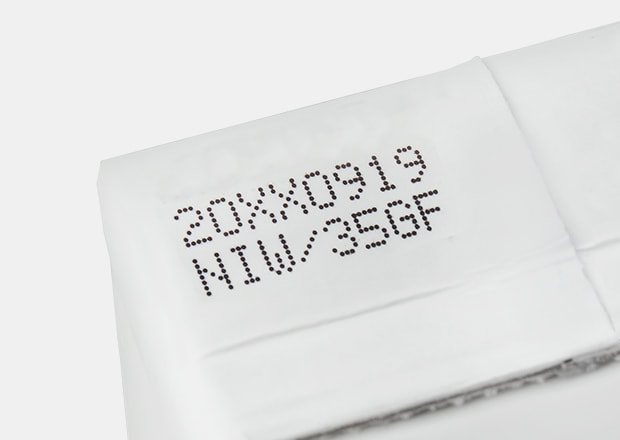
Printing example
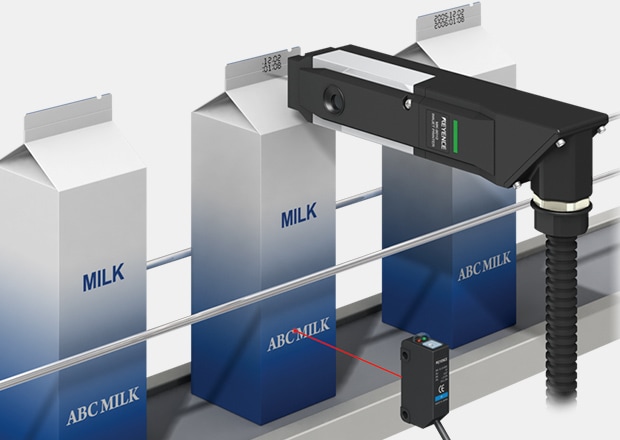
Installation example
Applications and Use Cases
- Expiration dates and lot numbers
- High-speed production requirements
- Strict regulatory compliance
- Serialization and traceability
- High accuracy requirements
- Compliance with safety standards
- Shipping labels and tracking codes
- Barcode readability for scanning systems
- Efficient inventory management
How to Choose the Right Solution
The best carton coding system depends on several factors:
Production Line Requirements and Speed
Some high-speed cartoners produce over 100 cartons per minute. This means the accompanying inkjet carton printer or other coding solution employed must be able to match such speed.
Type of Packaging Material Used
No packaging material is created alike. It can feature smooth, rough, or glossy finishes. The distinct texture of each type of packaging material can impact its legibility.
Product Information and Coding Requirements
Certain industries have extremely strict coding requirements where coding solutions are employed. They must be able to update complex codes on the fly to print on uneven or curved surfaces with accuracy.
Assessing Current Production Processes and Needs
Coding needs vary by industry. Research internal production needs and suitable coding equipment accordingly.
How to Implement Carton Coding
Understanding Carton Coding applications requires careful planning to ensure accurate, reliable marking without slowing production.
1. Evaluate Production Requirements
- Line speed and throughput
- Carton material (corrugated, coated, etc.)
- Required data (barcode, expiration date, lot code)
2. Select the Appropriate Coding Technology
- CIJ → best for high-speed production lines and variable data printing on cartons
- TIJ → best for high-resolution printing on select applications
- Laser → best for permanent, maintenance-free marking where speed and substrate allow
3. Optimize Printer Placement
- Install in a stable section of the line
- Ensure consistent carton positioning
- Avoid vibration or surface variation
4. Integrate with Production Systems
- Connect to PLCs, sensors, and automation systems
- Enable real-time printing and data control
- Support barcode-driven product changeover
5. Validate Print Quality
- Use inspection systems to verify codes
- Ensure readability and compliance
- Reject defective cartons automatically
Common Challenges in Carton Coding
Common CIJ printer issues on production lines usually show up as readability problems, inconsistent character formation, or missed/incorrect codes. Because CIJ printers rely on a stable ink jet and precise timing, small disruptions can quickly affect printing quality, especially at high line speeds.
- Smudging or poor contrast: Often caused by ink/solvent mismatch, inadequate drying time, or unsuitable carton substrate.
- Missing characters or broken barcode elements: Common when the printhead nozzles partially clog, when ink viscosity drifts, or when the printer is not maintaining stable jetting.
- Dot dropouts and streaking: Typically linked to fluid system instability, contamination in the ink, or improper start-up after downtime.
- Character distortion or “fuzzy” text: Usually tied to incorrect print settings, unstable print timing, or vibration/position variation in the carton print zone.
- Incorrect print content: Often an integration issue, data not updating in time, recipe selection errors during changeover, or PLC/sensor triggering the printer at the wrong time.
- Barcode scan failures: Frequently caused by insufficient quiet zone, incorrect barcode format, or placement outside the scanner’s reliable read area.
Addressing these issues early by validating ink choice, tightening PLC/trigger synchronization, and using inline verification, helps prevent downstream traceability and compliance problems.

Frequently Asked Questions About Carton Coding
What Is the Best Coding System for Cartons?
The best system depends on production speed, material type, and required print quality. Continuous inkjet is typically used for high-speed lines, while thermal inkjet and laser systems are used for higher resolution or permanent marking.
How Can Carton Coding Errors Be Reduced?
Errors can be reduced by automating data input, using barcode-driven product changeover, and implementing print inspection systems.
Where Should a Carton Coding Printer Be Installed?
Printers should be installed in a stable section of the production line where cartons are consistently positioned and free from vibration.
What Information Is Printed on Cartons?
Common data includes expiration dates, batch numbers, barcodes, QR codes, and product identifiers.


![Packaging Technology Introduction [Packaging Machine Edition]](/img/asset/AS_82098_L.jpg)