RPA (Robotic Process Automation)
RPA in Healthcare
Key Takeaways
- RPA shifts routine EHR and admin tasks from clinicians to automation, freeing time for patient care.
- Automation with OCR and RPA reduces transcription errors, improving medical safety and data accuracy.
- RPA streamlines claims, DPC coding, and reporting, cutting overtime and lowering administrative costs.
- KEYENCE RK Series offers no-code scenario building, audit logs for PHI security, and end-to-end implementation support.

The healthcare industry is at a major turning point, facing challenges like long working hours for doctors and nurses, increasingly complex administrative tasks, and new regulations on physician work styles. To maintain and improve the quality of care and secure more time for patients within limited resources, fundamental operational efficiency is urgently needed.
As a powerful solution to these issues, "RPA (Robotic Process Automation)", which automates routine PC-based administrative work, is being adopted by a growing number of medical institutions.
This article details the challenges in the healthcare industry, the benefits of RPA, and specific use cases.
Learn how KEYENCE's RPA, the "RK Series," can reduce the burden on medical staff and contribute to building a sustainable healthcare system.

Challenges in the Healthcare Industry
The front lines of medicine face numerous daily challenges.
- Excessive Workload for Healthcare Professionals: In addition to clinical duties, significant time is spent on administrative tasks like entering data into Electronic Health Records (EHRs) and preparing documents, which encroaches on time that should be dedicated to patient care and professional development.
- Complex Medical Claims Processing: The creation and review of medical reimbursement claims, which are concentrated at the end of each month, require specialized knowledge and are prone to errors, placing immense stress on staff.
- Repetitive Data Entry Across Multiple Systems: Patient and clinical information is often manually entered and transferred between various systems, including EHRs, ordering systems, departmental systems, and medical accounting systems, creating a high risk of human error.
- Burdensome Information Sharing for Inter-Hospital Collaboration: When coordinating care with other institutions, information from referral letters and medical summaries received as paper or PDF files must be manually transcribed into the EHR, a time-consuming process.
- Time-Consuming Creation of Internal Statistical Reports: Generating various statistical reports for management analysis, academic presentations, and administrative reporting requires significant time and effort.
Benefits of RPA Implementation
RPA addresses these challenges and brings transformative benefits to the medical field.
- Reduced Burden on Staff, Allowing Focus on Core Duties: By having RPA handle administrative work, doctors and nurses can concentrate on high-value activities that only humans can perform, such as patient communication and clinical conferences. This directly contributes to work-style reform.
- Improved Medical Safety by Preventing Human Error: Mistakes in transcribing patient information, drug names, or procedure codes can lead to medical errors. Automation with RPA virtually eliminates these mistakes, aiming for anand dramatically improving medical safety and accuracy.
- Cost Reduction through Increased Efficiency: By significantly shortening the time spent on claims processing, reception duties, and data entry, RPA helps reduce overtime and control labor costs.
- Enhanced Patient Services: Automating processes like appointment scheduling and changes can reduce phone wait times and enable real-time updates for online bookings, improving the patient experience.
- Promotion of Data-Driven Hospital Management: RPA can automatically collect and aggregate clinical and financial data from across the hospital, visualizing it in dashboards to support swift, data-informed management decisions.
RPA Use Cases in Healthcare
RPA can be applied in various scenarios within a medical setting.
| Task | Automation with RPA |
|---|---|
| New Patient Registration & Updates | Scans paper-based questionnaires or referral letters with OCR, and RPA automatically inputs the text data into the appropriate fields in the EHR system. |
| Medical Claims Auditing Support | Automatically checks data exported from the claims computer against a checklist of common reasons for denials or returns (e.g., missing diagnosis codes), flagging questionable claims for final review by staff. |
| DPC Data Creation Support | Automatically collects and transfers information needed to create DPC (Diagnosis Procedure Combination) forms from the EHR and departmental systems, reducing the burden of coding work. |
| Data Transfer for Regional Collaboration | Reads medical information summaries sent via fax or email (PDF) from other hospitals using OCR, and RPA transcribes the data into the local EHR, speeding up information sharing. |
| Automated Generation of Statistical Reports | Periodically extracts necessary data from medical accounting systems and EHRs, then aggregates and visualizes it in Excel. Automatically creates monthly management meeting materials and other reports. |
Why Choose KEYENCE's RK Series RPA?
The unique environment of medical institutions makes KEYENCE's "RK Series" the ideal choice.
1. Intuitive for All Staff to Use
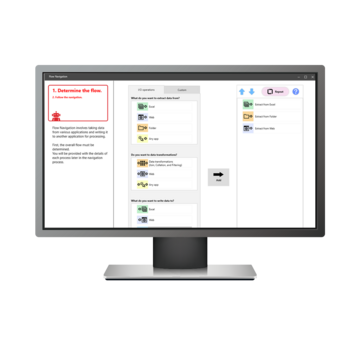
Even without IT expertise, administrative staff can create automation scenarios using a user-friendly, mouse-driven interface. This allows those who know the workflow best to lead automation initiatives quickly, even in a busy medical environment.
2. Advanced Security for Patient Information
The automatic audit log feature precisely records "who, what, when, and where" for every automated process. This ensures a secure and governed operation, even when handling sensitive personal and confidential information in a healthcare setting.
3. Reliable Support from Start to Finish
From identifying automation opportunities to providing hands-on scenario creation assistance and ensuring stable operation, KEYENCE's dedicated specialists offer comprehensive support. This provides peace of mind, especially for medical institutions with small IT departments.
Balancing high-quality medical care with the well-being of those who provide it is essential for the future of healthcare. KEYENCE's RK Series RPA is a powerful partner for automating routine tasks, freeing up your staff to deliver the compassionate, human-centric care that only people can provide.
For detailed materials, a free demo, or a consultation, please do not hesitate to contact us.