Data Acquisition (DAQ)
Benefits of Time-Synced Data in R&D, Manufacturing, and Troubleshooting
-
Tags:
- Data Acquisition , Strain
Key Takeaways
- Time-synced data uses a common timestamp to directly correlate all sensor streams.
- Data-synchronized video (NR-CM01) links visual context to waveform data for faster diagnosis.
- Synchronized timestamps pinpoint transient events in manufacturing for quicker corrective action.
- In R&D, time alignment improves run-to-run comparability and reduces repeated tests.
The challenges faced in modern measurement environments are rarely data availability. With large volumes of data generated by sensors, machines, and test systems, the challenge is typically interpreting that readily available data.
As different signals are captured across devices without a shared time reference, analysis slows, and confidence in the data drops. Time-synced data in manufacturing changes dynamically by allowing events to be evaluated in the proper sequence, regardless of the channels involved, all within a single timeline. In R&D and product testing, that alignment supports a more straightforward conclusion towards the next steps.
Why Time Alignment Matters in Modern Data Collection
Measurement data, temperature, strain, vibration, voltage, and other high-speed signals often interact with each other within milliseconds and rarely exist in isolation. However, if those signals are recorded on separate clocks or collected without device coordination, then tracing the relationship between the data types becomes harder. While engineers see anomalies, their cause and the order in which they happen will remain unclear.
Time alignment data in manufacturing is a process that addresses this problem directly. With all data streams sharing the same timestamp, the data analysis for production lines becomes more reliable. Any transient event can be traced to causes upstream, and any process change can be evaluated against real operating conditions. This results in an analysis that reflects what is happening on the line or during a test, not just as a best guess that is assembled after the fact.
Understanding Time-Synced Data
Time-synced data refers to measurement data that is captured within a shared time base across all data streams and sensor types. Each data point carries the common timestamp and allows all signals to be compared directly without relying on post-processing adjustments; regardless of where the data comes from, a single device or otherwise.
In practice, time-synced data support correlation. For example, a rise in temperature can be evaluated alongside a suspected mechanical strain, or a vibrational spike can be compared against control signals or equipment power draw at the same instant.
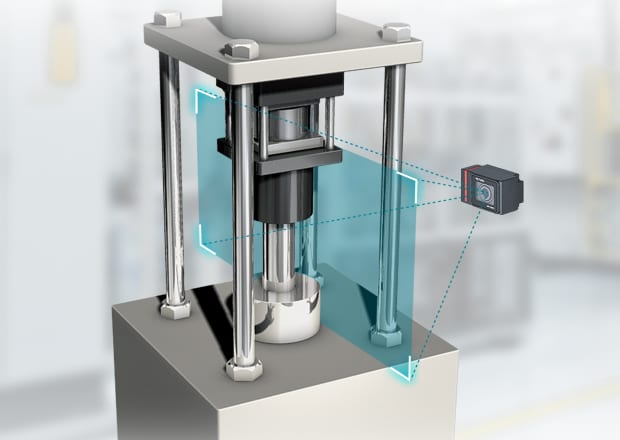
KEYENCE's new Data-Synchronized Video Camera, the NR-CM01, adds context to your measurements by capturing video that is synchronized with collected waveform data. The data-synced video provides improved data analysis and a deeper understanding of test results.
Reduce Analysis Time Using Data Synced Video
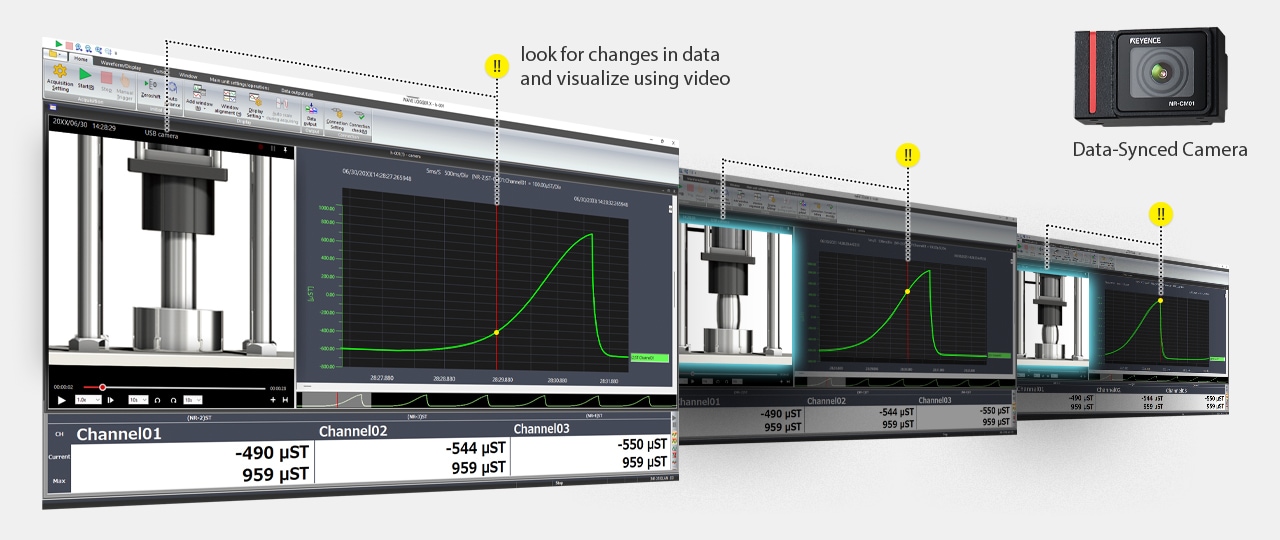
Advantages of Time-Synced Video Footage and Data in Research and Development
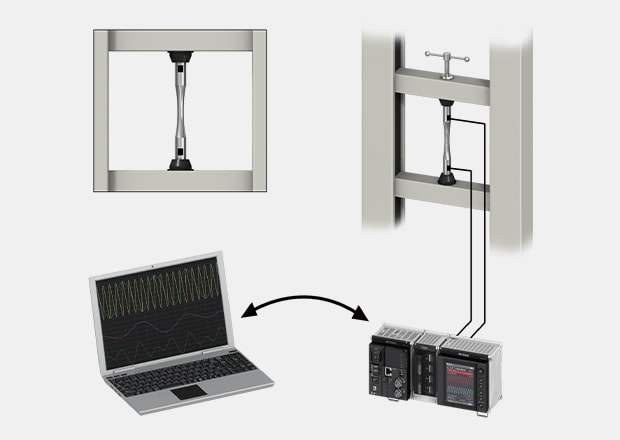
In R&D product testing, during validation and evaluation, engineers often measure multiple characteristics at one time. With time-synced data, they are able to analyze these measurements all at once. This matters regardless of what is being evaluated, and the phase differences and transient behavior are easier to identify when data shares a timeline. Over repeated test cycles, consistent time alignment also helps improve comparability between runs.
By adding the capability of data-synchronized video footage, engineers are not only able to evaluate multiple streams of data in sync, but they are also able to compare visual differences between tests.
For example, test results may differ if an outside factor interferes with a test, like an operator accidentally knocking a sensor out of place or an error occurring in the testing process itself.
These abnormalities may appear in your collected data. However, video footage provides context as to 'why' you achieved that result.
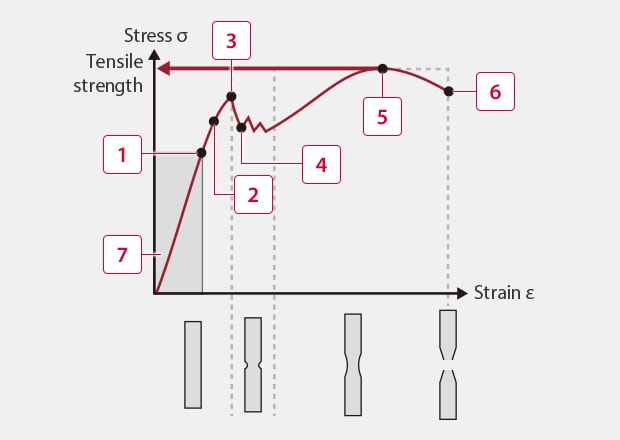
Another example of this is tensile testing. When measuring load and strain on a tensile test, you can measure and see the waveform data of when your sample eventually fails. By adding video footage, you are able to see what part of the sample failed- providing additional context to your data and making it faster and easier to make improvements on your product and testing process.
-
1Proportional limit
-
2Elastic limit
-
3Yield point
-
4Lower yield point
-
5Maximum stress
-
6Fracture
-
7Designed region
Improving Manufacturing Visibility With Time-Synchronized Measurements
Production environments introduce a variability that is not experienced in controlled tests, like equipment wear and tear, processes drifting from intended outcomes, and environmental changes. Time-synced data in manufacturing helps improve the visibility of these factors and how they interact with each other in real time. Process deviations can be traced to hyper-specific moments instead of a large window of time, which supports faster adjustments and clearer documentation when investigating quality issues. Over time, these synchronized measurements also help build a stronger history of changes and issues. They also support trend analysis without relying solely on manual data reconciliation.
How NR-CM01 Supports Time-Synched Video Footage in Data Collection
In many measurement environments, different signals may be captured at the same time, but rarely do they behave the same way. While some change happens gradually, others happen in bursts. Data for these behaviors can often vary by channel. When reviewed later, even the smallest timing differences can complicate how the data is analyzed for production and then acted upon.
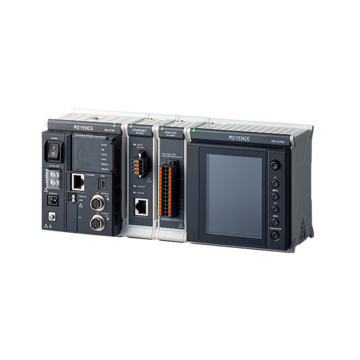
Data loggers like the NR-X Series and the NR-CM01 from KEYENCE address this by applying a common timestamp to all streams of data during collection. It aligns every data stream as they are captured, allowing for signals to be evaluated within a single timeline. Because this happens at the acquisition of the data, less time and effort are spent reconciling timestamps at a later time. Engineers can move directly into comparison and interpretation, overall supporting faster data review and clearer conclusions when troubleshooting with data synchronization is incorporated into the workflow.
Traditional data review can be time intensive when trying to connect numerical trends with physical events. The NR-X Series solves this challenge with the NR-CM01 Data Synced Video Camera. By synchronizing recorded data with corresponding video footage, engineers can jump directly to points of interest, view before-and-after behavior, and correlate data variations with physical phenomena.
This capability shortens the path from measurement to understanding. It also adds visual clarity when diagnosing anomalies, reviewing product behavior, or preparing reports. In practice, this feature reduces analysis time and improves collaboration between testing, design, and quality teams.
Why Time-Synced Data Is Critical for High-Speed Measurement Systems
Timing differences that once seemed negligible can now have huge impacts on production lines. High sampling rates capture rapid changes in system behavior, but without aligned timestamps, short-duration events can negatively affect how data is interpreted.
When Time-Synced Data Makes the Biggest Impact
Time-synced data often proves itself the most useful when a system behaves in a completely different way than anticipated. With measurements all sharing a distinct timeline, engineers can trace any change across the data without having to shut down the line or spend hours inferring from incomplete data. This also carries into R&D product testing, where synchronized datasets support interpretation and reduce the need to repeat or revisit measurements to resolve any uncertainties.
Contact KEYENCE to explore the power of video-synced data for your manufacturing needs today!