Optical Comparator (Profile Projector)
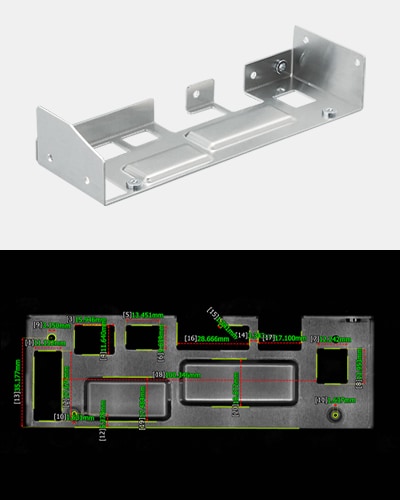
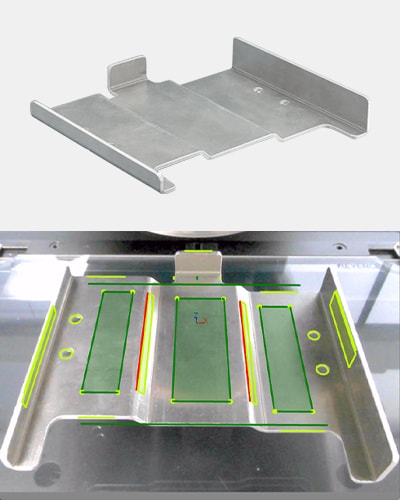
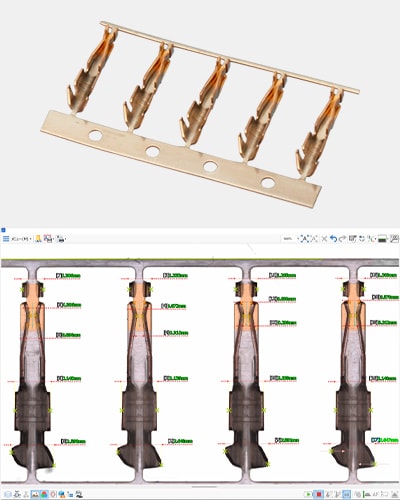
Dimensional Inspection for Metal Stamping
Key Takeaways
- Choose cold stamping for rapid mass production and hot stamping to create high-strength metal parts.
- Utilize fine blanking for micron-level precision parts required in aerospace, auto, and medical fields.
- Select machine presses for fast mass production or hydraulic presses for flexible, precise pressure control.
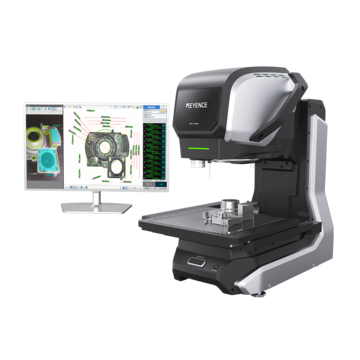
- Ensure quality control of complex stamped parts using the KEYENCE IM Series Instant Measurement System.
Explore metal stamping techniques, processes, and machines. Find reliable stamping parts manufacturers and gain insights into the stamping manufacturing process.
What is Stamping?
Stamping parts is an umbrella term for a process that uses a punch and die set to forcefully form sheet metal. Within stamping, there are categories that refer to the process and end result. Categories of stamping parts include punching, forming, swaging, blanking, and piercing. These processes create holes, dimples, tabs, recessed areas, and other part geometries.
Stamping Processes
Cold Stamping
Cold stamping is a common process of shaping metal pieces without heating them up. Instead, strong pressure is applied to the metal using hydraulic or mechanical presses. Different materials like steel, aluminum, and copper are commonly used. Stamping is the process of forming by applying pressure to materials. Using dies makes it possible to manufacture products with complex shapes in a short time and in large volumes. Additionally, the ability to automate rolled sheet metal processing through continuous press operation has resulted in widespread use in a broad range of metalworking sites.

Hot Stamping
Hot stamping is a method that creates precise metal parts by heating the blanks until they melt. Dies are then used to shape the molten metal into the desired form. Once shaped, the metal quickly cools down, keeping the shapes, edges, and curves intact. The resulting metal parts are strong and can withstand stress and pressure. Two processes are used in this process, direct hot stamping and indirect hot stamping.
Stamping Techniques
Plastic Forming
Plastic forming occurs by pressing a material into a die to produce a designed shape. Contrary to the name featuring “plastic,” this process is frequently used for stamping parts made of metal in the automobile industry. It receives the “plastic” in its name because it utilizes a material’s ability to change by applying force—also known as its plasticity. Plastic forming uses roll forming machines, transfer press machines, or high-speed press machines.
Piercing
Piercing is a part stamping technique for creating holes. The holes are created by forcefully piercing a sheet metal with a tool. After the sheet is pierced, the sheet with holes then continues on through the manufacturing process.
Fine Blanking
Fine blanking is a stamping machine technique that utilizes the hydrostatic pressure effect. The hydrostatic pressure effect says that plastic forming force increases when pressure is applied to metal.
In this case of fine blanking, pressure comes from top and bottom angles with minimal clearance. This metal stamping process is frequently used on steel, stainless steel, and super alloys. Fine blanking is the micron-version precision version of stamping. Because of this, stamping parts by fine blanking is often used in the aerospace, automobile, and medical device industry.
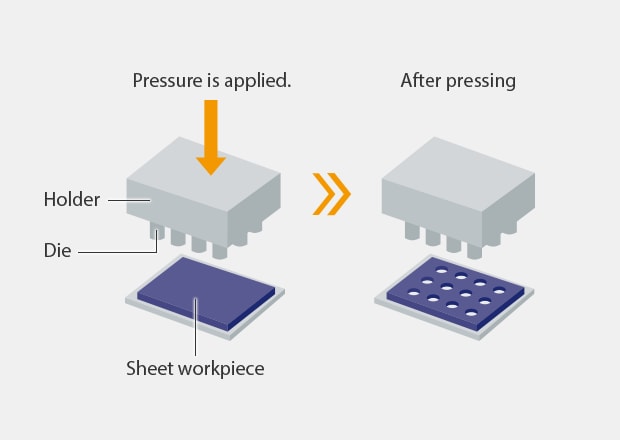
Punching
Punching is a forming process where holes or shapes are made in sheet metal using a tool or a die. Punch presses are commonly used for punching processes. Their punch force is on the order of several tens of tons, and they are primarily used to form sheet materials. Punch presses that punch out sheet material with dies attached to a tool holder—called a turret—are known as turret punch presses.
Stamping Machines
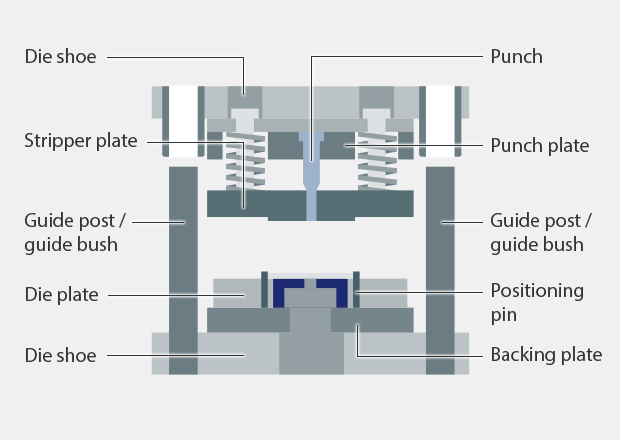
Forming Machines
Today, most production sites use machine presses. This is due to the advantages of quick processing and relatively easy maintenance. As automation of processing continues to expand, machine presses are a vital tool in mass producing metal parts. Also, unlike hydraulic presses, machine presses do not suffer from fluid leakage. Machine press models can be divided into several groups based on the slide mechanism of the pressurizing unit. In addition to crank presses, which are the most common, there are various types including knuckle presses and link presses.
Turret Punch Press
A turret punch press is a stamping machine that uses a tool holder with a die attached. This stamping manufacturing process is ideal for punching shapes or holes in sheet metal.
Hydraulic Press
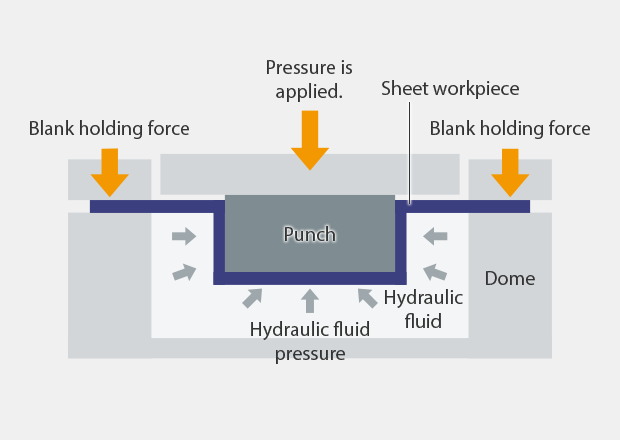
A hydraulic press pumps fluid into a cylinder and uses the resulting compressive force for forming. Hydraulic pressure controlprovides flexibility in the plastic forming process. Another advantage is the ability to create long workpieces. As a typical exampleof a modern hydraulic press, hydraulic press brakes are able to adjust the applied force according to the material and thickness of the workpiece. Conventional hydraulic presses mostly used water as the confined fluid, but as industries grew, oil-based hydraulic presses became the standard. Recent advancements in (computerized) numerical control have also enabled highspeed, high-accuracy stamping under digital control. The benefits of water-based hydraulic presses include the fluid itself being non-flammable, the relative ease of maintenance, and low running costs. Large hydraulic presses are also capable of compressive forces in the tens of thousands of tons. Meanwhile, compared with water-based presses, oil-based hydraulic presses allow for finer control, enabling more precise forming. The metal components used in oil-based hydraulic presses are also not prone to rust as water is not used. Currently, oil-based hydraulic presses are more widely used than their water-based counterparts.
As you can see, there are many facets to stamping. Regardless of the process and techniques that are used, the right machine for the job is important for getting the best results. Learn more about KEYENCE’s IM Series Instant Measurement System and how it can help you check and inspect all types of stamped parts.