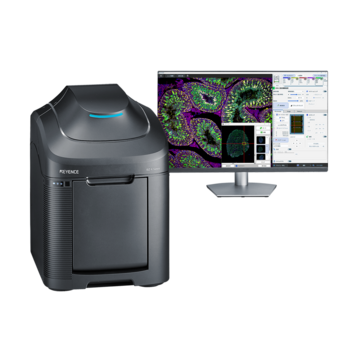
Fluorescence Microscopes
Thailand Liquid Crystals in Space Project Aboard the International Space Station
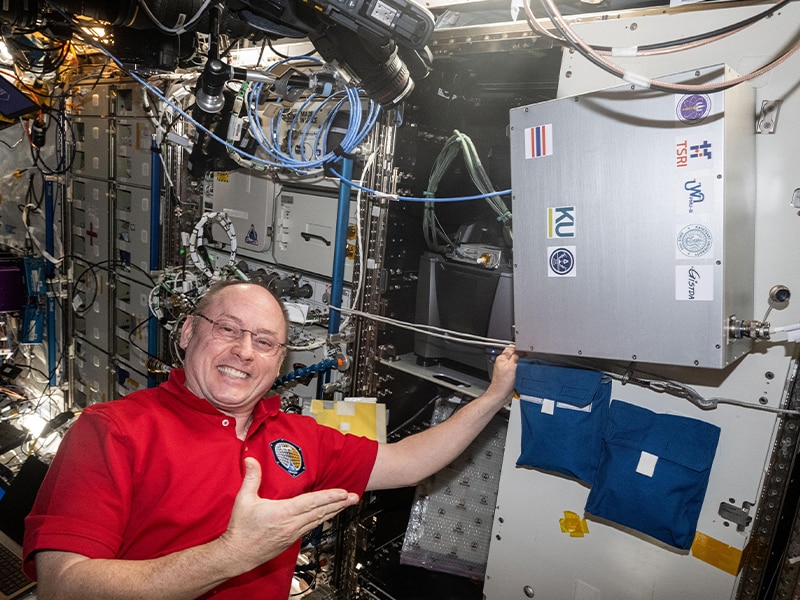
We completed the 120 hour operation on the ISS for the liquid crystal experiment investigated under ISS KERMIT (BZ-X800) microscope.

Nattaporn Chattham
Associate Professor, Department of Physics, Faculty of Science, Kasetsart University 50 Ngamwongwan Rd., Ladyao, Chatuchak, Bangkok, Thailand
Dr. Nattaporn Chattham is an Associate Professor of Physics at Kasetsart University, Bangkok, Thailand. Her research focuses on liquid crystals, soft condensed matter, and nanophotonics. She received her B.S. in Physics from Kasetsart University, Thailand, and her M.S. and Ph.D. in Physics from the University of Colorado Boulder, USA. She was an Alexander von Humboldt Research Fellow at the University of Magdeburg, Germany. Dr. Chattham is the Principal Investigator of the Thailand Liquid Crystals in Space (TLC) Project, which investigates liquid crystal behaviour aboard the International Space Station in late 2025. The project is funded by the Government of Thailand and the U.S. ISS National Laboratory, in collaboration with Voyager Technologies.
Q1. Please describe the research or project you are currently working on. What are its goals and the outcomes you aim to achieve?
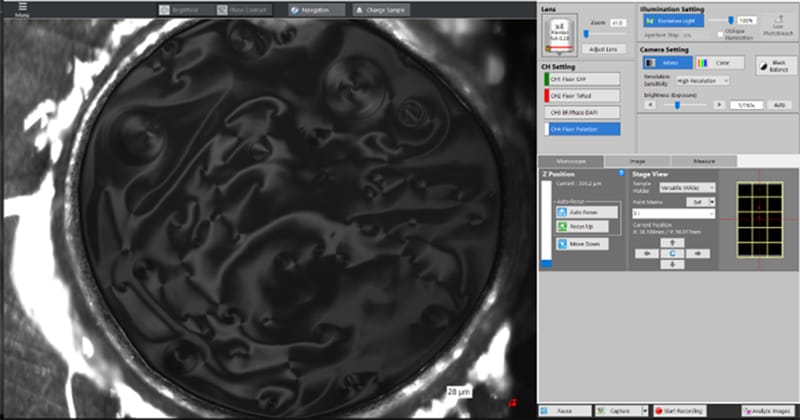
I am currently working on a research project that studies liquid crystal technology, which is widely used in LCD displays such as those found in smartphones, televisions, and computer monitors. The project focuses on investigating defects that naturally occur within liquid crystals and reduce display performance.
The main goal of this research is to understand how these defects behave when the influence of Earth’s gravitational force is removed. By studying the response of liquid crystals under reduced gravity conditions, the project aims to identify ways to eliminate or minimize these defects (shown in the figure attached). The expected outcome is to contribute to the development of higher-efficiency display technologies with improved performance and image quality.
Q2. What challenges or difficulties do you face in your research or work?
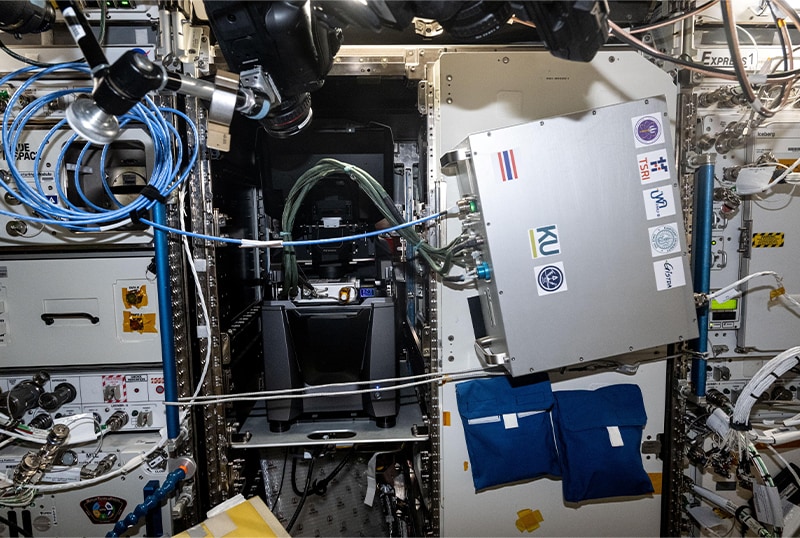
One of the main challenges in my research is designing and developing equipment suitable for use in a space environment. Every component must be different from standard Earth-based equipment in order to function reliably under microgravity conditions. The research team and students must work intensively to ensure the device can withstand the unique conditions aboard a space station.
Additional challenges include meeting strict safety requirements to protect astronauts and ensuring that the experiment does not negatively affect the space station environment. Moreover, the equipment must be carefully designed to avoid interference with other electronic systems on the station, as any disruption could cause errors in station control. These constraints significantly increase the complexity of the research and development process.
Get detailed information on our products by downloading our catalog.
View Catalog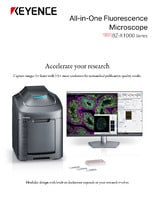

Q3. What prompted you to adopt the BZ series? Please explain the background.
We study defects in liquid crystal films using microscopic observation. The Keyence BZ-X800 microscope, available aboard the International Space Station (ISS) under the name KERMIT (Keyence Research Microscope Testbed), is used for this purpose. We have designed a liquid crystal payload specifically for the liquid crystal film experiment, ensuring compatibility with the KERMIT system for conducting experiments under microgravity conditions.
Q4. Which BZ features or functions have you found particularly helpful?
The microscope operating software enables remote control of the system and allows images to be observed from any location. The BZ microscope on the ISS is controlled from a ground station without requiring direct human interaction at the microscope.

Q5. What are your outlook and goals for future research or projects?
We are researching additional experiments that utilize KERMIT on the ISS to study the fluorescence of stem cells and the fluorescence of liposomes in a microgravity environment.
Q6. Do you have any messages for young researchers or companies working in the same field?
Studying liquid crystals in space provides unique insights into fundamental phenomena that cannot be fully observed on Earth. I encourage young researchers to embrace interdisciplinary collaboration and view technical challenges, such as working under microgravity and strict safety constraints, as valuable learning opportunities. For companies in this field, partnering with academic researchers and space agencies can accelerate innovation, as space-based experiments offer knowledge that can be translated into advanced materials and high-performance technologies on Earth.