UV Laser Coder
UV Laser Coder Improves Trans-Ocean Packaging: Case Study
For food packaging operations running across multiple lines, coding reliability has a direct impact on throughput, labor demands, and long-term maintenance planning. Trans-Ocean Products, a seafood producer based in Bellingham, Washington, faced growing challenges with its existing inkjet coding systems as production demands increased.
Their previous printers required frequent adjustments, had high consumable costs, and print inconsistencies were becoming harder to manage across a wet processing environment. After evaluating multiple alternatives, Trans-Ocean transitioned to KEYENCE UV laser coding technology and deployed the FP-1000 Series UV Laser Coder across several of its packaging lines. What they found was that this one change reshaped how coding fit into daily operations and long-term maintenance planning. This UV laser coder case study outlines how that transition changed daily operation across multiple packaging lines.
Why Trans-Ocean Needed a Coding Upgrade
Trans-Ocean has produced surimi seafood products since 1985. They source raw materials from the North Pacific and support a wide range of packaged goods. Their packaging environment includes multiple machine types, each with different speeds, bag formats, and operational constraints.
The maintenance team found that coding systems demanded regular intervention during routine production. At one point, they were having to change the umbilical on their five existing printers on average once to twice a year. Print quality issues and setup adjustments began to consume time that could have been directed toward other priorities. In areas exposed to moisture and product residue, these issues appeared more frequently. Coding was no longer a background process. It had become a recurring point of attention, affecting uptime and operator workload.
The Coding Challenges with Inkjet Technology
Before adopting UV laser coding, Trans-Ocean relied on inkjet printers to apply lot codes and expiration dates to pouch-type bags. These systems required pneumatically actuated printheads that had to be repositioned and dialed in during product changes. Each new bag size introduced setup work, increasing the time needed to complete changeovers.
Environmental conditions added further complexity. Inkjet printheads running in wet areas collected residue over time, which interfered with deflection plates and head alignment. When that happened, print quality dropped quickly. Operators often had to pause the line to clean or realign the system before production could continue.
Consumables also played a role. Ink and solvent had to be reordered and tracked regularly, which kept consumables in active rotation, as well as taking up space on the floor. As additional packaging lines were added, the work increased, and print-related upkeep began to compete with other maintenance tasks.
How the FP-1000 Series UV Laser Coder Increased Efficiency and Reduced Maintenance
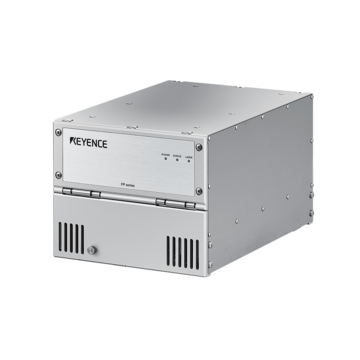
The FP-1000 Series UV laser coder introduced a light-based marking method that removed several sources of friction associated with inkjet systems. By eliminating ink transfer, the system reduced the number of components that required regular attention. There were no pumps to maintain, no filters to replace, and no actuated printheads to adjust.
At Trans-Ocean, this shift changed the maintenance profile of coding equipment. Routine upkeep became simpler and more predictable, with most tasks handled at the operator level with their attention focused primarily on keeping the lens clean and monitoring cooling components, rather than responding to mechanical wear or fluid-related issues.
Print output remained consistent once jobs were set. Because the marking head stayed stationary, codes held their shape and position across different products and line speeds. Operators spent less time stopping the line to make print-related corrections.
Why Trans-Ocean Selected the FP-1000 Series UV Laser Coder
Several practical considerations guided Trans-Ocean’s decision to standardize on the FP-1000 Series UV laser coder. One of the most impactful features that the maintenance team considered was the system’s wide 5-inch by 5-inch marking window. This allowed print jobs to be configured to accommodate multiple bag sizes without physically repositioning the marking head.
By separating print layout from mechanical setup, the team reduced changeover time and simplified job management across lines. Print programs could be adjusted digitally rather than through physical realignment, which supported faster transitions between products and less downtime.
Durability was another factor. Previous inkjet systems included moving components that required periodic replacement, contributing to maintenance costs and downtime. The laser system’s lack of moving parts addressed this issue directly, reducing the likelihood of wear-related failures and improving long-term reliability.
Installation Process: Fast, Simple, and Supported by KEYENCE
The transition to UV laser coding began with a collaborative installation process. KEYENCE technicians supported Trans-Ocean’s team from planning through integration, helping ensure that the first deployment went smoothly. The initial FP-1000 Series unit was installed on a rotary vacuum packer in under two hours.
Trans-Ocean fabricated mounting hardware internally, with guidance from KEYENCE during the first installation. After the first unit was in place, the maintenance team handled later FP-1000 Series installations internally. Mounting and setup followed the same approach used during the initial install, allowing new units to be brought online as lines were scheduled.
This approach allowed Trans-Ocean to move from evaluation to broader rollout quickly, building familiarity with the system while keeping lines running.
Real Results After Switching to the FP-1000 Series
Following the initial installation, Trans-Ocean expanded its use of the FP-1000 Series UV laser coder across six production lines. Four units were mounted on rotary pack systems that print on static bags at speeds ranging from the low teens to several dozen bags per minute. Two additional units were installed on thermoformer packaging lines, where the laser marks film during machine cycles using an external encoder wheel.
Across these applications, the maintenance burden associated with coding decreased noticeably. The removal of pumps, filters, and actuated printheads reduced the number of potential failure points. The print quality of the FP-1000 Series UV laser coder remained stable even in areas where intense moisture and temperature had previously caused issues with the team’s inkjet systems.
Operators also reported smoother day-to-day interaction with the equipment. The interface supported straightforward job selection and adjustment, and print output remained consistent once programs were set. While proper bag positioning continued to matter, the system required less intervention overall.
Application Examples Across Their Production Lines
Today, the FP-1000 Series UV laser coder supports multiple packaging formats within Trans-Ocean’s facility. On rotary vacuum packers, the system marks static pouch bags without mechanical adjustment between products. On thermoformer lines, the laser prints directly on moving film in sync with machine operation.
To accommodate the processing environment, Trans-Ocean fabricated a splash guard to protect the lens and cooling components from product exposure. This adaptation helped maintain stable operation while preserving the low-maintenance characteristics of the system.
With the UV printers in place, laser coding for packaging became part of normal line operation rather than a separate task that required ongoing attention. With print jobs being handled during setup rather than later — and once a run started — codes held their position as products moved through the line. Operators no longer paused production to correct print movement or alignment, even as packaging formats changed over the course of a shift.
Across Trans-Ocean’s packaging lines, coding now fits into the pace of production rather than shaping it. The FP-1000 Series UV laser coder supports daily operation without adding steps, adjustments, or extra attention as products move from run to run.

![Process-specific Marking Applications [Food/Pharmaceutical Industry]](/img/asset/AS_133442_L.jpg)
![Installation Example: FP-1000 Series UV Laser Coder [Trans-Ocean Products]](/img/asset/AS_161509_L.jpg)