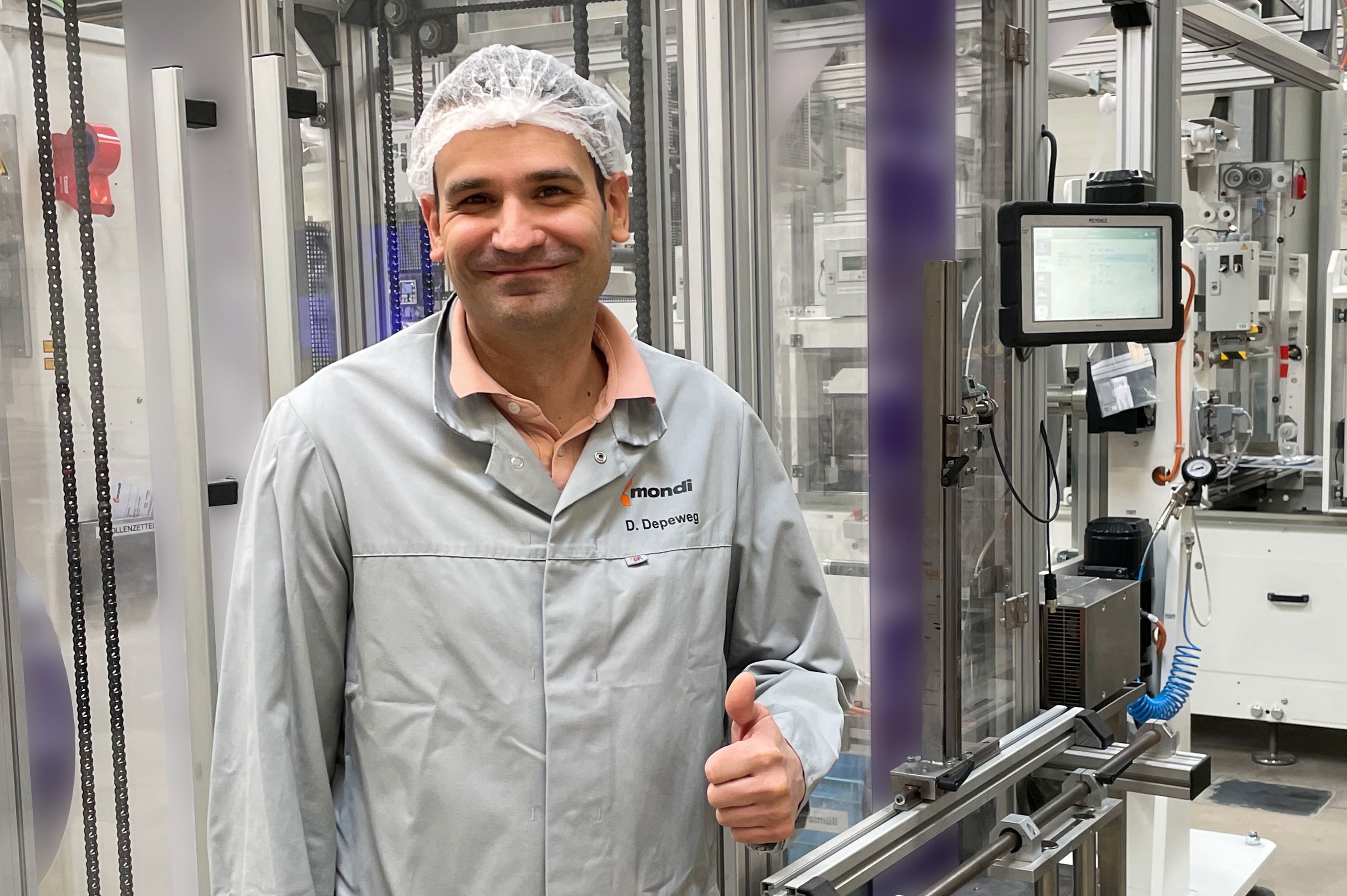
Mondi Halle GmbH develops customized paper and plastic packaging for the food, industrial, and consumer goods industries. At the Steinfeld site, the company now marks its packaging films with the KEYENCE UV Laser Coder FP-1000—with order number, time, date, and machine ID. Integration was effortless, operation is straightforward, and the system has been running trouble-free at the Steinfeld site for more than six million prints. In this way, the technology is helping to keep the site modern and future-ready.

Key Points in Brief
- Mondi Halle GmbH marks packaging films at the Steinfeld site with the KEYENCE UV Laser Coder FP-1000.
- Order number, time, date, and machine ID are applied—traceability plays a central role, especially in pet food production.
- The sharp print image adheres reliably to various materials, including challenging mono-materials.
- The FP-1000 operates without consumables: ink does not need to be refilled or stored, eliminating the associated costs as well as the safety requirements for storage and protective measures.
- At the Steinfeld site, the system has been running trouble-free for more than six million prints; integration was effortless and operation is straightforward.
ChallengeWhy was the Steinfeld site looking for a new marking system?
Mondi Halle GmbH stands for sustainable packaging solutions and innovative materials used worldwide in the food, industrial, and consumer goods industries. With a focus on quality, environmental friendliness, and individual customer requirements, the company develops customized paper and plastic packaging.
The Steinfeld site was looking for a system that would work reliably in day-to-day operations—without time-consuming maintenance, without consumables, and with consistent results. Above all, safety, easy handling, and smooth operation were important. Especially because traceability plays a central role in pet food production, the marking had to be reliable during ongoing operations.
SelectionWhat made the KEYENCE UV Laser Coder FP-1000 the right choice?
The UV Laser Coder from KEYENCE meets these requirements and even goes beyond them. The decisive factor was that the system fits directly into existing processes: integration was effortless, and operation is straightforward. According to Dennis Depeweg, production manager at the Steinfeld site, many people find it hard to picture how the system works at first. But as soon as it is in operation, it quickly becomes clear how smoothly it runs and what benefits it actually brings.
“No special training required, no specialized technical knowledge: just turn it on, wait five minutes, and off you go.”
— Dennis Depeweg, Production Manager at the Steinfeld site
ResultsWhat has changed in day-to-day production?
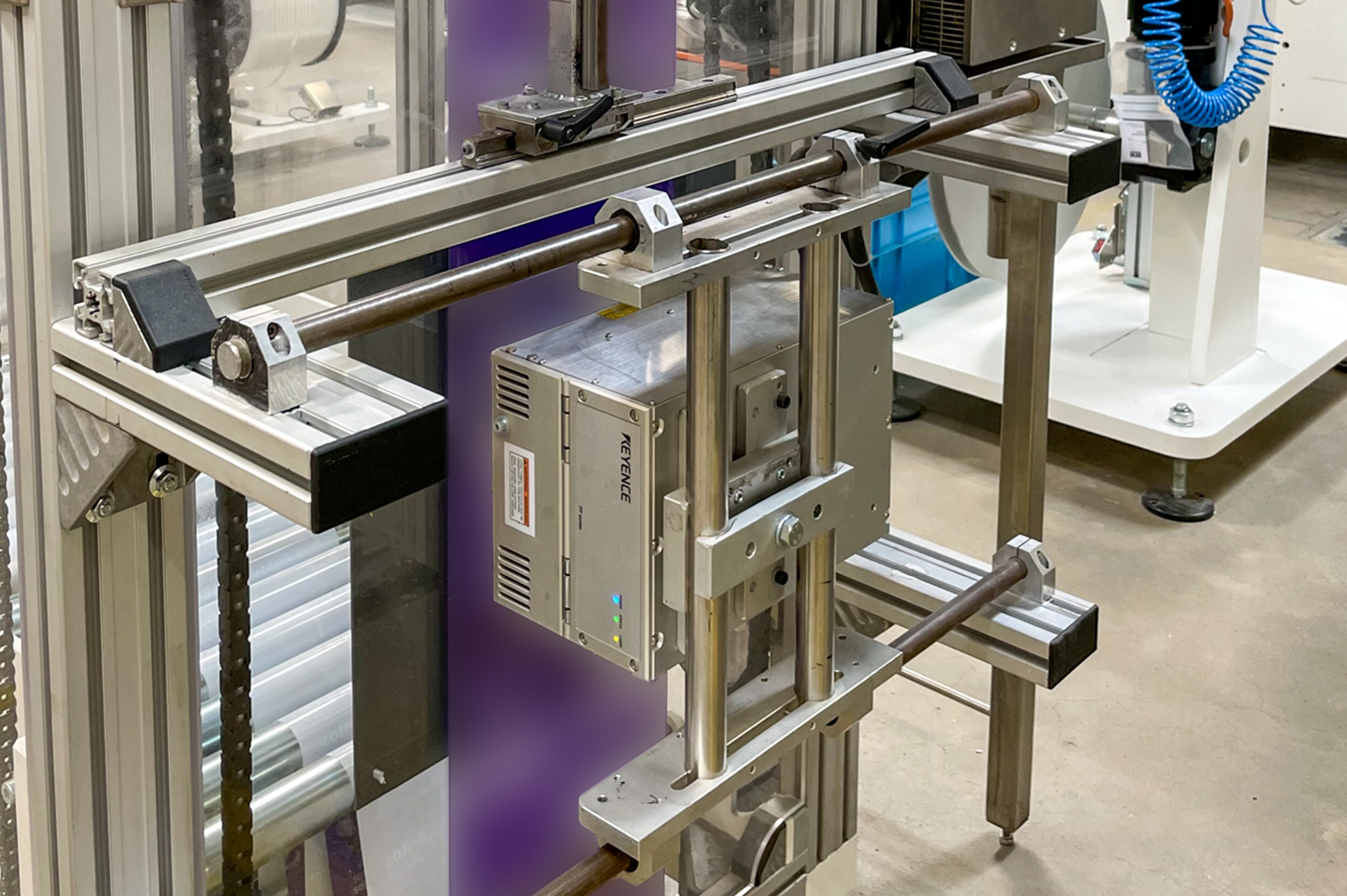
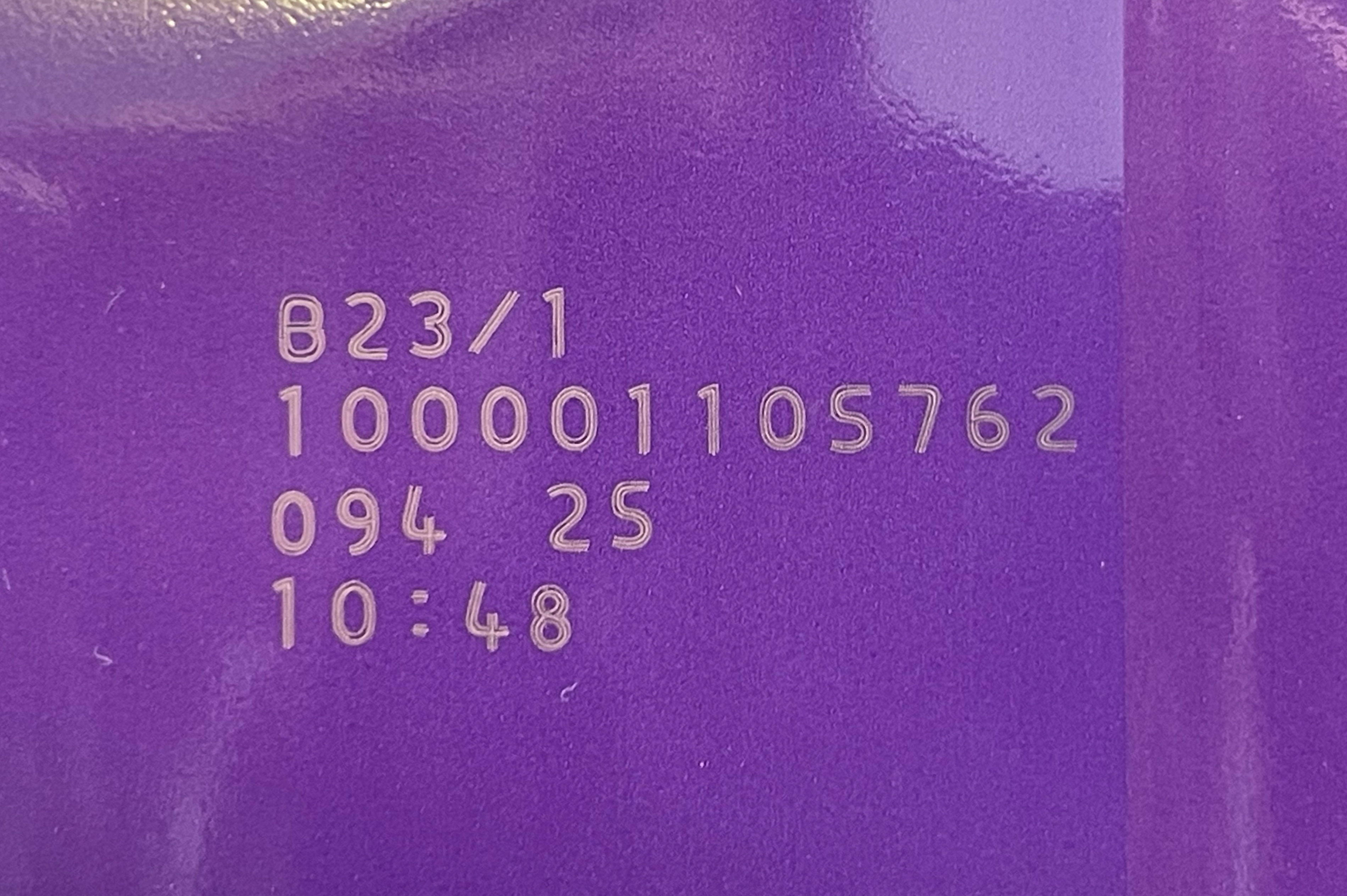
Today, the UV Laser Coder is an integral part of the production processes at Mondi Halle GmbH in Steinfeld. Various packaging films are printed with the order number, time, date, and machine ID. The marking is not only sharp but also adheres reliably to various materials, including challenging mono-materials.
Because the system does not require consumables, ongoing operation now requires noticeably less maintenance. At the Steinfeld site, the FP-1000 has been running trouble-free for more than six million prints.
“There is no downtime, no maintenance, no repairs—the system just runs. Since we’ve had the FP in-house, we haven’t had to spend a single hour on repairs or maintenance.”
— Dennis Depeweg, Production Manager at the Steinfeld site
ImpactWhat contribution does the technology make to safety and sustainability?
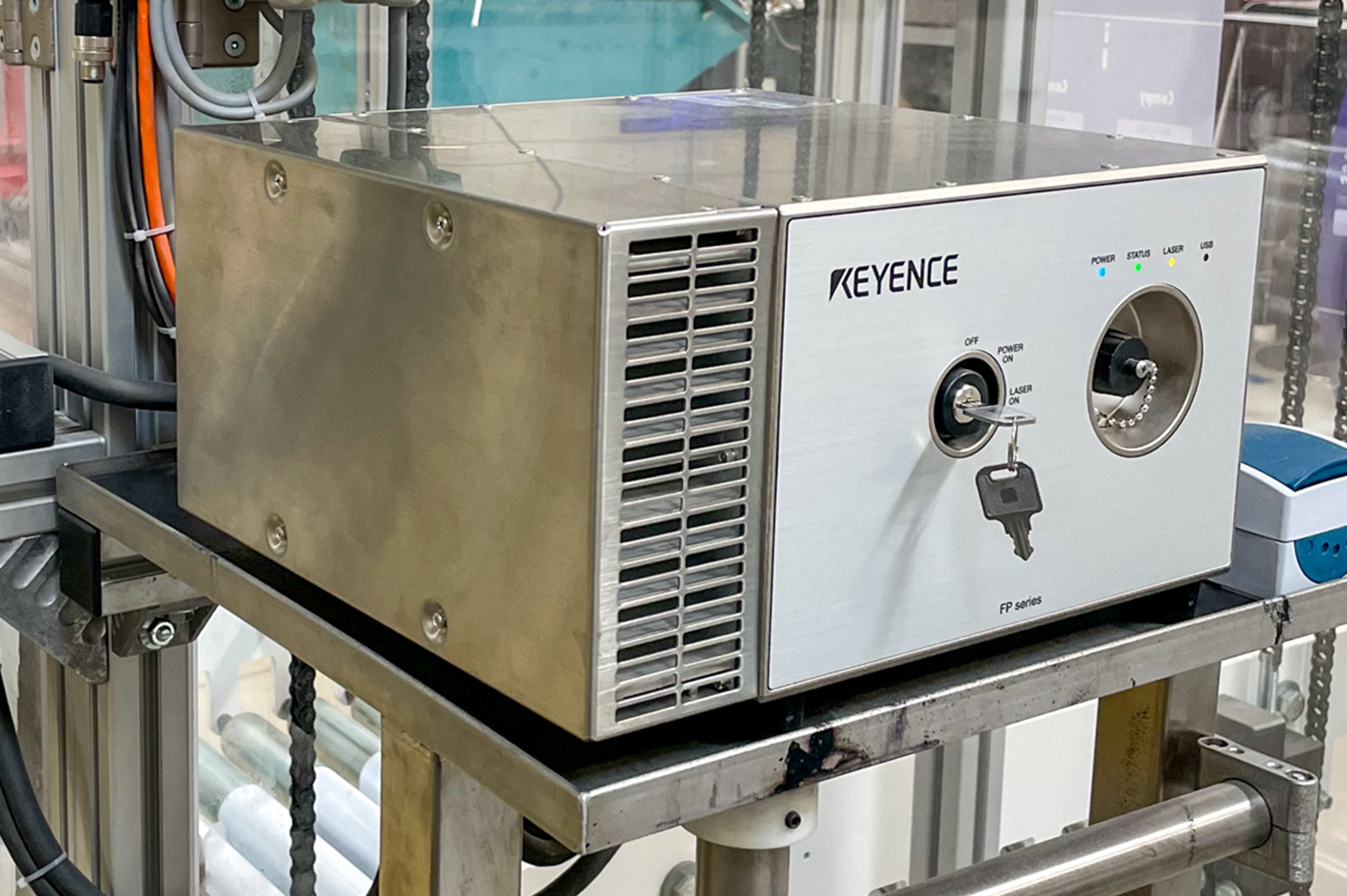
At Mondi in Steinfeld, safety and sustainability are top priorities. Accordingly, the requirements for new technologies are high. The UV Laser Coder from KEYENCE was integrated into existing processes not only smoothly but, above all, safely. Ink does not need to be refilled or stored. This eliminates not only the associated costs but also the safety requirements for storage and protective measures.
At the same time, the new technology helps to make the production site more sustainable and innovative: eliminating consumables reduces waste and lowers resource consumption—another step toward future-oriented, environmentally conscious production. The technology thus makes a valuable contribution to the further development of existing processes at Mondi and supports the company’s ongoing commitment to keeping the Steinfeld site modern and future-ready.
Frequently Asked Questions (FAQ)
QWhat does Mondi Halle use the KEYENCE UV Laser Coder FP-1000 for at the Steinfeld site?
A
The UV Laser Coder marks various packaging films with the order number, time, date, and machine ID. Traceability plays a central role, especially in pet food production.
QWhy did Mondi Halle choose the KEYENCE UV Laser Coder FP-1000 over a system with consumables?
A
The Steinfeld site was looking for a system that would work reliably in day-to-day operations—without time-consuming maintenance and without consumables. Above all, safety, easy handling, and smooth operation were important. The UV Laser Coder from KEYENCE meets these requirements and even goes beyond them.
QHow difficult was it to integrate the FP-1000 into existing production?
A
Integration was effortless, and operation is straightforward. Today, the UV Laser Coder is an integral part of the production processes at the Steinfeld site.
QOn which materials does the FP-1000 mark reliably at Mondi Halle?
A
Various packaging films are printed. The marking is sharp and adheres reliably to various materials, including challenging mono-materials.
QHow much training does the team need for the KEYENCE FP-1000?
A
According to the production manager, no special training or specialized technical knowledge is required: turn it on, wait five minutes, and it is ready to go. Many people find it hard to picture how the system works at first—but as soon as it is in operation, it quickly becomes clear how smoothly it runs.
QWhat contribution does the technology make to safety and sustainability?
A
There is no need to refill or store ink. This not only eliminates the associated costs but also the safety requirements for storage and protective measures. Eliminating consumables reduces waste and lowers resource consumption.