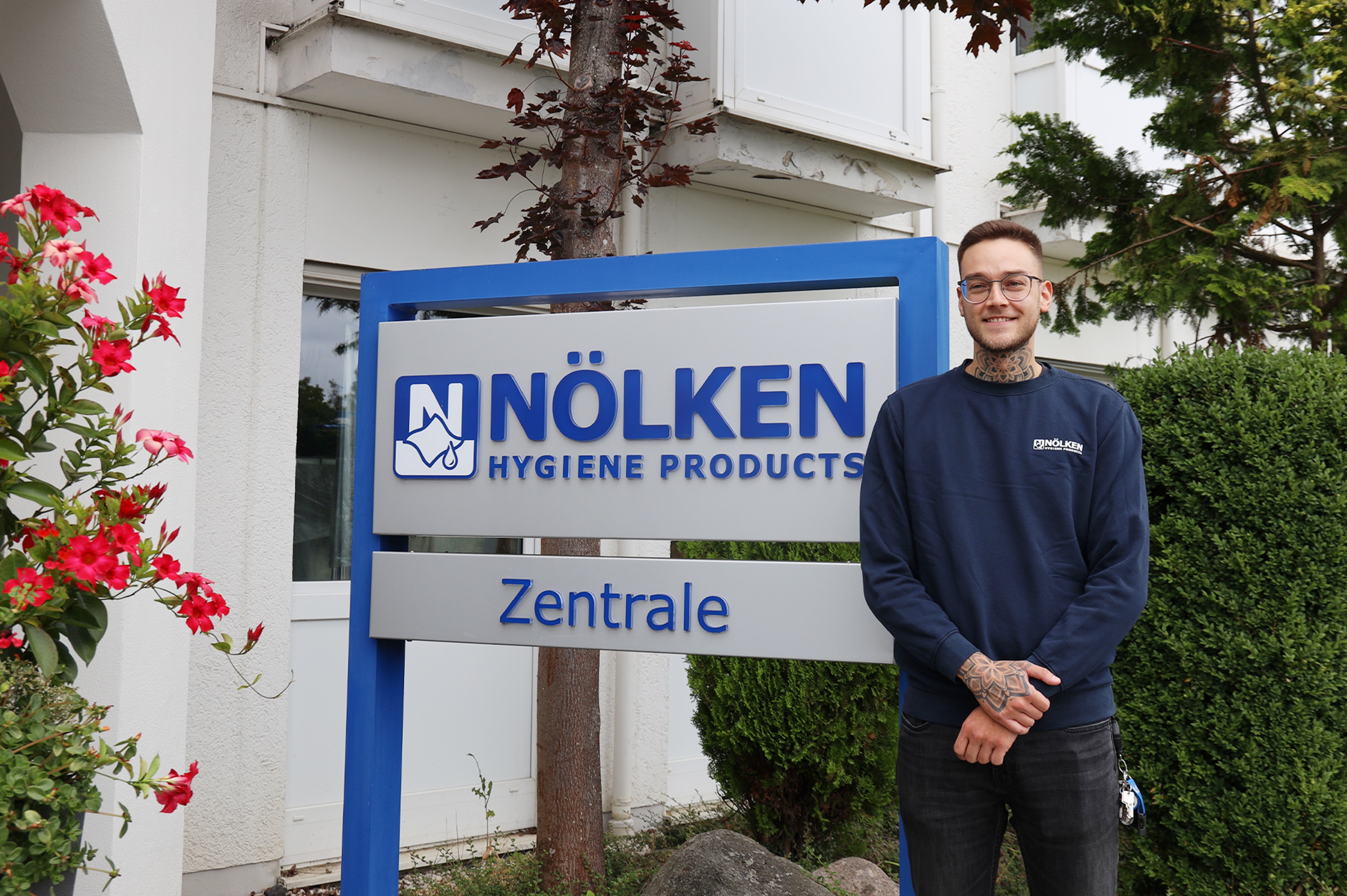
Nölken Hygiene Products GmbH in Germany manufactures personal care products as a private label manufacturer—including creams, wet wipes, and moist toilet paper. Until recently, the shipping cartons leaving the automated lines were marked using a mix of different systems, from labelers to hot wax printers. Today, case coders from the KEYENCE CC-1000 Series handle all carton marking with a single, uniform system, printing EAN codes, dates, and UDI QR codes directly onto brown cardboard—with a camera for inspection in every device. This case study features Kevin Dratschmidt, who supported the project from commissioning through training his colleagues.
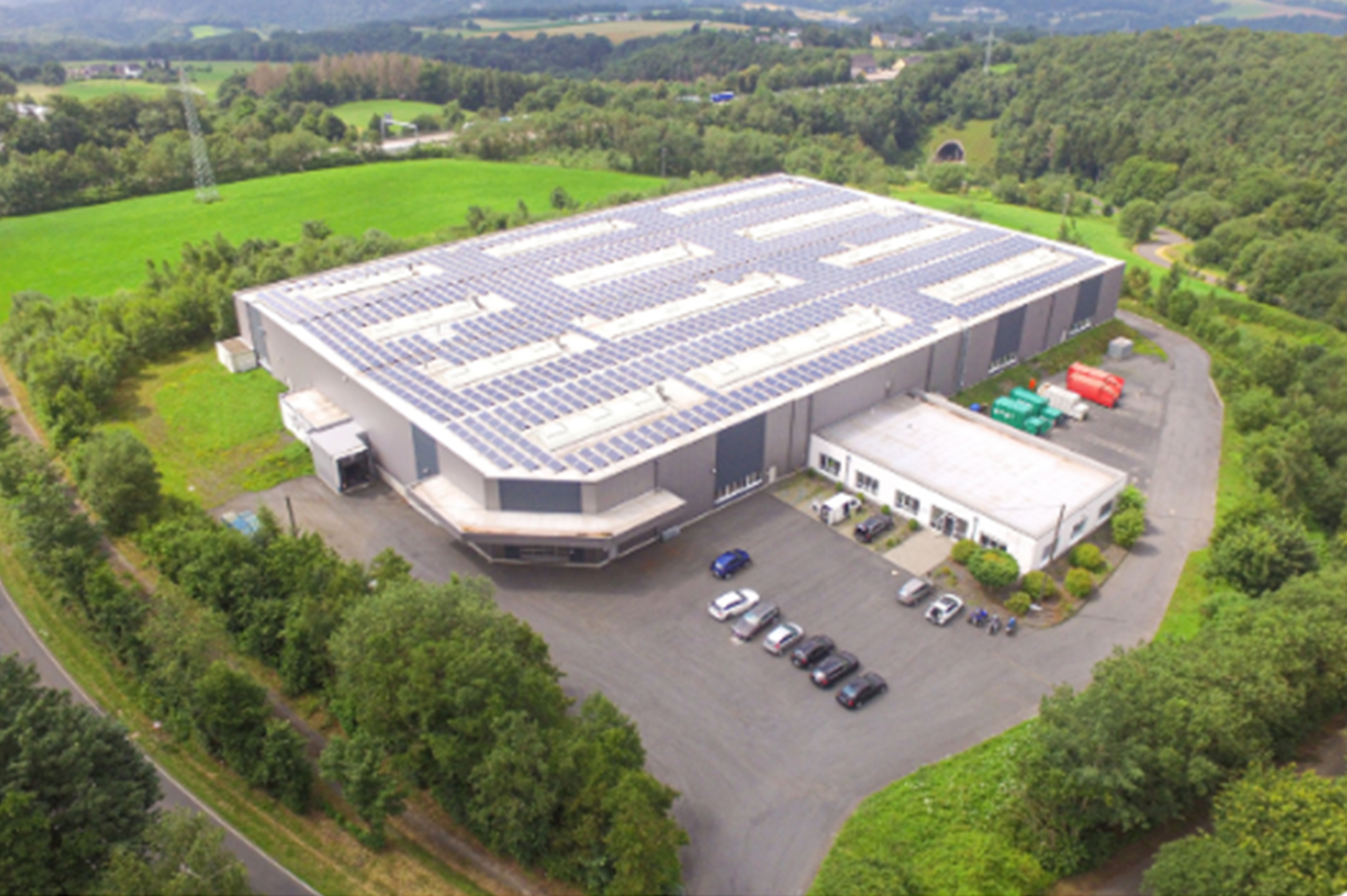
Summary: The Project at a Glance
- Nölken Hygiene Products GmbH, a German private label manufacturer of creams, wet wipes, and moist toilet paper, now marks its shipping cartons with case coders from the KEYENCE CC-1000 Series.
- Previously, several different marking solutions ran in parallel at the plant, including labelers and hot wax printers; consolidating to a single system also eliminates waste from labels and liner.
- The printers are integrated into the automated lines: cartons with unreadable print, incorrect EAN, or insufficient print quality are automatically rejected, and a traffic light system shows the printer status even from a distance.
- EAN codes with product names, automatically sequential manufacturing and expiration dates, and UDI QR codes are printed directly onto brown cardboard, making the products used traceable.
- Modularity and mobility allow a device to be transported five or ten meters—or to another building—during line changeovers; the printer itself reports shocks and vibrations.
- The CC cleaning module keeps the print image clean and prevents the nozzles from being cleaned with the wrong cloths—which was often a problem with the previous printer system.
ChallengeWhy did Nölken want to replace its labelers and hot wax printers?
“We are known as a private label manufacturer of cosmetic care products,” explains Kevin Dratschmidt. “From creams and wet wipes to moist toilet paper—we have a broad product range.” Everything that leaves the factory goes out in a shipping carton, and each carton must carry the correct information.
This information was previously applied using more than one technology. Some lines used a labeler that printed on a white label and applied it to the brown carton; others worked with a hot wax printer. Two things bothered the team about this. First, the factory was simply operating several different marking solutions with different requirements, different consumables, and different error patterns. Second, the waste: every label leaves behind a liner, and the label itself is a consumable.
Keeping the print quality stable on the hot wax printer also required discipline. There was a specified procedure for using the original accessories—and anyone who did not adhere to it quickly encountered errors.
“There were several reasons why we decided on the case coder. The most important thing for us was to have a consistent system and not have to work with different marking solutions.”
SelectionWhy did Nölken choose the KEYENCE CC-1000 Series?
The search for an alternative began at a trade show. While looking for a different approach specifically for carton marking, the team noticed the KEYENCE booth, got into a conversation—and from then on, things moved quickly: Nölken was able to test the CC-1000 in its own production over a longer period of time.
This test led to the decision. Standardizing on the CC-1000 Series meant a uniform system with the same requirements, and with direct printing on the carton, label and liner waste disappeared along with the labeler.
“Originally, the whole thing started with a visit to a trade show. There, we looked around for alternatives for carton marking. We got straight into a conversation, and it was quickly arranged for us to try out the CC-1000. We received the printer as a test device and were immediately convinced.”
ResultsWhat has changed with the switch to the CC-1000?
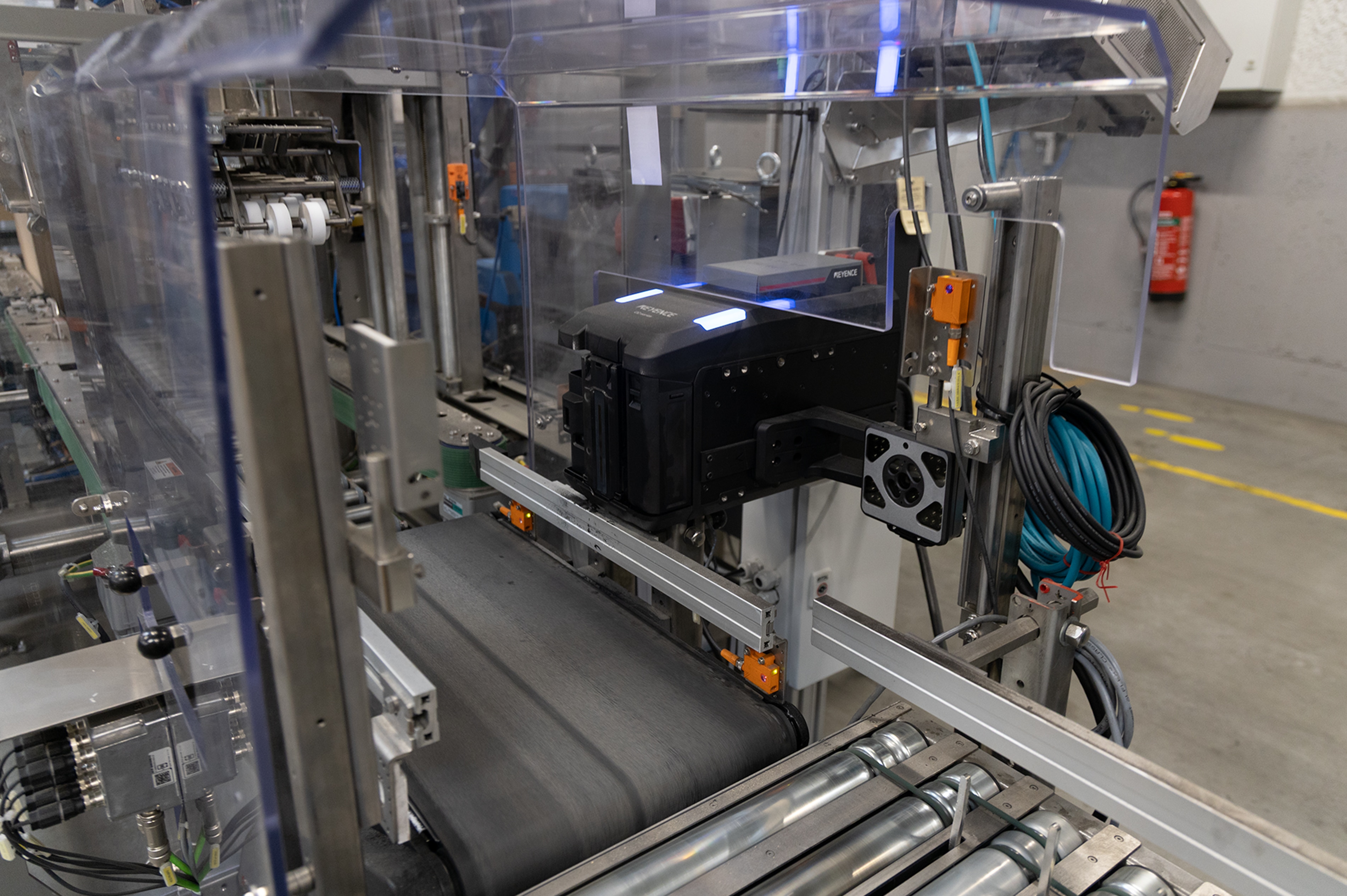
The printers do not stand next to the lines, but are integrated into Nölken’s automated lines. Each device has a camera for inspection, and the line acts according to what the camera reports: if the print is unreadable, the EAN is incorrect, or the print quality is insufficient, the carton is automatically rejected and subsequently reprinted. For operating personnel, a traffic light system makes the status of each printer visible from a distance—ready for operation, error present, or not ready for operation.
Exactly what is printed depends on the product. Mainly, it is EAN codes with the product name; every now and then, an expiration or manufacturing date is added, which automatically advances via the printer’s date function. In addition, Nölken prints UDI codes as QR codes with all information about the product—including the manufacturing date, as well as an indication of which in-house products were used—so that everything is traceable. Especially with the QR code, it is important that it is reliably reproduced every time—that is exactly what the camera inspection is for.
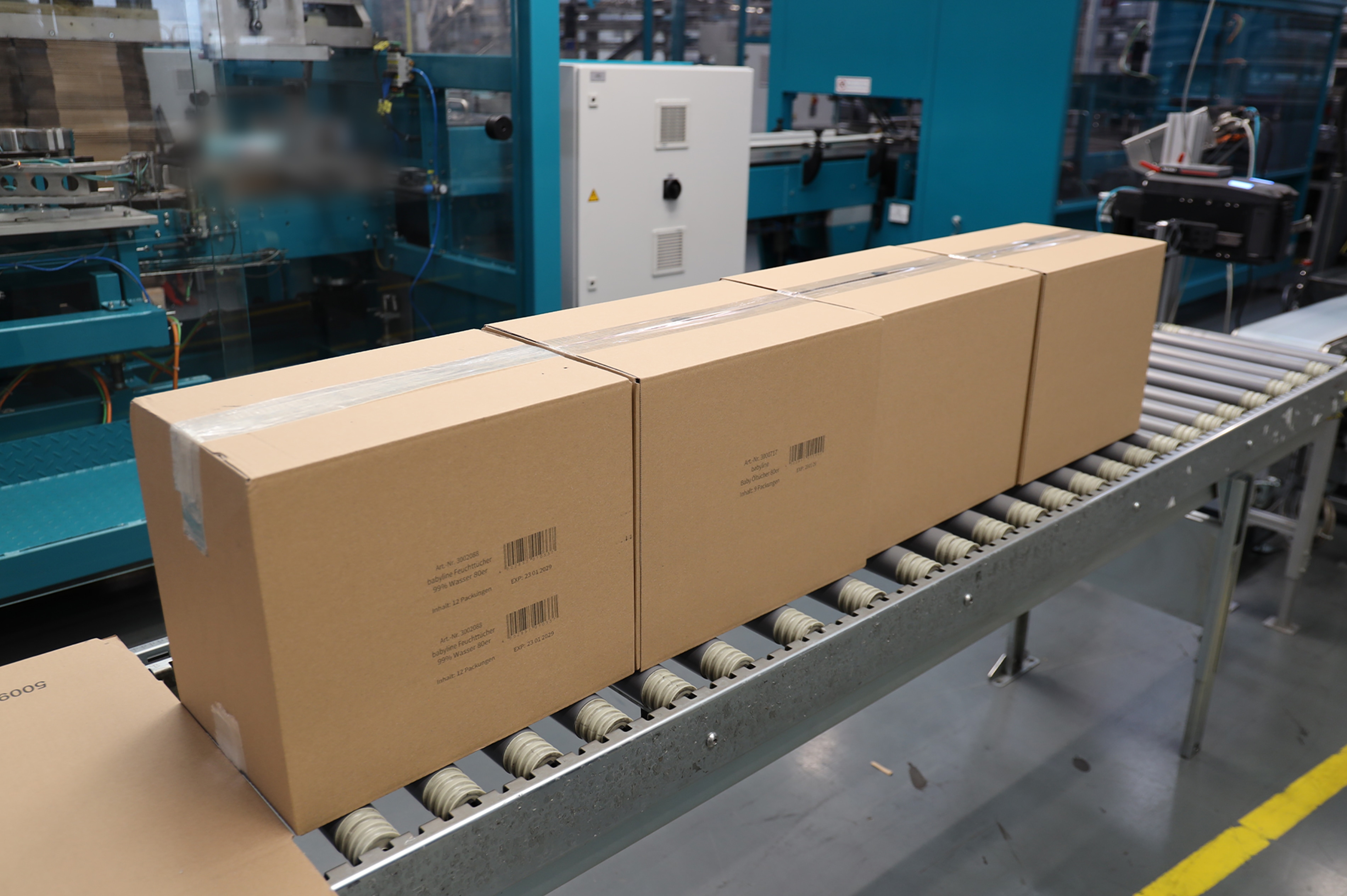
The print quality on brown cardboard was the point that the team monitored most closely. Labels had been printed on a white background, which set a high bar. Dratschmidt himself calls the comparison difficult—but with the KEYENCE printers, the factory can definitely ensure that the quality is at least as good, even directly on the brown background. And maintaining this quality has become significantly easier: the CC cleaning module fits precisely into its guide rail and the procedure is clearly described, so that the nozzles can no longer be cleaned with the wrong cloths—previously, that was exactly what was often a problem.
The advantage that stands out the most in everyday life, however, is mobility. During a line changeover, a printer sometimes has to be moved five or ten meters or even transported to another building—thanks to its modularity, this is simply not a problem. If the device is handled too roughly, it reports the shock or vibration itself.
“The best thing that immediately stands out is the mobility. It makes us really flexible, and there are simply few problems. And if there is ever a problem, the printer reports it immediately. The user interface is easy to use—it is really optimally designed.”
OutlookWhat is next for Nölken with marking and labeling?
Now that carton marking has been standardized, Nölken already has the next task in mind: film marking. A UV laser coder from the KEYENCE FP-1000 Series was tested in the factory and also convinced the team; implementation is planned for a future project.
When asked whether he was satisfied with the switch, Dratschmidt kept his answer short: “Very. We currently have no problems at all and everything is working.”

Frequently asked questions (FAQ)
QWhat does Nölken Hygiene Products use the KEYENCE CC-1000 Series case coder for?
A
The CC-1000 Series is used exclusively for carton marking. Nölken prints EAN codes together with the product name and, if required, an expiration or manufacturing date, which automatically advances via the printer’s date function. UDI codes in the form of QR codes contain the complete product information, including the manufacturing date and an indication of which in-house products were used, so that each carton can be traced.
QWhy did Nölken replace its previous labelers and hot wax printers with the KEYENCE CC-1000 Series?
A
There were several reasons for this, but above all it was about having a consistent system instead of several different marking solutions. One of the previous solutions was a labeler, so switching to direct printing on the carton also eliminates waste from labels and their liner.
QHow is the KEYENCE CC-1000 case coder integrated into the production lines?
A
The printers are integrated into Nölken’s automated lines. Each device has a camera for inspection: if the print is unreadable, the EAN is incorrect, or the print quality is insufficient, the carton is automatically rejected and subsequently reprinted. A traffic light system shows operating personnel from a distance whether the printer is ready for operation, an error is present, or it is not ready for operation.
QDoes the KEYENCE CC-1000 Series achieve sufficient quality even when printing directly on brown cardboard?
A
According to Nölken, the comparison is difficult because previous labels were printed on a white background and then applied to the brown cardboard. With the KEYENCE printer, the team can definitely ensure that the quality is at least as good, even directly on the brown background—and the quality is very easy to maintain compared to the previous hot wax printer.
QHow does the CC cleaning module of the KEYENCE CC-1000 Series help maintain print quality?
A
The CC cleaning module makes it much easier to keep the print image clean. Since the module fits precisely into its guide rail and the procedure is clearly described, operating personnel can no longer clean the nozzles with the wrong cloths—which was often a problem with the previous printer system.
QHow easy is it to move a KEYENCE CC-1000 Series case coder between lines?
A
Mobility is the advantage that the team notices most. During a line changeover, a device might be transported five or ten meters, or even to another building, and its modularity makes this straightforward. If the device is handled too roughly, it reports the shock or vibration itself.