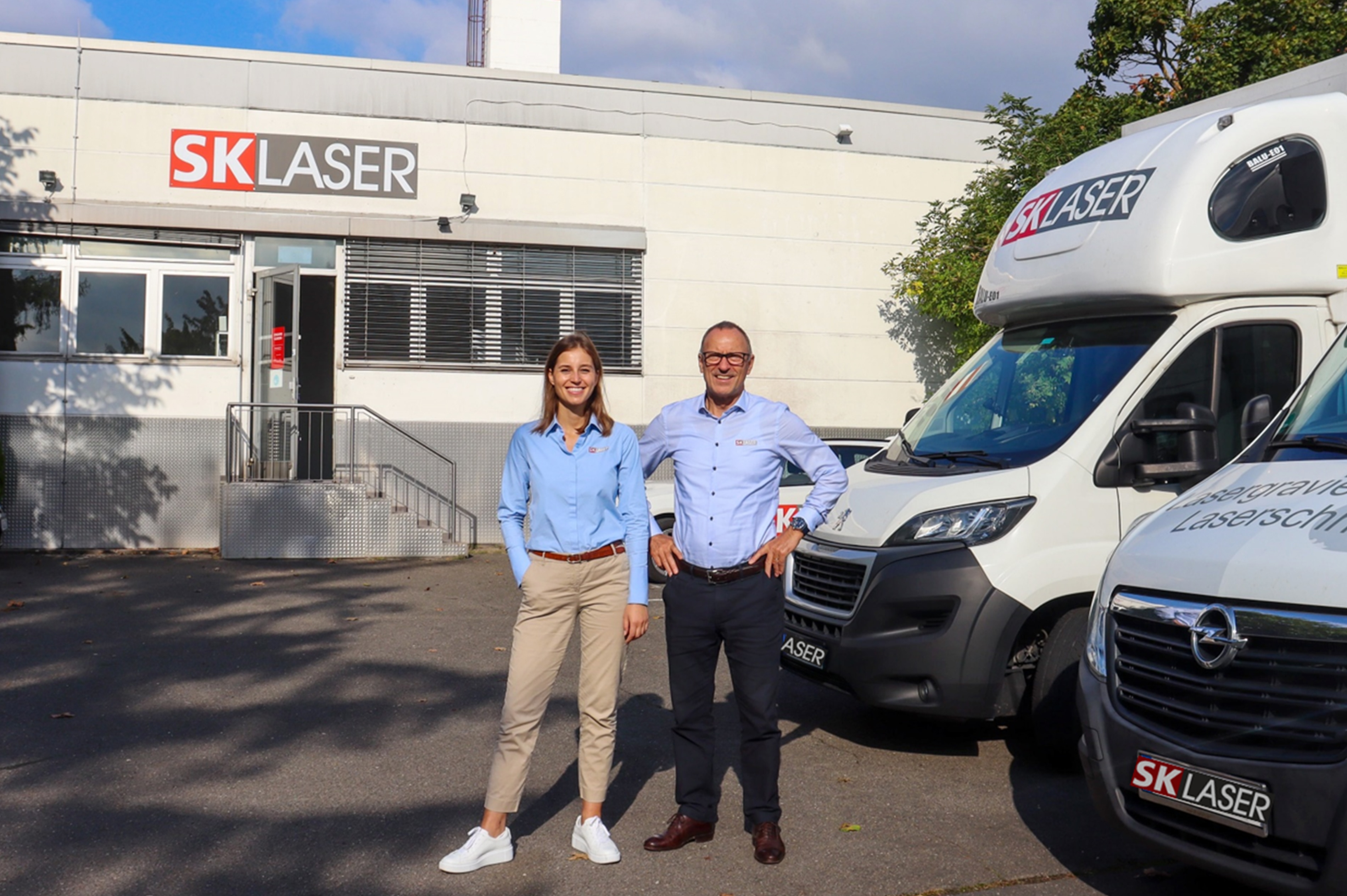
SK Laser GmbH, based in Wiesbaden, develops and builds custom machines for laser surface processing. In the pre-sales phase, in which customer products are sampled, the quality of the finish is crucial—but subtle differences are often not visible to the naked eye. With the VHX Series digital microscope from KEYENCE, SK Laser also evaluates the surface quality of laser engravings in terms of depth and finish and documents the results—adding real value to day-to-day sample creation.
Key Points at a Glance
- An additional dimension of evaluation. In addition to visual and tactile inspection, surface quality can be evaluated in terms of depth and finish.
- Fine differences visible. Letters engraved in aluminum that look equally good to the naked eye show major differences under the microscope.
- Better sample decisions. Depending on the task, the most suitable marking can be selected from the microscope image.
- Documentation included. The results can be recorded—an additional tool that makes daily work easier.
- A partnership built on trust. Since 2023, SK Laser has also been using KEYENCE systems for vision and code tasks.
In depth
Assessment of surface quality by depth and finish
Pre-sales
Sample testing before machines are configured
Documentation
Record results and make them traceable
About SK Laser GmbH
SK Laser is a young, medium-sized manufacturer of custom machines for laser surface processing. These laser machines are developed and manufactured in Wiesbaden. In addition to standard machines that are operated manually, there are also semi-automatic and fully automatic systems. Most machines are built as custom machines according to customer requirements. The family-owned company was founded in 2005 by Christoph Kollbach, and his daughter Dina Reit is leading the company into the future.
“We have already been able to work on many good projects with very satisfied customers.”
— Dina Reit, SK Laser GmbH
Challenge Quality Can Hardly Be Assessed with the Naked Eye
When producing samples, the finish and its quality play a special role—this is exactly what the customer needs to see. Tests with different lasers can achieve different results in terms of quality and speed. Only then can the machines be configured, taking into account the cycle time specified by the customer.
The problem: The quality of the finish often cannot be assessed with the naked eye. For this reason, SK Laser decided to install a VHX Series digital microscope from KEYENCE.
SelectionWhy the KEYENCE VHX Series Digital Microscope?
The microscope provides tremendous support to the user in their work, as it gives them an additional dimension. In addition to normal visual and tactile assessment, the user can evaluate the surface quality in terms of depth and finish. This proves helpful in many cases. After many projects and tests, KEYENCE microscopes are now the first choice at SK Laser.
“We used to try other suppliers because they were cheaper, but today we are a loyal KEYENCE customer. In my opinion, the quality and performance cannot be beaten. The service is great.”
— Christoph Kollbach, Managing Director of SK Laser GmbH
ResultsLaser Engraving in Aluminum in Detail
SK Laser uses the VHX Series digital microscope in the pre-sales phase, during which the customer’s product is sampled. Creating a sample is very important not only for the supplier but also for the customer: processing time and quality can be determined, and it becomes clear how the material reacts to the laser beam.
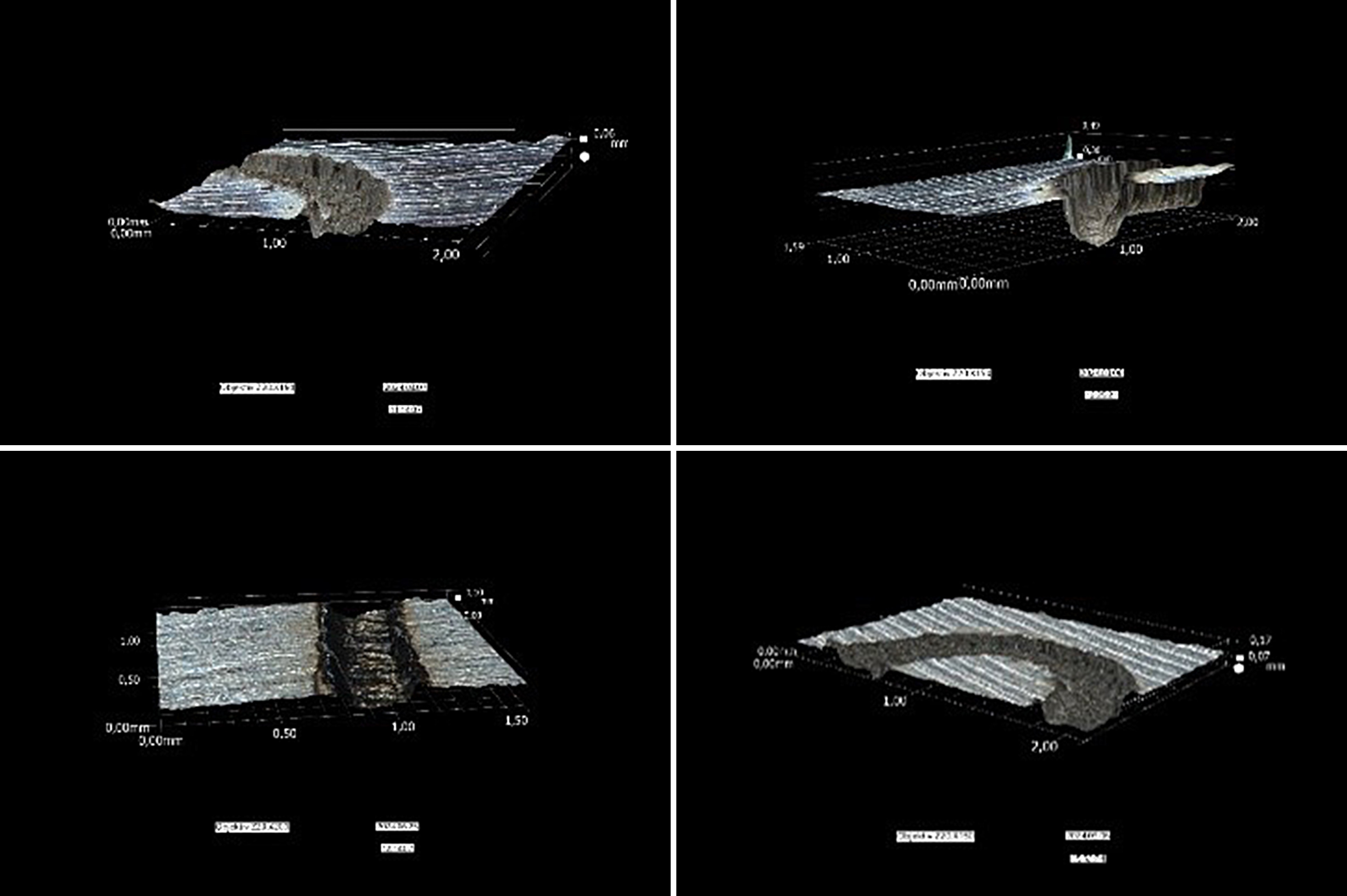
For example, letters engraved in aluminum may all look equally good to the naked eye yet show large differences under the digital microscope. Depending on the customer’s requirements, the most suitable marking can be selected from the microscope image. The processing depth can also be selected appropriately: a deep engraving is not always needed—if a surface engraving is already permanent and irreversible, that is often sufficient.
For daily work in sample creation, the microscope offers real added value. In addition, the ability to document results provides another tool that makes work easier.
OutlookCollaboration Beyond the Microscope
The collaboration with KEYENCE goes beyond the microscope: since 2023, SK Laser GmbH has also been integrating KEYENCE systems into its machines. These are often used when the specific task requires a vision system, a special camera, or a code reader to read and validate data. In this way, SK Laser combines sample inspection and system integration into a consistent quality standard.
Frequently Asked Questions (FAQ)
Q What does SK Laser use the VHX Series digital microscope for?
A
SK Laser uses the digital microscope in the pre-sales phase, during which the customer’s product is sampled. When producing samples, processing time and quality can be determined, and it becomes clear how the material reacts to the laser beam.
Q Why did SK Laser choose the digital microscope from the KEYENCE VHX Series?
A
The quality of the finish often cannot be judged with the naked eye. That is why SK Laser installed a VHX Series digital microscope to evaluate the surface quality in terms of depth and finish, in addition to visual and tactile assessment.
Q What added value does the KEYENCE VHX Series offer during sample creation?
A
The user gains an additional dimension of evaluation. Letters engraved in aluminum that look equally good to the naked eye show major differences under the digital microscope. This allows the most suitable marking to be selected depending on the task.
Q How does the KEYENCE VHX Series support documentation?
A
The documentation function provides an additional tool that simplifies daily work and keeps the results of each sample inspection traceable.
Q Is a deep laser engraving always necessary?
A
A deep engraving is not always needed: if a surface engraving is already permanent and irreversible, that is often sufficient—and the microscope helps to evaluate this reliably.
Q Does SK Laser collaborate with KEYENCE beyond the microscope?
A
Since 2023, SK Laser has also been integrating KEYENCE systems into its machines. These are used when the individual task requires a vision system, a special camera, or a code reader to read and validate data.