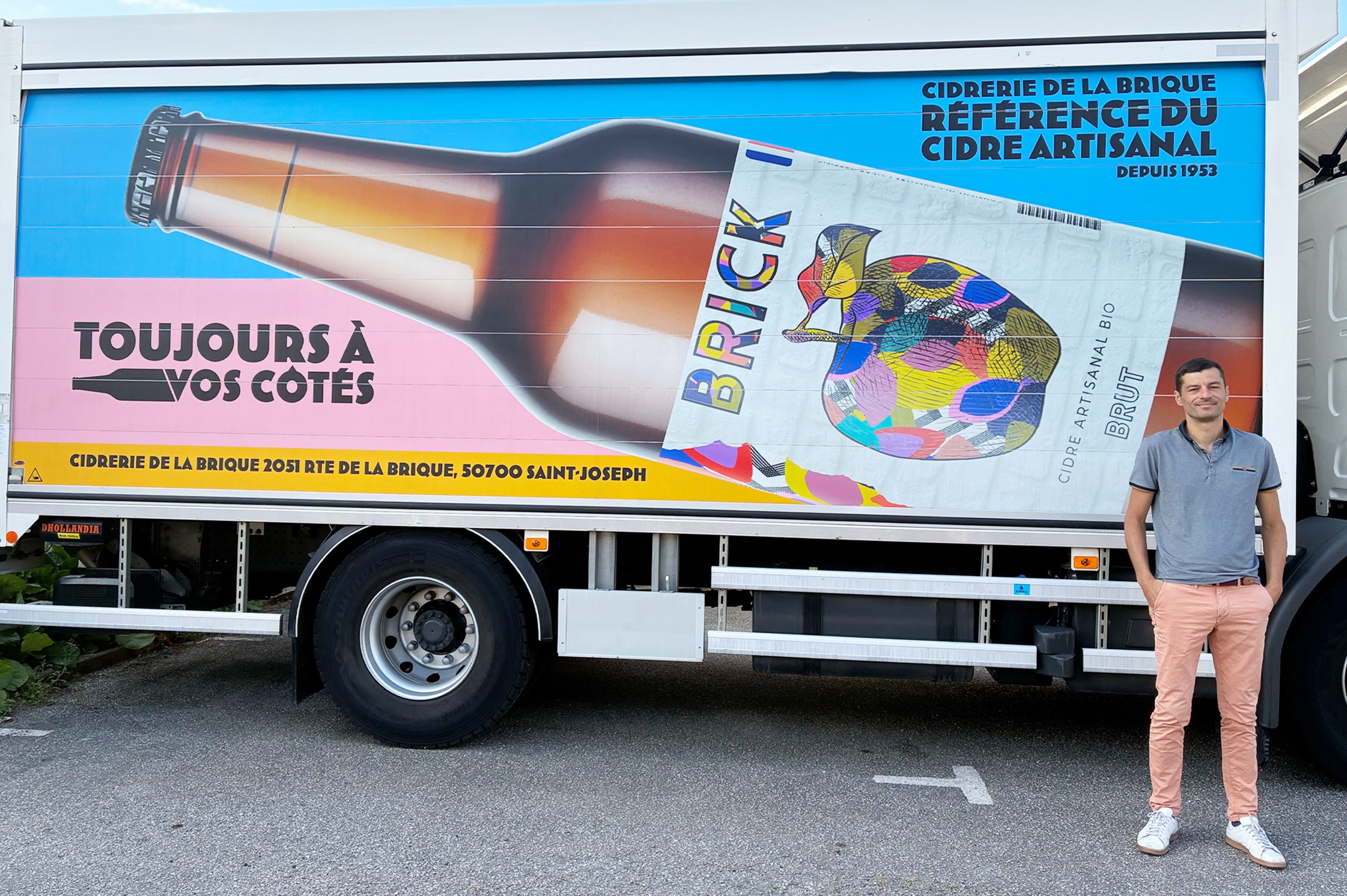
Cidrerie de la Brique is an independent, artisanal cider-making small business based in Normandy, producing approximately 1.3 million bottles per year from Normandy PGI cider apples. When it came time to renew its case marking equipment, the cider house invited bids from three suppliers and selected the KEYENCE CC-1000 Series High-Resolution Case Coder. Five months later, its director François Calandot noted a much sharper print, an interface that his small team can use without specialized skills, and, above all, no production downtime due to the coder.
In Summary
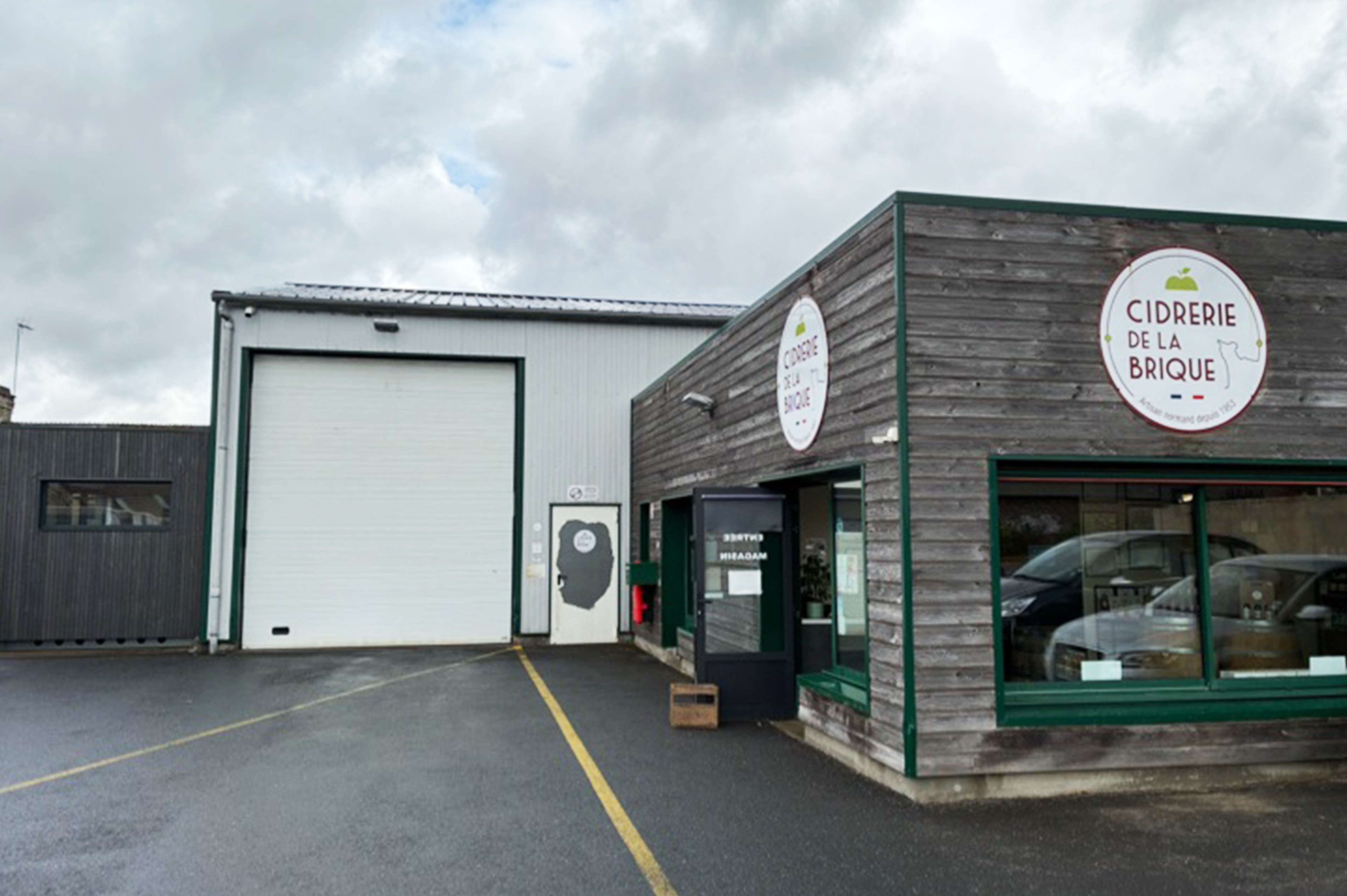
- Cidrerie de la Brique, an independent, artisanal cider house in Normandy, produces approximately 1.3 million bottles per year, nearly 90% of which is cider, supplemented by apple juice and apple spirits, with 80% sold in France and 20% exported.
- Its previous case coder frequently broke down and its software made importing a logo or image difficult for a team without a dedicated IT specialist.
- The cider house evaluated three suppliers and also considered a labeling machine, which was ruled out because applying an adhesive label to a case is risky in a humid building.
- An on-site trial convinced the team of the print quality; the compact footprint of KEYENCE’s CC-1000 was also well-suited to the available space.
- Five months after installation, the print is considered incomparable in sharpness and contrast, and a 5 × 4 cm illustrated visual stands out cleanly on the bottle packaging cases.
- Adding a logo costs little more than the ink, allowing the cider house to proactively mark its cases rather than only upon request.
ChallengeWhy was the previous coder slowing down the line?
Cidrerie de la Brique bottles about three days a week and ships in corrugated cardboard cases. In addition to its own cider, it also produces cider for other companies, and these orders leave the line in blank white cases, on which identification must be applied on site.
Two difficulties complicated this task. The first was reliability: the previous coder stopped often enough that service interventions became routine. The second was the software: importing a logo or image into the previous system was, according to the director, extremely complicated. This was a serious obstacle for a company where only two people manage IT in addition to their main jobs.
“To enter a logo or import an image, it was really very complicated. We don’t have any IT specialists on the team; there are only two of us managing these matters.”
There was also an environmental constraint. The production building can become humid, which ruled out labeling—a method better suited to a dry factory.
SelectionHow to choose between inkjet and labeling?
At the time of renewal, the cider house invited bids from three suppliers. It also seriously considered a completely different approach: labeling, as a much larger producer in the region does.
This option was ruled out for practical reasons. Sticking an adhesive label on corrugated cardboard in a humid environment was deemed too risky; direct printing avoids having to wonder if the label will hold.
“It was really about printing; sticking an adhesive label on a box was a bit risky in our environment.”
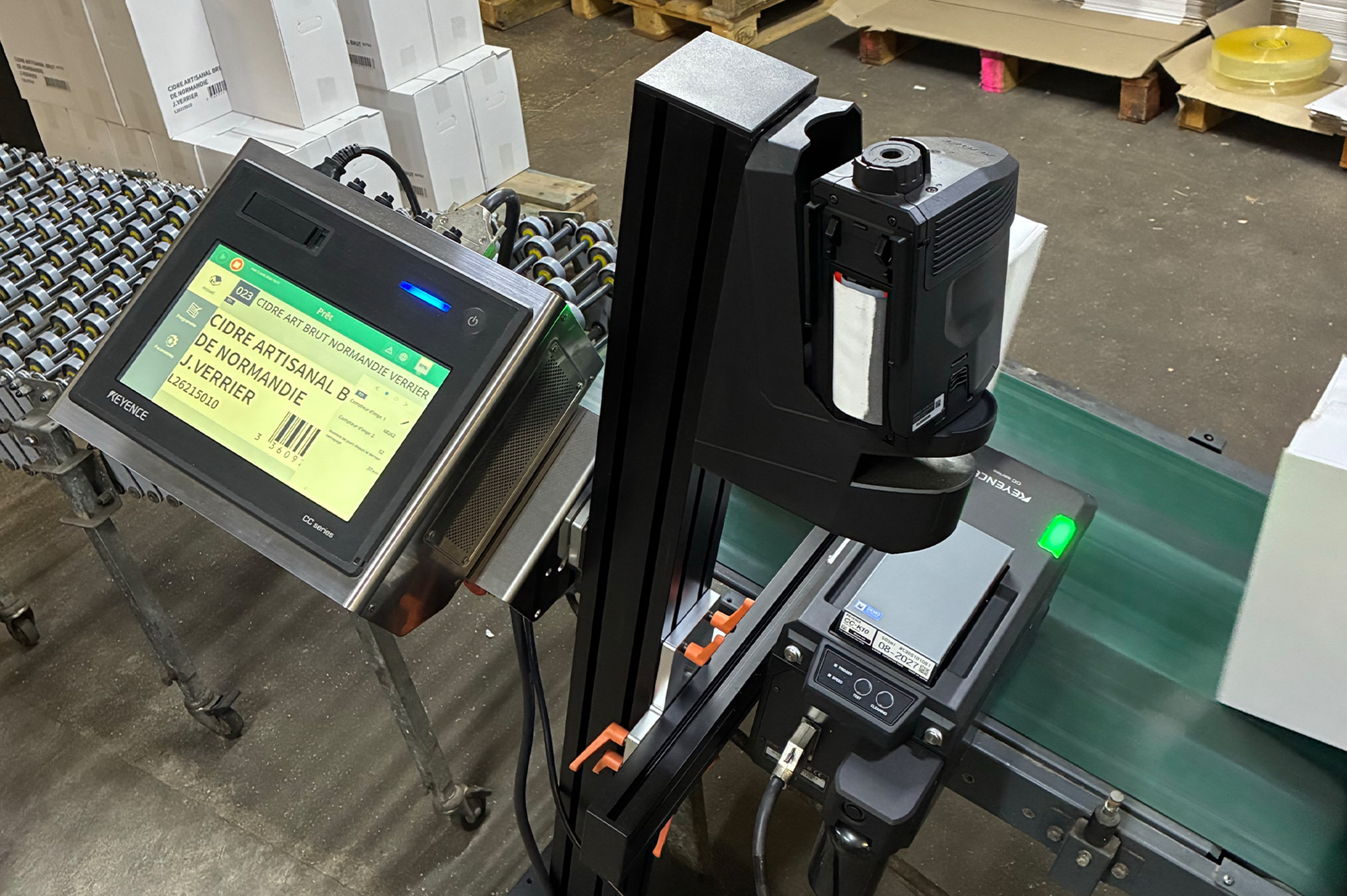
The decision was ultimately made based on a trial conducted on the cider house’s line. A KEYENCE representative came to run the test, and the result was conclusive. Two additional points carried weight: the machine’s small footprint, which is important in an old building, and the overall package of price, contract, and expected lifespan.
“And finally, we tried KEYENCE. A representative came to do a trial, and we found that it was really high quality.”
One concern remained before signing. Being somewhat out of the way, the cider house wanted to know if there were enough customers nearby for a technician to travel regularly in the area. Learning that KEYENCE already equips several food and dairy plants in Normandy and the Cotentin peninsula resolved this point.
ResultsWhat has changed with the CC-1000?
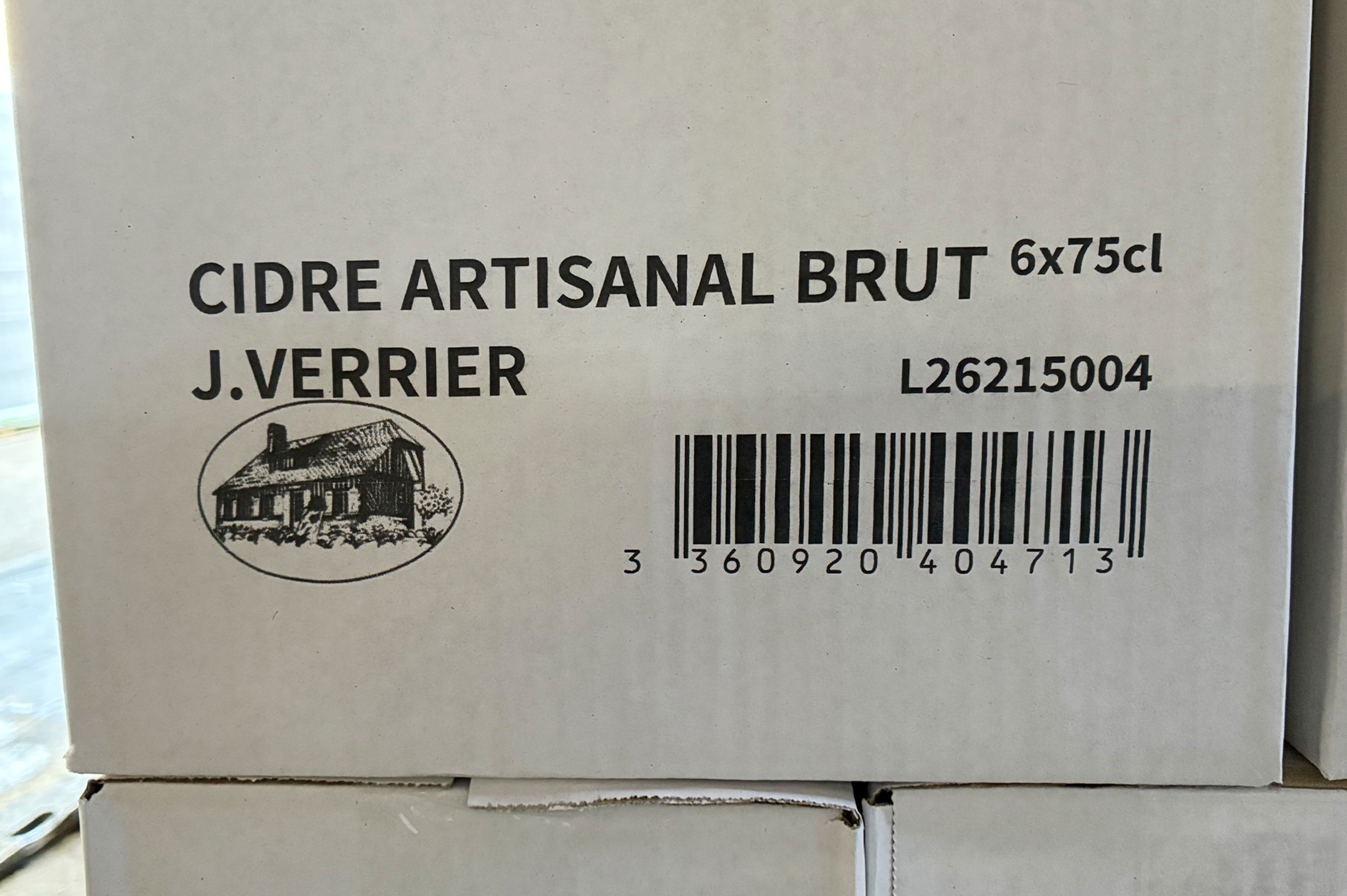
The most immediate difference is readability. The cider house prints an illustrated Norman cottage of about 5 × 4 cm on its cases, which is small enough that average print quality would be noticed immediately. With the CC-1000, the rendering is sharp.
“The print is much sharper. It’s incomparable in sharpness and contrast. The little Norman cottage drawn on the box is quite small—it must measure about 5 by 4 centimeters—but the logo is ultra-sharp.”
The second change concerns production continuity. The cider house has been using the CC-1000 for five months and has not had to stop because of the coder during this period. The director is careful to present this finding as a still-recent observation rather than a long-term verdict, but the contrast with the previous situation is clear.
Ergonomics have also improved, in a way that matters for a small team. The central console is simple enough for an operator to use, which removes the bottleneck that made changing visuals a specialist’s task.
“The KEYENCE interface, at least on the central console, is overall quite easy for an operator to use.”
There is also a commercial dimension. Since printing a visual adds practically nothing to the cost apart from the ink, the cider house can now mark the cases for contract production as a matter of principle, rather than as an option. Coming from a retail background, the director clearly sees the benefit: in a storeroom, a case with a legible logo is found much faster than a blank white case.
“If I can go a bit further without it costing me too much, and in this case it costs me nothing except a little ink, then I might as well do it!”
OutlookWhat are the next steps for the cider house?
According to the director, the cider house is not yet exploiting everything the system allows. Today, the cases carry a logo, a barcode, and identification, but there is still room to print more information as the team finds the time to rework its visuals.
“We put information, but we can put more information. There are plenty of things we don’t necessarily use, either because we don’t need them yet, or because we haven’t taken the time to do so.”
Marking batch numbers on glass bottles is the next priority.
Alcohol consumption is declining in France and worldwide, which makes the cider house cautious about future investments, although its range of apple juices partly offsets this. Sustainability is already a priority: the company generates very little waste, sends its apple pomace for anaerobic digestion and energy recovery, has solar panels on site, and uses practically no water except for cleaning the tanks.
Asked which sites he would recommend the CC Series to, he answers in one word.
“All of them, yes. Yes, you shouldn’t hesitate.”
Frequently Asked Questions (FAQ)
QWhy did Cidrerie de la Brique choose the KEYENCE CC-1000 over a labeling machine?
A
The production building can be humid, and sticking an adhesive label on a case in this environment was deemed risky. Direct printing with the CC-1000 Series High-Resolution Case Coder eliminates the question of label adhesion, since the marking is applied directly to the corrugated cardboard.
QWhat problems did the CC-1000 solve compared to the previous case coder?
A
The previous equipment broke down frequently, and its software made importing a logo or image very complicated. Since installing the KEYENCE CC-1000, the cider house has been operating for five months without any coder-related downtime, and the print quality is described as incomparable in sharpness and contrast.
QCan the KEYENCE CC-1000 be used without an IT specialist?
A
Yes. At Cidrerie de la Brique, only two people manage IT in addition to their other duties, and the director indicates that the interface of the CC-1000’s central console is generally quite easy for an operator to use, a clear change from the previous system, where importing visuals was a real obstacle.
QWhat does Cidrerie de la Brique print on its cases with the CC-1000?
A
For contract production, the cider house receives blank white cases. With the CC-1000, it prints the customer’s logo, a barcode, and product identification on them. A visual of a Norman cottage of about 5 × 4 cm is reproduced clearly enough to be easily spotted in a storeroom.
QDoes adding logos with the KEYENCE CC-1000 increase packaging costs?
A
According to the director, printing an additional logo costs practically nothing, except for a little ink. This is what makes it possible to proactively add branding to the cases, and not just at the customer’s request.
QWhich sites would Cidrerie de la Brique recommend the KEYENCE CC Series for?
A
When asked which cider houses or factories he would recommend it to, the director simply answers: all of them. He notes that the company has only been using the system for five months and probably has not yet exploited all of its possibilities.