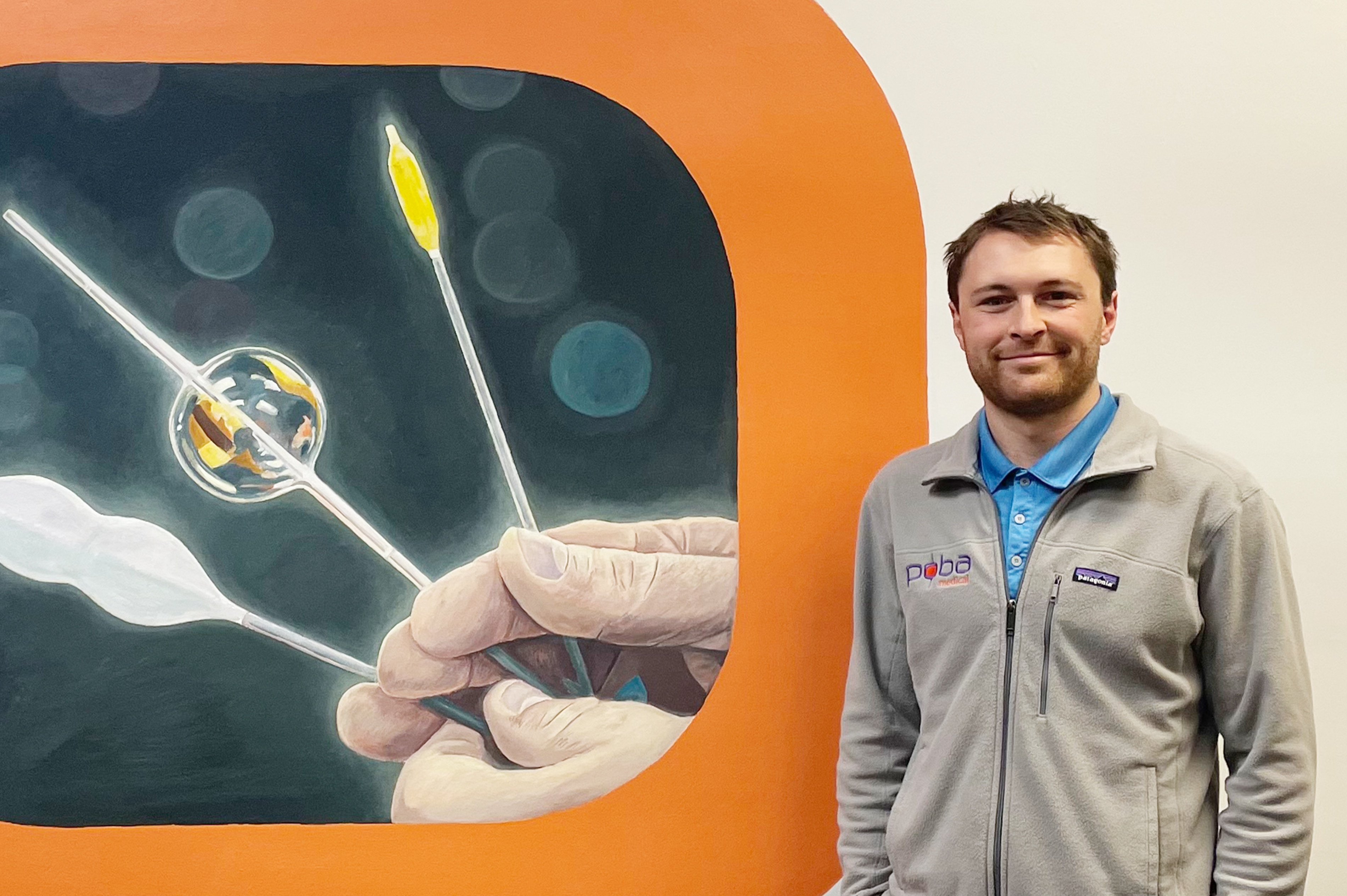
POBA Medical Inc. (POBA Medical) manufactures medical balloon components for medical device companies and is expanding into catheter based products. To inspect complex balloon geometries with confidence, the company introduced the KEYENCE TM-X Series telecentric measurement system. A measurement and calculation loop that took nearly an hour now takes about 5 minutes, tightening the feedback loop between process engineering and quality control.

Key points
- POBA Medical is a contract manufacturer of medical balloon components commonly utilized in catheters. They also manufacture full assembly catheter based medical devices in addition to their balloon products.
- Complex geometries and compliant balloons, which are challenging to inspect, called for measurements that are repeatable for every member of a growing QC team.
- The KEYENCE TM-X Series looks at hard to measure locations, including angles, and displays the results automatically.
- Nearly an hour to about 5 minutes: the time for measuring and calculating the same quantity of balloons.
- Lot release criteria are being developed on the TM-X, with sampling in line and customer-defined AQL sampling plans.
- Position correction that finds the part anywhere in the field of view without precise fixturing was the "wow" moment of the demonstration.
What does POBA Medical manufacture?
Contract manufacturing of balloon components is the core of POBA Medical's business. The company supplies medical balloons to manufacturers that develop balloon catheters, and these customers often process the balloons further into systems such as stent delivery systems or drug delivery systems.
The company is now broadening that capability. While remaining a contract manufacturer, it has moved into more finished medical device components, not just balloons. Patrick Norris, VP of Engineering, sums up the direction:
"[Our] core business has been balloons, but we now offer full med device contract manufacturing."
ChallengeWhy did complex balloon geometries call for a new way to inspect?
POBA Medical has measured its balloons with tools such as micrometers and vision-based caliper systems, and it still uses these techniques for its simpler products. Patrick Norris is clear that this approach continues to serve many customers well. The change came with a different kind of product.
"When we're moving into a lot more of these complex geometries, we had to level up because we had to have a way to inspect them. And so that's where the TM-X has come into play for us."
Two requirements stood out: complex geometry and repeatability. Compliant balloons are made of a flexible material system that are challenging to measure, which makes consistent measurement difficult. The company also needed results that would not depend on operator tenure and expertise with the instruments.
"We needed something that was more repeatable for less experienced operators as we bring in more and more folks to our QC team and grow as a company."
Angles were a particular challenge. Specifying or verifying an angle on a complex balloon meant measuring several lengths and back-calculating the angle by hand, with a lot of math along the way.
SelectionWhy did POBA Medical choose the KEYENCE TM-X Series?
The KEYENCE team brought the TM-X and other instruments to POBA Medical's facility for demonstrations. Gathered in the conference room, the POBA Medical team saw how quickly the TM-X picked up measurements. Jakob Walz particularly valued being able to set a tolerance on each measurement tool in the TM-X software.
"It all just was really pointing in the right direction when we saw."
The moment that made the biggest impression was position correction. The TM-X finds the part wherever it is placed in the field of view, so precise fixturing is not required.
"When you move your part in the position correction and it picks it up everywhere without hesitation, I think that was the wow factor. I was like, 'There's no way. We're going to have to fixture it perfectly' and [the system] really compensates for a lot of that."
ResultsHow has the TM-X changed balloon inspection and process development?
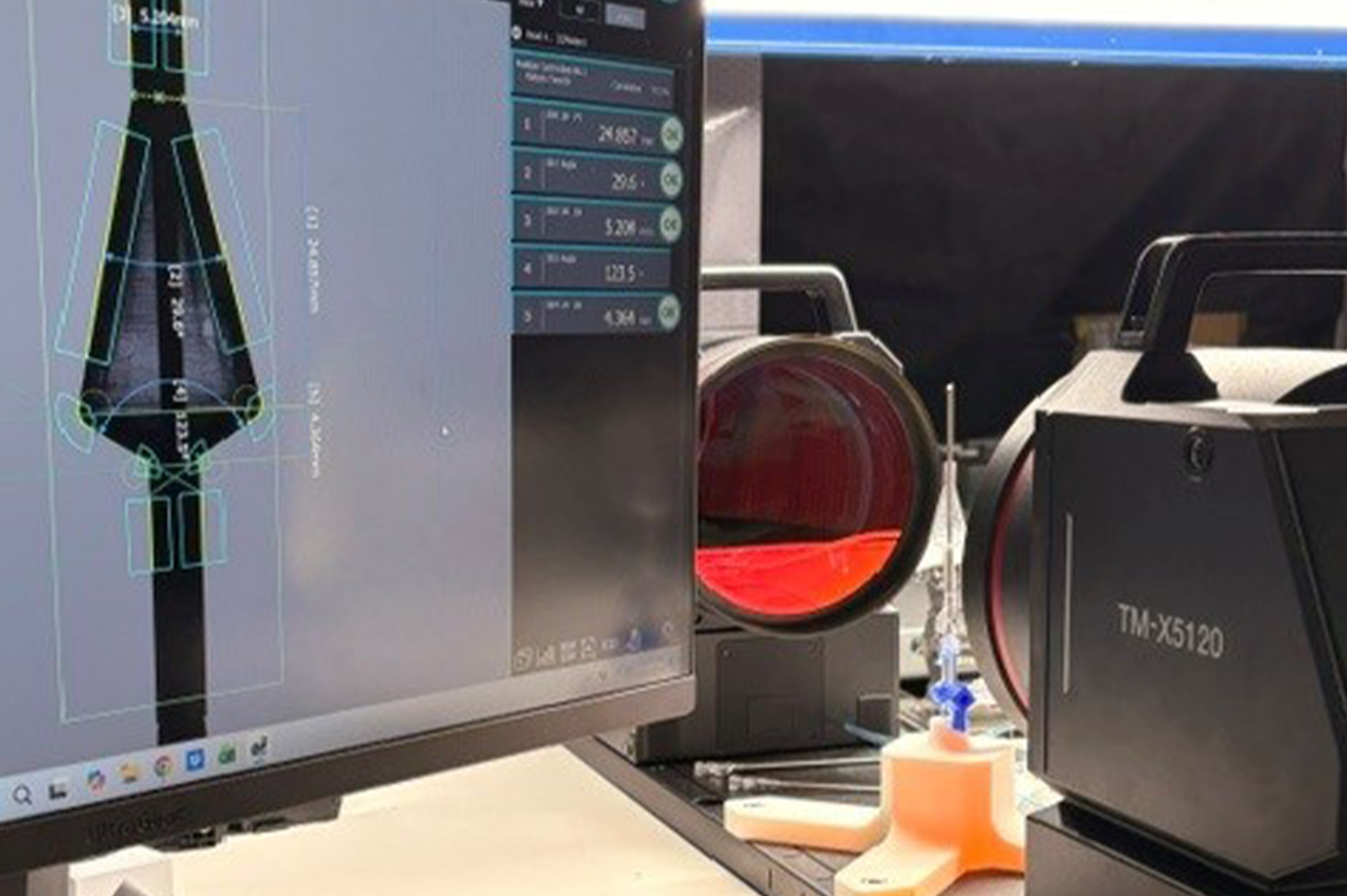
The TM-X is used offline, outside the cleanroom. It is not tied to a single project: the instrument moves between products, and the team switches easily between measurement programs for different balloons. Jakob Walz programs the TM-X to find the locations to measure, and the instrument then displays everything the team needs to see, including angles.
For this interview, Jakob Walz worked out the numbers together with the company's quality control lead. Collecting all the data points used to take her about half an hour. She then would have to pass the data to him, he would calculate the angles, and he would give her the final results to add to their data tracking file.
"It's cut that an almost hour-long process down to 5 minutes for the same quantity of balloons that we need to test. And so that just really tightens the feedback loop between process engineers in the cleanroom and quality control."
With faster feedback, the team can adjust and develop its processes more quickly and with a higher degree of certainty that it is moving in the right direction. The time saved goes into developing more programs to measure different balloons.
The TM-X also supports quality assurance toward customers. POBA Medical is developing lot release criteria on the TM-X, with interval sampling within production lots based on customer-defined AQL sampling plans. Customers care about the angles and lengths of their balloons, and the company works with each customer on how measurements are made so that both sides agree on how the specification is met.
"This makes it really easy for us to say, 'This is super automated and we have a lot of faith in the measurements that we're giving them.'"
Jakob Walz, who started in process engineering and now leads balloon production, has a background in polymer science and leads much of the hands-on work with the TM-X.

SupportWhat do usability, support and the KEYENCE brand mean to the team?
Patrick Norris has seen many measurement techniques over his career, from optical comparators to calipers. He describes the TM-X as a pretty advanced piece of equipment and has been impressed by what the team can do with it. For Jakob Walz, that capability comes without a cost in usability.
"Even for how advanced the instrument is, it doesn't take away from the usability. We get to learn every day, and I find I can navigate it quite smoothly."
Support has been close at hand. A local KEYENCE sales engineer based nearby visits the facility and spends time with the team on the machine.
"I really feel like we're working together on this stuff, and I think we've solved some meaningful issues that we've come across."
The KEYENCE name also matters to the company. As Patrick Norris puts it:
"It's not like we're using something unknown, we're using something that's industry standard."
OutlookWhere is POBA Medical heading next?
POBA Medical continues to build its capability toward contract manufacturing of more finished medical devices, and the team is still learning how to get the most from the TM-X. For the company, the value lies in fast, confident go/no-go feedback on complex balloons, while conventional tools continue to serve its simpler products.
"And that is really the value for us."
Frequently asked questions (FAQ)
QWhat does POBA Medical use the KEYENCE TM-X Series for?
A
POBA Medical, a contract manufacturer of medical balloon components, uses the TM-X to measure complex balloon geometries, including angles and lengths that its customers specify. The measurements are part of the lot release criteria it is developing, with sampling within production lots.
QWhy did POBA Medical need the KEYENCE TM-X Series for complex balloons?
A
As the company moved into more complex geometries, it needed a repeatable way to inspect them. Compliant balloons are flexible and do not hold their shape well, and measurements had to stay repeatable for less experienced members joining the growing QC team, not only for experienced operators.
QHow much time does the KEYENCE TM-X save in balloon inspection at POBA Medical?
A
Collecting the data points used to take the quality control lead about half an hour, after which a process engineer would calculate the angles by hand. That process of nearly an hour now takes about 5 minutes for the same quantity of balloons, because the TM-X measures the programmed locations and displays the results automatically.
QWhy did POBA Medical choose the KEYENCE TM-X Series?
A
In demonstrations at its facility, the team saw how quickly the TM-X picked up measurements and valued being able to set tolerances on each measurement tool in the software. The position correction, which finds the part anywhere in the field of view without precise fixturing, made a particularly strong impression.
QIs the KEYENCE TM-X easy to use for a team that is new to it?
A
Yes. POBA Medical describes itself as rapidly increasing capability, and finds it can navigate the software smoothly. Switching between measurement programs for different balloons is easy, which suits an instrument that moves between many products.
QWhat support does KEYENCE provide for the TM-X at POBA Medical?
A
A local KEYENCE sales engineer based nearby visits the facility and works with the team on the machine. POBA Medical says it feels like the two companies are working together and that they have solved meaningful issues along the way.