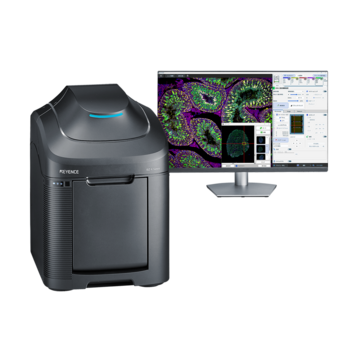
Point Scanning Confocal vs. Spinning Disk Confocal
Spinning disk confocal microscopes and point scanning confocal microscopes are two advanced imaging technologies that provide high-resolution imaging but are designed for different applications. Spinning disk systems use multiple pinholes to capture images rapidly, making them ideal for live-cell imaging and dynamic processes with minimal photobleaching. Point scanning confocal microscopes scan one point at a time, delivering higher resolution, greater imaging flexibility, and improved quantitative analysis for detailed research. Understanding the strengths and limitations of each technology helps users choose the right confocal microscope for their imaging needs.
Key Takeaways
- Point scanning confocal microscopes deliver higher resolution and greater imaging precision for detailed analysis and quantitative measurements.
- Spinning disk confocal microscopes provide high-speed image acquisition, making them ideal for live-cell imaging and fast biological processes.
- Confocal microscopes have unique advantages depending on factors such as imaging speed, sample type, depth, and application requirements.
- Spinning disk systems reduce photobleaching and phototoxicity, making them well suited for imaging sensitive or living specimens over time.
- Point scanning confocal systems capture the highest quality image and are ideal for thick samples and where cleaner images are needed.
Researchers frequently discover that the choice between a spinning disk confocal microscope and a point scanning confocal microscope depends on what they are photographing and how quickly it moves. Point scanning technologies create an image one point at a time, which takes more time but yields cleaner data and greater detail for quantitative work. To keep up with living cells and rapid biological activities without overheating the sample, spinning disk devices scan many spots simultaneously.
What Is a Spinning Disk Confocal Microscope?
A physical disk filled with small pinholes that rotates quickly between the light source and the sample is the basis of the name "spinning disk confocal microscope." The technology records frames so fast because thousands of locations are lit and read nearly simultaneously as the disk rotates. The disk allows several spots to operate simultaneously rather than waiting for a single laser to cover the whole field.
For anybody researching mobility, this design truly makes a difference. A camera that can capture thousands of frames per second is useful for capturing creatures wiggling beneath the lens, proteins moving, or cells dividing. Samples also hold up better over extended imaging sessions because the light exposure per point remains modest. By the conclusion of the experiment, researchers using spinning disk confocal microscopes for extended periods of time typically observe less photobleaching and healthier cells.
What Is a Point Scanning Confocal Microscope?
A point scanning confocal microscope works differently. A single laser beam rasters across the sample one pixel at a time, guided by mirrors. A pinhole blocks any light that isn't coming from the exact focal plane, which is what gives confocal imaging its signature clarity and sharp optical sectioning.
Particularly in thick or heavily labeled materials where scattered light might usually obscure the image, a point scanning confocal microscope often yields clearer, higher-resolution images. It just takes longer to construct an entire image with this method, but the image is higher-resolution compared to the faster method used by spinning disk confocal microscopes.
Spinning Disk Confocal Microscope vs. Point Scanning Confocal: Key Differences
Imaging Speed and Throughput
The most noticeable distinction between the two technologies is their speed. A spinning disk device can record video-rate imagery, dozens of frames per second, since it reads so many places at once. That throughput is important when you're imaging something that won't sit still, such as a swimming embryo. This also preserves the sample by limiting exposure.
A point scanning system moves slower. . Scanning pixel by pixel across a large field takes time, and that time multiplies if you're capturing a Z-stack through a thick sample. For static or fixed specimens, this rarely matters, but for anything living and moving, the wait can mean missing the event entirely. Although this system is slower and will photobleach the sample more, the image quality is much better.
Resolution, Sensitivity, and Image Quality
Resolution presents an alternative narrative. A point scanning confocal microscope usually resolves better detail and has less background haze since it concentrates all of its power on one area before moving on, especially in materials with a lot of depth. While spinning disk systems are quick, they capture information from many pinholes simultaneously, which can cause more blur, particularly in thick or densely labeled tissue.
Sensitivity partially reverses the comparison. Dim fluorescent signals in living cells are well suited for spinning disk cameras, which are designed to detect extremely low light levels. Longer dwell times can be compensated for by point scanning systems, but this method isn't always feasible when the sample is moving or delicate.
Advantages of Spinning Disk Confocal Microscopes
Speed is the headline benefit, but it isn't the only one. Because each point receives less cumulative light exposure, spinning disk confocal microscopes cause noticeably less photobleaching and phototoxicity. That's a real advantage for anyone tracking a live specimen over minutes or hours, since a stressed or damaged cell stops behaving like a normal one.
Multicolor imaging also tends to run smoothly on these systems, since fast acquisition lets researchers switch channels without losing much time. Labs studying dynamic processes such as intracellular transport, embryonic development, or neural activity generally lean toward spinning disk setups because the technology was built with exactly that kind of work in mind. For teams exploring fluorescence-based imaging more broadly, KEYENCE's fluorescence microscope lineup offers tools suited to a range of live and fixed sample work.
Advantages of Point Scanning Confocal Microscopes
The accuracy of a point scanning confocal microscope is superior to that of a spinning disk device. Thick samples pass through with far less haze, background noise is reduced, and optical sectioning is clearer. Because of this, it is an excellent option for anybody performing meticulous measuring tasks, such as counting structures, tracing minute details, or creating an intricate 3D reconstruction from a Z-stack.
Flexibility is another point in its favor. Because the pinhole size and scan parameters can be adjusted independently, researchers can fine-tune the system for a specific sample rather than accepting a fixed setup. Pathology labs, structural biology researchers, and anyone working with dense or highly labeled tissue often find that the extra time spent scanning is worth the payoff in image quality. Systems like the BZ-X1000 show how far fluorescence-based confocal imaging has come for labs that need both flexibility and detail.
Choosing the Right Confocal Microscope for Your Application
Choosing between these boils down to a few pragmatic considerations. What samples are you imaging? Fixed or thick specimens prefer point scanning; live, moving samples prefer spinning disks. How much information is required? The greater resolution of point scanning is typically required for quantitative measurements and precise structural work.
Workflow and budget are also important; many laboratories run both and decide based on each experiment. Speaking with an expert about your particular samples typically makes things clearer more quickly than relying only on specifications. There is just a better fit for what you are attempting to learn; there is no right or incorrect solution.
Frequently Asked Questions
Q What is a point scanning confocal microscope?
A
It's a microscope that scans a single laser point across a sample to build an image, using a pinhole to block out-of-focus light and produce sharp, detailed results.
Q What are the differences between spinning disk and point scanning confocal microscopes?
A
Spinning disk systems scan many points at once for speed, while point scanning systems scan one point at a time for higher resolution and cleaner detail.
Q Which confocal microscope is better for high-speed imaging?
A
Spinning disk confocal microscopes are generally the better choice, since their parallel scanning approach captures fast-moving events at video-rate speeds.
Q What confocal microscope is better for capturing high-resolution images?
A
Sharper resolution and less background noise are often obtained using a point scanning confocal microscope, especially in thick or heavily labeled materials.
Q What confocal microscope is better for live cell imaging?
A
Spinning disk systems tend to work best for live cells, since their lower light exposure per point reduces photobleaching and keeps specimens healthier over time.
Q How does a point scanning confocal microscope work?
A
A laser beam sweeps across the sample point by point while a pinhole filters out unfocused light, and the collected signal is assembled into a detailed image.