Poka Yoke Manufacturing or Barcode Scanning: Making the Right Choice for Quality Control
Defective parts create major consequences in manufacturing environments. Studies show visual inspection catches only 80-90% of defects, and even 100% inspection protocols fail to achieve perfect results. A single defective component can trigger customer rejection of entire production batches, while critical assembly errors may lead to recalls that get pricey and run into millions.
Two main approaches address part mix-up prevention and assembly line quality control: poka yoke manufacturing and barcode scanning systems. Poka yoke relies on physical error proofing in manufacturing through design features that prevent incorrect assembly. Barcode readers to verify parts use digital tracking and confirm component accuracy. Each method offers unique advantages for manufacturing inspection and verification, including different cost structures and implementation requirements.
This piece gets into both approaches and helps plant and quality engineers determine which solution fits specific production environments.
What is Poka Yoke and How Does It Work
Poka yoke translates from Japanese as "mistake-proofing". The core philosophy recognizes that human errors remain inevitable, but defects do not have to be. Poka yoke manufacturing designs processes, tooling and fixtures to make incorrect assembly impossible or obvious instead of relying on inspection to catch defects after waste has been created.
The approach addresses a fundamental limitation: visual inspection catches only 80-90% of defects, and fatigue, distraction and monotony degrade detection accuracy. Poka yoke devices achieve what inspection cannot by preventing errors at the source. Shingo classified these methods into three categories based on how they prevent or detect errors.
Contact Method for Part Verification
Contact-based poka yoke uses physical features such as shape, size or position to prevent incorrect assembly or processing. Asymmetric guide pins on fixtures allow parts to load in only one orientation; the component cannot seat if positioned backward. Go/no-go gauges check dimensional conformance through physical contact and eliminate measurement interpretation requirements. Keyed connectors in electrical assemblies prevent wrong wire harnesses from being connected.
Fixed-Value and Motion-Step Methods
Fixed-value methods ensure the correct number of parts, fasteners or actions are completed. Parts kitting trays with compartments for exactly the number of fasteners needed for one assembly reveal missed steps when components remain unused. Counting sensors on feeders verify the correct number of components were dispensed before proceeding.
Motion-step methods ensure operations occur in the correct sequence. Sequential light guides light up the next bin during assembly and ensure proper component order. PLC-controlled fixtures lock in position until the current operation is verified complete, which prevents operators from skipping steps.
What is Barcode Scanning and How Does It Work
Barcode scanning operates through optical scanners that decode data encoded in patterns of bars and spaces. The scanner emits a light beam or captures an image of the barcode, analyzes reflected light to identify the pattern, and translates it into a digital signal sent to a computer for processing. This automation speeds up data collection compared to manual entry methods.
Barcodes track raw materials, work-in-progress inventory, finished goods, equipment usage, and production batches in manufacturing environments. One-dimensional barcodes like UPC and Code 128 consist of parallel lines encoding limited data. Two-dimensional formats such as QR codes and Data Matrix store more information in compact spaces and maintain readability even when partially damaged. Fixed industrial and handheld barcode readers track items through the manufacturing process and into distribution to maintain process and product traceability.
Manual vs Automatic Barcode Readers
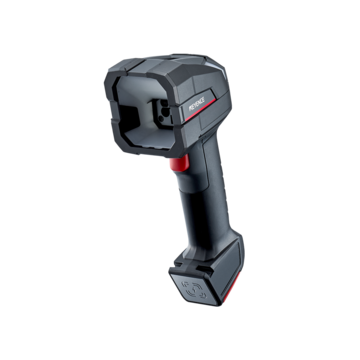
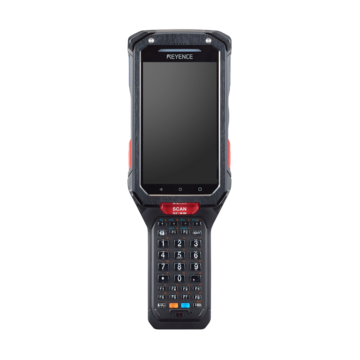
Handheld scanners allow workers to move freely and scan items wherever needed, making them suitable for receiving, cycle counting, and quality inspections. Workers carry these devices to scan materials at docks rather than bringing items to fixed terminals.
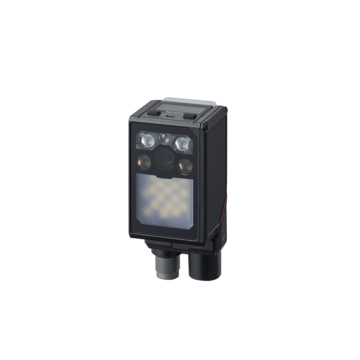
Fixed-mount scanners attach to conveyor lines, doorways, or workstations. Items pass through the scanner's field of view and capture barcode data without manual intervention. Fixed scanners offer consistency for high-volume operations, while handheld units provide versatility for smaller operations.
Up-to-the-Minute Data Tracking Capabilities
Barcode systems connect to central databases through wired or wireless networks. Every scan updates inventory records visible throughout the organization right away with up-to-the-minute connectivity. Scanners feed data into inventory management or ERP systems and update stock levels and production status without manual data entry.
Contact KEYENCE to learn more about barcode scanning solutions that blend with your existing production systems.
Key Differences Between Poka Yoke and Barcode Scanning
Prevention vs Detection Approach
Poka yoke in manufacturing operates on prevention principles and designs systems where errors cannot occur physically. The process blocks incorrect actions at the source before defects form. Barcode scanning functions as a detection mechanism that verifies part selection after the operator makes a choice. The difference is this: prevention shapes processes so mistakes are impossible, while detection identifies mistakes after they happen.
Cost Analysis: Original Investment and Operating Expenses
Physical poka yoke devices range from minimal investments for simple solutions like guide pins to substantial expenses for complex automation. Many effective implementations use low-cost fixtures built in-house from simple materials. Barcode systems need scanner hardware, software licensing, label printing infrastructure and network connectivity. Pick-to-light systems that combine visual guidance with barcode verification carry higher implementation costs due to indicator hardware and rack modifications.
Effectiveness in Part Mix-Up Prevention
Human cognitive limitations create error patterns you can predict: memory lapses, oversights from information overload and mistakes mixing parts that look similar. Poka yoke eliminates these errors through physical constraints that make wrong selections impossible. Barcode scanning reduces transcription errors but depends on operators scanning the correct item. Manual barcode verification adds labor to each transaction.
Integration with Existing Production Systems
Poka yoke implementation requires production process analysis, error identification and control mechanism design. Integration with legacy equipment may demand fixture modifications and work practice changes. Barcode systems need compatibility with existing ERP platforms, database structures and network infrastructure.
Training and Skill Requirements
Poka yoke devices need original training but become self-evident through physical design. Operators adapt to error-proof fixtures through use. Barcode scanning demands training for proper scanning techniques, exception handling and system navigation.
Making the Right Choice for Your Manufacturing Process
When Physical Error Proofing Makes Sense
Poka yoke in manufacturing proves most effective in manual operations that require heightened alertness or in situations where errors early in production cause downstream problems. Safety-critical assembly steps where mistakes create hazardous conditions just need physical prevention. Environments with high operator turnover benefit from error-proof fixtures that reduce training requirements. Incorrect component placement causing defects responds well to contact-method verification.
When Digital Part Verification Systems Are Better
Barcode scanning excels in situations where traceability requirements extend across supply chains and regulatory frameworks. Data-entry error reduction becomes critical. Skilled operators make one mistake per 300 keystrokes, while barcodes reduce this to one error per million. Manufacturing operations with thousands of inspection programs benefit from instant program retrieval through barcode scanning. Documentation proving material batch, operator, and equipment identity matters for recalls. Barcode systems provide the audit trails to be done.
Hybrid Approaches for Assembly Line Quality Control
Combining poka yoke principles with pick-to-light systems creates resilient error prevention. Light indicators guide operators to correct parts while physical features prevent incorrect assembly. This integration addresses selection errors and assembly sequence mistakes.
Decision Framework Based on Production Volume
High-volume manufacturing just needs automated error detection. Consistency challenges multiply at scale. Low-volume production changes quality responsibility to operators as in-process inspectors, where physical poka yoke guides correct execution. Contact KEYENCE to learn more about barcode scanning solutions that adapt to production volumes of all types.
Poka Yoke Manufacturing vs Barcode Scanning
| Attribute | Poka Yoke Manufacturing | Barcode Scanning |
|---|---|---|
|
Core Philosophy
|
Poka Yoke Manufacturing
Mistake-proofing through design; makes errors physically impossible or obvious right away
|
Barcode Scanning
Digital tracking and verification confirm component accuracy after selection
|
|
Main Approach
|
Poka Yoke Manufacturing
Prevention - blocks incorrect actions at the source before defects form
|
Barcode Scanning
Detection - verifies part selection after the operator makes a choice
|
|
Mechanism
|
Poka Yoke Manufacturing
Physical features (shape, size, color, position), fixtures, and design constraints
|
Barcode Scanning
Optical scanners decode data patterns and connect to central databases
|
|
Main Methods
|
Poka Yoke Manufacturing
Contact method (physical features), Fixed-value (correct quantity), Motion-step (correct sequence)
|
Barcode Scanning
Manual handheld scanners and automatic fixed-mount scanners
|
|
Error Prevention Capability
|
Poka Yoke Manufacturing
Physical constraints make wrong selections impossible and eliminate errors
|
Barcode Scanning
Transcription errors decrease but operators must scan the correct item
|
|
Original Investment
|
Poka Yoke Manufacturing
Ranges from minimal for simple solutions (guide pins) to substantial for complex automation; many implementations use low-cost fixtures built in-house
|
Barcode Scanning
Scanner hardware, software licensing, label printing infrastructure, and network connectivity are all required
|
|
Operating Expenses
|
Poka Yoke Manufacturing
Ongoing costs remain low after the original implementation
|
Barcode Scanning
Software licensing, label printing, and network maintenance continue as ongoing expenses
|
|
Training Requirements
|
Poka Yoke Manufacturing
Original training required but devices become self-evident through physical design; operators adapt through use
|
Barcode Scanning
Proper scanning techniques, exception handling, and system navigation need ongoing training
|
|
Integration Complexity
|
Poka Yoke Manufacturing
Production process analysis, error identification, control mechanism design are all required; fixture modifications and work practice changes may be needed
|
Barcode Scanning
Compatibility with existing ERP platforms, database structures, and network infrastructure is necessary
|
|
Data Tracking
|
Poka Yoke Manufacturing
Digital tracking or traceability is not provided
|
Barcode Scanning
Database updates happen with immediate connectivity; audit trails for recalls are provided
|
|
Best Use Cases
|
Poka Yoke Manufacturing
Manual operations that need heightened alertness; safety-critical assembly; high operator turnover; prevention of incorrect component placement
|
Barcode Scanning
Traceability in supply chains; regulatory compliance; operations with thousands of inspection programs; documentation requirements
|
|
Dependency on Human Action
|
Poka Yoke Manufacturing
Minimal - physical design prevents errors without human intervention
|
Barcode Scanning
Moderate - operators must scan the correct item and follow system prompts
|
|
Scalability
|
Poka Yoke Manufacturing
Low-volume production benefits most where physical poka yoke guides correct execution
|
Barcode Scanning
High-volume manufacturing with automated error detection at scale is where this excels
|
|
Documentation Capability
|
Poka Yoke Manufacturing
Digital records are not created
|
Barcode Scanning
Proof of material batch, operator, and equipment identity is provided for regulatory purposes
|
|
Hybrid Potential
|
Poka Yoke Manufacturing
Pick-to-light systems can be combined with this for boosted error prevention
|
Barcode Scanning
Poka yoke principles can be integrated to address both selection and assembly errors
|
Conclusion
The choice between poka yoke and barcode scanning depends on your specific production requirements. Physical error proofing excels at prevention through design and makes mistakes impossible before they occur. Barcode systems provide digital verification and traceability to meet regulatory compliance and supply chain visibility.
Manufacturers find success by matching the approach to their needs:
- Choose poka yoke when safety-critical assembly and high-turnover environments are your priority
- Select barcode scanning when documentation and traceability drive quality requirements
- Think over hybrid systems that combine both approaches to achieve detailed quality control
Your production volume, regulatory requirements, and error types will guide the final decision.
FAQs
Q What are the three main methods used in poka-yoke error proofing?
A
Poka-yoke uses three primary methods: contact method (which uses physical features like shape, size, or position to prevent incorrect assembly), fixed-value method (which ensures the correct number of parts or actions are completed), and motion-step method (which ensures operations occur in the correct sequence). These methods work together to prevent errors at the source rather than detecting them after they occur.
Q What are the main challenges when implementing poka-yoke systems?
A
The primary challenges include initial resistance to change from employees or decision-makers, the need to justify investment in new processes, and the time required to implement and realize benefits. Additionally, integration with existing production systems may require fixture modifications and changes to established work practices, which can create temporary disruptions during the transition period.
Q How does barcode scanning reduce errors compared to manual data entry?
A
Barcode scanning dramatically reduces data-entry errors by eliminating manual transcription. While skilled operators make approximately one mistake per 300 keystrokes during manual entry, barcode systems reduce this error rate to about one per million scans. This automation speeds up data collection and ensures greater accuracy in tracking materials, inventory, and production batches.
Q When should manufacturers choose poka-yoke over barcode scanning?
A
Poka-yoke is the better choice for safety-critical assembly steps where mistakes could create hazardous conditions, environments with high operator turnover that benefit from self-evident error-proof fixtures, and situations where incorrect component placement early in production causes downstream problems. It's most effective when physical prevention of errors is more important than digital documentation.
Q Can poka-yoke and barcode scanning be used together?
A
Yes, combining both approaches creates a hybrid system that offers comprehensive quality control. For example, integrating poka-yoke principles with pick-to-light systems and barcode verification addresses both selection errors and assembly sequence mistakes. Light indicators guide operators to correct parts while physical features prevent incorrect assembly, and barcode scanning provides the necessary traceability and documentation.