Why Continuous Static Monitoring Is Critical for OEE in Modern Manufacturing
Overall equipment effectiveness (OEE) is frequently presented as an expression of production health. Availability, performance, and quality are calculated and reviewed as a single percentage that is intended to reflect how effectively assets are being utilized. In more advanced production environments, OEE analyzes data, like status changes, cycle performance, and quality signals. This is conducted via machine controllers, production software, and machine sensors installed directly on the equipment.
The integrity of OEE, however, depends on the completeness of the variables being measured. When a factor influences uptime, speed, stability, or yield but is not directly captured within the production data model, its impact can be recorded without attribution.
Within this context, static electricity and OEE not only affect material behavior, but also how production data is recorded. A continuous static monitoring system introduces electrostatic behavior to the same analytical framework that governs performance and quality. Overall, this reduced the likelihood that losses are logged without their root cause as a visible element.
The Hidden Impact of Static Electricity on Production Performance
Static electricity builds up whenever materials contact and separate, particularly when one of the materials is an insulator. This is commonly seen in films moving across rollers and molded plastic components, leaving their tooling areas, as well as powders transferring through hoppers and operators moving across the floor. All of these actions generate static electricity. In lower humidity environments, that charge persists and can rise to significant voltage levels.
The operational impact of static electricity is rarely a one-off or occurs in a single instance. Instead, these charges build up over time, sometimes slowly. Charged surfaces attract airborne particles that degrade coating quality. If there is an electrostatic discharge into a sensitive circuit, it can shorten that component's life without immediate failure.
Electrostatic effects are typically observed indirectly as scrap trends and sensor irregularities are logged within the OEE system, yet the corresponding static charges that have accumulated at the time of the event are rarely captured. Without a continuous static monitoring system, the electrostatic conditions of a material remain external to the production data set. Real-time static monitoring in manufacturing needs this information to help stay aligned and to strengthen the accuracy of its performance evaluation.
How Static Electricity Reduces Overall Equipment Effectiveness
OEE is calculated from recorded machine statistics and output quality, which means unmeasured environmental variables can distort the interpretation of loss categories.
Availability
Equipment availability is the proportion of a planned production time during which equipment is operating. Unplanned interruptions may be attributed to equipment faults or control issues. When electrostatic discharge affects a control interface or an otherwise sensitive component, the resulting interruption is registered in the system as downtime, and the cause, the static charge, is rarely captured.
A continuous static monitoring system provides time-aligned electrostatic data that can be compared directly to downtime records. If surface voltage trends rise before specific categories of interruptions, the relationship between the two becomes visible, and the attempt to reduce downtime from static can then shift from speculation to documented correlation.
Performance
The performance measurement is to help determine whether a piece of equipment is operating at its intended speed. As production lines ramp up, the rate of materials coming in contact with that equipment also increases. This creates conditions where there is likely to be more static charges accumulated on the surface of the material. Operators may adjust throughput slightly to accommodate and maintain a stable handling of the materials without understanding that the underlying driver is electrostatic buildup.
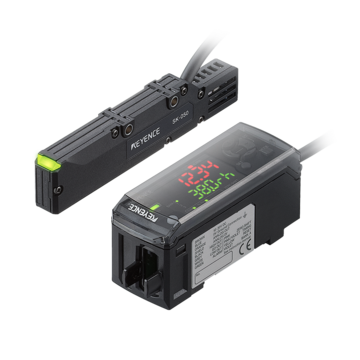
Static sensors for production lines help provide more visibility into the behavior of electrostatics. Field strength data can be evaluated alongside cycle time and throughput metrics, so when a charge level aligns with performance variability, any process adjustments can be made with greater precision. Real-time static monitoring in manufacturing produces the resolution necessary to analyze this interaction under actual production conditions.
Quality
Within the OEE calculation, the quality component measures how much of the total output meets the specification of the production run compared with the overall production volume. In electronics manufacturing, electrostatic discharge prevention is central to protecting the integrity of the produced devices, and OEE systems can help monitor any buildup that would otherwise be invisible to the immediate eye.
Quality losses that are related to contamination or electrical stress are often categorized broadly within defect tracking systems. By continuously monitoring electrostatic conditions, engineers gain an additional layer of context when it comes time to evaluate yield trends.
Why Periodic Static Checks Are No Longer Enough
In many facilities, static levels are assessed with hand-held meters or through scheduled audits. While these approaches provide a snapshot of the electrostatic conditions of a line at a specific moment, OEE systems can monitor production lines continuously and capture all production behavior in real time.
When electrostatic measurement is episodic while production data is continuous, there is an analytical gap that can emerge. A spike in scrap or a cluster of downtime events may occur, unnoticed, between scheduled static checks. Instead of missing these events, the OEE model will reflect the loss, but will lack the electrostatic data for comparison.
A continuous static monitoring system aligns electrostatic measurements with the cadence of monitoring production. The voltage of a surface or the strength of a static field can be measured and then streamed to a programmable logic controller (PLC) and onto supervisory platforms. The electrostatic measurements are recorded alongside the machine state and are then incorporated into the existing performance dashboard. Electrostatic discharge prevention efforts benefit from this alignment because of how ionization effectiveness and charge control can be evaluated under sustained production loads rather than having to be inferred from periodic validation.
Benefits of Real-Time Static Monitoring Systems
Real-time static monitoring in manufacturing strengthens the interpretive quality of the existing performance data. Rather than adding in isolated metrics, it integrates electrostatic behavior into the broader production model.
When static sensors for production lines are connected to an automation system, there are several operational advantages:
- Compare downtime timestamps with surface voltage trends
- Review yield shifts against measured field strength
- Ionization systems can be assured under full production throughput
These outcomes help support the electrostatic discharge prevention program by providing an ongoing validation of static control measures.
Integrating Static Sensors with Ionizers and Automation Systems
Measurements, on their own, do not stabilize a production line. Static sensors for production lines help add value to data collected by a continuous static monitoring system that feeds directly into automatic logic.
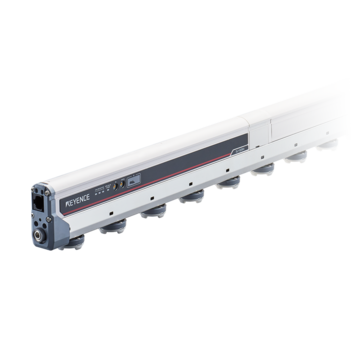
When the levels of static charge exceed a defined limit, ionizers can be adjusted automatically to help maintain a neutral balance of ions. Ionizers function by emitting controlled streams of positive and negative ions into the surrounding air, allowing excess surface charges to dissipate. Adjusting output in response to measured field strength allows electrostatic discharge prevention to operate under the full production load instead of relying on post-event analysis.
The integration of a continuous static monitoring system along with an OEE helps clarify any data found in troubleshooting. If downtime events occur while electrostatic reading remains stable, any static can be eliminated as a contributing factor. This system supports alignment through active process control and contributes to reducing downtime from static.
Improve OEE and eliminate hidden static risks. Request a consultation on continuous static monitoring for your production line.