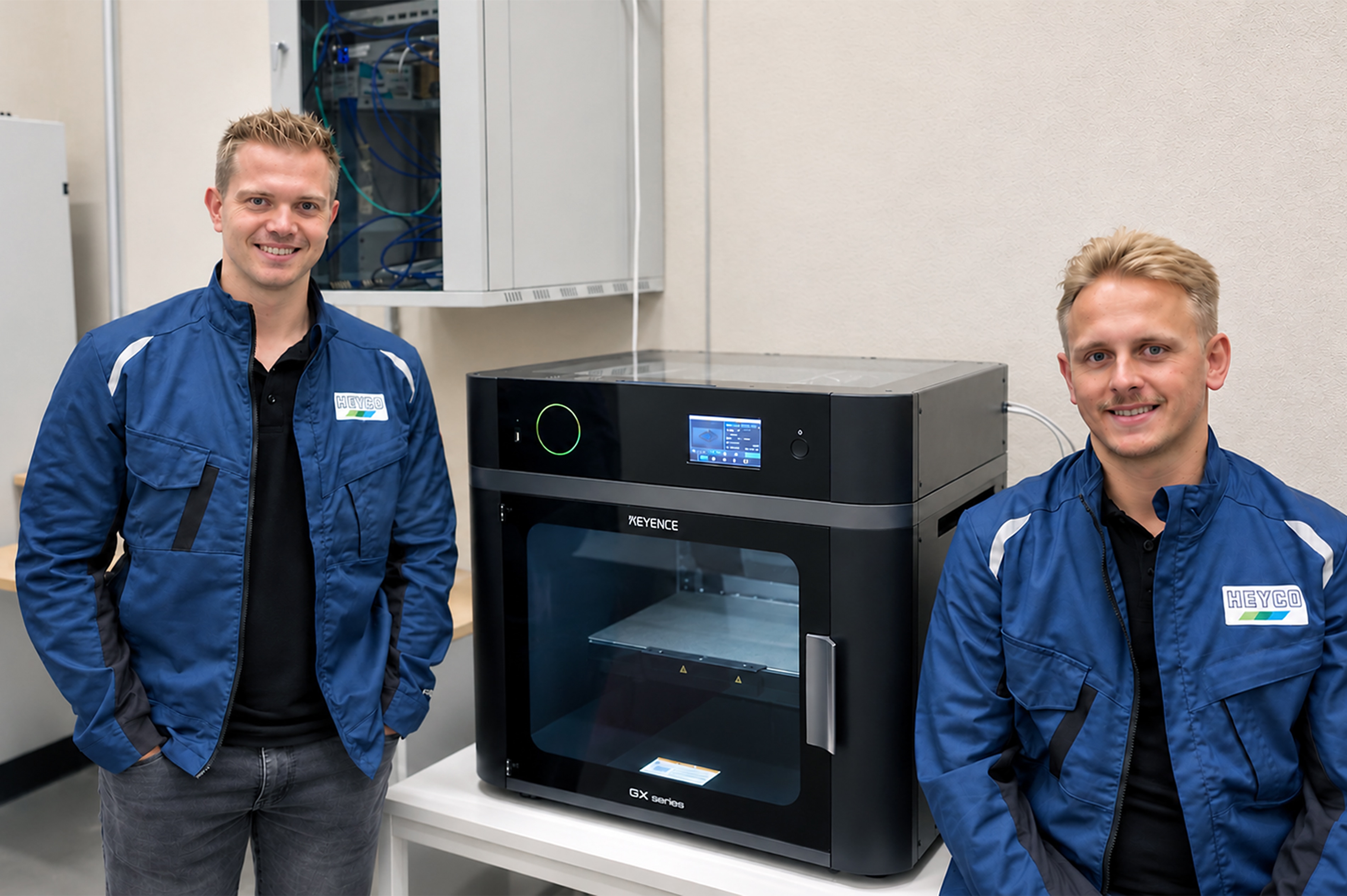
Founded in 1937, the HEYCO Group combines many years of industrial experience with innovative manufacturing technologies. From a traditional manufacturer of hand tools, it has developed into an internationally active development partner and supplier to the automotive industry. At the Tittling site, HEYCO-WERK SÜD combines comprehensive expertise in research, development, design, and manufacturing. The range of services extends from sophisticated forged components to technical plastic components. HEYCO accompanies its customers from the initial product idea to series production readiness.
This case at a glance
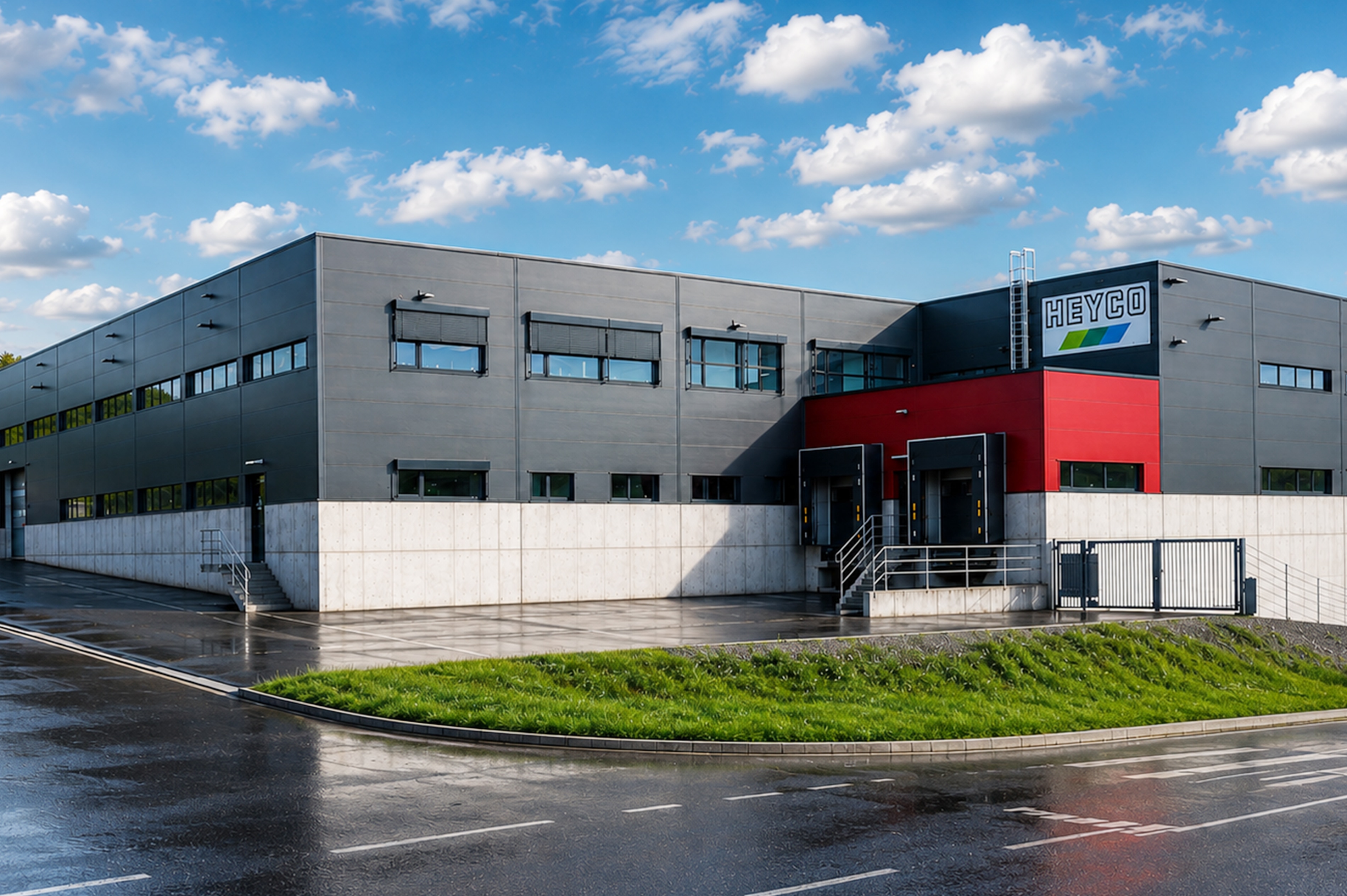
- At HEYCO, two KEYENCE 3D printers are in use today: the AGILISTA-3200W handles delicate, detailed prototypes, while the GX-1000 handles the larger, functional components—from assembly and welding fixtures to component holders and robot grippers, right through to measuring and testing equipment.
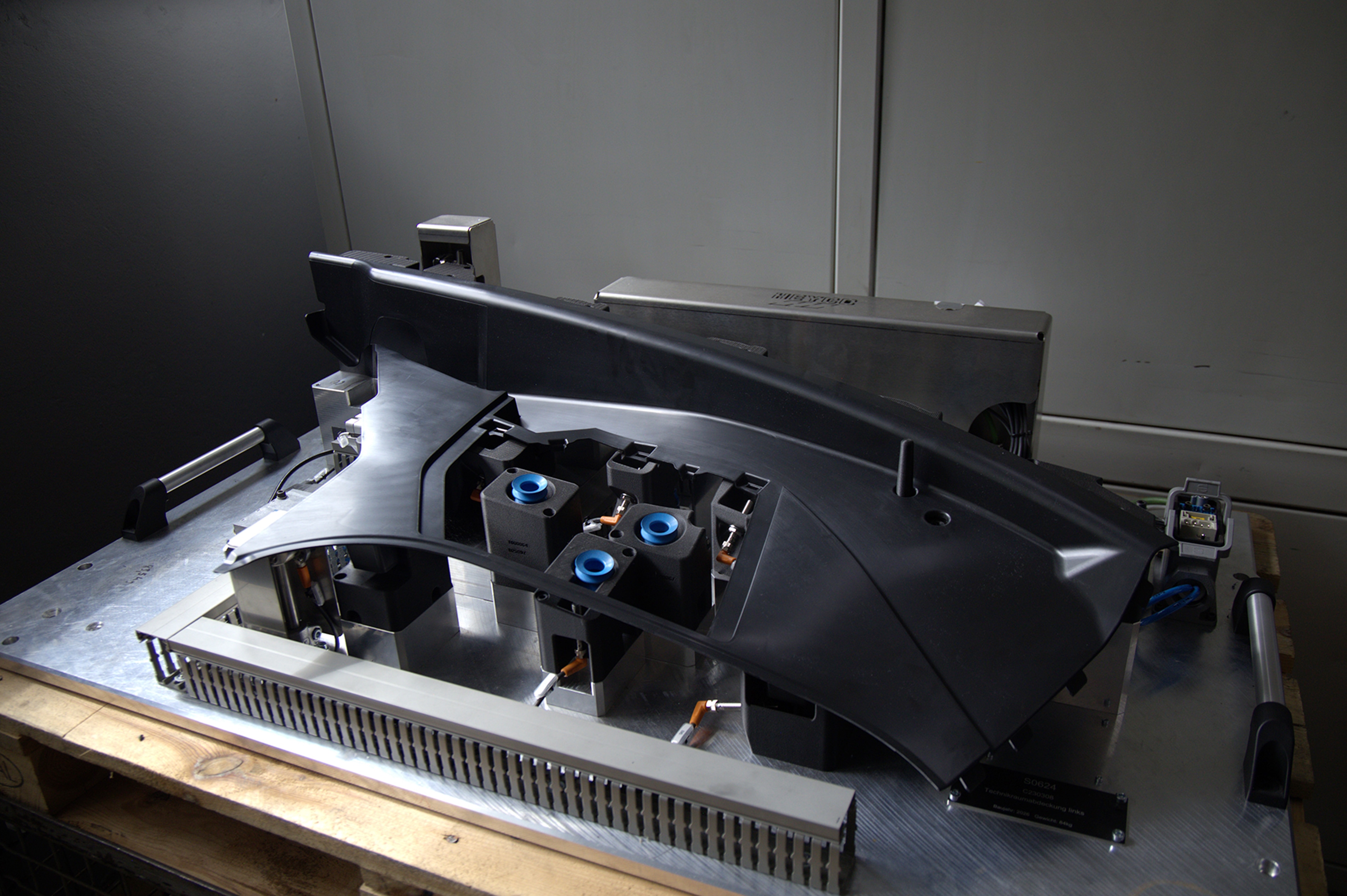
- The KEYENCE GX-1000 Series 3D printer is used for assembly and welding fixtures, component holders, robot grippers, and functional prototypes.
- Fixtures that were previously programmed in CAM and milled from aluminum are now printed. This eliminates the programming time and machine hours and makes the fixtures noticeably lighter, which is an advantage when handling them at the workplace. HEYCO has already been able to save around 65,000 euros through the GX-1000 alone.
- Because a printed part is quickly available, the development team tries things out instead of debating them: variants can be printed, glued into an existing component, and evaluated together with the customer before a tool change.
- Multiple engineering materials on one machine—GX-M1, GX-T1 for thin, repeatedly stressed geometries, GX-H1 for temperature-stressed fixtures, and a flexible TPU—make it possible to serve different customer requirements without changing systems.
- Operation is described as uncomplicated: select the material in the slicer, apply the preset parameters, then position, slice, and print. According to the users, the printers are now running almost continuously.
ChallengeFrom the first prototype to an integral part of production
In HEYCO’s development and production environments, custom fixtures, component holders, and prototypes are regularly required. Previously, these components were often manufactured using complex machining processes or sourced externally.
“Through the targeted use of additive manufacturing, numerous components can be manufactured significantly faster, more flexibly, and more economically.”
HEYCO started with the KEYENCE AGILISTA-3200W, which was particularly impressive in the production of delicate and highly detailed prototypes. However, with increasing requirements for component size, mechanical strength, and cost-effectiveness, the need grew for a system for larger, functional components and fixtures—and with it, the question of how this spectrum could be sensibly expanded.
SelectionRange of materials and simple operation were the deciding factors for the GX-1000 Series
To meet these requirements, HEYCO expanded its manufacturing spectrum with the KEYENCE GX-1000. The deciding factor was not a single feature, but the combination of two factors: a wide selection of materials and a process that does not require a specialist.
“The GX-1000 enables us to produce high-quality, functional components right from the very first use. The simple operation without complex parameterization and the ability to use engineering plastics and high-performance materials are particularly impressive.”
Where a trial-and-error phase is usually required before parameters and results match, here the results are spot on from day one. This significantly lowers the barrier to entry: additive manufacturing does not remain a specialized discipline of individual colleagues, but becomes a tool that can be widely used across the team.
The range of materials is the second deciding factor. With engineering and high-performance materials, the system covers very different requirements. The flexible and wear-resistant GX-T1 is suitable for delicate, stressed components—such as snap hooks that reliably return to their original shape after bending. For joining and welding fixtures, the heat-resistant GX-H1 is used, which withstands temperatures up to 250 °C. And the robust, wear-resistant GX-M1 forms the standard for many everyday fixtures.
This allows HEYCO to choose the right material for every task—and react immediately to customer requests instead of first passing the requirement on to a supplier.
ResultsAround 65,000 euros saved: How the GX-1000 accelerates development and series production
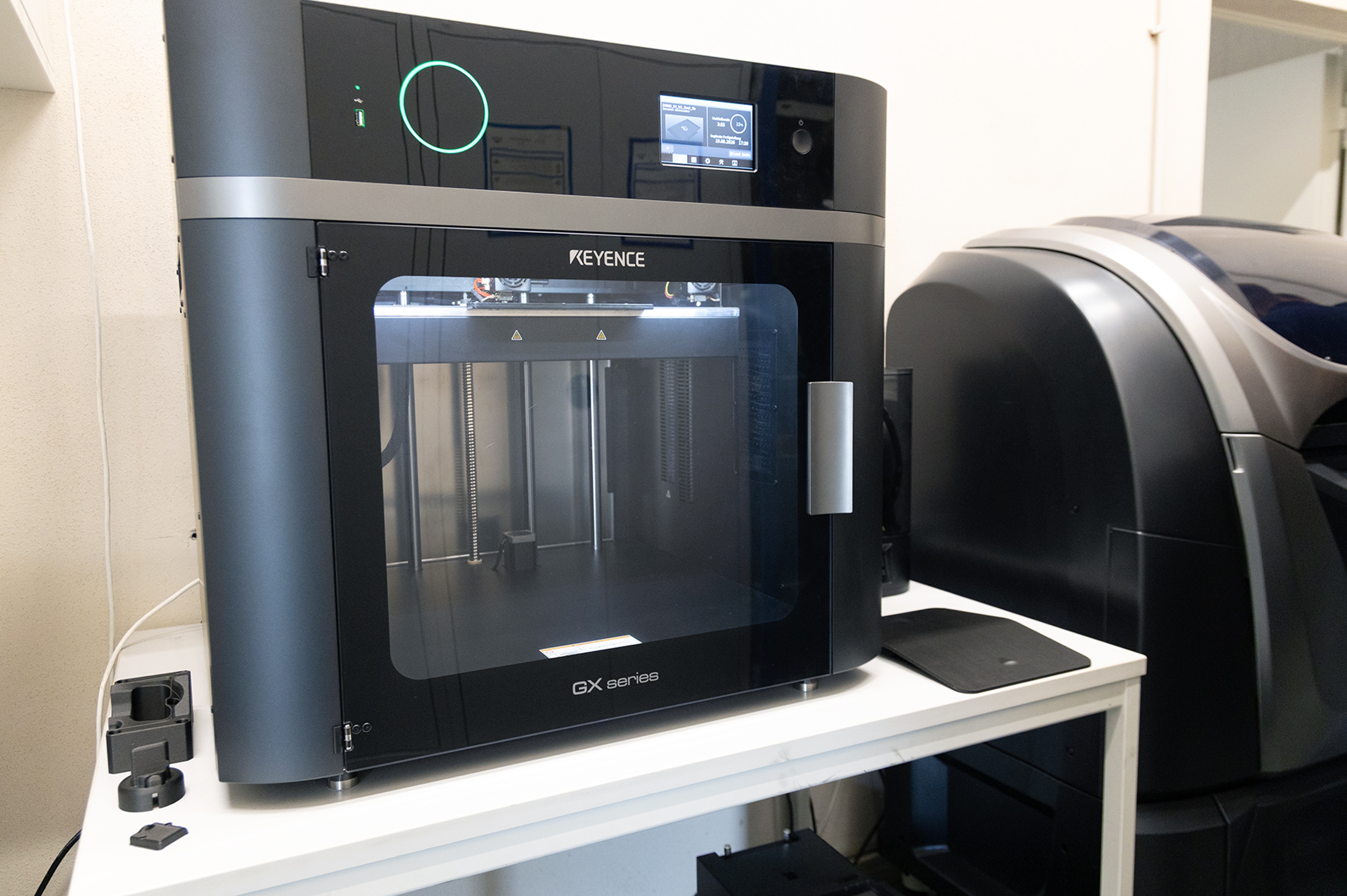
The greatest added value of additive manufacturing is demonstrated in daily use. CAD models can be directly converted into functional components without complex manufacturing steps.
“The real component is created directly from the CAD model.”
This enables rapid realization of new ideas, shortens development times, and increases flexibility for design changes. What is designed on the screen can be held in the hand and tested at the workstation shortly thereafter.
Custom component holders and fixtures are manufactured directly in-house—quickly and as needed. Programming and manufacturing efforts are significantly reduced, and response times for design changes are noticeably shortened.
What used to be a separate production order or an external purchase is now a print job. The team can make that decision itself—without consultation or waiting.
“Through the use of the KEYENCE GX-1000 alone, HEYCO has already been able to save around 65,000 euros.”
The benefits do not end in development. The additively manufactured fixtures are also used in series production and support it reliably.
This extends to 100% verification of assembly processes for demanding automotive customers. Exactly where process reliability is non-negotiable, the printed equipment has proven itself in everyday use.
OutlookAGILISTA and GX-1000 as part of the development strategy
KEYENCE 3D printing now supports various areas, from development and testing to highly detailed prototypes, as well as measuring and testing equipment, component holders, and fixtures.
“The introduction of additive manufacturing was the next step for HEYCO to further expand its own development and manufacturing expertise.”
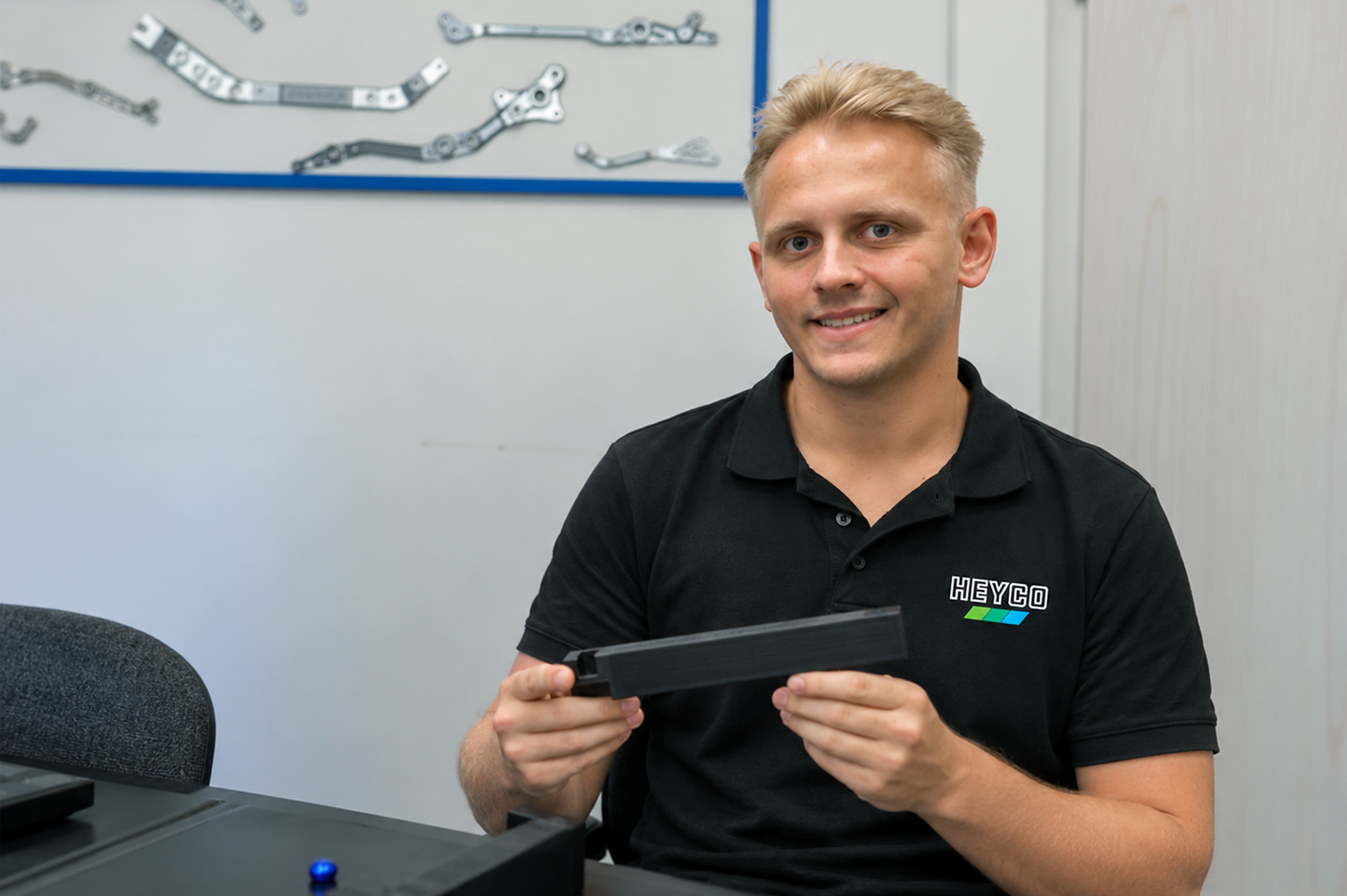
With the AGILISTA-3200W, an extremely versatile system was initially established, covering a wide range of applications from precise component holders to highly detailed prototypes. With the GX-1000, this spectrum was subsequently expanded to include larger, functional components and fixtures. One of these fixtures was already in use at the time of the interview: there, a large component rests on several printed blocks that together form the holder.
For HEYCO, 3D printing is now far more than just manufacturing individual plastic parts. It is a tool with which its strength as an innovative development partner can be further expanded—quickly, flexibly, and economically.
Frequently asked questions (FAQ)
Q What does HEYCO-WERK SÜD use the KEYENCE GX-1000 Series for?
A
For assembly and welding fixtures, component holders, robot grippers, and functional prototypes—for both plastic and metal applications. Components developed in CAD are directly printed and tested, and prototypes are used for test series and assembly checks before an injection molding tool is finished.
Q Why did HEYCO-WERK SÜD switch from milled aluminum fixtures to the GX-1000 Series?
A
Previously, fixtures had to be programmed in CAM and manufactured on a CNC machine, which tied up programming time and machine hours. The team asked whether a holder really had to be made of aluminum, started the first printing trials, and found that a printed fixture performs the required function, is available faster, and is easier to modify.
Q How easy is the GX-1000 Series to operate for employees without 3D printing experience?
A
The team describes the process as straightforward: the material is selected in the slicer, the parameters are already stored for this material, then the component is positioned, sliced, and printed. According to the users, even a colleague who is not deeply involved in 3D printing can achieve a good result, and anyone who has operated the printer a few times can perform the routine steps independently.
Q Which GX-1000 Series materials does HEYCO-WERK SÜD work with?
A
Predominantly with GX-M1 as an all-purpose material, with GX-T1 for thin-walled and repeatedly stressed geometries such as snap hooks and gripper fingers, with GX-H1 when higher temperature resistance is required, and with a flexible TPU material for soft components. The fact that several engineering materials are available on one machine is one of the reasons why the team can respond quickly to different requests.
Q How much has HEYCO-WERK SÜD saved with the GX-1000 Series?
A
Through the use of the KEYENCE GX-1000 alone, HEYCO has already been able to save around 65,000 euros. Custom component holders and fixtures are manufactured directly in-house—quickly and as needed. This also reduces programming and manufacturing effort.