
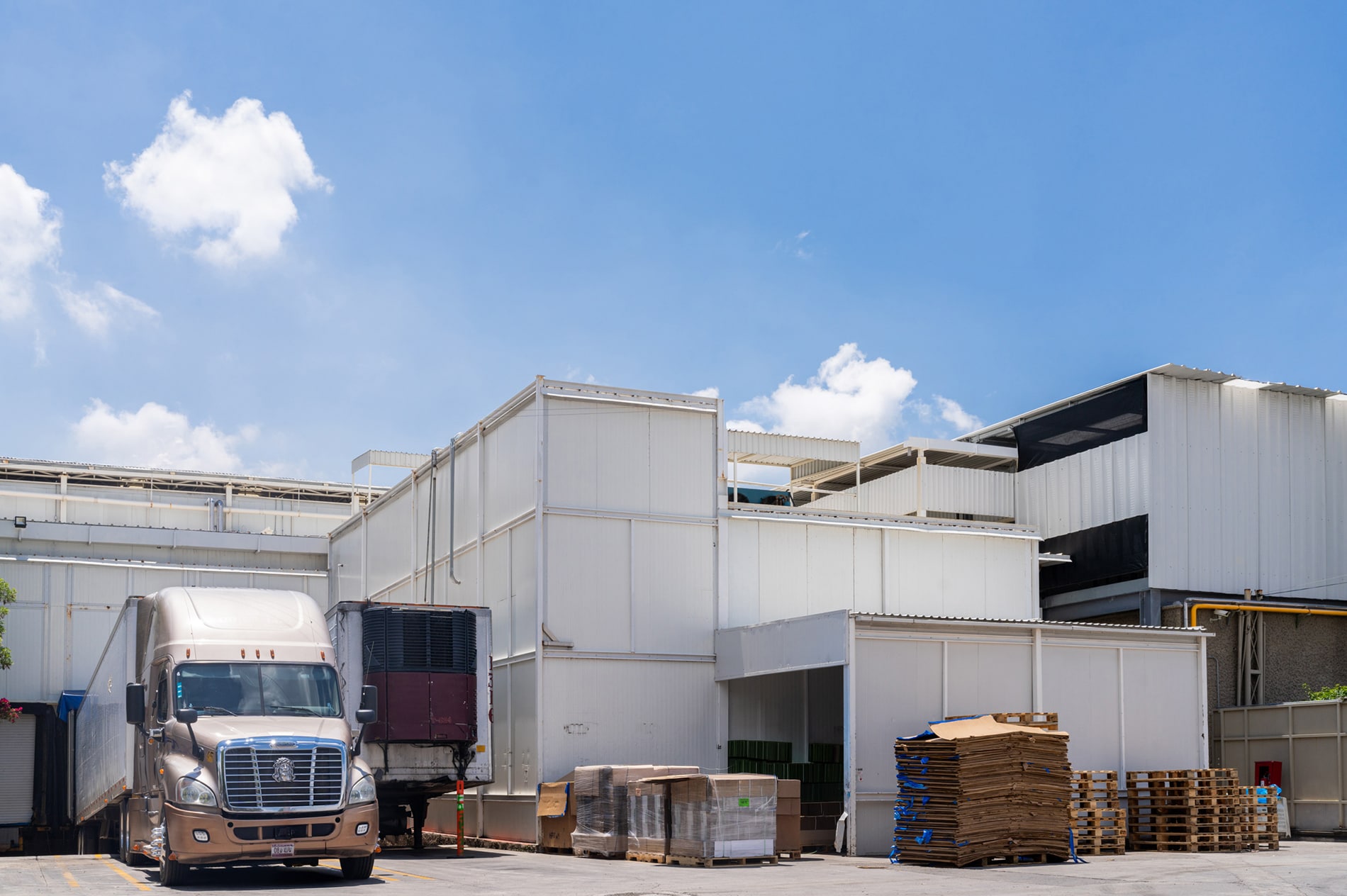
La Próxima Estación, a family-owned company in Irapuato, Mexico, processes and packages frozen and fresh fruits and vegetables — broccoli, cauliflower, mango, strawberry, and more — exporting nearly 98% of its production, mainly to the United States. In its repackaging area, the company replaced a ribbon-type thermal transfer coder with the MD-U Series UV laser marker from KEYENCE to print expiration dates and traceability codes. The change eliminated consumable replacements that stopped the line several times a day and, according to the maintenance team, increased coding efficiency from around 90% to 100%.
Key points at a glance
- La Próxima Estación (Irapuato, Mexico) exports nearly 98% of its frozen and fresh products, mainly to the United States, and needed reliable date coding in its repackaging area.
- Their previous ribbon-type thermal transfer coder required frequent ribbon and printhead changes, stopped the line about three times a day during peak season, and sometimes printed blurry marks.
- KEYENCE was the only supplier that offered a laser coder; a cost-benefit analysis indicated a payback of about a year and a half, and they chose the MD-U Series UV laser marker.
- Following the change, line stoppages due to coding went from three a day to zero, and efficiency rose from around 90–92% to 100%.
- A built-in camera allows viewing the print position before marking, the marks are always legible, and the production area now configures the codes; installation took only two days.
- Management’s goal is to eventually bring the laser marker to the rest of the bagging machines.
ChallengeWhy did they start looking for a new coder?
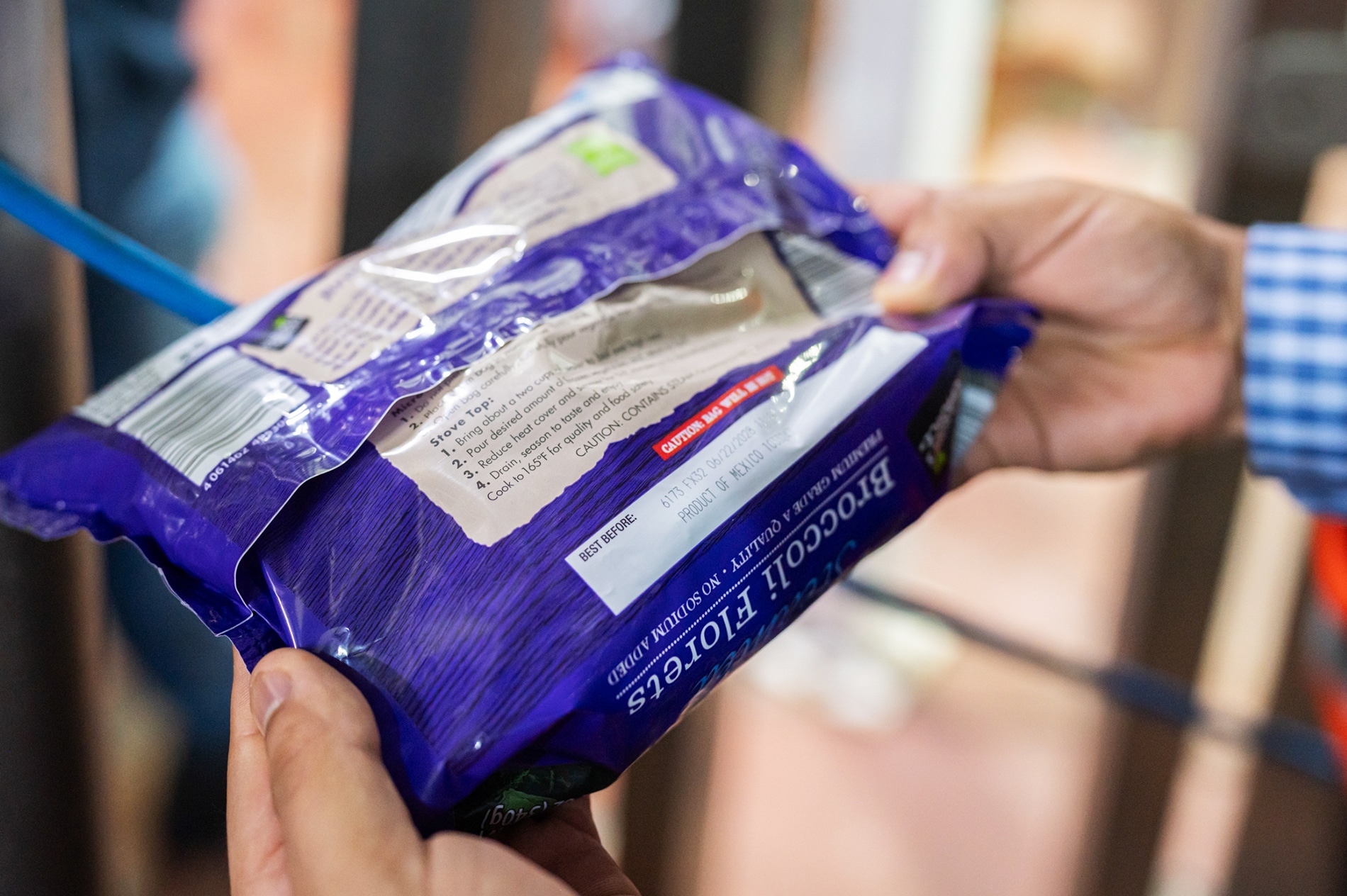
La Próxima Estación marks each bag of frozen and fresh product with an expiration date and time: the date for the customer and the time for the company’s internal traceability. In the repackaging area, this coding was done with a thermal transfer printer that consumes a ribbon and wears out a printhead. A ribbon lasted barely around one shift, so in high season—three shifts a day—the line needed three ribbons daily, while the expensive printhead had to be replaced approximately every six months of three-shift operation. Each ribbon change involved about five minutes of downtime per shift, the marks sometimes came out blurry and barely legible, and the codes had to be prepared on a separate computer and transferred to the machine on a USB flash drive. Together, these stoppages and costs kept coding efficiency below the company’s 98% target, at around 90–92%.
“A ribbon is lasting us approximately one shift, and there are three shifts in high season: that’s three ribbons per day. In addition, the printhead is very expensive and must be changed within six months when working three shifts. In companies, sometimes it’s not so much the consumable, but the time it takes to have a machine stopped.”

SelectionWhy KEYENCE’s UV laser marker?
The company works with a wide list of capable suppliers and actually compared options, but the alternatives were all transfer or ribbon printers: the same consumable, the same wear and tear. KEYENCE was the only supplier that offered a laser coder. A cost-benefit analysis placed the return at around a year and a half, and an attractive warranty along with financing options reinforced the decision. The choice also fit with management’s drive to automate, reduce costs, and stay competitive: as the team put it, if soda bottles are already laser-marked, why not them? Before deciding, the team had three clear concerns, and KEYENCE’s pre-purchase demonstrations and testing addressed each one.
“We had several concerns. One was whether it would print on the bag. The second was the water jet: our machines are thoroughly washed, and we were worried that a very expensive piece of equipment would get wet and not work. But the moment you showed us a video with a water jet hose, we said go ahead. And the third was speed, because our machines can reach up to 100 strokes per minute.”
ResultsWhat changed after migrating to laser?
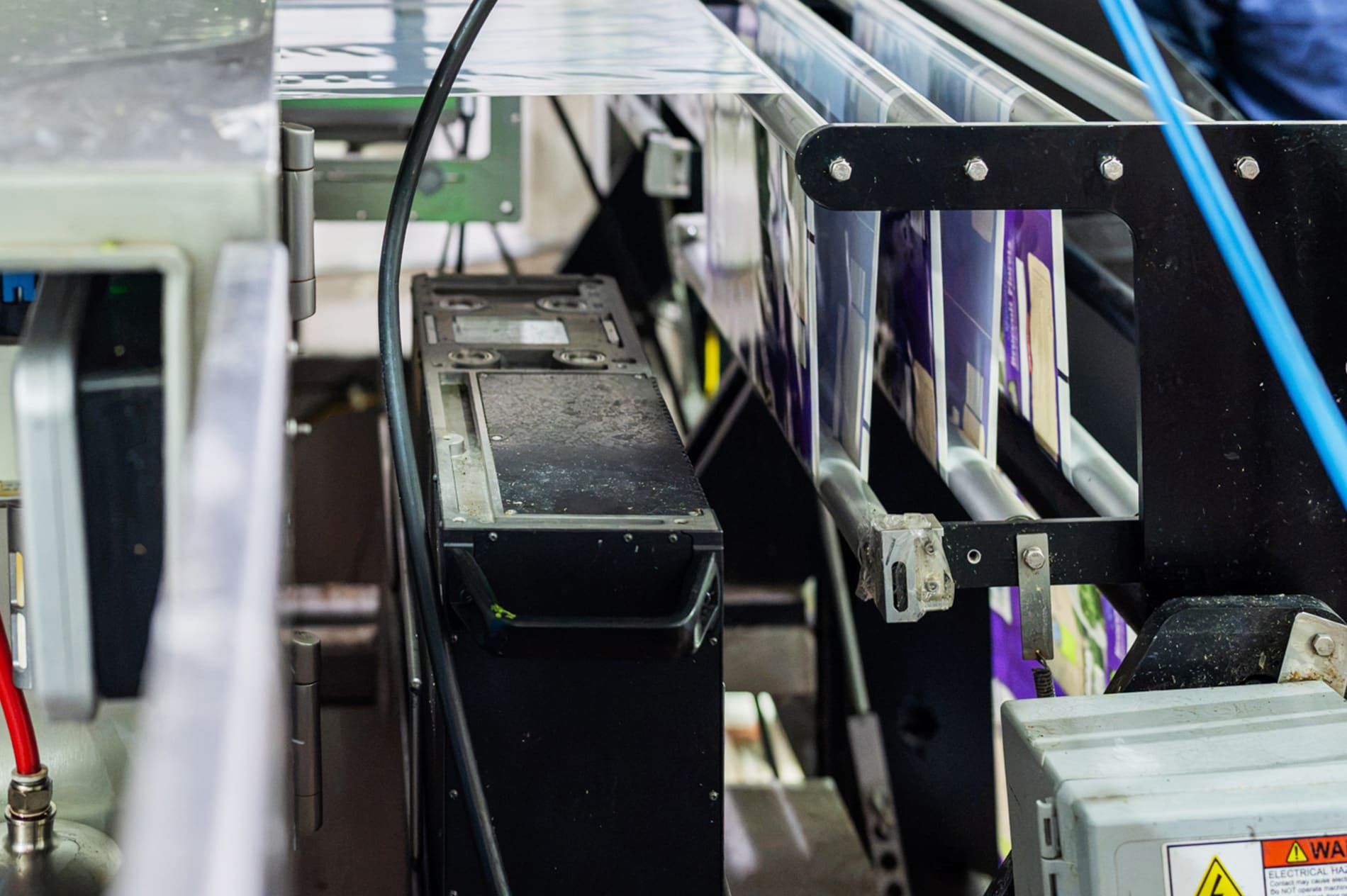
The most immediate change was seen on the line itself: the three daily stoppages for ribbon changes dropped to zero, and ribbon and printhead consumables disappeared—along with their cost. Since the marking head is certified as waterproof, it continues to function despite the plant’s twice-daily washdowns, and the marks are now always legible instead of coming out blurry from time to time. A built-in camera allows operators to see exactly where the code will fall before printing it, a feature the team highlighted as a favorite. The interface is so intuitive—like PowerPoint, in their words—that the production area now configures the codes directly, a task that previously fell to maintenance; the date and time advance automatically, and the codes are changed three or four times a day depending on the product. The equipment was installed and operating in just two days and, after about six months, has not caused any problems, with agile remote support via video calls and phone calls. The maintenance team summarizes the impact in one figure: coding efficiency went from around 90–92% to 100%.
“With the previous coder, our numbers were below that 98%, around 90, 92. By switching to this, our numbers are currently at 100%. From three stoppages per day due to ribbon changes, we went to zero.”
FutureWhat’s next for the line?
The repackaging area operates five bagging machines, and today, one of them features KEYENCE's laser marker. Management’s stated goal is for all machines to have a laser marker; the team is frank that they cannot do it all at once due to the cost, so the plan is to complete the cost-benefit analysis of the first unit before considering the next. La Próxima Estación already recommends KEYENCE equipment to allied companies in the Irapuato area, noting that auditors see this equipment as an aid to ensuring product safety. The plant also operates two KEYENCE IV4 Series vision sensors for foreign body detection, automatically rejecting product that does not pass inspection, a use the team is proud of.
“It is management’s goal for all machines to have this laser marker. We are honest: right now we haven’t been able to do it due to the cost, so first we have to finish the cost-benefit analysis of this one to be able to consider the second.”
Frequently Asked Questions
QWhat KEYENCE product did La Próxima Estación introduce, and what do they use it for?
A
They introduced KEYENCE’s MD-U Series UV laser marker in their repackaging area to print expiration dates and traceability codes (date and time) on product bags. They also use two IV4 Series vision sensors for foreign body inspection.
QWhy did they replace their previous coder?
A
Their ribbon-based thermal transfer coder required frequent ribbon and printhead changes, stopping the line about three times a day during peak season, and the printing was sometimes blurry. They were looking for a more efficient, lower-cost solution.
QWhy did they choose a KEYENCE laser marker?
A
Among their suppliers, KEYENCE was the only one that offered a laser coder instead of another consumable-based transfer printer. A cost-benefit analysis indicated a payback period of about a year and a half, and the warranty and financing made it attractive.
QWhat concerns did they have before purchasing, and how were they resolved?
A
They were concerned about whether the laser would mark clearly on the bag, whether the equipment would withstand daily washdowns with water, and whether it could keep up with their line speed. KEYENCE’s pre-purchase testing and a video demonstration of the equipment under a water hose resolved all three concerns.
QWhat results have they seen since the switch?
A
Line stops due to coding went from three a day to zero, consumable costs disappeared, markings are always legible, and the production area now configures the codes. The maintenance team reports that coding efficiency rose from around 90–92% to 100%, with no issues in about six months of use.
QDo they plan to expand the use of laser marking?
A
Yes. Management’s goal is to eventually equip the rest of the bagging machines with the laser marker, once the cost-benefit of the first unit is completed.