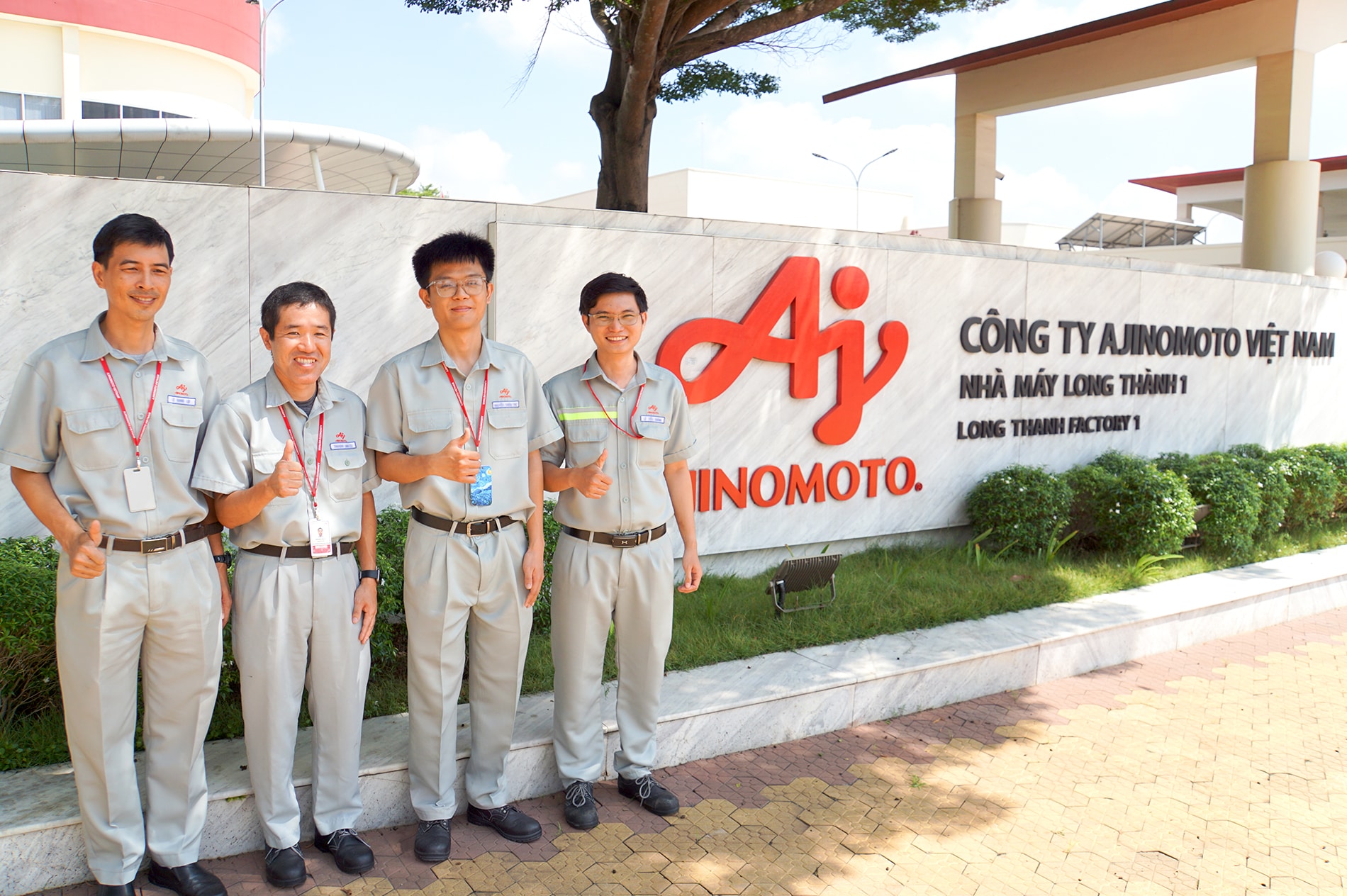
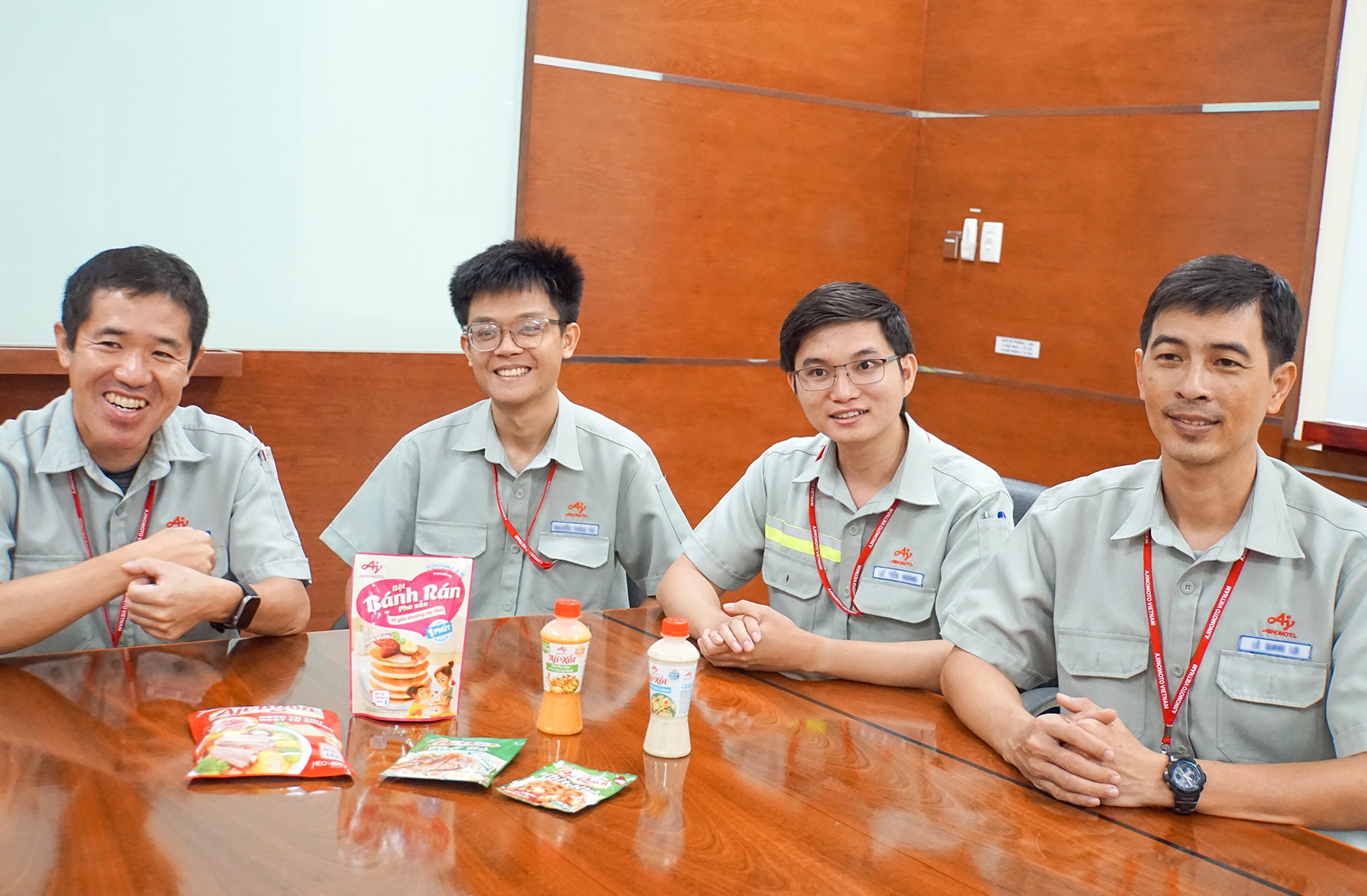
The Long Thanh Factory of Ajinomoto Vietnam—which produces umami and flavor seasonings familiar to Vietnamese consumers—has implemented KEYENCE's UV laser markers to overcome a long-standing problem: faded expiration date prints. The driving force behind this project was the frontline staff (production team) at the Long Thanh Factory, who know the site best. From identifying the problem and selecting the product to verifying the effectiveness after implementation, we listened to the story from the perspective of the factory team.
Summary of Key Points
- Overcoming the years-long problem of "faded printing." Expiration date prints, which used to fade due to contact during transportation, are now stable thanks to UV laser markers.
- Packaging loss reduced to near zero. The previous 0.1% loss rate due to printing errors has been eliminated. On high-speed lines, each machine saves over 10,000 packages per year.
- Reduced effort in managing consumables. Ink and solvents are no longer needed, thereby cutting out the entire workflow of ordering, storing, using, and disposing of them.
- Simplified maintenance. No more nozzle clogging or periodic cleaning, reducing the risk of machine downtime and stabilizing operations.
- Safe and clean work environment. Since no chemicals are used, the risk of operator exposure to chemicals is eliminated, making the workplace more comfortable.
- Frontline staff led the selection process. Evaluation and selection were based on three criteria: internal testing standards, impact on the packaging's barrier layer, and cost reasonableness.
About Ajinomoto Vietnam and the Long Thanh Factory
Ajinomoto Vietnam was established in 1991 and began producing AJI-NO-MOTO® umami seasoning at the Bien Hoa Factory in 1992. In 2008, the company opened its second production facility, the Long Thanh Factory. The main products of this factory are Aji-ngon® flavor seasoning and Aji-Quick® seasoning for dishes such as fried chicken, hot pot, and noodle soup.
The production scale is approximately 50,000 tons per year. Along with the growth of the Vietnamese economy, production volume increases by more than 5% annually. About 600 people work at the factory, including full-time employees and production staff from dispatch companies, with a predominantly young workforce.
Because a single factory handles about 50 types of products, production changeovers occur frequently, making production management far from simple. In controlling this complexity, reliable expiration date printing is an indispensable element.
ChallengeThe Years-Long Struggle with "Faded Printing"
Previously, the Long Thanh Factory used inkjet printers to print expiration dates on the back of packaging. For some products, this is a high-volume, high-speed production line, printing on over 30,000 packages per shift. In this context, the biggest concern for the frontline team was the issue of faded printing.
"Because we previously printed on the surface of the packaging, the print could fade due to contact during transportation or sales activities, and sometimes the sales department reported finding products with faded prints."
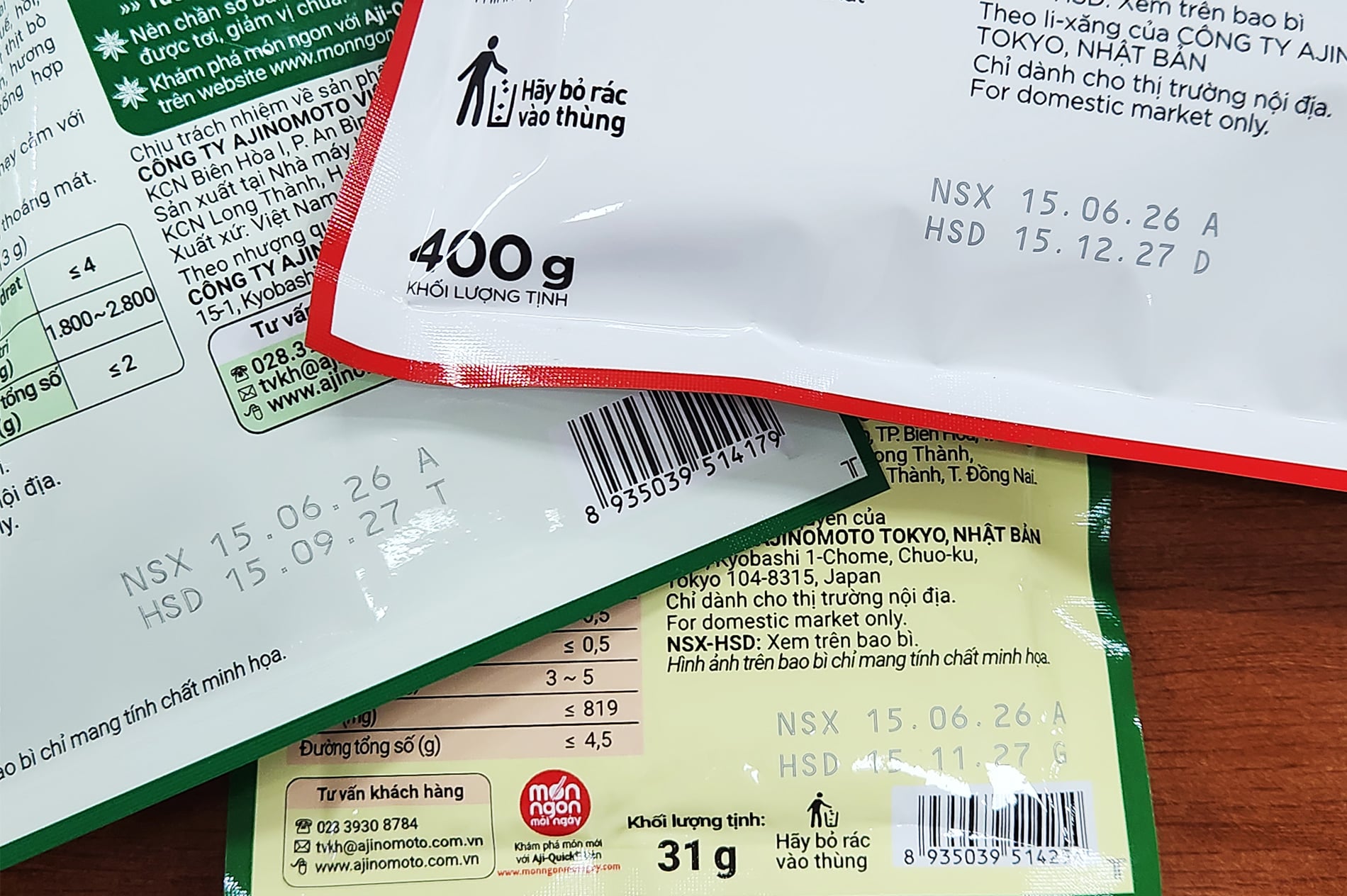
Faded printing is not just a cosmetic issue. If the expiration date cannot be read, there is a risk of regulatory violations, accompanied by serious risks of damaging Ajinomoto's brand image. What is even more troublesome is that even if no abnormalities are confirmed at the time of shipment, fading can still occur during transportation and distribution—at which point the factory cannot detect it.
Frontline staff tried various measures to solve this problem: changing ink types, introducing corona treatment machines. However, corona treatment machines pose a risk of electrical sparks, and no measure could solve the root cause. After this trial process, the team turned to another printing method: UV laser markers.
SelectionThe "Three Decisive Factors" Identified by Ajinomoto
KEYENCE was not the only laser marker supplier. Among many options, how did the frontline team identify the most suitable product? The person in charge recalls their initial impression as follows:
"We felt that KEYENCE's support was very dedicated. All members were extremely impressed with the clarity and reliability of the printed samples demonstrated."
The most decisive factor was KEYENCE proving the impact on the packaging's barrier layer "with data." KEYENCE took cross-sectional photos of the packaging after laser printing under a microscope, showing that the barrier layer protecting the food was completely undamaged. Thanks to this, not only the production team but also the Quality Assurance (QA) department felt confident in the implementation. Working toward the common goal of improving product print quality, the production team and the QA department collaborated, and factory staff made a careful decision from multiple angles, including inspecting the packaging cross-section.
Based on this, the three final selection criteria that the production team valued were:
"We valued three points: the print must pass internal tests and be stable, it must not damage the barrier layer, and the investment must be within an acceptable range without affecting the product cost. We verified each point one by one."
- 1 Stability of print quality - meeting the company's internal testing standards
- 2 Impact on packaging - not damaging the barrier layer and not degrading quality
- 3 Cost reasonableness - impact on product cost is at an acceptable level
In addition, the size of the printer body fitting into the existing packaging machine was also an important practical condition. In terms of cost, after comparing multiple suppliers, the factory evaluated that KEYENCE's product had a small impact on the product cost. Based on previous experience with CO2 laser markers used for printing on cardboard boxes—which required an exhaust system to handle smoke and odors—frontline staff confirmed the advantages of UV laser markers for themselves.
Furthermore, the factory also uses a KEYENCE vision system in combination to inspect the printed expiration dates, ensuring quality in both printing and inspection.

EffectChanges Beyond Expectations
After implementation, frontline operations saw significant changes. Among them, the greatest effect was a significant reduction in packaging loss due to printing errors.
Near 0%
Packaging loss due to printing errors
Over 10,000
Packages saved per machine per year (high-speed line)
0 cases
Feedback regarding expiration dates after implementation
A high-speed production line uses over 10 million packages per year, and previously incurred a loss due to printing errors of about 0.1%. After introducing UV laser markers, this loss rate is nearly zero, equivalent to saving over 10,000 packages per machine per year. Thus, the initial goal of "overcoming faded printing" has been completely achieved.
However, the value perceived by the team did not stop there. The person in charge shared that "there were three effects beyond expectations."
"First is the reduced effort in managing consumables. Since ink and solvents are no longer needed, management tasks from ordering, inventory management, and usage to disposal are almost entirely eliminated."
Consumables like ink and solvents sometimes face supply instability due to global situations. No longer needing them also gives frontline staff more peace of mind regarding procurement risks.
"Second is simplified maintenance. Nozzle clogging, which frequently occurs with inkjet printers, along with periodic cleaning and inspection, are no longer necessary, helping to reduce the risk of machine downtime and maintain stable operations."
"Third is improved safety and work environment. Since there is no need to handle chemicals, the risk of operator exposure to chemicals has been eliminated, and there are comments from the frontline that 'the work environment has become more comfortable.'"
Internal evaluations after implementation have also been very positive. Through monitoring by various departments, including the quality control department, there have been comments such as "the expiration date is printed more stably, withstands oil, alcohol, and hand sweat, and the reliability of the information has been enhanced." Externally, no feedback regarding expiration dates has been recorded to date.
Laser prints have the characteristic of being slightly lighter in color than ink and slightly grayish. Before implementation, the production team consulted with the marketing and quality control departments, and optimized the laser power to ensure readability. In addition, by avoiding switching all products at once and instead transitioning in phases, consumers accepted it without finding it strange. "The important thing is that the expiration date must be clearly readable," the person in charge shared.
Future OutlookEnvironmental Response and the Potential of UV Laser Markers
At the Long Thanh Factory, there are still product lines that do not use UV laser markers, and the risk of faded printing still exists there. The company plans to gradually consider implementation for these lines.
Along with this, environmental response is also an important issue to consider. The Ajinomoto Group aims for zero plastic waste by 2030 and is collaborating with packaging manufacturers to develop new, easily recyclable materials. Because traditional ink sometimes has difficulty adhering to new materials, the person in charge stated, "In the process of promoting environmental response, the application of UV laser markers will be an effective solution."
In other words, as packaging transitions to more sustainable mono-materials, inkjet or thermal printing methods may adhere poorly—and laser marking may become essential to keep expiration dates readable. Date printing technology is becoming part of the sustainable development roadmap, not just a minor detail on the production line.
Behind this effort is the purpose of Ajinomoto Vietnam: “Contributing to the well-being of Vietnamese people and society through providing quality products and valuable initiatives with AminoScience.” The desire to deliver high-quality products to contribute to the happiness of the Vietnamese people and society is the driving force for every decision made by the production team.
Finally, we also asked about their expectations for KEYENCE in the future.
"Even right now, we have experienced very quick responses. When we face difficulties, we are consulted immediately and receive accurate proposals. Since the UV laser markers have not been in use for long, we hope to continue receiving maintenance support during long-term use as well as in the unfortunate event of a malfunction."
Frequently Asked Questions (FAQ)
QWhat problems did the factory face before using UV laser markers?
A
Previously, we printed expiration dates on the back of packaging using inkjet printers, and the biggest problem was faded printing due to contact during transportation and sales activities. Faded printing is a serious issue that can violate regulations and damage brand image. We tried changing ink types and introducing corona treatment machines, but none solved the root cause.
QWhy did the factory choose KEYENCE's UV laser markers?
A
There were three decisive factors. First, print quality had to meet our internal testing standards and be stable. Second, it must not damage the packaging's barrier layer and not affect product quality. Third, the impact on product cost had to be at an acceptable level. The clear prints during the demonstration, along with cross-sectional data of the barrier layer taken under a microscope, helped the quality control department feel confident in the implementation.
QWhat effects did the factory achieve after implementation?
A
Packaging loss due to printing errors is nearly zero, equivalent to saving over 10,000 packages per machine per year on high-speed lines. There were also effects beyond expectations: reduced effort in managing consumables (ink and solvents), no more periodic cleaning due to nozzle clogging, thereby reducing machine downtime risks, and a safer work environment due to not using chemicals.
QHow much packaging loss did the factory reduce?
A
On a high-speed line using over 10 million packages per year, the previous loss rate due to printing errors was about 0.1%. Since using UV laser markers, this rate is nearly zero, equivalent to saving over 10,000 packages per machine per year.
QWas the factory concerned about laser print colors being lighter than ink?
A
We consulted in advance with the marketing and quality control departments and set the appropriate laser power to ensure readability. Because we transitioned products in phases, consumers also gradually got used to the new prints. The important thing is that the expiration date must be clearly readable, and to date, we have not received any external feedback.
QHow do UV laser markers align with the Ajinomoto Group's environmental goals?
A
The Ajinomoto Group aims for zero plastic waste by 2030 and is collaborating with packaging manufacturers to develop easily recyclable mono-material packaging. Because traditional ink may adhere poorly to these new materials, UV laser marking is a potential solution to maintain print durability even on sustainable packaging.