Machine Vision
Affordable Automation: How Vision Inspection is Leveling the Playing Field
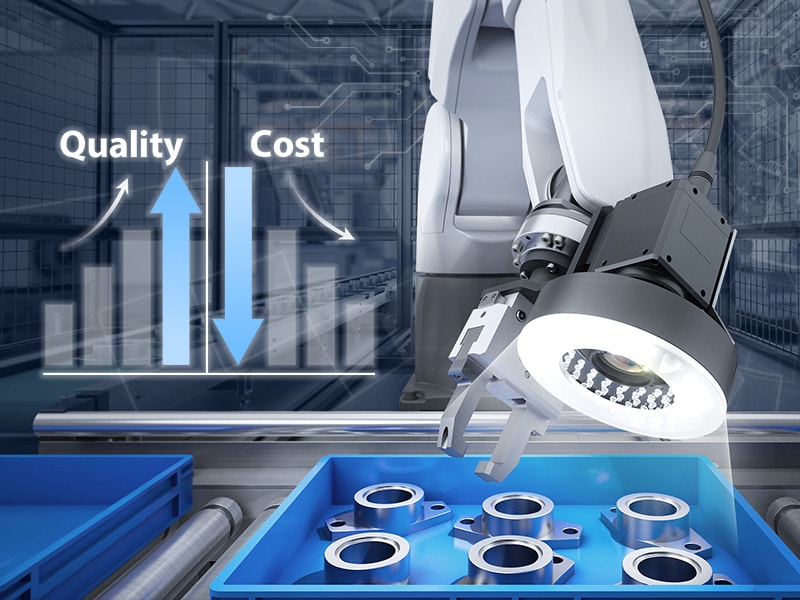
What once required large budgets and dedicated engineering teams is now within reach for more operations as affordable vision inspections are changing how manufacturers are approaching quality.
Vision inspection automation is easier to deploy and simpler to manage; it is also flexible enough to support changing production needs. Automated quality inspection systems are no longer limited to just high-volume facilities.
Why Automated Vision Inspection Is Becoming More Accessible
Vision inspection automation no longer depends on custom-built and costly systems. Many platforms now combine imaging and processing into a single unit, which reduces setup time and simplifies installation. For teams without dedicated automation resources, this makes automated quality inspection systems easier to introduce into existing workflows.
Software has also changed how inspections are created and maintained. Guided setup tools and example-based configurations reduce the need for manual programming. Systems can be trained to recognize acceptable variation, which allows machine vision systems for small manufacturers to adapt to part changes and lighting differences.
System selection is more flexible as well. Not every application requires an advanced depth measurement or robotics. In many cases, cost-effective vision inspection can be achieved with 2S imaging for surface checks or presence verification. Affordable vision inspection often starts with simpler tools that match the task.
What a Low-Cost Vision System Can Detect
Today’s low-cost machine vision cameras are surprisingly capable. Even entry-level systems can detect incorrect labels, surface scratches, misaligned parts, or dimensional defects. These units may be compact, but they handle complex tasks with precision and speed.
Whether the need is to verify inkjet codes, flaws on metal, or identify packaging flaws before shipment, a well-configured, low-cost vision system closes gaps that manual inspection can’t.
Key Features of Accessible Vision Solutions
Modern machine vision inspection systems combine imaging, lighting, processing, and software into single compact units. This means fewer components to manage and less time spent wiring or configuring.
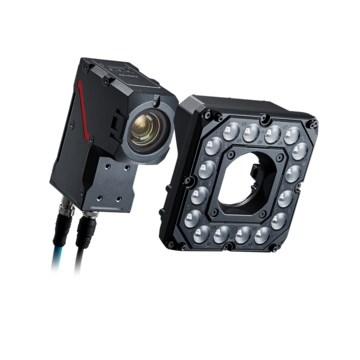
Systems like the KEYENCE CV-X and VS Series offer guided setup, built-in troubleshooting, and visual programming that requires no coding. Teams can modify inspection logic in real time, fine-tune performance quickly, and adapt to part variation all without outside help.
Some smart cameras come with integrated AI, enabling systems to learn from sample images and make nuanced decisions. Smaller teams can now run powerful inspections without writing code or managing training data.
How Machine Vision Improves Quality and Reduces Manual Inspection
Manual inspections are heavily reliant on consistency, which is difficult to maintain at production speed. Fatigue and variation between operators can affect how defects are identified. Vision inspection automation applies the same criteria at the same rate for every part.
Automated quality inspection systems evaluate products as they move through the line. With cameras capturing images and software analyzing features, the results trigger actions such as rejection or sorting. This process happens in milliseconds, allowing inspection to keep pace with the speed of production.
A single system can evaluate multiple characteristics at once. Surface condition and dimensional features can be checked at the same time as any printed information. This reduces the need for separate inspection steps and keeps the process moving.
Vision inspection automation maintains consistent inspection logic across every shift, and these automated quality inspection systems can detect subtle defects that may be difficult to identify during manual checks.
AI-enabled systems add flexibility by learning from sample images and can distinguish between acceptable and unacceptable variations, which helps reduce any unnecessary rejects while maintaining inspection accuracy.
Key Benefits for Packaging Lines
In high-throughput packaging environments, mistakes add up quickly. A missed fill level or an unreadable date code might not seem like much, but catching it before it leaves the line avoids downstream waste and delays. That reduces waste and keeps rework to a minimum.
For lines running multiple SKUs, low-cost vision systems simplify transitions as smart models equipped with AI can adjust to small part differences without needing manual tweaks. That saves time during changeovers and reduces the chance of operator error.
These systems also help with traceability. These systems automatically log results and check printed codes on the fly, making it easier to stay audit-ready without slowing the line down.
Real-World Use Cases
Small and mid-sized manufacturers are already seeing strong returns. One food facility installed a smart camera to catch underfilled packages and saw false rejects drop by 80%. A mid-tier auto parts supplier used a low-cost vision inspection system to guide robotic arms, cutting cycle time, and removing operator error.
In packaging, a producer running multiple SKUs utilizes AI-based product detection to automatically apply the correct inspection routine. This eliminates manual intervention during changeovers and reduces waste.
These examples show what’s possible with the right vision setup, even for teams with limited technical bandwidth.
Benefits of Affordable Vision Systems for Small and Mid-Size Manufacturers
For smaller operations, automation decisions often come down to practicality. Machine vision systems for small manufacturers handle routine inspections on the line, so that operators are no longer required to repeat checks and can stay focused on performance. These automated quality inspection systems allow teams to shift away from repetitive checks and focus on process control.
Cost-effective vision inspection also helps reduce downstream issues, as when defects are identified early, they do not move further along the line where they would require rework or disposal. This helps improve yield and stabilizes production output.
Affordable vision inspection can be introduced at a single inspection point and then expanded over time. Most facilities start with a single application, such as label verification or surface inspection. Then, they expand to additional checkpoints over time, allowing vision inspection automation to grow alongside production without requiring a whole system overhaul.
Flexibility is another advantage. Product changes or minor design adjustments can often be handled through software updates. These systems can be reconfigured to support different inspection criteria without extended downtime.
Real-World Applications of Cost-Effective Vision Inspection
Vision inspection automation is used across a range of manufacturing processes, which often start with targeted applications.
On packaging lines, automated quality inspection systems verify fill levels and read printed codes at line speed. These checks help prevent errors from reaching shipping and distribution networks and reduce rework.
In another example, like electronics and precision assembly, machine vision systems for small manufacturers confirm component presence and orientation while reading identification codes. This supports both quality control and traceability without needing to add in manual steps.
These examples are not exhaustive and show how affordable vision inspection is applicable in practical ways. Manufacturers can introduce vision inspection automation where it has the most impact and expand from there.
The ROI Equation
The return on a low-cost vision system is often realized in weeks, not years. Inspections that once took seconds now happen in milliseconds. Products that once required rework now leave the line right the first time.
One manufacturer reduced inspection time from 60 seconds per part to just over two seconds, thereby reducing labor and increasing output. Another facility reduced missed defects by 30%, improving quality and lowering warranty risk.
Best Practices for Deployment
Success begins with clearly defining the inspection task, and for most applications, a smart camera with integrated lighting and processing capabilities is the most straightforward. These units reduce complexity and are easier to support over time.
Software matters just as much. Look for platforms that offer intuitive inspection creation, built-in diagnostics, and flexible result handling. Many systems now offer remote access and cloud monitoring, even for low-cost vision inspection setups.
Crucially, most of today’s solutions are designed to be deployed by in-house teams. Guided setup wizards and logic-based programming reduce learning curves and empower production teams to take ownership from day one.
Your Next Step Toward Smarter Manufacturing
Machine vision inspection systems are no longer reserved for enterprise-scale plants. Affordable vision inspection has opened the door to smarter automation for smaller manufacturers. It's no longer just about cutting costs; it's about identifying issues early and meeting growing demand, all at an accessible price.
These systems can start small, solve specific problems, and scale over time. With high detection performance, user-friendly interfaces, and no need for complex coding, they provide more reliable and efficient production.

FAQs
Does Low Cost Mean Limited Detection Power?
Today’s low-cost machine vision cameras can detect complex defects and subtle variations with impressive accuracy.
How Quickly Can I See ROI?
Many facilities recover their investment within the first few months through labor savings, reduced scrap, and faster throughput.
Can Low-Cost Vision Systems Grow With My Production Needs?
Yes, scalable platforms like the KEYENCE VS Series support expansion without starting over.
Do I Need a Vision System Engineer?
No, most low-cost vision inspection systems are designed for use by production or quality teams, with intuitive interfaces and guided setup.