Traceability From Film to Pallet: Printing, Reading, and Marrying Codes
Traceability isn't a single device. It is an end-to-end process chain. It starts at the primary packaging, runs through the case to the pallet, and is complete only when all codes are linked to each other and reconciled with the order in the higher-level system. Many plants are at the start of this chain and still capture traceability data entirely by hand.
This article shows how manual bookings become a gap-free traceability solution. It explains which codes arise at each packaging level, how they are read inline on the conveyor, what "marrying" codes means, and what extra requirements pharma and food projects typically bring.
Key Takeaways
- Traceability isn't one machine. It is a chain from primary packaging through the case to the pallet, reconciled against the order in the ERP.
- A pragmatic start is a pilot line, not a big-bang project. Even one inventory discrepancy can force a manual recheck of thousands of cartons.
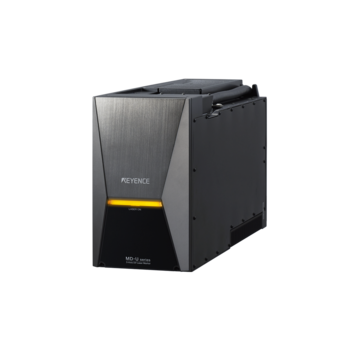
- Code each packaging level. For heat-sensitive film laminates, the MD-U Series UV laser marks with minimal heat stress.
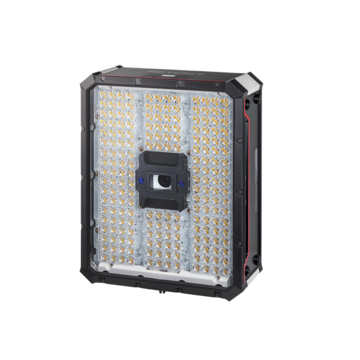
- For inline reading on the conveyor, the SR-5000 Series logistics code reader offers a wide field of view, deep depth of field, high-speed reading, and pallet scanning.
- Code quality is a must. A share of codes on difficult substrates can fall below the required grade, so grading to ISO/IEC 15415 and 15416 should be an acceptance criterion.
From Manual Bookings to Gap-Free Traceability: The Typical Starting Point
The starting point is similar in many plants. Traceability is fully manual, for example through paper bookings or double scans at individual stations. That works as long as the process runs stably, but it is error-prone, and after a disruption it often can't deliver a complete, reliable history.
A project rarely starts from enthusiasm for technology. It starts from real pressure. Typical triggers are inventory discrepancies that can no longer be traced, customer requirements for documented traceability, or regulatory requirements. A single inventory discrepancy can force a manual recheck of thousands of cartons. At that point, the cost of manual capture becomes obvious.
The pragmatic way in is usually a pilot line instead of a large rollout. First, one line is fully equipped and the architecture is validated under real conditions. Only then does scaling follow, often with a plant-wide or even global view. This approach reduces risk and creates a solid base for standardization.
Coding at Each Packaging Level: Primary Packaging, Case, Pallet
A continuous chain only exists if each packaging level carries its own unique code.
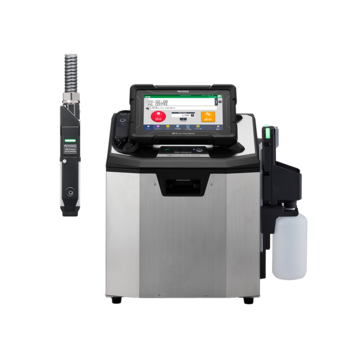
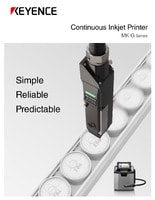
- Primary level. The best-before date, lot number, and, where needed, a Data Matrix code go on the film, cup, or label, using continuous inkjet (such as the MK-G Series) or a laser, depending on the substrate. For plastic parts, the MD-X Series 3-axis hybrid laser marker suits the job. For film laminates, a UV laser such as the MD-U Series is the usual choice, because conventional-wavelength lasers can cause heat damage to the film.
- Secondary level. The case gets its case coding with a barcode or Data Matrix code, printed directly and driven from the higher-level system. KEYENCE's inkjet and case coding lineup covers this level.
- Tertiary level. The pallet gets its label, which is generated automatically and tied into the chain.
Only when every level is identified uniquely can you later trace which unit was in which case on which pallet.
Inline Code Reading on the Conveyor: Side Reading, Top Reading, Pallet Scan
Printed codes are only half the chain. They have to be read reliably and at line speed. The practical requirements are demanding. Typical belt speeds are about 140 to 240 feet per minute, reading fields can span the full belt width, and a deep depth of field is needed so codes are captured wherever they sit on the case.
This leads to different reading concepts:
- Side and top reading cover codes at different positions. Where a single reader isn't enough, multi-head arrays work together.
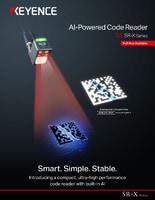
- Stationary code readers such as the SR-X Series AI-powered code readers handle inline reading at defined positions.
- Wide-range and tunnel reading is the domain of the SR-5000 Series, with a large field of view, very deep depth of field, and reading on fast conveyors, all the way to pallet scanning over long reading distances.
Beyond the reading itself, trigger and no-read handling are decisive. A photoelectric sensor or edge detection triggers the read at the right moment, and every no-read has a defined response window in which the line reacts, by rejecting, stopping, or routing to manual recapture.
Marrying Codes: Reconciling Product, Case, and Pallet Data
The core principle of traceability is marrying the codes. That means the unique link that records which unit is in which case and on which pallet. This relationship is what turns individual codes into a continuous history.
Technically, the assignment happens at every handoff point. When a product goes into a case and the case is closed, the product code and case code are read and linked. At palletizing, the pallet code is captured as well. Data flows in real time, and the linked records are reconciled with the order in the higher-level system, such as ERP or SAP, through standard interfaces.
For the chain to stay gap-free, error cases have to be settled clearly too. No-reads, double bookings, and manual recapture must not create unbooked units. A clean concept makes sure each unit is captured exactly once and assigned unambiguously, even if a code can't be read at first and has to be recaptured with a handheld scanner.
Code Quality Is a Must: Grading, Read Rates, and No-Read Handling
A chain is only as strong as its weakest code. Poor code quality at the point of marking comes back later in the chain, in the warehouse, in shipping, or at the trading partner. On difficult substrates such as printed cartons, a share of codes can fall below the required grade, which inevitably leads to read problems.
That is why code quality is a must, not an extra.
- Measure and set the grade. Code quality is measured as a grade (A/B/C) under ISO/IEC 15415 for 2D codes and ISO/IEC 15416 for barcodes. For direct part marks, ISO/IEC TR 29158 (AIM DPM-1-2006) also applies. Define this grade as an acceptance criterion for the marking, and don't check it only after the fact.
- Read rate as a figure. A read rate close to 100 percent is the goal. You reach it only when code quality, lighting, reader placement, and trigger all fit together.
- No-read handling as part of the concept. Every no-read needs a defined response so that no unit passes unbooked.
You can build verification of code quality straight into the line, for example through the grading function of the code readers or through a verification camera right after printing.
Serialization and Compliance: What Pharma and Food Projects Require in Addition
In regulated industries, a purely technical process chain isn't enough. It has to be documented in a traceable way and formally qualified. Pharma projects usually require continuous code grading, full documentation of the inspections, and qualification of the inspection systems used. Traceability has to be provable across all packaging levels at any time, and serialization requirements such as DSCSA in the US may apply.
A central compliance aspect is also verification of the right packaging material. That means documented proof that the released packaging material was actually used. In serialization-related applications, this is a key criterion that goes beyond reading codes.
For scaling, a solid standard only comes from a uniform system architecture. If you set up the chain consistently on a pilot line, with a uniform code structure, identical reading concepts, and standardized interfaces, you can roll the solution out plant-wide and across sites without redesigning every line.
Frequently Asked Questions
Q What does it mean to "marry" codes?
A
Marrying means linking the codes of different packaging levels, so you record which unit is in which case on which pallet. This assignment arises at each handoff point by reading the codes involved, and it is reconciled in real time with the order in the higher-level system. That is what creates a gap-free history.
Q How do you start with traceability if everything is manual today?
A
Usually you start with a pilot line, not a big project. One line is fully equipped, including primary, secondary, and tertiary coding, inline reading, and ERP reconciliation. The architecture is tested under real conditions, and only then does the plant-wide rollout follow. That reduces risk and provides a solid base for standardization.
Q Which code readers suit inline reading?
A
For code capture at defined positions on the conveyor, stationary code readers such as the SR-X Series are a fit. For applications with a large field of view, deep depth of field, fast conveyors, or pallet scans, the SR-5000 Series is designed for wide-range and tunnel reading. The overall concept also needs reliable triggering, for example through a photoelectric sensor or edge detection, and clearly defined no-read handling.
Q Why does code quality matter so much?
A
Poor codes show up later in the process chain and cause the biggest problems there. On difficult substrates, a share of codes can fall below the required grade, which leads to more no-reads and rework in the warehouse. Code quality should therefore be measured as a grade under ISO/IEC 15415 or ISO/IEC 15416 and set as a binding acceptance criterion for the marking.
Q What do pharma projects require in addition?
A
Pharma projects usually require more than a working technical chain. They call for continuous code grading, full documentation, and qualification of the inspection systems used. Verification of the right packaging material is also often required, meaning documented proof that the released packaging was used. A uniform system architecture makes a later rollout across lines and sites easier.