CMM (Coordinate Measuring Machine)
CMM for Shipbuilding
Key Takeaways
- Portable CMMs are ideal for shipbuilding, enabling on-site GD&T inspections of large, assembled components.
- A single CMM replaces multiple inspection tools, streamlining GD&T measurements and improving accuracy.
- Select CMM software that requires minimal training and features temperature compensation for reliable results.
Coordinate measuring machines, also known as CMMs, are precision metrology systems used for dimensional inspection and GD&T analysis. CMMs operate by using a probe to collect coordinate points from a part’s surface, then use software to calculate measurements such as size, location, form, and orientation. These systems are widely used across manufacturing industries for inspection, quality control, reverse engineering, and first article validation due to their high accuracy and versatility.
If you work in the shipbuilding industry, a CMM can make inspections faster, easier, and more accurate. Instead of using several different tools like calipers, micrometers, gauges, and tape measures, a CMM combines everything into one system. This helps simplify the measuring process while improving accuracy and repatability. In this blog, we’ll go over how to choose the right CMM for shipbuilding applications and what to look for when comparing systems.
How CMM Machines Are Used in the Shipbuilding Industry
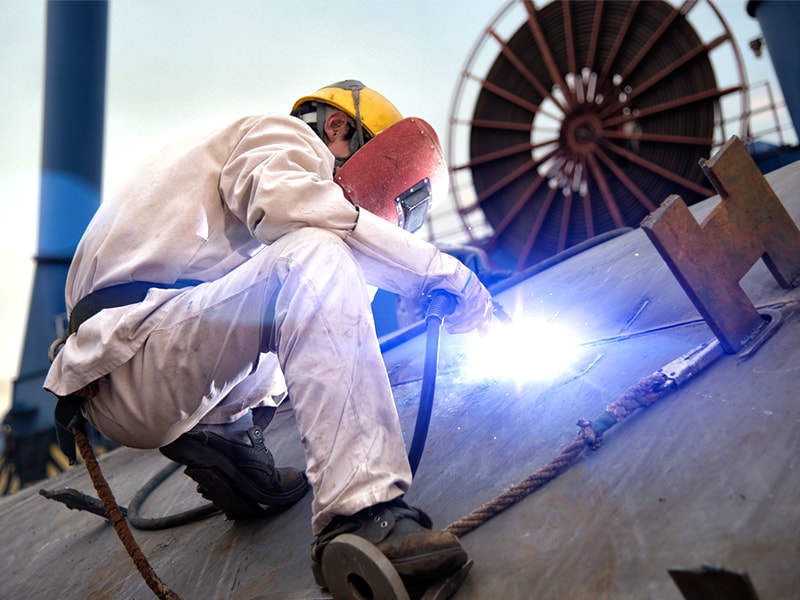
Shipbuilding inspection and manufacturing are unique because much of the work is performed directly on the ship, with inspections often taking place after assembly due to the large scale of the components and structures being built.
These challenges have made portable and specialized inspection tools essential for collecting accurate GD&T data throughout the shipbuilding process.
Using a coordinate measuring machine in shipbuilding reduces the number of tools needed while making GD&T measurements easier and more efficient. A single CMM can measure flatness, angles, depth, thickness, dimensions, and more, eliminating the need for multiple inspection tools. Portable CMMs can also be easily moved around the ship to measure large parts, complex shapes like propellers, and hard-to-reach features such as holes and recessed areas.
Choosing the Right CMM for Shipbuilding Applications
Like most machines, CMMs have different models with pros and cons for various applications.
CMMs have three main categories: bridge/gantry, cantilever/horizontal, and arm/portable. For the shipbuilding industry, the best CMM model to use is a portable CMM with adaptable software. Let's discuss why.
Select the Proper Model
All CMM models use a probe to measure dimensions and GD&T data, but they each have different setups.
Portable arm CMMs are more flexible than other types of CMMs because the probe is guided by the operator and does not require a fixed stage or table for the part. This makes them ideal for shipbuilding inspections, since the CMM can be brought directly to the vessel instead of moving large components to a measurement system.
Bridge, gantry, cantilever, and horizontal arm CMMs use a fixed stage and an automated probe controlled by the machine. The stage may sit on the floor or be elevated as part of the system. These CMMs are typically stationary, meaning the part must be brought to the machine for inspection.
Although bridge, gantry, cantilever, and horizontal CMMs are frequented in other industries, none of them are the ideal coordinate measuring machines for shipbuilding. These models are difficult to transport because of their heavy and stationary nature. In addition, since most shipbuilding inspection occurs after assembly within the vessel, it would be physically impossible to inspect with these models.
Select the Proper Software
While CMMs save time and provide valuable inspection data, traditional CMM software can often be difficult to operate. Many systems require extensive training and may struggle to maintain accurate measurements in changing environmental conditions such as temperature variations.
It is important to choose a CMM with software that is easy to understand, requires minimal training, and can adapt to different technicians and environmental conditions. This helps ensure more consistent and reliable measurement results in shipbuilding environments.
Integrate a CMM into Your Ship Manufacturing Processes
Implementing a coordinate measuring machine for shipbuilding will automate your shipbuilding inspection and replace your collection of tools with one that does it all.
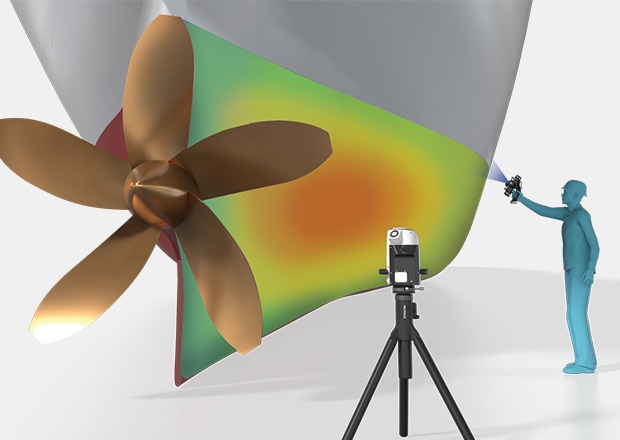
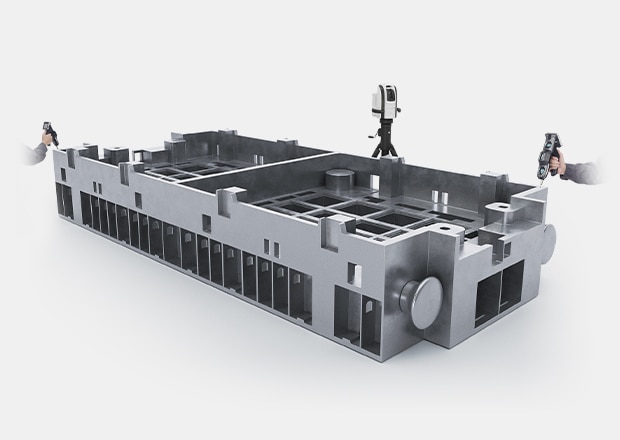
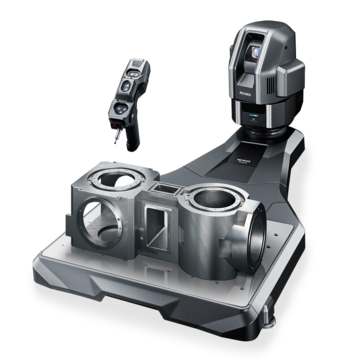
KEYENCE’s portable and handheld coordinate measuring machines are specialized for shipbuilding, featuring no-training-required software, real-time measurement response, and temperature compensation. Our CMMs transport between technicians in a rolling case and remain consistent with measurements no matter who is using it.
Stop worrying about transferring measurement data or tools. We’re ready to optimize your shipbuilding processes. Contact us today to learn more.

Related Products
Related Downloads
-
WM-6000 series Wide Area CMM Catalog
Brochure for the WM-6000 series Wide-Area CMM. A portable setup with a wireless handheld probe that enables users measure large parts and equipment.
![WM-6000 series Measurement / Application Examples [Fabrication Application Examples]](/img/asset/AS_116822_L.jpg)
![WM-6000 series Measurement / Application Examples [In-Machine Measurement Examples]](/img/asset/AS_116821_L.jpg)
![WM-6000 series Measurement / Application Examples [System Versatility Examples]](/img/asset/AS_116820_L.jpg)