CMM (Coordinate Measuring Machine)
CMM for Medical Device Industry
Key Takeaways
- Portable CMMs enable fast, on-site GD&T inspections for large medical devices, reducing production downtime.
- Optical inspection systems provide non-contact, submicron accuracy for small, delicate medical components.
- Select software with CAD comparison and data analysis to streamline reverse engineering and quality control.

A coordinate measuring machine, also known as a CMM, is a metrology machine that is used for dimensional and GD&T measurements. CMMs use a probe to collect coordinate points and calculate measurements with software. A vision measurement machine (VMM) is an automated optical inspection system that can perform non-contact measurements to high degrees of accuracy and repeatability at the push of a button.
If you’re in the medical device industry, a CMM or optical inspection system can help improve efficiency in your inspection, measurement, and reverse engineering processes without sacrificing precision or accuracy.
In this blog, we’ll discuss how to choose a CMM or optical inspection system for the medical device industry.
How CMMs and Optical Inspection Systems are Used in Medical Device Manufacturing
Medical device manufacturing differs from many other manufacturing processes. Devices are often produced in small batches, defects carry serious consequences, and precision is critical. Due to the high level of care required throughout production, efficiency is important, but accuracy and reliability always come first.
CMMs in the medical industry are commonly used for inspecting machined components, equipment assemblies, housings, mold verification, production machine alignment, and calibration. Optical inspection systems are often used for applications involving tight tolerances, delicate features, or small components, such as prototypes, implants, prosthetics, and other precision medical devices. Their non-contact measurement capabilities make them especially useful for inspecting sensitive or highly detailed parts.
Choosing the Right Device: CMM and Optical Inspection System for Medical Device Applications
Like most inspection systems, different models have different pros and cons for a range of applications.
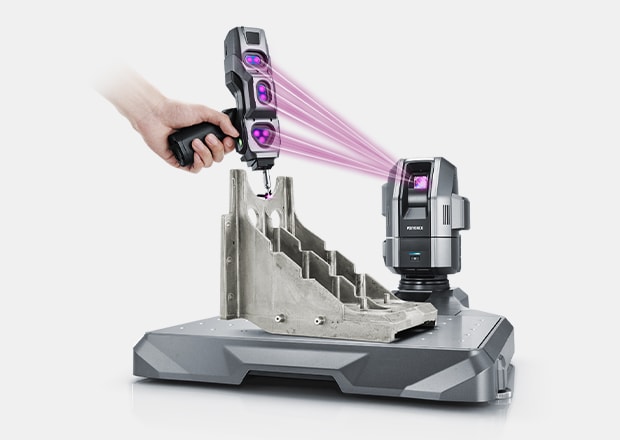
CMMs are often best suited for larger medical device applications, components that do not require ultra-fine tolerances, and parts that are not affected by contact-based measurement. Portable CMMs with CAD comparison capabilities also allow manufacturers to perform fast and efficient measurements directly on the shop floor, helping reduce inspection time while keeping production moving efficiently.
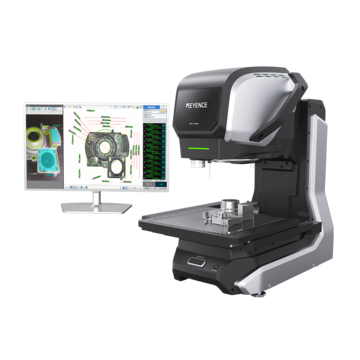
For higher-throughput or non-contact medical applications, optical inspection systems such as automated optical comparators and multisensor measurement systems are often the better solution. These systems excel at inspecting small, highly detailed parts with extremely tight tolerances while eliminating the risk of contact-based measurement affecting the component. For applications requiring the highest level of precision, multisensor systems with submicron accuracy like the KEYENCE IM-X Series, provide fast, repeatable, and highly accurate measurements for demanding medical device inspections.
Select the Proper Model
Portable CMMs are handheld and easy to move around, allowing the system to be brought directly to the part instead of moving parts to an inspection area. In medical device manufacturing, this makes them ideal for in-process inspections and facilities without a dedicated quality room. Even in plants with separate inspection areas, portable CMMs help reduce time spent transporting parts and can ease the workload on automated CMMs that often experience inspection backlogs.
Alternatively, bridge/gantry and cantilever/horizontal CMMs are typically stationary systems located in dedicated inspection rooms. While bridge and gantry CMMs are known for their high precision, they lack the flexibility and portability that handheld CMMs provide for shop-floor measurements and larger applications.
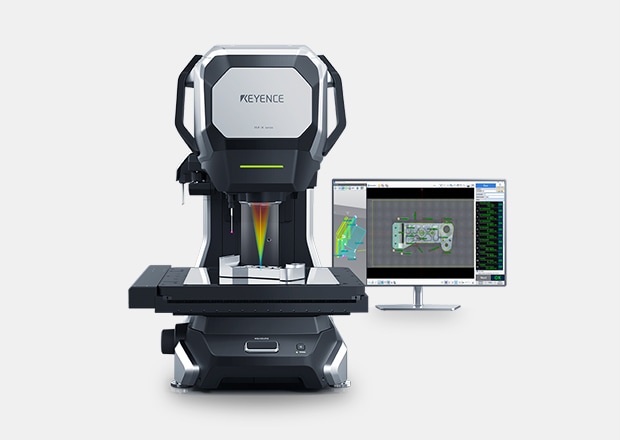
Because of the unique challenges medical devices often pose, optical inspection systems or VMMs offer the accuracy, precision, or flexibility of inspection that is often required and that a CMM may lack. The IM-X Series with the LM Camera Head is a hyper-accurate, multisensor measurement system that helps inspect parts with a wide range of shapes, sizes, and materials.
Select the Proper Software
The proper software for medical device manufacturing improves reverse engineering capabilities, time spent analyzing data, and precision with repeated production.
Data analysis software automates graphing, statistical analysis, and real-time inspection feedback. This software spots trends of incorrect inspections in real time so technicians can adjust or stop the device from moving further into the supply chain. Alternatively, the system can use this data for repetitive measurements or inspections for a batch of devices.
Another valuable software feature is CAD model comparison. Systems with this capability automatically compare measurement data to the original CAD model and identify precise dimensional differences between the part and the design. This helps speed up the reverse engineering process by allowing technicians to quickly identify deviations and make adjustments more efficiently.
Integrate the CMM and Optical Measurement Systems into the Medical Device Manufacturing Process
If you’re looking for measurement solutions that can improve efficiency without compromising precision in medical device manufacturing, the KEYENCE XM Series and KEYENCE IM-X Series provide the speed, accuracy, and repeatability needed for demanding inspection applications in the medical industry.
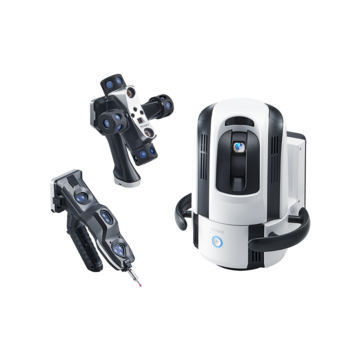
The KEYENCE XM Series is a portable handheld CMM capable of measuring parts up to 2 meters (6.6 feet) while capturing full GD&T data. Its integrated software includes 3D CAD model comparison and advanced data analysis tools to streamline inspections and reverse engineering applications. The system can also generate traceability reports complete with trend graphs, statistical analysis, and histograms, making it easy to share inspection data throughout the supply chain.
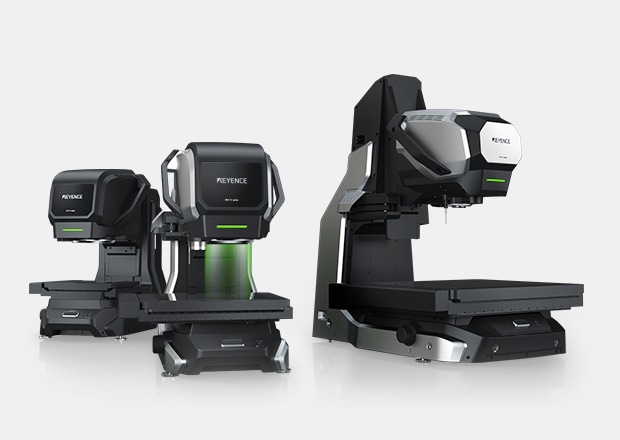
For applications up to 19 inches or those requiring non-contact inspection, the KEYENCE IM-X Series is an ideal solution. These optical inspection systems can measure parts in seconds with submicron accuracy, making them well suited for even the most demanding tolerance requirements.
Contact us today for a free demo or to discuss any questions regarding these systems.

Related Products
Related Downloads
-
XM Series Handheld Probe Coordinate Measuring Machine Catalog
Brochure for the XM-5000 Series Handheld CMM. Portable CMM to easily and accurately measure 3D and GD&T features anywhere including the shop floor and in the machine tool.