CMM (Coordinate Measuring Machine)
CMM in Manufacturing and Fabrication
Key Takeaways
- Portable CMMs streamline manufacturing inspections by allowing on-site measurements, reducing downtime.
- A single CMM replaces traditional hand tools, offering faster and more accurate GD&T evaluations.
- Choose user-friendly software with 3D CAD comparison and environmental compensation for consistent results.
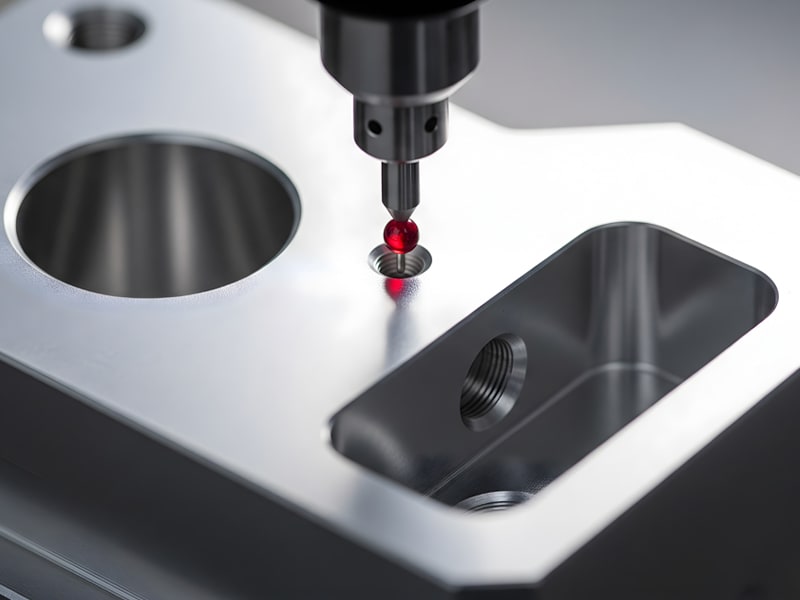
Coordinate measuring machines, also known as CMMs, are commonly used metrology machines for dimension and GD&T features. CMMs use a probe to collect coordinate points and calculate measurements with software.
For those in the manufacturing industry or fabrication industry, a coordinate measuring machine is an opportunity to streamline processes and final inspections.
How CMM Machines are Used in the Fabrication Industry
A CMM machine is typically used for in-process and final inspections in the fabrication industry.
In-process and final inspections involve both visual and dimensional verification. While tools such as calipers, micrometers, and gauges can perform basic measurements, a CMM combines these capabilities into a single system while offering far more advanced inspection functionality. In addition to standard fabrication measurements, CMMs can evaluate GD&T features such as flatness, squareness, parallelism, perpendicularity, and angularity. CMM software helps automate the inspection process by instantly calculating measurements and analysis, improving inspection speed, accuracy, and consistency.
CMMs are also more accurate than traditional inspection tools, helping ensure precision parts meet exact specifications. They can also measure complex shapes and 3D features, making them ideal for a wide range of manufacturing applications.
Choosing the Right CMM for Fabrication Applications
Like most industrial equipment, CMMs are available in several models, each with advantages for different applications. The three main CMM categories are bridge/gantry, cantilever/horizontal arm, and portable arm systems. For many plastics manufacturing applications, portable CMMs paired with adaptable software are often the best fit. Let’s take a look at why.
Select the Proper Model
One of the most versatile and efficient CMM options for the fabrication industry is a portable, handheld CMM.
In-process and final inspections are necessary, but they can also be time-consuming, especially when using a fixed-position CMM. Traditional systems often require parts to be transported to a dedicated inspection area, forcing production to pause during the process. In many cases, manufacturers must also wait for an available technician or open machine time before inspections can begin.
Portable handheld CMMs help eliminate these delays by bringing the measurement system directly to the part. Inspections that once caused lengthy downtime can often be completed in just minutes, helping improve efficiency while keeping production moving.
Select the Proper Software
The proper CMM software for the fabrication industry should combine a user-friendly interface, fast inspection times, 3D CAD comparison, and environmental compensation features to help streamline inspections while improving accuracy and consistency throughout production.
The manufacturing industry is currently facing a shortage of skilled technicians while also seeing an increase in entry-level employees. As a result, CMM software needs to be easy to learn and simple to operate so it does not require extensive training or create delays between operators. Fast inspection times are equally important, helping manufacturers reduce downtime while maintaining consistent and reliable measurements across technicians.
Two important software features to look for are 3D CAD comparison and environmental compensation. 3D CAD comparison allows the CMM to inspect a part and automatically compare the collected data to its original CAD model, quickly highlighting dimensional differences and tolerance issues. This helps reduce inspection time while improving efficiency and consistency. Environmental compensation is equally important for shop-floor and portable CMM applications, where vibration and temperature changes can impact measurement accuracy. Software that accounts for these conditions helps maintain reliable measurements across different production environments and can also alert operators when conditions are too unstable for accurate inspection.
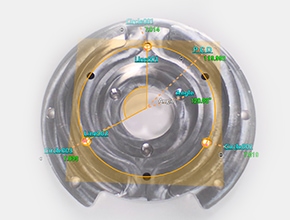
PCD, dividing angle
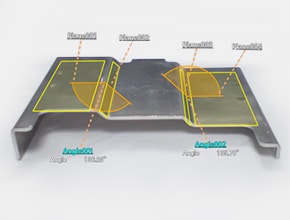
Bending angle
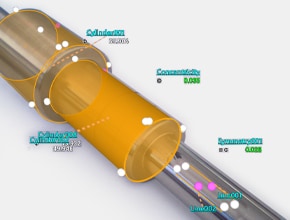
Coaxiality, symmetry
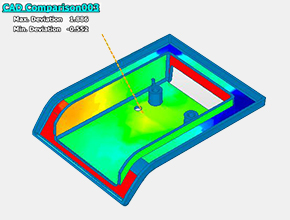
3D CAD comparison
Integrate the CMM into Manufacturing and Fabrication Process
Implementing coordinate measuring machines in fabrication and manufacturing will let you inspect your parts on the shop floor and will provide better accuracy than traditional hand tools.
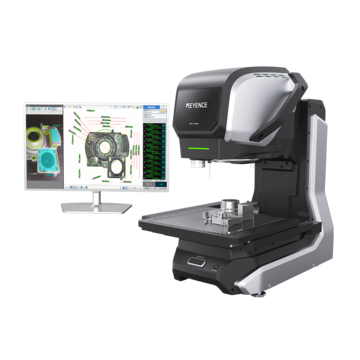
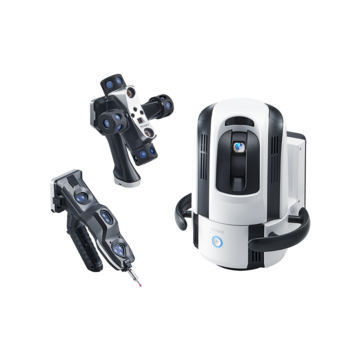
KEYENCE's portable and handheld coordinate measuring machines, the WM Series and the XM Series, are designed for demanding fabrication and manufacturing applications. Both systems feature intuitive software, 3D CAD model comparison, and temperature compensation to help improve inspection speed, accuracy, and consistency. These CMMs have helped manufacturers streamline and modernize their inspection processes. Are you ready to transform your quality control process?
Contact us today for a free demo.

Related Products
Related Downloads
-
WM-6000 series Wide Area CMM Catalog
Brochure for the WM-6000 series Wide-Area CMM. A portable setup with a wireless handheld probe that enables users measure large parts and equipment.
![WM-6000 series Measurement / Application Examples [Fabrication Application Examples]](/img/asset/AS_116822_L.jpg)
![WM-6000 series Measurement / Application Examples [In-Machine Measurement Examples]](/img/asset/AS_116821_L.jpg)
![WM-6000 series Measurement / Application Examples [System Versatility Examples]](/img/asset/AS_116820_L.jpg)