Industrial Laser Marking Systems / Laser Markers
Best Laser Marking Methods for Dental Aligners
-
Tags:
- Battery , Laser Ablation , Electric Vehicle
Key Takeaways
- UV lasers (355 nm) give micron-level, cold marks ideal for transparent aligners via photochemical ablation.
- CO2 lasers (10600 nm) work for opaque/colored thermoplastics; cheaper but create more heat-affected marks.
- Select system by material compatibility, production volume, integration, mark verification, workspace, and support.
- Laser marking provides permanent, consumable-free UDI traceability and fast automated throughput for high-volume lines.
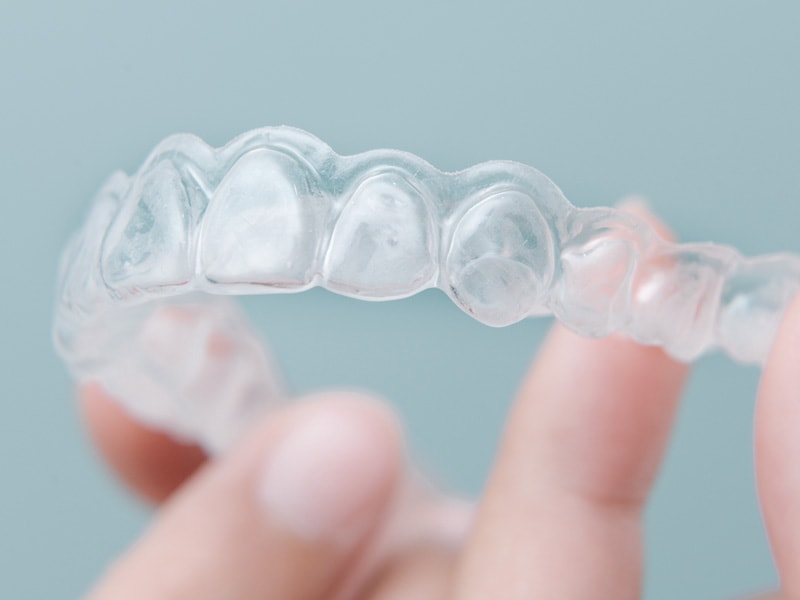
The orthodontic industry has changed substantially in the last two decades. Clear aligners have become the choice for millions of people looking for discreet teeth straightening options. As production volumes rise and regulatory constraints tighten, manufacturers face increasing pressure to deploy dependable tracking systems.
Laser marking dental aligners offers a permanent solution that meets both compliance standards and operational needs without compromising the aesthetics or function of these delicate devices.
Why Laser Marking Is Ideal for Dental Aligners
Traditional marking methods fall short when applied to clear thermoplastic materials. Ink stamps fade over time and can transfer to patients' teeth or gums. When wearing or washing, adhesive labels come off. These short-term fixes result in traceability gaps that can be expensive during quality investigations or recalls.
Laser marking for dental aligners offers a non-contact technique that immediately applies permanent identification codes to the material's surface. No consumables, such as chemicals or inks, are needed for marking. Instead, light is used to create surface-level contrast marks that are permanent and contamination free.
The method modifies the material by applying concentrated light radiation. This produces contrast that scanning devices can interpret, and that is visible to the human eye. Because the beam can be programmed to very lightly affect the aligner, there's no risk of stressing or deforming the part. The marking happens in seconds, making it suitable for high-volume production lines processing thousands of units daily.
Furthermore, organizations around the world require medical devices to have unique device identification (UDI) codes. These codes enable swift tracking in the event of a safety issue or a product recall. Aside from requirements, permanent labeling enables manufacturers to manage inventory, combat counterfeiting, and maintain quality control across production facilities.
UV Laser Marking for Clear Aligners
UV laser marking has emerged as the preferred technology for transparent and translucent materials. These systems operate at a wavelength of 355 nanometers, which falls in the ultraviolet spectrum. The short wavelength allows for extremely precise focusing, creating marks as small as a few micrometers in diameter.
Moreover, the physics of UV marking differs from that of other lasers. UV lasers break molecular bonds by a process known as photochemical ablation, rather than using heat to burn or melt materials. The "cold" marking procedure reduces heat-affected zones around the mark. This feature is particularly useful for heat-sensitive thermoplastics used in aligner manufacturing.
Additionally, clear polyurethane and other transparent polymers respond extremely well to UV rays. Laser marking dental aligners produces a delicate white or frosted appearance that contrasts with the surrounding transparent material. These marks are often not felt by patients with their tongues, and they have no effect on how the aligner fits or functions. From a cosmetic aspect, manufacturers can insert codes in regions that are buried against tooth surfaces.
Advantages of UV Laser Systems
The main advantage of UV technology is its precision. Marking complex patterns, such as 2D data matrix codes that cram a lot of information into a small area, is made possible by the narrow beam focus. Batch numbers, serial codes, manufacturing dates, and facility identifiers can all be contained in a single tiny mark. Advanced optical character recognition (OCR) systems can read these codes instantly during packaging or distribution.
Speed matches precision in importance for production environments. UV lasers mark most aligner materials in under two seconds per unit. Automation systems can integrate marking directly into thermoforming or trimming lines.
The method works exceptionally well with a variety of aligner materials. Simple parameter adjustment allows UV systems to adapt regardless of whether manufacturers utilize PETG, polyurethane, or bespoke blends. Power settings, marking speed, and focus depth can all be fine-tuned to optimize mark quality for each specific material formulation.
Maintenance requirements remain minimal compared to other marking technologies. UV laser systems contain few moving parts and generate no consumable waste. Facilities avoid ongoing costs for replacement inks, solvents, or cleaning supplies. The laser source itself typically operates for tens of thousands of hours before requiring service. This reliability translates to a lower total cost of ownership over the equipment's lifespan.
CO2 Laser Marking on Thermoplastic Materials
CO2 laser marking plastic represents an alternative approach that works well for certain aligner applications. These systems emit infrared light at a wavelength of 10600 nanometers. The longer wavelength interacts differently with polymer materials compared to UV light, creating marks through controlled surface melting or color change.
Thermoplastic materials absorb CO2 laser energy readily, making the marking process efficient and fast. The laser creates contrast by slightly raising or lowering the material surface, or by changing its color through controlled heating. For opaque or colored aligners used in specific treatment protocols, CO2 marking can deliver excellent results at a lower equipment cost than UV systems.
The features of the mark are different from those of UV technology. Darker markings with somewhat elevated edges are usually produced by CO2 lasers. Although these marks can still be within medical device limitations, they feel more noticeable to the touch. For laser marking dental appliances like retainers, bite guards, and other orthodontic devices where mark visibility is more important than complete discretion, manufacturers frequently employ CO2 systems.
Compared to UV solutions, CO2 systems use more heat to generate contrast. Because the infrared wavelength is not as focused, the heat-affected zone extends further away from the mark center. This restriction may limit the locations where markings can be firmly applied without risking material integrity in extremely thin aligner materials or tight tolerance applications.
Key Considerations When Choosing a Laser System
Although there are many factors in play, choosing the right laser marking dental aligners system comes down to a few considerations:
- Material compatibility
- Production volume
- Integration capabilities
- Mark quality verification
- Workspace requirements
- Service and support
Material compatibility should be the primary consideration during the selection procedure. Manufacturers who only make clear aligners will find that UV systems produce better outcomes and increase patient acceptance. Those producing a wider range of laser marking dental appliances across different materials and opacity levels might benefit from CO2 flexibility or even a combination of both technologies.
The amount of production affects the return on investment calculation. Laser systems' speed and automation possibilities make them ideal for high-volume tasks. Facilities that produce fewer than a thousand units per month may struggle to justify the capital outlay, and regulatory restrictions may leave little choice but permanent labeling.
Integration capabilities matter for seamless manufacturing flow. Look for systems offering standard communication protocols that connect with existing production software. The ability to automatically pull marking data from batch management systems eliminates manual data entry errors and speeds changeovers between different aligner series.
Mark quality verification also deserves careful attention. The best laser marking dental aligner systems include built-in vision systems that inspect each mark immediately after creation. These cameras verify code readability and detect any marking defects before the aligner moves downstream. Automated verification catches issues in real-time rather than discovering problems during packaging or after shipping.
Different systems demand varying amounts of area. Desktop units are ideal for smaller operations or restricted spaces. Inline conveyor systems are compatible with automated lines but require space for setup and maintenance. When planning space, consider your existing needs as well as potential expansion.
Finally, service assistance is important for keeping equipment working smoothly. Choose providers with nearby technical teams who understand laser technology and medical device manufacturing. Fast repairs and readily available parts keep your production schedule and obligations on track.
Ready to improve traceability and precision in your aligner production? Speak with a laser marking specialist today to find the ideal UV or CO2 solution for your manufacturing line.

![Laser Marker Electric Vehicle Applications [Battery, ECU, converter and inverter edition]](/img/asset/AS_106938_L.jpg)