Industrial Laser Marking Systems / Laser Markers
UV Laser Marking vs Pad Printing: Faster, Cleaner, and More Reliable Marking for Medical Plastics
-
Tags:
- Laser Marking , Plastic , Medical
Key Takeaways
- UV laser marking eliminates consumables and downtime compared with pad printing.
- MD‑U UV laser delivers up to 4× faster cycle times for identical marks.
- Laser marks are permanent, solvent- and autoclave‑resistant, improving traceability and sterilization.
- Instant digital changeover enables reliable variable data and UDI‑compliant serialization on medical plastics.
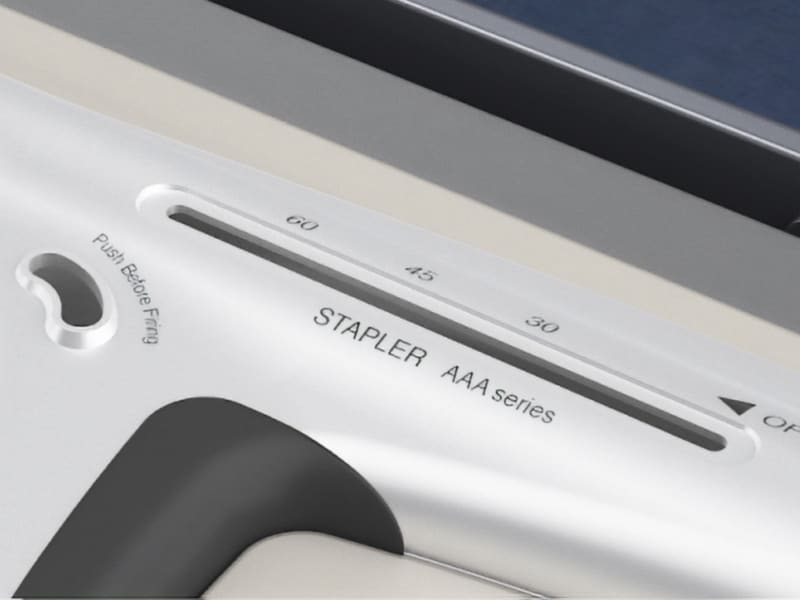
When it comes to medical part marking, speed, consistency, and traceability are non-negotiable. Traditional pad printing methods rely on inks, pads, and curing time — slowing throughput and risking inconsistent marks. Laser marking eliminates these issues entirely, offering permanent, high-contrast results with zero consumables and no downtime.
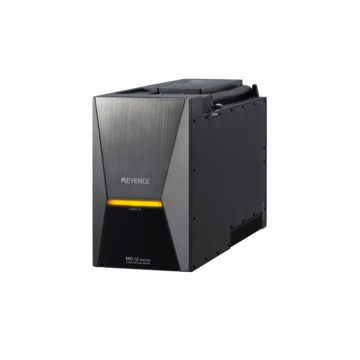
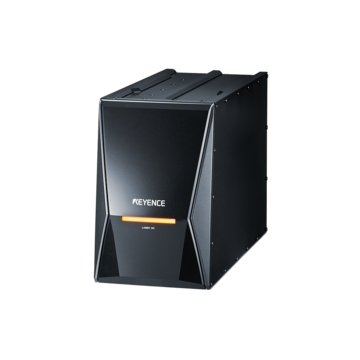
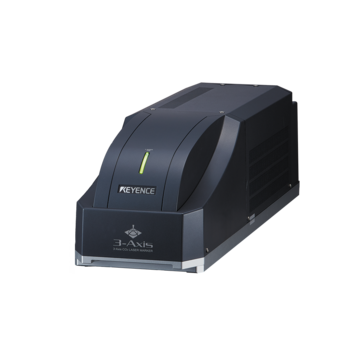
In this comparison, KEYENCE’s MD-U UV Laser Marker demonstrates how advanced laser technology replaces pad printing in medical manufacturing. By integrating directly into automated production lines, the MD-U delivers identical or better mark quality at up to 4× faster cycle times, while maintaining cleanroom compatibility and UDI compliance.
What Is UV Laser Marking?
UV laser marking uses a focused ultraviolet beam to etch a permanent mark into a part's surface through a cold marking process. Because the wavelength runs shorter than a standard fiber or CO2 laser, it generates far less heat, which makes it a good fit for materials that can't handle much thermal stress. That's a big reason manufacturers choose UV laser marking medical plastics over other laser types: it avoids the melting, discoloration, or micro-cracking that heat-sensitive polymers are prone to. This kind of precision is what keeps barcodes, date codes, and UDI marks legible long after a part has been through sterilization.
What Is Pad Printing?
Pad printing is an older, contact-based printing method. Ink is transferred from an etched plate onto a flexible silicone pad, then pressed onto the part. It's remained a common choice for pad printing medical devices for years, partly because the pad can conform to curved or oddly shaped surfaces that flat printing struggles with.
That said, results depend heavily on ink chemistry, drying time, and the condition of the pad itself, so quality can drift from one run to the next. This inconsistency is often the reason manufacturers start looking at laser marking medical devices as a steadier, more predictable option.
Limitations of Pad Printing in Medical Manufacturing
While pad printing has been widely used in the industry for decades, its limitations have become increasingly costly in modern high-speed, high-traceability production environments.
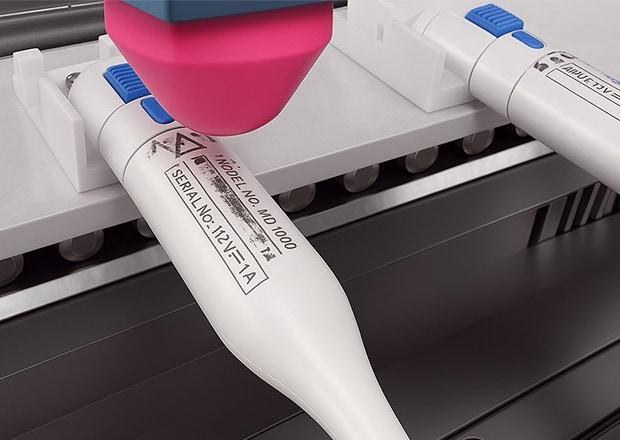
- Requires consumables — pads, inks, and solvents must be continuously purchased, replaced, and maintained.
- Slower throughput — each mark requires a full application and curing cycle, creating unavoidable downtime.
- Inconsistent mark quality — ink adhesion varies by material, and marks can fade or peel after sterilization.
- Limited traceability — variable data (lot codes, UDI marks) require frequent manual setup and high operator dependency.
These challenges reduce overall equipment efficiency (OEE) and increase long-term operating costs — especially in environments requiring lot traceability or 24/7 production.
How Laser Marking Solves These Challenges
Laser marking offers a non-contact, maintenance-free alternative that directly addresses each shortcoming of pad printing.
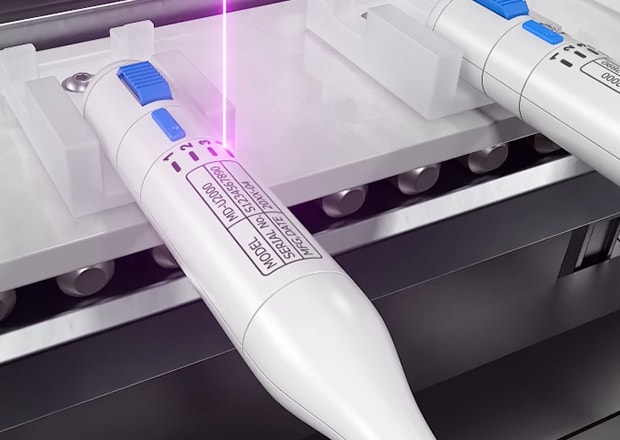
- Permanent surface change — laser alters only the surface of the material, creating marks that never peel, fade, or require curing.
- No consumables or downtime — eliminates the need for pads, inks, or solvents entirely.
- Instant design changeover — switch logos, barcodes, or text instantly by uploading new files.
- High-contrast precision — With a full lineup of laser technologies, KEYENCE delivers sharp, repeatable marks on virtually any material or surface type — from metals to multicolored or transparent plastics.
- Traceability ready — supports variable data such as lot codes, expiration dates, and UDI-compliant serialization.
By integrating directly into production or assembly lines, KEYENCE laser markers provide consistent mark quality without slowing throughput or introducing contamination risk.
Surface Quality Comparison: Pad Printing vs UV Laser Marking
Pad Printing
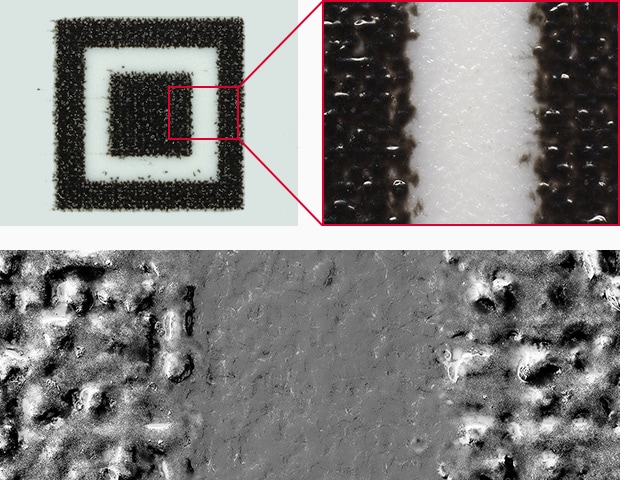
- Ink sits on surface → prone to peeling and fading
- Requires consumables (pads, inks, solvents)
- Edge bleed creates inconsistent marks
- Limited resistance to chemicals and sterilization
UV Laser Marking
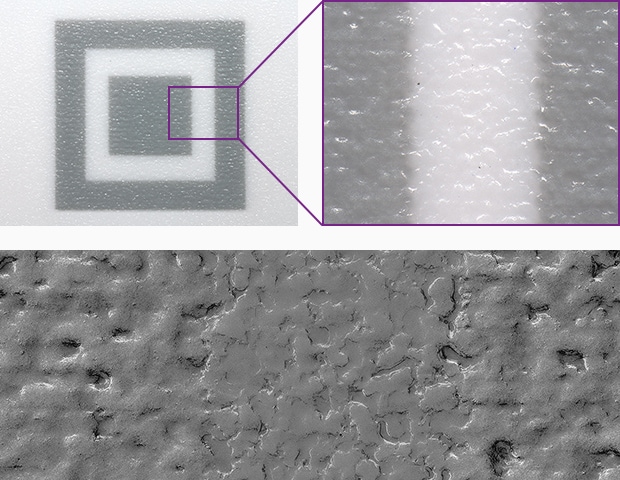
- Permanent surface change → no risk of peeling
- Maintenance-free and consumable-free
- High-contrast, precise, repeatable edges
- Resistant to solvents, autoclaves, and abrasion
Microscopic surface analysis shows that UV laser marks exhibit uniform contrast and edge clarity, supporting suitability for components that undergo chemical sterilization or abrasion in FDA-regulated environments.
*Sample marked with KEYENCE MD-U2510 UV Laser Marker.
High-Speed Marking & Throughput Advantage
In addition to achieving superior surface quality and mark durability, the MD-U2510 can also deliver these results at significantly higher production speeds.
In internal testing, KEYENCE’s MD-U2510 UV Laser Marker outperformed a conventional 2.5 W UV system in a label replacement application.
Conventional UV Laser
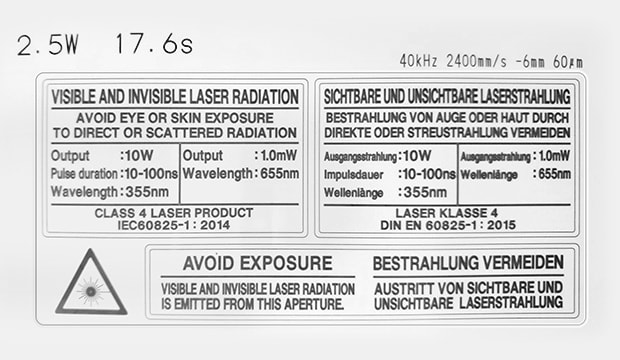
- Output Power : 2.5 W
- Cycle Time : 17.6 s
KEYENCE MD-U2510
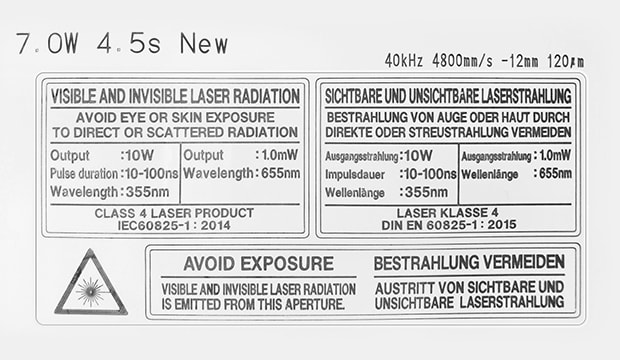
- Output Power : 7 W
- Cycle Time : 4.5 s
The MD-U2510 achieved identical mark contrast and edge definition in less than one-quarter of the time, clearly demonstrating its throughput advantage.
* Sample marked with KEYENCE MD-U2510 UV Laser Marker.
Applications in Medical Manufacturing
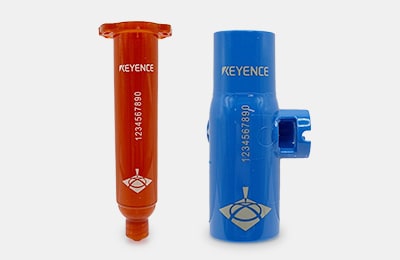
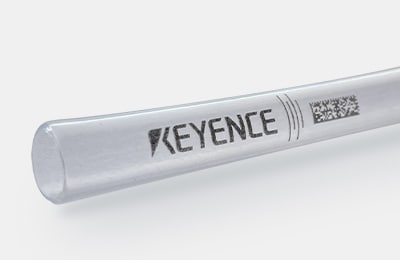
KEYENCE UV lasers are widely adopted for direct marking on a variety of medical plastics and components, including:
- Connectors & housings – durable identification without additional labeling
- Diagnostic kits & cartridges – compact, high-contrast barcodes and logos
- Transparent IV bags – legible codes without compromising clarity
- Catheters & tubing – fine, sterile marks on curved or flexible surfaces
- Caps & closures – variable lot or date coding directly on colored parts
These examples highlight the versatility of UV laser technology across materials like polycarbonate (PC), polypropylene (PP), and polyethylene (PE), all common in medical device manufacturing.
However, KEYENCE laser systems are not limited to plastics — our diverse lineup also enables high-quality marking on metals, glass, and other specialized materials used throughout the medical and life sciences industries.
* Sample marked with KEYENCE MD-U2510 UV Laser Marker.
Connectors
Catheters
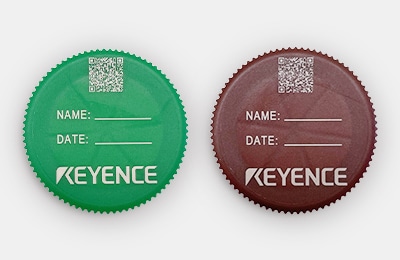
Caps&Closures
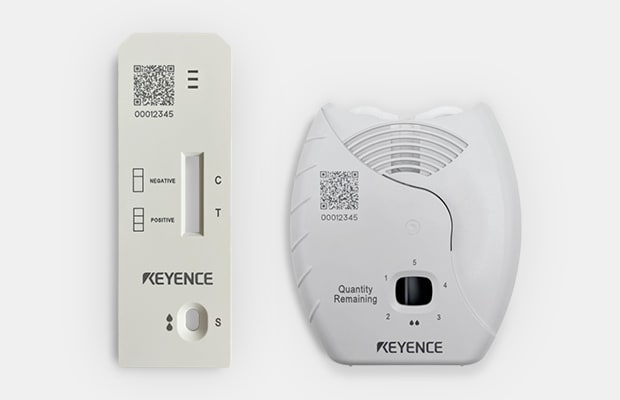
Kits&Cartridges
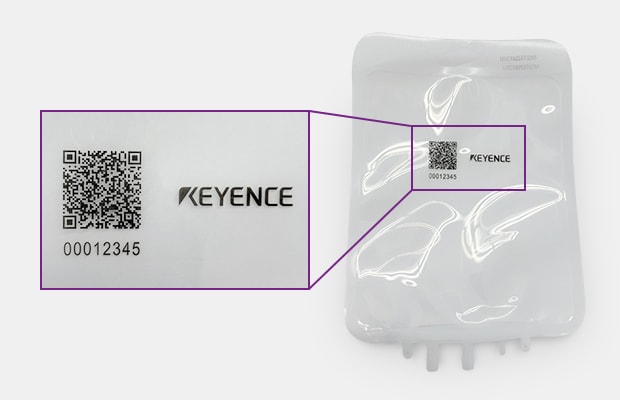
Transparent ⅣBags
How Each Technology Works: Side-by-Side Process Overview
Once past the general comparison, it helps to see how each process actually runs from start to finish. The steps below break down what happens on the production floor with UV laser marking vs pad printing, so your organization can see exactly where the time and variability come from.
UV Laser Marking Process Step by Step
A design file, whether it's a logo, barcode, or serial number, is created using the laser system's software. From there, the laser focuses a UV beam onto the part and alters the surface material to form the mark, all without ever touching it. Since there's no ink, pad, or plate involved, operators can switch between designs in seconds instead of resetting tooling for every job. For teams evaluating medical device laser marking, this digital-first setup is often what tips the decision away from pad printing.
Pad Printing Process Step by Step
The process begins with etching an image onto a metal plate, which then gets flooded with ink. A silicone pad presses down onto that plate, lifts the ink, and transfers it onto the part. From there, the ink has to cure before the part can move further down the line, and the pads themselves wear out and need replacing over time. Every one of these steps adds time, plus a few extra variables that simply don't come up once laser systems enter the picture.
UV Laser Marking vs Pad Printing: Key Differences at a Glance
Line the two methods side by side, and the gap starts to make sense. Laser marking skips consumables altogether, cuts changeover time down to seconds, and holds up noticeably better under sterilization or chemical exposure. Pad printing still has its place for certain color-heavy applications, but when it comes to medical plastics marking that needs to survive autoclaving or solvent contact, laser marking is often the safer bet.
If your organization is still weighing UV laser marking vs pad printing for an upcoming project, our team can walk you through the best options for your needs.
Clean, Consistent, and Future-Proof Marking
As the medical industry continues to demand higher throughput and greater traceability, laser marking has become the most efficient and reliable alternative to traditional pad printing.
KEYENCE laser systems deliver clean, permanent, and high-contrast results across a wide range of materials — eliminating consumables, reducing process time, and ensuring full compliance with UDI and sterilization standards.
Discover how KEYENCE laser marking can transform your production line — request a free marking test today.

Frequently Asked Questions
Is UV Laser Marking Safe for FDA-Regulated Medical Devices?
Yes. Since it doesn't introduce any ink, solvent, or adhesive onto the part, UV laser marking is widely accepted in FDA-regulated environments where the risk of contamination must remain as low as possible.
Can Pad Printing Still Be a Good Option for Curved Medical Parts?
Yes, the flexible pad conforms well to curved or irregular surfaces, which is part of why pad printing medical devices has stuck around this long. The tradeoff is that mark consistency tends to vary more than it does with a laser marker.
How Long Does Switching From Pad Printing to UV Laser Marking Usually Take?
Most manufacturers can get a UV laser marking system up and running within a few weeks, largely because the digital design process eliminates the need to order new plates, pads, or inks whenever a mark changes.