Industrial Laser Marking Systems / Laser Markers
Laser Marking on Lead
-
Tags:
- Laser Marking , Metal , Laser Engraving
Lead presents unique challenges for permanent identification marking. The material’s soft and flexible nature makes conventional marking methods problematic. For instance, mechanical engraving damages the surface, while chemical etching yields uneven results.
The good news is that laser marking on lead is a non-contact method that produces readable, long-lasting marks without sacrificing the integrity of the material.
Why Laser Marking Is Ideal for Lead
Traditional marking methods struggle with lead's unique material properties. The metal's softness and malleability demand a gentler approach that delivers permanent identification without physical damage.
- Non-contact processing protects soft material - Lead's softness makes it vulnerable to physical marking methods like stamping and engraving, which leave deep impressions that weaken components and create stress. Laser systems eliminate physical contact entirely, preserving the structural properties of thin lead sheets, battery terminals, and delicate components.
- Controlled surface modification creates permanent marks - Lead laser engraving produces marks through controlled surface oxidation or localized melting. The laser heats a precise area, creating a color change or texture difference that remains visible throughout the component's service life. Settings can be adjusted to create dark marks on lighter surfaces or white marks on oxidized lead.
- High-speed marking suits production environments - The process speed makes it practical for high-volume production. Marking cycles can be integrated into automated assembly lines without reducing manufacturing output or necessitating extra handling steps.
Challenges of Marking Soft Metals Like Lead
Soft metals take in laser energy in a different way than stronger materials like steel or titanium. Lead's ability to conduct heat quickly spreads it away from the focal point, which could affect more areas than planned. To make sure the marks are of good quality, this feature needs shorter pulse lengths and exact power control.
Avoiding Surface Damage and Material Deformation
Laser marking soft metals requires parameter optimization that balances mark visibility against material preservation. Excessive power causes craters or rough textures, which degrade surface smoothness and may impede component function. Overly aggressive markings on battery connections may result in higher electrical resistance.
The rate at which heat builds up is controlled by both the scan speed and the pulse frequency. Faster scanning with less power per pulse spreads thermal energy over time, which lowers peak temperatures in any one place. This method lowers the melting point while still providing enough energy to leave marks that can be seen.
In soft materials, focus distance accuracy is particularly critical. To enhance marking efficiency while minimizing heat transfer into nearby regions, correct concentration focuses energy in the smallest possible location. For consistent results, metal marking systems must take these optical characteristics into consideration while choosing wavelengths and modifying parameters.
Applications of Lead Laser Engraving
Many industries use marked lead parts. Lead is used in specialized equipment because it is good for quality control and compliance, as it is a good conductor of electricity, protects against radiation, and does not rust.
Battery Terminals and Industrial Components
High-contrast laser marking is used in battery manufacturing to identify and trace terminals. Each terminal receives codes that connect it to batch data, material certificates, and assembly records. These marks can withstand the battery assembly process, which includes welding, chemical exposure, and mechanical stress.
Radiation shielding components in medical and nuclear applications must be permanently marked for inventory control and regulatory compliance. Lead bricks, sheets, and custom-formed shields include identifying tags that monitor the material supplier, thickness verification, and installation position.
Electrical components with lead solder connections or lead-based contacts require marking methods that do not degrade electrical qualities. Also, laser marks improve traceability without introducing contaminants or causing surface imperfections that disrupt current flow.
Best Laser Systems for High-Contrast Lead Marking
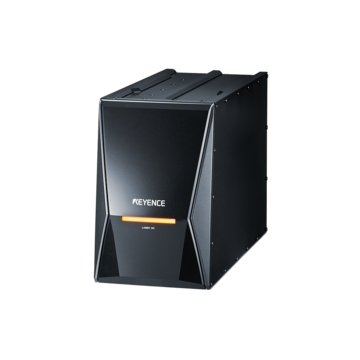
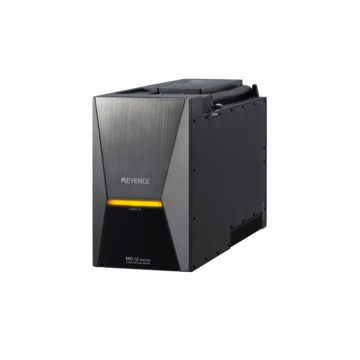
Most lead marking applications are well-suited to fiber lasers. Their wavelength provides good absorption on lead surfaces, and the varied power levels may accommodate everything from thin foil to thick plate. The systems integrate easily into production lines with minimal maintenance requirements.
UV laser marking offers advantages for industrial lead marking solutions requiring minimal heat input. The shorter wavelength enables cold processing that produces marks with almost no thermal effect on the surrounding material.
Hybrid systems combining multiple wavelengths provide flexibility for facilities marking diverse materials. The equipment handles lead, steel, aluminum, and plastics by switching wavelengths and parameters.
Metal laser engravers differ in terms of power output, beam quality, and control sophistication. Applications that require fine detail necessitate higher-resolution devices with precise control. Simple alphanumeric labeling works with more basic arrangements, lowering costs while still meeting functional needs.
Laser Marking on Lead - The Right Choice
Improve traceability and compliance with precision laser marking on lead. Contact KEYENCE to find the right system for your application.