Industrial Laser Marking Systems / Laser Markers
Benefits of Laser Marking Machines for Your Business
-
Tags:
- Laser Marking , Laser Labeling , Laser Cleaning
Key Takeaways
- Laser marking machine benefits include permanent, tamper-proof marks that meet FDA and IPC traceability requirements.
- Switching to laser marking eliminates consumables like ink, solvents, and etching chemicals, cutting long-term operating costs.
- Compared with chemical etching or inkjet printing, laser marking runs faster with far less downtime.
- A single laser system can mark metals, plastics, glass, and more, reducing the need for multiple machines on the floor.
Lasers are quizzical devices that inspire thoughts of sci-fi movies and dangerous beams, but contrary to popular belief, lasers have many practical and useful applications. In fact, lasers are revolutionizing businesses with their quick, permanent, and versatile methods for processing material with laser marking machines.
Laser marking machines are specialized pieces of equipment that use a focused light from the UV to the IR spectrum to heat a material to the point of leaving behind a mark. These machines stand out for compliant traceability marks, no consumables, and cost savings. In this blog, we'll dive into the benefits of laser marking machines and how they achieve this competitive edge.
What Are the Benefits of Laser Marking Machines?
Before getting into how each laser marking machine benefit plays out on the shop floor, it helps to step back and look at the bigger picture. At a high level, these systems combine speed, durability, and material flexibility in ways that older marking methods simply can't match, which is part of why the importance of laser marking in manufacturing keeps growing across so many types of laser engravers and industries.
Laser Marking Advantages
These machines are commonplace and highly regarded for numerous reasons.
Permanent Marks for Traceability and Compliance
Laser marking machines mark permanently. The marks cannot be rubbed off or fade away through time or exposure to contaminants. Because laser marks become part of the material itself, they hold up through the sanitizing, handling, and shipping that would wear away ink or labels.
That durability is exactly what regulators are looking for when they require traceable identifiers on medical devices, automotive components, and electronics. For manufacturers trying to stay ahead of compliance audits, this kind of permanence is often the deciding factor.
Fast Marking
Laser marking can be a quicker and more efficient marking process than chemical etching and inkjet printing. Chemical etching requires many steps that can last days, and laser marking happens instantaneously. Inkjet printing/labeling has consumables and replacement parts that can slow down the process and often lead to downtime—laser marking technology does not.
Versatile Use
Purchasing laser marking technology is an addition to your toolbox beyond just a basic marking system. Laser marking machines are effective on a range of materials, sizes, industries, and processing methods.
| Materials | Processing |
|---|---|
| Industries | ||||
|---|---|---|---|---|
| Automotive / Aerospace / Defense | Electric Vehicle | Semiconductor / Electronics | Medical | Food / Pharma |
|
Automotive / Aerospace / Defense
|
|
|
|
|
Reduced Consumables and Long-Term Operating Costs
Once a laser marking system is installed, there's no recurring bill for ink cartridges, etching chemicals, or printer ribbons to budget for. That single change quickly brings organizations savings, especially on lines running multiple shifts, since maintenance crews aren't constantly refilling ink or troubleshooting clogged nozzles. Over a few years, the savings from skipping consumables altogether tend to outweigh the upfront cost of the equipment itself.
Field of View
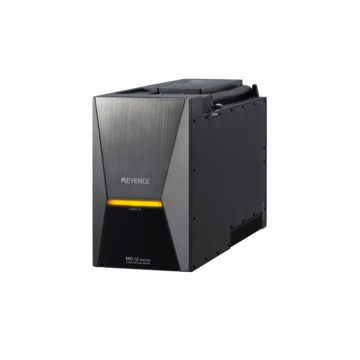
- 3-Axis Hybrid Laser Marker MD-X Series
- KEYENCE's hybrid laser marking system can mark across an area of 330 mm (12.99 in) x 330 mm (12.99 in) x 42 mm (1.65 in).
- 3-Axis UV Laser Marker MD-U Series
- KEYENCE's UV laser marking system can mark across an area of 330 mm (12.99 in) x 330 mm (12.99 in) x 42 mm (1.65 in).
- 3-Axis Fiber Laser Marker MD-F Series
- KEYENCE's fiber laser marking system can mark over an area of 300 mm (11.18 in) x 300 mm (11.18 in) x 42 mm (1.65 in).
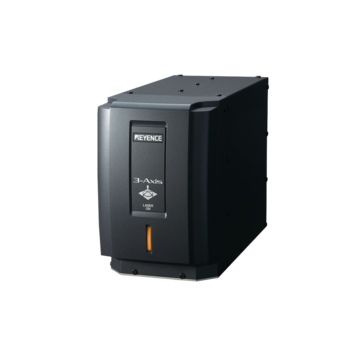
- 3-Axis CO2 Laser Marker ML-Z Series
- KEYENCE's CO2 laser marking system can mark across an area of up to 300 mm (11.18 in) x 300 mm (11.81 in) x 42 mm (1.65 in).
- Telecentric Green Laser Marker MD-T Series
- KEYENCE's green laser marking system achieves microscopic-level detail marking. This laser can create a readable 2D code as small as .35mm (.01 in) x .35 mm (.01 in).
Zero Consumables
There are a myriad of reasons why businesses are moving towards using fewer consumables. Here are a few of them:
- Decrease environmental impact
- Consume fewer materials
- Reduce waste
- Lower PPE equipment budget
Whatever the reason may be, laser marking technologies are often a viable solution. Laser marking machines use light to directly mark products and do not need any other materials. Because of this, there is no extra maintenance, material, PPE, or toxic waste costs.
Enhanced Durability and Longevity of Laser Marking
Laser marking is a durable process with both the marks and the machine. As discussed above, laser marks are permanent and readable. A few applications of how laser marks withstand industry-specific challenges are:
- Laser marking on medical devices withstands the constant sanitization, washing, and contact with bodily fluids
- Laser marking on stainless steel withstands rust adhesion paint
- Laser marking on parts withstands shot blasting
IP-64 Durability
In addition to the physical mark withstanding outside conditions, the actual machine has enhanced durability and longevity.
KEYENCE's MD-X, MD-U, and MD-F laser marking machines meet the IP-64 resistance specification. This specification means that water splashing from any direction will have no harmful effect on the machine's use, and there will be no ingress of dust, often referred to as dustproof and water-resistant.
Predictive Maintenance
KEYENCE's MD-X, MD-U, MD-F, and MD-T laser marking machines all have built-in thermopile power monitors.
The thermopile power monitor is an aspect of the laser marking technology that acts as a predictive maintenance tool by measuring the output power of the laser to detect any drops in power over time.
The predictive maintenance will then give a warning about possible malfunctions so that you can proactively fix them before they affect manufacturing processes.
Lens Protection Filter
The MD-X comes attached with a lens protection filter installed. This filter decreases wear and tear on the lens so that your laser marking machine will last even longer.
Cost Savings with Laser Marking
Laser marking is an investment that saves your budget in the long run. Instead of having to continuously budget to buy new materials for other marking processes (like chemical etching, labeling, and printing), make a one-time purchase for laser marking technology, and there will be no need to watch your expenses add up.
Advantages of Laser Marking Over Traditional Marking Methods
Compare laser to older techniques like stamping, labeling, or chemical etching, and the advantages of laser marking become clear. Two areas in particular stand out on most production floors: speed and material range.
High-Speed, High-Precision Marking for Production Lines
Laser systems can fire off a mark in a fraction of a second, which is important when you're running thousands of parts a day. There's no drying time, no curing step, and no need to pause the line while a pad or plate gets reset. That combination of speed and repeatable accuracy is one of the clearest laser marking machine benefits for high-volume manufacturers trying to keep pace with demand.
Flexible Marking Across Metals, Plastics, and Other Materials
A single laser marking machine can often handle jobs that would otherwise require several different pieces of equipment. Metals, plastics, glass, and even certain composites can all be marked without swapping tooling or reconfiguring the machine between runs, including UV laser marking for heat-sensitive plastics. That kind of flexibility is a major reason the benefits of laser marking extend well beyond any one industry or part type.
Regulatory Compliance and Traceability of Laser Marking
Medical Device FDA Compliance
As of 2013, the Food and Drug Administration (FDA) requires all medical devices (besides Class I devices) to display a unique device identification (UDI). The UDI must be readable by machines and humans and contain identifiers like serial, batch number, expiration date, and manufacturing date. Since UDIs store a lot of information on a small device, many businesses choose to use 2D codes.
If you're in the medical sector, incorporating a laser marking system is a sure way to stay in compliance with traceability standards. KEYENCE's laser marking machines outperform alternatives like stamping, labeling, and chemical etching. Laser marking machines can mark the non-geometric shapes of medical devices and do not ever rub off for accidental contamination. These laser marking machines also mark the most common device material, stainless steel.
Electronics IPC-1782 Compliance
IPC-1782 requires electronic devices to have traceability about product ID/label, documentation/record keeping, and data exchange/sharing. 2D codes by laser marking machines store over 1,000 characters of information. Additionally, laser marking machines can mark microscopically yet clearly on small electronic semiconductors. Since laser marking doesn't use force, these fragile materials can be marked without impacting the structural integrity of the part.
Part Traceability: Shot Blasting Resistance
Shot blasting is known for creating a perfect finish while covering traceability marks, which is frustrating when you have to redo the mark.
Laser marking technology can mark the 2D codes to be shot blast resistant. By deep engraving the 2D code, the depth of the mark will outlast any shot blasting and still be readable afterward to keep traceability intact.
Ready to Try a Laser Marking Machine?
Ready to elevate your business with laser marking technology? Take a step towards enhanced efficiency, durability, and compliance by adding laser marking to your toolbox. Each one has strengths with certain materials, processing, and industries; our knowledgeable team is ready to teach you all about them!
Discover how laser marking can upgrade your production processes, prevent bottlenecks, streamline traceability, and save costs in the long run. Contact us today to discuss any questions or to get started!

Frequently Asked Questions
How Long Do Laser Marks Actually Last?
Laser marks are considered permanent since they alter the material itself, so they typically outlast the part they're on, holding up through cleaning, handling, and normal wear.
Do Laser Marking Machines Work on Materials Besides Metal?
Yes. Depending on the laser type, these machines can mark plastics, glass, ceramics, rubber, and more, which is one of the core laser marking machine benefits over single-material methods like stamping.
Is Laser Marking More Expensive Than Traditional Methods Upfront?
The equipment itself is a bigger initial investment, but the advantages of laser marking, especially skipping consumables and reducing downtime, usually make up the difference within a few years.

Related Products
Related Downloads
-
Laser Processing Application Guide
This booklet covers a wide range of laser processing techniques - such as cutting, drilling, and deep engraving - as well as welding and soldering that are unique to lasers.