The Smart Guide to Flow Meters for Building Automation Systems
Flow meters are essential measuring devices in building automation systems that monitor and record the flow rate, volume, or mass of liquids and gases, enabling precise control over HVAC systems, water consumption, and energy management.
Not all flow measurement technologies are created equal when it comes to building automation. Inline magnetic meters require pipe cutting, system draining, and extended shutdowns for installation—disruptive in any occupied facility and costly on larger pipe diameters where labor and fittings scale significantly. Vortex meters introduce pressure drop into the system, require minimum straight-pipe runs that aren't always available in mechanical rooms, and are prone to vibration interference common in HVAC environments. Paddle wheel meters, while inexpensive upfront, rely on a physical impeller in direct contact with the fluid—making them vulnerable to fouling, wear, and inaccuracy as debris accumulates or the impeller degrades over time.
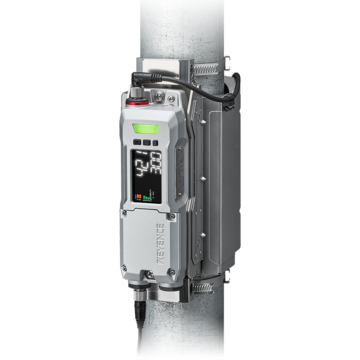
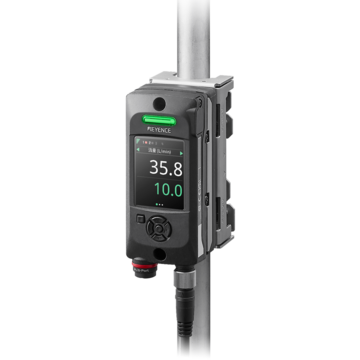
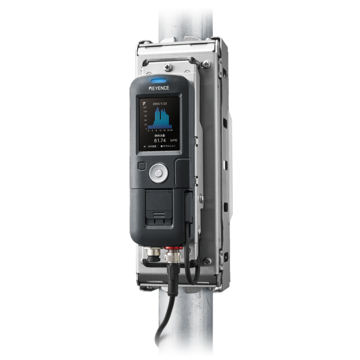
KEYENCE clamp-on ultrasonic flow meters deliver 1–3% accuracy without moving parts, fluid contact, or pipe modification—enabling retrofit installations across closed-loop chilled water, condenser water, heating, domestic water systems, and air/gas lines in under an hour with zero downtime.
Accurate flow measurement prevents costly water waste and damage, with early leak detection systems addressing issues that cause average insurance claims exceeding $10,000 annually.
Integration with Building Management Systems through open protocols like BACnet and MODBUS enables real-time monitoring, automated alerts, and data-driven preventive maintenance that cuts unnecessary service visits by 20–30%.
This guide explores how flow meters integrate with smart building technology to deliver measurable improvements in water flow monitoring, leak detection, and energy management across your building infrastructure.
Understanding Flow Meters for Smart Building Technology
Basic Principles of Flow Measurement
Flow measurement in commercial HVAC hydronic systems quantifies how much fluid moves through a pipe over a given period, typically expressed as gallons per minute (GPM). The process works by capturing a physical signal from the fluid and converting it into a readable flow rate. This makes flow measurement the fastest way to confirm whether the water side of your system is performing its intended function.
The core calculation is straightforward: volumetric flow equals the cross-sectional area of the pipe multiplied by fluid velocity. Mass flow applications take this a step further, multiplying the volumetric rate by fluid density. Clamp-on ultrasonic transit-time meters capture this velocity signal by transmitting ultrasonic pulses diagonally through the pipe wall and fluid—upstream and downstream—and calculating flow from the difference in travel time. Because the measurement is purely acoustic, there is nothing to corrode, foul, or wear out, and no process penetration is ever required.
Common Flow Meter Types in Building Automation
For building automation applications, clamp-on ultrasonic flow meters have emerged as the technology of choice. Their ability to measure flow non-invasively—without contacting the fluid, cutting pipe, or interrupting operations—makes them uniquely suited to the demands of occupied commercial facilities.
Clamp-on ultrasonic flow meters use transit-time technology to determine flow by measuring the difference in travel time between ultrasonic signals sent upstream and downstream through the fluid. The sensors mount entirely on the outside of the pipe, making them compatible with metal, plastic, and composite piping without any process penetration. They require minimal maintenance, operate without moving parts, introduce zero pressure loss, and perform reliably across water, water-glycol mixtures, and other common HVAC fluids—all without depending on fluid conductivity. Typical accuracy ranges from 1% to 3%, sufficient for HVAC energy management, sub-metering, and leak detection applications.
While clamp-on ultrasonic meters dominate non-invasive applications, several other technologies remain common in building automation. Electromagnetic (mag) meters offer high accuracy (typically ±0.5%) and excellent repeatability for conductive fluids like chilled water and glycol solutions, making them a preferred choice for permanent BTU metering installations where pipe penetration is acceptable during construction or planned shutdowns. Vortex flow meters are well-suited to steam and high-temperature hot water systems, leveraging the Von Kármán effect to deliver reliable measurement without moving parts—though they require a minimum flow velocity and a clear straight-pipe run. Paddle wheel meters represent the low-cost end of the spectrum: simple, easy to install, and adequate for basic monitoring applications, but sensitive to flow profile disturbances and less accurate at low flow rates. Each technology involves a trade-off between installation cost, fluid compatibility, and accuracy that clamp-on ultrasonics sidestep by measuring entirely from the outside of the pipe.
For building applications requiring a portable solution—commissioning verification, temporary troubleshooting, or surveying flow across multiple points—clamp-on meters offer an additional advantage: the same sensor can be repositioned quickly without any system modification. This portability makes it practical to audit an entire facility's hydronic system in a single visit.
HVAC Sensors and Flow Monitoring Basics
Sensors function as the backbone of any control system. A building automation system (BAS) may contain hundreds to thousands of sensor and control points, all relying on accurate data to function optimally. These sensors measure temperature, relative humidity, CO2, water flow, airflow, pressure, levels, and energy consumption.
Faulty sensors cause more than inconvenience. Poor sensor data leads to wasted energy, substandard indoor environmental conditions, and equipment running to failure. Accurate flow monitoring sits at the center of this challenge—without it, the rest of the system has no reliable foundation to work from.
Why Accuracy Matters in Building Systems
Accuracy in flow measurement affects billing, compliance, and operational efficiency simultaneously. For custody transfer and tenant sub-metering, even small measurement errors translate directly into financial discrepancies. Regular calibration keeps meters consistent despite exposure to fluctuating temperatures, pressure variations, and particulate contamination.
Regulatory requirements add another layer of urgency. Many industries must meet strict standards for water usage and discharge. Inaccurate measurement can result in regulatory breaches, fines, or legal action. An uncalibrated flow meter quietly introduces inefficiencies—excessive water usage, billing errors, and resource mismanagement—that compound over time. The good news is that selecting the right meter type for your application addresses these risks directly.
Flow Meter Applications Across Building Automation Systems
HVAC Flow Meters for Energy Management
Real-time flow data gives HVAC systems the information needed to maintain ideal flow rates and eliminate guesswork from energy management. Flow meters detect system inefficiencies like blockages or leaks that quietly drive up energy costs before they appear on a utility bill. When integrated with a Building Management System, this data supports demand-based control strategies that adjust heating or cooling output to actual building load rather than fixed schedules.
Variable flow systems take this further by adjusting flow rates dynamically. The result is a system that consumes only the energy required at any given moment — no more, no less.
Water Flow Monitoring in Commercial Buildings
Water consumption for domestic use has grown by 600% in the last 50 years. That growth has made submetering a practical necessity for multi-tenant commercial buildings. Installing a submeter on each unit provides precise measurement of water usage per tenant, eliminating the disputes and cost inequities that come from averaged billing.
Leak Detection Systems and Early Warning
Undetected water leaks waste thousands of gallons annually. The financial consequences extend well beyond the water bill.
Flow monitoring addresses this directly. Abnormal consumption patterns that indicate a leak get flagged early, before damage spreads. Proactive pipeline monitoring can accurately detect, locate, and alarm on both existing and emergent leaks, giving facilities teams time to respond rather than react.
Monitoring Chilled Water Systems
Chilled water flow measurement opportunities exist throughout hydronic systems. The KEYENCE FD Series clamp-on ultrasonic meters are well suited for cost allocation and sub-metering in chilled water applications, delivering the accuracy needed for fair tenant billing without requiring any pipe modification or system shutdown. Where dedicated thermal energy measurement is required, BTU meters work alongside clamp-on flow meters to achieve comprehensive energy accounting across the entire hydronic loop.
Building-Wide Water Consumption Tracking
Taken together, these applications add up to something significant. Smart water management has demonstrated the ability to reduce a building's CO2 footprint by almost 70% in some cases. The data infrastructure that makes this possible starts with accurate, continuous flow measurement across every point in the system.
The Advantages of Clamp-On Flow Meters for Existing Buildings
Non-intrusive installation benefits
Clamp-on flow meters attach directly to the pipe's exterior without cutting into pipelines or modifying existing infrastructure. The sensors mount externally, making them compatible with a wide range of pipe materials—metal, plastic, and composite configurations alike. Because they never contact the fluid inside, the sensors remain completely independent of process conditions like pressure and density. This is a meaningful distinction for facilities where process integrity cannot be compromised.
No downtime or pipe cutting required
Traditional flow measurement approaches require shutting down operations, draining lines, cutting pipe, and scheduling extended maintenance windows—work that is disruptive and costly in occupied facilities. KEYENCE clamp-on ultrasonic flow meters eliminate all of that. Installation completes without interrupting service, often within an hour, with some models requiring less than five minutes to set up. There are no pressure drops introduced. There is no fluid contact. The process keeps running throughout setup, and lost production time stays at zero.
Retrofit applications and scalability
Clamp-on technology proves ideal for retrofit and operational improvement programs in live buildings. The portable design enables flow verification or troubleshooting without disrupting liquid flow. Engineers can move quickly from one location to the next, checking flow rates across multiple points and building an accurate picture of actual water distribution throughout the system.
Installation cost savings
Reduced labor requirements and fast setup make clamp-on systems a practical choice for both temporary measurements and permanent monitoring installations. Because installation requires no contractors for pipe work, welding, or system draining, total project costs are substantially lower than traditional approaches. For large pipe diameters—common in main building risers and primary distribution loops—the cost advantage is especially significant, as clamp-on pricing does not scale with pipe size the way invasive alternatives do.
Maintenance Advantages of KEYENCE Clamp-On Technology
KEYENCE FD Series clamp-on meters contain no moving parts and never contact the internal fluid, which greatly reduces long-term maintenance requirements. Wear, corrosion, and clogging are non-issues when the sensor remains entirely external to the process. There is nothing to replace on a scheduled basis, no seals to inspect, and no risk of process contamination from sensor degradation. For facilities looking to reduce maintenance burden without sacrificing measurement quality, this design philosophy delivers measurable long-term savings.
Integration, Efficiency, and Long-Term Value
Building Management System Integration
Modern flow meters connect to building automation systems through open protocols like BACnet and MODBUS. This connectivity supports remote collection of flow rate, velocity, and cumulative volume data, while relay alarm outputs trigger alerts for conditions like weak signal detection or reverse flow. The result is a closed-loop system where real-time building performance data feeds directly into maintenance workflows, eliminating the data silos that have historically kept facility teams reactive rather than proactive.
Energy Efficiency and Cost Reduction
Buildings account for almost half of total energy consumption globally, with a significant portion of that waste tied to equipment operating outside its intended parameters. Flow meters provide the measurement foundation needed to surface these inefficiencies before they compound.
Analytics platforms put that foundation to work. Within the first six months of deployment, facilities commonly identify 10-20% energy savings opportunities. Flow data makes it possible to pinpoint exactly where the system is underperforming and take corrective action without guesswork.
Preventive Maintenance Through Continuous Monitoring
Calendar-based maintenance schedules treat all equipment equally regardless of actual operating conditions. Runtime-based preventive maintenance triggered by flow meter data takes a different approach—cutting unnecessary service visits by 20-30% by responding to what the system actually needs.
Continuous monitoring detects gradual performance changes before they become failures. That means repairs can be scheduled during planned downtime rather than in response to unexpected breakdowns. The operational impact is measurable: fewer emergency calls, less unplanned downtime, and better resource allocation for facilities teams.
Operational Insights and Data Analytics
Aggregated flow data supports daily, weekly, and monthly usage analysis with long-term retention. Advanced dashboards offer grid-level overviews with drill-down access to individual meters, giving facility managers the detail they need for both day-to-day decisions and long-term planning.
Future-Proofing Your Building Automation Infrastructure
Open integration platforms support data exchange from both proprietary and third-party systems. This architecture is designed to grow with your building—integrating with existing infrastructure during retrofits while keeping costs and disruptions to a minimum. For companies aiming to stay competitive and compliant, that flexibility is as important as the technology itself.
Conclusion
Flow meters for building automation deliver measurable results through improved energy efficiency, leak detection, and operational insights. With non-intrusive clamp-on ultrasonic technology, you can add flow monitoring across existing infrastructure without disrupting building operations, cutting pipe, or scheduling system shutdowns.
As a matter of fact, most facilities recover their investment within 12 to 24 months through reduced utility costs and prevented water damage. Choose the right flow measurement technology for your specific applications, and you'll gain the data foundation needed to optimize building performance for years ahead.
FAQs
Q What are the most common types of flow meters used in building automation systems?
A
Electromagnetic flow meters are currently the most common flow meter you may run across. The electromagnetic technology has been around for more than 50 years and served as a reliable monitoring technology not withstanding its fluid and detection limitations.
However, clamp-on ultrasonic flow meters, which have been released to the mainstream market within the last 10 years, are quickly becoming the preferred choice for building automation applications. They cover the full range of common HVAC fluids—chilled water, hot water, condenser water, and water-glycol mixtures—without requiring pipe modification, system shutdown, or fluid contact. Their non-intrusive design makes them practical for both new construction and retrofit projects, and their lack of moving parts means virtually zero ongoing maintenance. The KEYENCE FD Series is purpose-built for these applications, offering BACnet and MODBUS connectivity for direct BAS/BMS integration.
Q What factors should I consider when selecting a flow meter for my building?
A
Key considerations include the type of media being measured (water or water-glycol mixtures), required accuracy levels for your application, pipe size and material, available straight-pipe run lengths for sensor placement, and integration capabilities with your existing building management system. Also consider your maintenance philosophy and budget—clamp-on ultrasonic technology eliminates the need for pipe work and minimizes long-term service costs. Confirm that the meter supports the communication protocols your BAS requires, such as BACnet or MODBUS.
Q How long does it take to install a clamp-on flow meter?
A
Clamp-on flow meters can typically be installed within an hour, with some models requiring less than five minutes to set up. Since they attach directly to the pipe's exterior without cutting into pipelines, installation occurs without interrupting service or shutting down operations, making them ideal for retrofit applications in existing buildings.
Q Why is flow meter accuracy important in building automation systems?
A
Accurate flow measurement directly impacts energy efficiency, billing accuracy, and regulatory compliance. Even small measurement errors can lead to excessive water usage, billing discrepancies, and resource mismanagement. Inaccurate readings may also cause wasted energy, improper system functionality, and equipment failures. For applications involving custody transfer or tenant billing, high accuracy ensures fair cost allocation and helps avoid disputes.