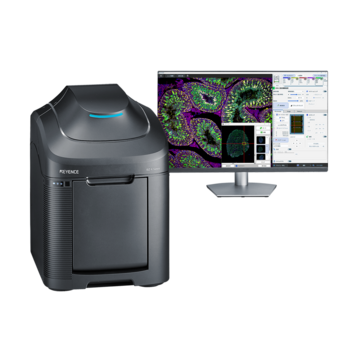
Fluorescence Microscopes
BZ-X Series Accelerates Phycobloom’s Algal Oil Research, Advancing Sustainable Biofuels Through Synthetic Biology and High‑Performance Imaging

Left : Dr. Ian hu (CTO) , Right : John Waite (CEO)
Interviewee: John Waite, CEO, Phycobloom
John Waite is the co‑founder and CEO of Phycobloom, a company developing sustainable liquid fuels derived from algae. He earned his DPhil in Materials Science from the University of Oxford, where he researched high‑entropy alloys for fusion applications. After teaching at St Edmund Hall and participating in Entrepreneur First, he co‑founded Phycobloom in 2019. In 2022 Phycobloom was selected for the Breakthrough Energy Fellowship.
Interviewee: Ian Hu, CTO, Phycobloom
Ian Hu is the Co‑founder and Chief Technology Officer of Phycobloom. As CTO, he shapes the company’s development roadmap and oversees research activities and hiring. His academic background is in biology, culminating in a PhD from the University of Cambridge. During his doctoral and prior research, he worked across diverse wet‑lab topics, including infecting tomatoes, synthesizing fluorescent probes, and extracting parasites from scampi. At Phycobloom, he applies this broad experimental skill set to advance synthetic‑biology approaches for algae, supporting the company’s mission to produce sustainable algae‑derived oils as drop‑in fuels.
01. Overview of Current Research and Project Goals
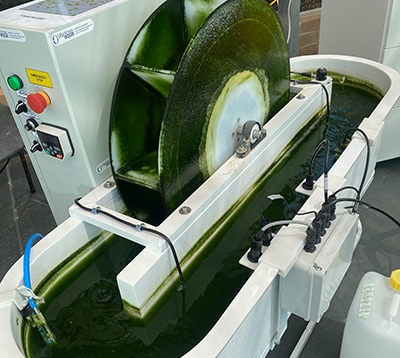
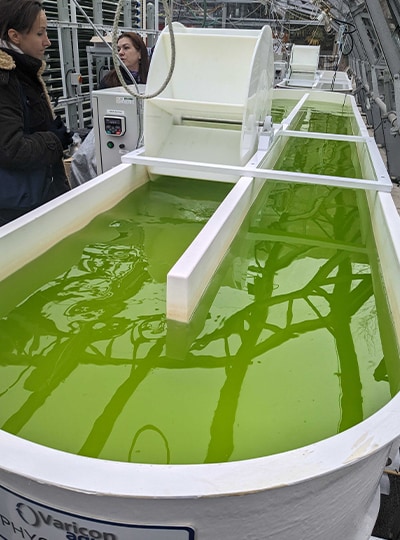
Bio reactor of algal
At Phycobloom, we are developing a system that uses the power of synthetic biology and genetic engineering to change the way algae behave. The goal is to enable algal oil recovery without destroying the cells. Traditional technologies require killing and lysing of cells to extract oil, which is time-consuming, costly, and necessitates re-growing of biomass. Through genetic engineering, we have enabled algae to release oil into their surroundings, allowing us to obtain larger quantities of with little to no downstream processing required.
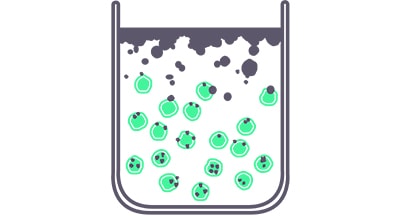
Acquiring oil from Lipid-filled microalgae without destroying
In our research, we employ fluorescent proteins and lipid staining to track lipid synthesis in algae, emphasizing single-cell level observation and data analysis. To evaluate culture uniformity and gene transfer efficiency, we have established a system for rapid analysis of large numbers of cells.
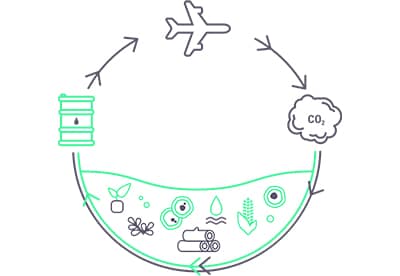
Biofuel cycle
Our ultimate goal is to establish algae that can cost-effectively create oil from air, water, and sunlight, thus displacing fossil fuels as an energy source. In sectors where other renewable energies are difficult to implement (such as aviation, shipping, and plastic production) biofuels will play a crucial role. We believe that algae-derived biofuel is the only biofuel capable of sustainable production at scale, and we aim for algal fuel to transform the world's approach to energy.
02. Challenges and Technical Barriers
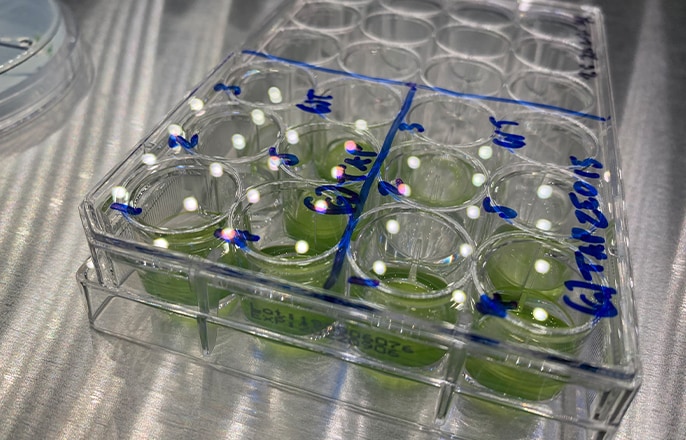
Incubating algal
Phycobloom faces several layers of technical challenges. Our day to day efforts are aimed at optimising the lipid synthesis, and lipid secretion, in our algae species. This requires a deep understanding of algal metabolisms and growth patterns, as well as precise genetic edits to ensure energy and carbon flow through the right pathways at the right time. Algae are photosynthetic monsters, able to produce lipids more efficiently than any other organism, but if their carbon source (metabolism) and carbon sinks (secretion systems) do not work in tandem, then our overall productivity is what suffers.
Algae also pose general challenges as chassis for synthetic biology. There are limited tools and datasets for genetic manipulation compared to model species, and it is difficult to ensure consistency and localization of protein expression. We frequently use fluorescent and luminescent tags to monitor the behaviour and performance of our genetic edits, but capturing useful data relies on using high-quality and consistent equipment. The BZ-X Series does exactly this for us.
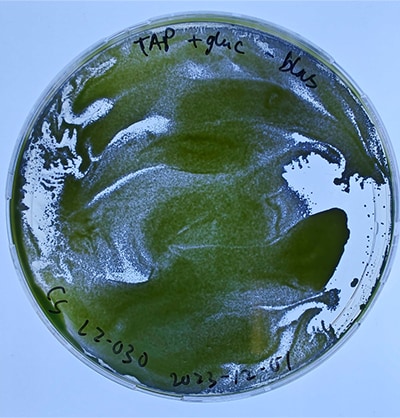
Cultured algal
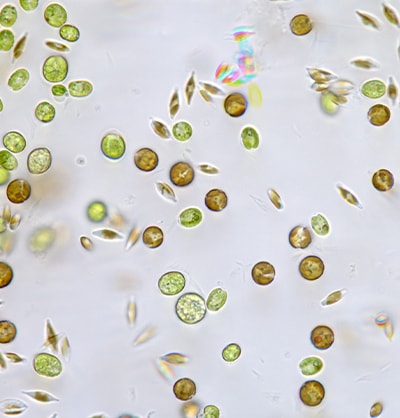
Agal with oil
03. Motivation for Introducing the BZ-X Series
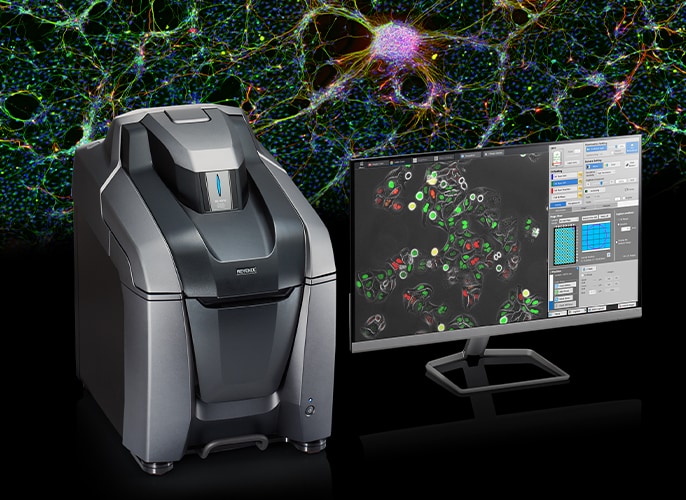
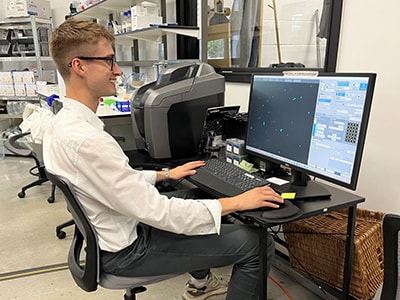
Several years ago Phycobloom acquired a confocal microscope which was capable of operating at high-resolution and imaging sub-cellular details. However powerful this device was, the throughput was not high enough and it required an experienced user to get the best out of it. When the KEYENCE Fluorescence Microscope BZ-X was demonstrated in our lab it was immediately obvious that we would be able to process samples much faster, both due to the natural capacity of the machine, but also the user-friendly nature of the control software meant that any member of our team was able to capture high quality images without specialist training.
04. Key Features and Advantages
The specific feature that is most useful for Phycobloom is the anti-photobleaching setting. This rapidly toggles the laser on and off, prolonging the sample life and allowing us more time to interrogate specific samples. We are often searching for low intensity signals in our cells, and so this is a major advantage for us.
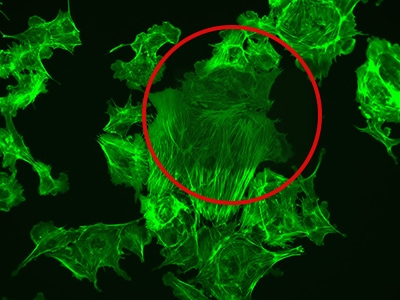
Without low photobleach mode
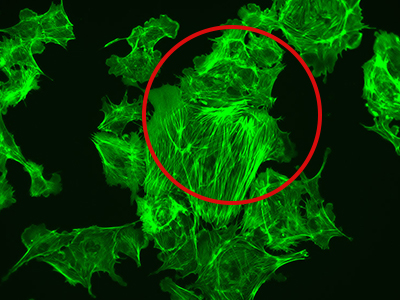
With low photobleach mode
05. Specific Improvements Achieved After BZ-X Series such as improvement of the quality, time saving, RD process speed up, and so on.
Our original microscope setup could process approximately four samples an hour. After we invested in the Keyence BZ-X we have been able to process an entire 96-well plate in an hour. This has saved us substantial amounts of time and gotten us to results that we would not have found otherwise.
06. Memorable Episodes and Success Stories with BZ-X Series
One of our most important projects related to the expression of membrane proteins. As with many algal experiments this expression was inconsistent over time as well as across individual populations. Using the high-throughput nature of the Keyence, as well as specific features such as the Low-Photobleach mode and Navigation function made this a much simpler task and we located our ideal features almost immediately. The BZ-X had almost instant pay off for us.
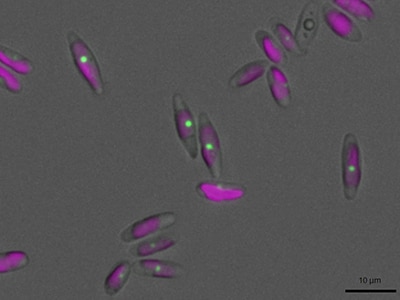
Green signal is lipid droplets
07. Future Outlook and Long‑Term Goals
Our long‑term vision is to operate engineered algae in large‑scale outdoor production facilities capable of meeting real‑world fuel demand. We believe algae can capture globally relevant amounts of CO₂. This means we continue to make and measure new genetic edits, stacking them together; a workflow that the BZ‑X Series will continue to play a central role in. Ultimately, we aim to develop highly efficient strains suitable for multiple industries and to accelerate a global shift away from fossil‑derived carbon.
08. Message to Young Researchers and Companies
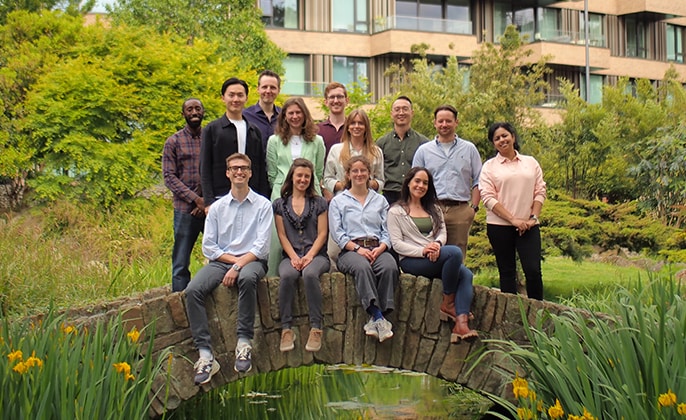
Team member
Algae‑based biofuels remain an emerging field with many challenges, but they offer extraordinary potential. Synthetic biology and metabolic engineering can fundamentally reshape global energy systems. We encourage young researchers to pursue ambitious ideas without fear of failure, and we invite companies to invest in this transformative sector. Together, we can advance the widespread adoption of algae‑derived fuels.
Additional Information
What is the Phycobloom Method?
Traditional algae oil extraction requires cell disruption and energy‑intensive downstream processing. Phycobloom engineers algae to secrete oil directly into the surrounding medium, allowing continuous harvesting without damaging the cells. This approach aims to deliver affordable, scalable biofuels capable of replacing fossil fuels.
Why Sustainable Biofuels Matter
Aviation, shipping, and petrochemical manufacturing are difficult to electrify and will continue to require liquid fuels. Phycobloom believes algae‑derived biofuels are the only scalable and sustainable option that can displace fossil fuel use.