Machine Vision
Vision Sensor vs. Vision System
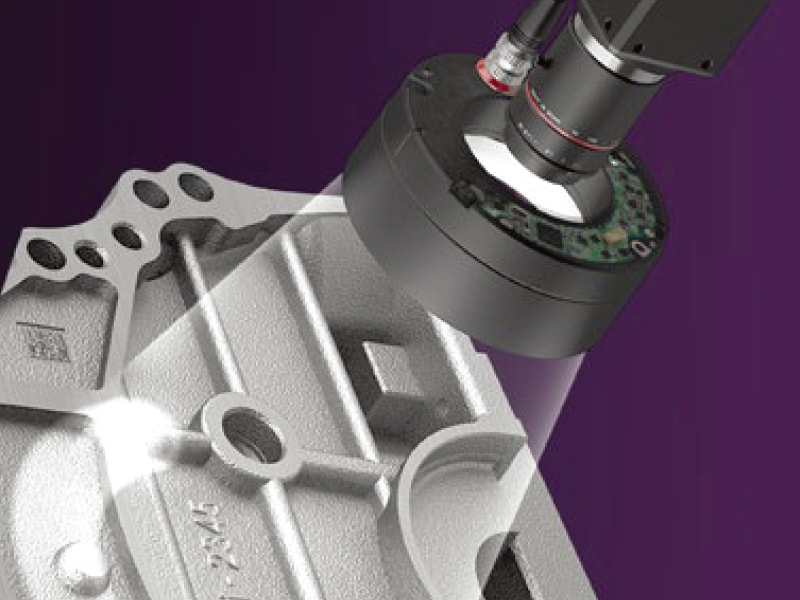
Modern, high-speed mass manufacturing methods simply demand high-quality control standards that are equally as fast and highly reliable. Manual inspection, while being a crucial part of the whole industrial era, has proved to be not just slow but also prone to error and often impeded by several different factors, such as product size, lighting conditions, and fast production lines.
Automated quality inspection, on the other hand, proved to be quite the opposite, as it maximized throughput, enhanced quality, and lowered manufacturing costs, which led many manufacturers towards adopting vision sensors and automated vision inspection systems.
Both vision sensors and automated vision inspection systems excel at repetitive inspection tasks, and they're much faster, more objective, and less prone to error. To the relief of all business owners, they work round the clock. At the same time, they provide consistent and reliable inspection results at faster rates and on larger production scales.
So, there's no good reason to avoid implementing vision sensors and vision systems into a production line. However, for the uninitiated, it's worth mentioning that a vision sensor vs a vision system isn't the same, and in this article, we'll discuss the differences. Without further ado, let's dive right in.
Differences Between Vision Sensors and Vision Systems
The main difference between vision sensors and automated vision inspection systems lies in their configuration and applications.
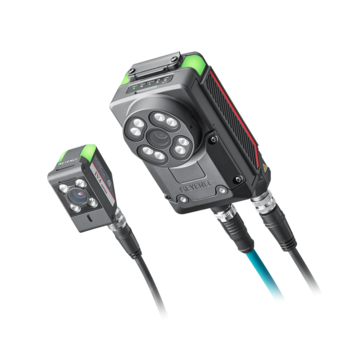
Vision sensors are usually charged with simple inspection tasks, such as answering simple yes-no questions on a production line. They capture light waves using photo-sensitive elements and rely on digital signal processors to translate said waves into pixels that generate digital images. Image analysis software then analyzes the pixel pattern to derive critical information about the observed object.
Their simplicity often ties them to production lines, where they perform simpler roles. This includes presence or absence detection, which answers a simple question: Does the sensor see an object in its field of view? If the answer is positive, the sensor will signal the processing unit to move the part to the correct place in the production process and bring another part in its place for inspection.
The inspection process might also look beyond mere presence detection; if the part is grossly damaged or flawed, the sensor will most likely route that part out of the production line for subsequent inspection by a machine operator or staff in charge of manual inspection—which, in some cases, is still necessary.
Sensors are also capable of basic optical character recognition, which enables a vision sensor to read human readable text.
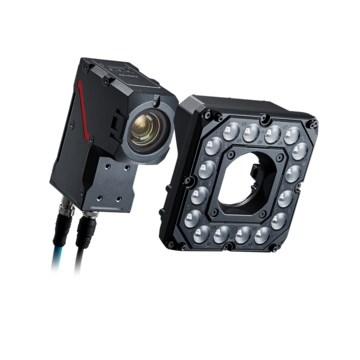
Automated vision inspection systems are capable of more in-depth applications. They usually consist of higher resolution camera units and powerful software. As such, automated vision inspection systems are perfectly capable of replicating sensor operations.
However, their depth allows them to perform additional functions crucial to the manufacturing process. This includes detecting whether parts and components are adequately guided and precisely positioned where they're supposed to be.
Additionally, automated vision inspection systems are great at discerning and reading codes on packages and individual components that might contain vital information to sort goods and differentiate between different parts within a single production process.
These systems are also great for high-precision measurements and gauging of manufactured or machined parts, as well as creating 3D representations of parts and components through machine learning and sophisticated algorithms.
| Feature | Vision Sensor | Vision System |
|---|---|---|
|
Primary Goal
|
Vision Sensor
Pass/Fail (Yes/No) tasks
|
Vision System
Complex analysis & measurement
|
|
Setup Time
|
Vision Sensor
Minutes (Plug-and-play)
|
Vision System
Hours/Days (Custom integration)
|
|
Cost
|
Vision Sensor
Lower initial investment
|
Vision System
Higher (includes PC/advanced software)
|
|
Data Output
|
Vision Sensor
Discrete I/O (Trigger/Result)
|
Vision System
Detailed data, 3D maps, images
|
|
Flexibility
|
Vision Sensor
Fixed for specific tasks
|
Vision System
Highly programmable/reconfigurable
|
Understanding the Role of Vision Systems in Complex Applications
In industrial automation and precision manufacturing, vision technologies have become necessary components that drive efficiency and innovation. From simple inspection tasks to complex three-dimensional imaging, vision sensors and vision systems offer powerful solutions for businesses seeking to optimize their operational capabilities.
Vision Systems for 3D Imaging and Measurement
Vision systems have revolutionized three-dimensional imaging by providing unprecedented levels of detail and accuracy. Unlike traditional 2D imaging, these advanced systems capture depth, contour, and spatial relationships with remarkable precision. Manufacturers in aerospace, medical device production, and advanced manufacturing rely on 3D vision systems to perform intricate measurements that were previously impossible or extremely time-consuming.
Benefits of Machine Vision Systems in Robotics
Think of a machine vision system as a robot's sixth sense. They process visual information faster than any human could, turning raw camera data into actionable insights. A vision system doesn't just look—it understands. It can identify a misaligned part, sort through thousands of items, and keep production running like a well-oiled machine.
Vision Systems for Quality Control in High-Precision Tasks
Imagine a microscope that can examine hundreds of products per minute without ever tiring or blinking. Vision systems do just that for industries that cannot afford even the slightest error. These systems guarantee complete perfection, whether they are producing the computer chips that run your smartphone or the life-saving drugs.
Real-World Applications: When to Choose a Vision Sensor vs a Vision System
Applications Where Vision Sensors Excel
In high-speed manufacturing, vision sensors are often the 'gold standard' for reliability. Because they focus on a single dedicated task, they offer lower latency and higher processing speeds than more complex systems, ensuring the line never has to slow down for the inspection. Vision sensors are capable of tasks such as quantifying items during assembly line transit and verifying color conformity, like:
- Simple object counting
- Basic color verification
- Rudimentary position detection
- Elementary presence/absence checks
Applications Best Suited for Vision Systems
These systems can handle tasks that call for in-depth, intricate analysis. They are great at solving problems that are too complicated for basic sensors. Uses include:
- Quality control for automotive components that sees what the human eye would miss
- Directing robots through complex motions with millimeter accuracy
- Accurate scaled measurements
- Defect detection
Case Study: Vision Sensors in Packaging vs Vision Systems in Robotics
Vision sensors help count packages and check labels. For complex robotic work, full vision systems take over, guiding machines with microscopic precision, like the difference between a quick glance and a surgeon's steady hand. These advanced systems can direct robots to perform intricate tasks with movements accurate down to a fraction of a millimeter. Vision systems can also do code and character recognition in tandem, verifying all aspects of the label down to its precise placement.
Advantages of Vision Sensors for Cost-Effective Solutions
Reduced Hardware Costs and Space Requirements
The good news is that automation can be implemented without a sizable investment. Vision sensors are perfect for businesses with limited space or those beginning automation on a smaller scale due to their small size and low processing requirements.
Ideal for Basic Automation and Quality Control
For simple inspection requirements, vision sensors provide an effective and useful option. They are ideal for automation and quality control jobs, as they provide reliable performance in applications that call for simple, consistent visual checks.
Ease of Installation and Use for Entry-Level Automation
Designed for ease of use, vision sensors feature intuitive interfaces and require little setup or training, making them perfect for businesses taking their first steps into automation. For high-volume lines where downtime is expensive, a vision sensor can be swapped and recalibrated in minutes by a floor technician, whereas a vision system may require a specialized vision engineer.
Maintenance and Reliability
Vision sensors are self-contained, all-in-one units — combining camera, lighting, and processor in a single housing. This means fewer points of failure compared to a system requiring external lighting controllers, separate cameras, and a PC.
Ultimately, the choice between a vision sensor and a vision system depends on the complexity of your inspection requirements.
- Choose a Vision Sensor (like the IV4 Series) if you need high-speed, reliable pass/fail results for a single variable — with minimal setup, no dedicated PC, and no specialized programming. The IV4 delivers up to 250 inspections/second with a 3-step setup.
- Choose a Vision System (like the VS Series or CV-X Series) if your process requires high-resolution analysis, 3D measurement, or the ability to handle multiple inspection points simultaneously.
Both technologies are essential pillars of modern automation. By matching the tool to the specific demands of your production line, you can maximize throughput and quality without unnecessary complexity.
Benefits of Vision Systems for Detailed Inspections and High-Accuracy Tasks
Enhanced Capabilities for High-Resolution Inspections
Automated vision inspection systems deliver unparalleled detail, capturing and analyzing images with exceptional clarity. They can detect imperceptible defects and variations that would escape human or basic sensor detection.
How Vision Systems Improve Defect Detection and Sorting
Vision systems can instantly analyze multiple parameters by utilizing sophisticated algorithms and high-speed processing, which significantly increases sorting accuracy and decreases waste in manufacturing processes.
Vision Systems for High-Speed, High-Precision Operations
Industries like precision engineering and semiconductor manufacturing have demanding inspection requirements. Vision systems offer the accuracy and processing power required for these tasks.
Choosing the Right Tool for Your Line
Ultimately, the choice between a vision sensor and a vision system depends on the complexity of your data requirements.
Choose a Vision Sensor if you need high-speed, reliable pass/fail results for a single variable with minimal setup and maintenance.
Choose a Vision System if your process requires high-resolution analysis, 3D measurement, or the ability to handle multiple inspection points simultaneously.
Both technologies are essential pillars of modern automation. By matching the tool to the specific demands of your production line, you can maximize both throughput and quality without unnecessary complexity.

FAQs
How Do I Integrate a Vision System Into My Current Production Line?
Successful integration starts with a thorough assessment of your needs, expert guidance from vision technology specialists, and a phased rollout to ensure minimal disruption to production.
Can I Upgrade a Vision Sensor to a Vision System Later On?
Some manufacturers provide modular solutions that enable incremental system upgrades, even though total replacement is frequently required.
Are Vision Sensors Compatible With Existing Automation Equipment?
Since most contemporary vision sensors are made with standardized communication protocols, they are widely compatible with the automation infrastructure.