Machine Vision
Dimension Measurement Vision System Applications
Modern production environments depend on accurate and repeatable measurements, especially when parts move at high speeds with tight tolerances. A dimension measurement system gives operators a steady stream of usable data by capturing length, width, height, contour, and geometric relationships in real time. With that information in hand, manufacturing quality control becomes more predictable, and shifts stay aligned even as products change.
Choose Case of Dimension Measurement
What is Dimension Measurement in Manufacturing?
Dimension measurement inspection uses camera-based tools to read part geometry during production. These systems pinpoint edges, track distances between features, and calculate angles directly from high-resolution images. Some applications call for simple 2D checks, while others need 3D feature data. Either way, a modern dimension measurement system handles parts of different sizes and materials without slowing the line. The combination of optical clarity and measurement automation gives teams visibility into variation the moment it appears, not hours later during sampling.
The Importance of Accurate Dimension Inspection
A small dimensional shift can affect assembly fit, movement, or downstream alignment. Operators see this most clearly when a stamped part begins to drift by a fraction or a formed wire loses consistency across a batch. Automated dimension inspection helps teams spot that drift early. Measurements update with each cycle, so changes in feature size or feature position show up long before they create scrap. This supports steadier throughput, fewer mid-run adjustments, and stronger manufacturing quality control.
Industries with tight geometric requirements (automotive, medical, electronics, and consumer goods) use dimensional checks as a way to keep finished parts predictable even when volume fluctuates.
Dimension Measurement Vision System Applications
Packaging Seal Inspection
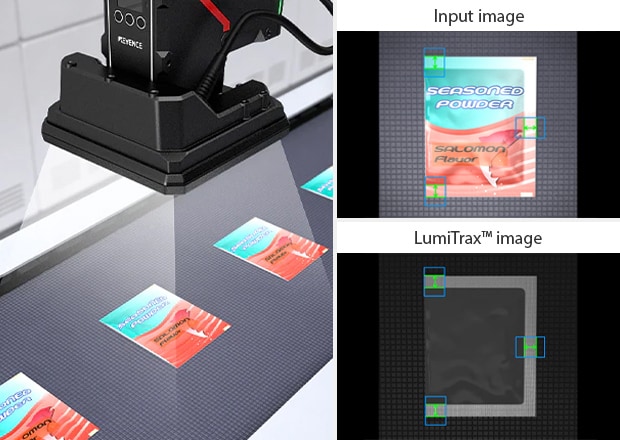
The inspection of packet sealing width was unstable due to the influence of patterns, uneven surfaces and glare. The LumiTrax™ function enables inspection based on shape only, by using the information of the uneven surface of the sealed section.
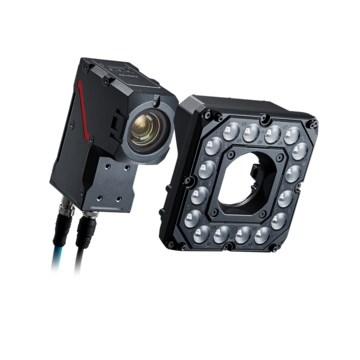
Vision System with Built-in AI VS series
Spark Plug Dimension Inspection
Dimension inspection of complex-shaped targets required the use of multiple measurement tools and calculations. KEYENCE's image processing system offers dimensions/geometry tools that allow high-accuracy inspection with intuitive operation.
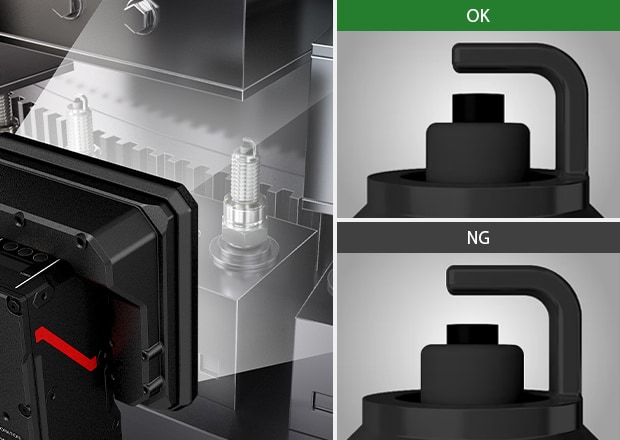
Vision System with Built-in AI VS series
Label Alignment Inspection
Inspect the labels wrapped around containers for misalignment. In addition to misalignment, peeling labels and other appearance defects can be inspected simultaneously.
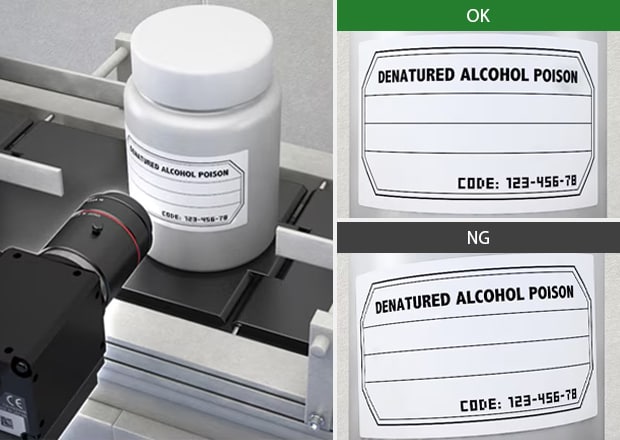
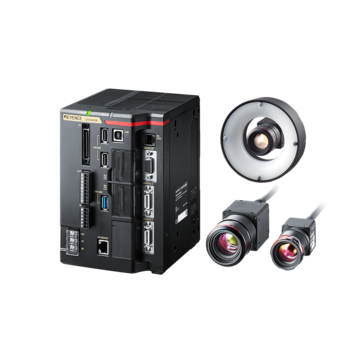
Intuitive Vision System CV-X series
Connector Terminal Bend Inspection
KEYENCE offers a package of tools for connector inspection. You can start inspection quickly without configuring calculations. Using a 21 megapixel camera improves the inspection accuracy.
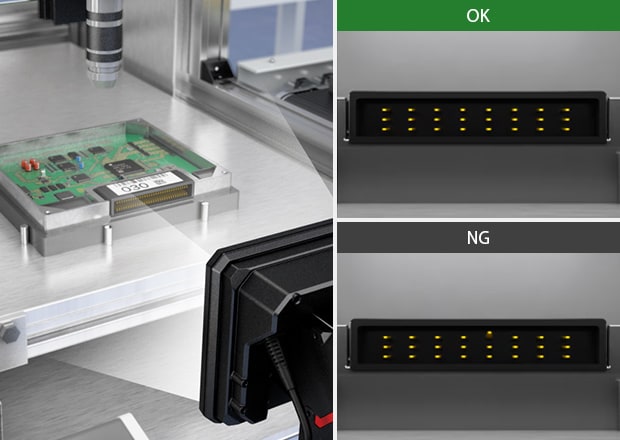
Vision System with Built-in AI VS series
U-Pin Dimension Inspection
Various dimension inspections are necessary after forming flat wires, including measuring the width of the coil ends. Using a high-resolution camera ensures tighter tolerances, which prevents improper stator insertions downstream.
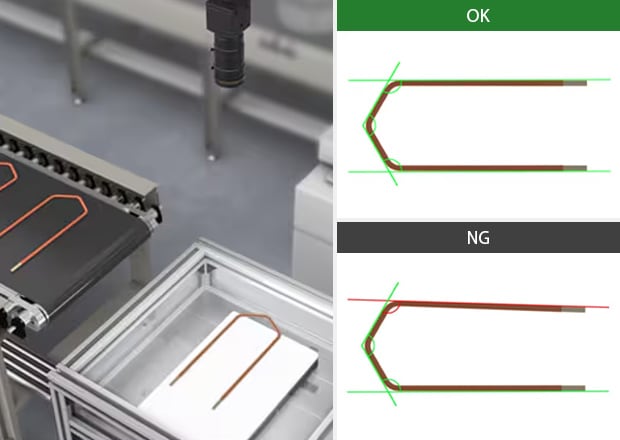
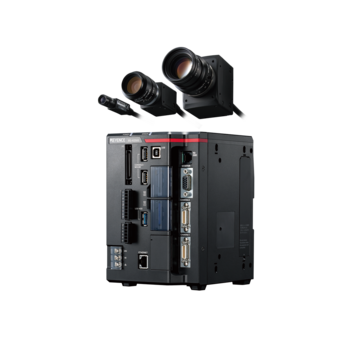
Customizable Vision System XG-X series
Connecting Rod Measurement
Changing from a 21-megapixel camera to a 64-megapixel camera means that measurement is possible with about three times as many pixels.
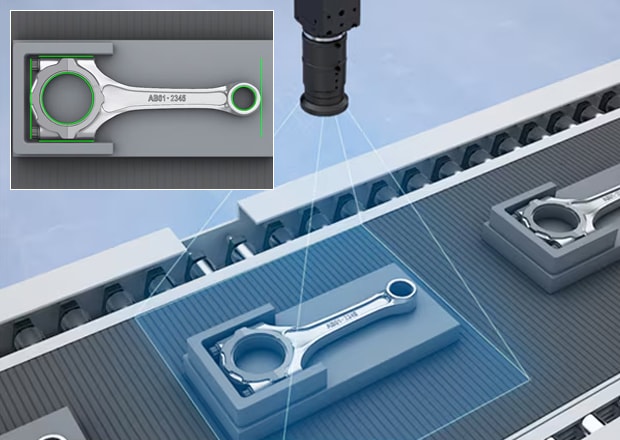
Customizable Vision System XG-X series
Key Features of KEYENCE’s Dimension Measurement Solutions
KEYENCE vision systems pair high-resolution cameras with a dedicated measurement suite that reads fine geometric detail from a single capture. The Measurements and Dimensions toolset handles widths, radii, angles, and positional relationships with consistent contrast, even when surfaces are reflective or textured. High-megapixel imaging adds more data points to each inspection, which helps teams tighten tolerances or track subtle shifts over long runs.
LumiTrax™ lighting isolates surface shape from patterns or glare, which is valuable when working with embossed seals, wrapped labels, or uneven packaging materials. On the software side, measurement automation allows operators to build and reuse inspection routines. In practice, this creates precision measurement solutions that adapt to changing production needs without losing dimensional stability.
Applications of Automated Dimension Measurement
Automated dimension measurement shows up in a wide mix of production tasks. In automotive work, vision systems, like the KEYENCE VS, read spark plug geometry, connecting rod shapes, and small formed-wire widths with enough clarity to track minor shifts from cycle to cycle.
Electronics lines often rely on the same tools to check terminal height, pin spacing, and bend angles on connector hardware. Packaging operations use dimension measurement inspection for seal width, label alignment, and wrapped-surface placement. Machined parts, molded components, coiled materials, and small mechanical assemblies all benefit from automated dimension inspection, especially when multiple measurements are required at once.

FAQs
How Do Automated Dimension Measurement Systems Enhance Production Efficiency?
They capture key dimensions in one pass and provide immediate feedback, which helps teams react faster to variation. This reduces rework and keeps production moving without extra manual checks.
What Types of Defects Can Be Detected Using Dimension Measurement Systems?
They detect width, height, angle, spacing, and contour changes. This includes bent terminals, uneven seal widths, label shifts, and other dimensional variations.
How Do KEYENCE’s Systems Compare With Traditional Measurement Methods?
Traditional tools depend on manual contact, repeated setup steps, and isolated sampling. A KEYENCE vision-based dimension measurement system captures non-contact measurements at production speed, uses automated routines for consistent repeatability, and records data for trend analysis.