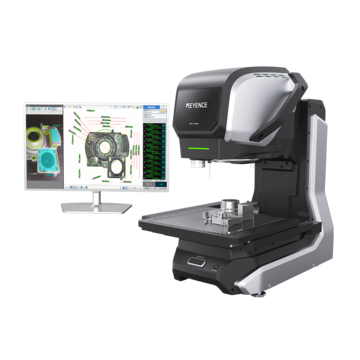
Optical Comparator (Profile Projector)
Methods for Measuring in Different Temperature Environments
Temperature is one of the most widespread yet underappreciated variables influencing measurement quality. Temperature changes as small as a few degrees alter part dimensions measurably, calibrated instruments deliver different results between the lab and production floor, and thermal variations within large components cause measurement errors that simple adjustments won't resolve.
Fortunately, optical measurement systems are a useful tool for managing these challenges.
Best Practices for Measuring Room Temperature in Lab Settings
Placing measurement equipment strategically away from heat sources, air vents, and direct sunshine is the first step towards achieving a reliable room temperature for measurement. To record the temperature conditions that truly impact your work, place monitoring devices at the same height as your measurement tools. Instead of depending on broad room readings, this method guarantees that you are monitoring the actual environment where measurements take place.
Create verification procedures that involve a quarterly comparison of your monitoring equipment with verified reference thermometers. Continuous tracking is possible with digital data loggers, which also notify you when conditions deviate from permitted bounds. In order to create audit trails that meet regulatory criteria, labs that are serious about precision invest in detection and measurement systems that combine environmental monitoring with quality management software.
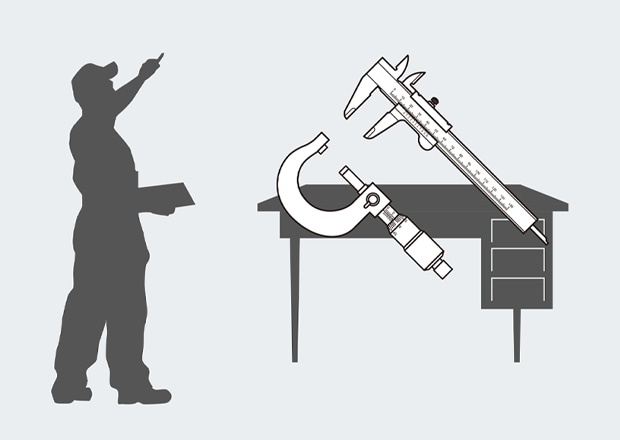
Temperature control is necessary for precise measurements.
Room Temperature
In order to perform accurate room temperature for measurement, it is necessary to ensure that the environment is appropriate for performing measurements. The key factors for the measurement environment are: temperature and cleanliness. ISO has defined the reference temperature for measurement as 68°F.
Any material may undergo thermal expansion due to changes in temperature. As such, the temperature in any room where precise measurement is necessary must be strictly controlled.
Tools and Instruments for Accurate Shop Floor Measurement
Shop floor environments create unique problems when contrasted to controlled laboratory spaces, requiring the right tools for the job. One such piece of equipment, a portable coordinate measurement device, includes temperature correction and can adjust to changing conditions without losing precision. While wireless sensor networks monitor whole production areas in real time, handheld infrared thermometers allow employees to swiftly assess local temperatures before taking vital measurements.
Shop Floor Measurement Systems with built-in temperature compensation automatically adjust readings as thermal conditions change. When measuring massive items that are difficult to carry to climate-controlled facilities, this technique comes in quite handy. Including environmental sensors in your measuring process ensures that context is recorded in addition to the dimensions data.
The Impact of Room Temperature on Laboratory Experiments
Labs are typically very controlled environments. However, even small temperature fluctuations have an impact on measurement outcomes across testing regimens. For materials with high thermal expansion coefficients, like certain metals, a three-degree shift in temperature can cause tolerance criteria of dimensions to fail that would otherwise pass. Chemical solutions change viscosity, electrical components drift in resistance, and biological samples exhibit unpredictable behavior when lab facilities' temperatures deviate from normal.
Consistency between facilities and time periods is ensured by keeping the measuring room temperature at the ISO-recommended 68°F. This standardization makes it possible to compare test findings from different places and time periods with confidence. Rushing measurements after temperature changes results in systematic mistakes because it takes time for parts and the measuring environment to reach thermal equilibrium.
Key Environmental Factors that Influence Measurement
Humidity levels have a small but important effect on materials and gadgets in addition to the surrounding temperature. Polymers and composites undergo dimensional changes due to moisture absorption, and condensation on cold surfaces results in inaccurate readings. Changes in air pressure impact both laser wavelengths in contemporary metrology equipment and pneumatic gauging methods.
Measurement errors can be caused by electromagnetic interference, airflow patterns from HVAC systems, and vibration from nearby machines. Precision work is kept apart from these interruptions by well-designed facilities. Strongly constructed advanced coordinate measurement solutions are more resilient to external effects when ideal conditions are not reached.
Temperature Control Requirements in Measurement Rooms
It is necessary to understand equipment and workflow requirements in order to design efficient temperature control for measurement areas. Using redundant HVAC systems with precise controls, high-precision metrology rooms usually maintain a consistent temperature of 68°F (plus or minus one degree). Thermal mass in floors and walls helps dampen short-term fluctuations. Building orientation minimizes solar heat gain throughout the day.
Because slow temperature changes are less disruptive than rapid cycling, continuous conditioning performs better than intermittent systems. Depending on their size and material characteristics, let the measured parts stabilize their temperature for a suitable amount of time in the control room. Steel components can take several hours to establish equilibrium, but aluminum does it more quickly. Documenting your temperature control procedures demonstrates measurement system capability during customer audits and certification reviews, supporting the reliability of your measurement capabilities.
Contact KEYENCE to get the most accurate temperature compensation system for measurements today.