Vision Systems
Vision Systems for the Defense Industry
Inspection points for quality control in defense manufacturing are often fixed long before a program reaches steady production. Once parts begin moving at volume, stopping the line to verify dimensions or surface condition becomes impractical. Vision inspection is used in these environments to evaluate components in motion, allowing inspection to occur without introducing handling steps that disrupt throughput or repeatability.

Ammunition Inspection for Safety and Compliance
Ammunition components undergo several forming and assembly steps. Variations introduced early in the process do not remain isolated; issues such as case geometry, surface damage, or seating problems can impact subsequent operations.
Automated ammunition inspection systems check each component in line as it moves through production, rather than relying on batch sampling or end-of-line audits. Vision inspection evaluates surface condition, dimensional consistency, and assembly features at line speed, allowing defects to be identified before additional value is added.
High-Speed Vision Systems for Accurate Defense Inspections
Defense manufacturing environments rarely allow inspection processes to slow production. Parts are inspected while in motion. These inspections typically occur during transfer or indexing rather than at a stopped station.
Defense vision systems capture data at these points as parts move through the line, with geometry or surface condition evaluated without pausing production. This capability supports defense industry automation by aligning inspection throughput with production output rather than forcing tradeoffs between speed and accuracy.
KEYENCE Advanced Vision for Military Applications
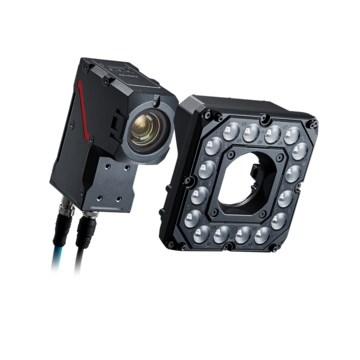
KEYENCE vision systems, like the VS Series, support military inspection technology by combining imaging performance with flexible inspection tools. Inspection hardware is typically left in place once a defense production line is set up. Vision inspection is used to evaluate dimensional features and surface condition within that fixed inspection area, even as part geometry or finishes change between runs.
Get detailed information on our products by downloading our catalog.
View Catalog
Optimize Defense Production Lines with KEYENCE Technology
In defense manufacturing, inspection placement determines how much rework risk a line carries, so when a variation is detected after multiple operations, the corrective process often involves a large amount of scrap and reprocessing. Vision inspection positioned directly on the line evaluates parts as they move through production, limiting how far variation can propagate before it is identified.
Because inspection occurs during the normal production cycle, the results reflect actual operating conditions rather than isolated and, occasionally, manual checks. That also means that changes in tooling conditions or setup variation become visible through inspection output without adding separate monitoring stations or interrupting production flow. This allows inspection to function as part of the line’s normal operation rather than as a downstream checkpoint.
Real-Time Detection for Ammunition Quality Control
Ammunition inspection often occurs while parts are still moving through forming or assembly operations. Vision inspection evaluates each round or component individually as it passes the inspection point, with accept or reject decisions made at that stage of the process. Inspection is tied to the current operation rather than being delayed to a downstream audit.
When issues are detected, they are associated with the operation that produced them, not a completed batch.

Reliable Vision Solutions for Harsh Environments
Vision inspection equipment in defense manufacturing has to operate in close proximity to active machinery and material handling systems. Once installed, inspection stations are typically left in place for extended production runs, with limited opportunity for adjustment during operation.
Imaging performance is expected to remain consistent as parts pass through the inspection area repeatedly over long shifts. Inspection hardware is not treated as a touchpoint during normal production, and interaction is generally limited to setup or scheduled maintenance rather than active runs.
To ensure reliable and consistent performance throughout production, optimize your defense inspections with KEYENCE vision systems.

FAQs
What Makes KEYENCE Vision Systems Ideal for Ammunition Inspection?
KEYENCE vision systems support ammunition inspection by combining high-speed imaging with flexible inspection tools to evaluate surface features and assembly characteristics inline, supporting consistent inspection results without slowing production.
How Do KEYENCE High-Speed Vision Systems Support Military Production Lines?
High-speed vision systems inspect parts as they move through the line, matching production rates while applying consistent inspection logic. This supports defense vision systems in maintaining throughput while reducing reliance on manual inspection.
Can KEYENCE Vision Systems Be Used in Extreme Defense Environments?
KEYENCE vision systems designed for industrial use operate reliably in demanding production environments that include vibration, debris, and extended operating schedules.
Related Downloads
Related Products
Industries
- Aerospace
- Automation Equipment/Machine Building
- Automotive
- Commodities
- Defense
- Electric Vehicles
- Electronic Device
- Fabric/Textile
- Food/Beverage Packaging
- Logistics
- Machine Tools
- Marine
- Medical Device Manufacturing
- Mining/Metals
- Paper Manufacturing
- Pharmaceuticals
- Printing
- Semiconductor/Manufacturing Electronics
- Solar
- Tobacco
- Vision-Guided Robotics