Static Control
Preventing IC Damage from Static in Cell Processes
Key Takeaways
- Continuous handling, transport, and air movement generate persistent static that damages ICs and lowers yield.
- Grounding and conductive mats are insufficient for nonconductors and airborne static; ionizers address these gaps.
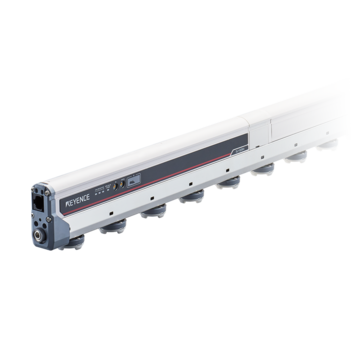
- Inline ionizers (e.g., KEYENCE SJ-Q / SJ-F700) neutralize charges in cleanrooms, reducing latent and catastrophic ESD.
- Continuous ionization stabilizes production, lowering rework, improving yield, and preserving long-term IC reliability.
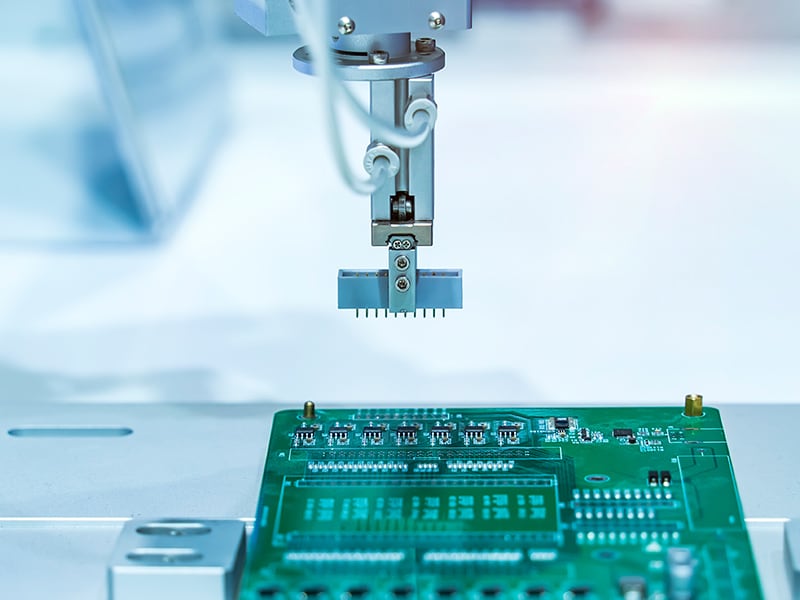
The semiconductor industry is increasingly reliant on precise manufacturing environments. As devices become more intricate, the risk of electrostatic discharge (ESD) grows alongside the intricacy. Effective static control is needed to safeguard integrated circuit (IC) components and prevent costly defects in production. Static electricity, when left unchecked, can lead to permanent damage to sensitive devices.
The Critical Need for Static Control in IC Manufacturing
In the semiconductor manufacturing process, static control plays an indispensable role, helping maintain the stability of IC parts throughout production. With components becoming smaller and more sensitive, electrostatic discharge (ESD) has a growing detrimental effect on performance.
Even the smallest amounts of static electricity can lead to significant damage, either immediately or over time, ultimately compromising yield and reliability. As production becomes more automated, ESD prevention in IC production becomes an integral part of the manufacturing process. The ability to control static throughout the production process ensures that ICs maintain their functionality and reliability, preventing defects before they become costly issues.

How Static and ESD Damage Impacts IC Yield and Long-Term Reliability
Static electricity and ESD can cause immediate catastrophic damage to ICs, making devices completely inoperative. Thankfully, this type of damage is typically visible early in the production process, leading to a quick rejection from quality control teams.
However, latent damage presents a much greater threat in the long run. Even the smallest of static charges can disrupt the delicate internal structures of semiconductor devices. This causes performance degradation that may not be apparent until the product is in the field and those failures manifest as unreliable performance, shortened product lifespan, and increased warranty claims. Without adequate static control, ESD prevention in IC production becomes a cost burden for manufacturers, leading to higher rework costs and loss of customer trust over time.
Static Sources: Handling, Transport, and Cleanroom Air Movement
Static buildup can occur at various stages in the IC manufacturing process. Handling, transport, and cleanroom ionization IC manufacturing conditions are all prime factors in static accumulation. Materials used in production, such as plastics, rubber, and even certain metals, can generate static charges through friction or contact. Workers, moving around the assembly line, also contribute to static electricity through simple interactions with materials.
In cleanroom environments (where conditions are tightly controlled to maintain precision in the production of ICs), the movement of air can also lead to increased static levels.
Monitoring humidity levels and controlling air movement within these spaces can help reduce the chances of static interference, ensuring the production environment remains conducive to producing high-quality ICs.
Ionizer Solutions Suitable for Semiconductor and IC Handling
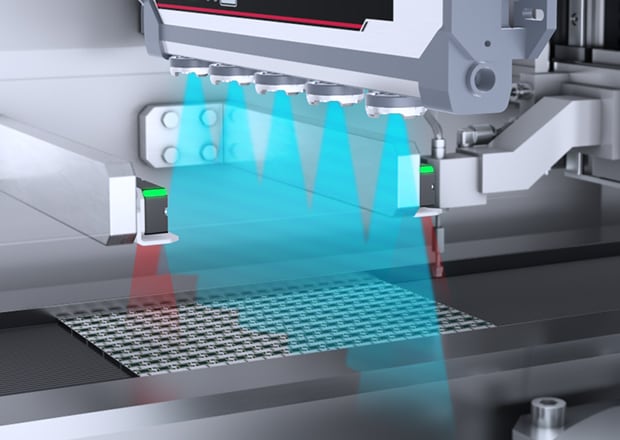
One of the most effective methods for static control IC parts manufacturing is through the use of ionizers for semiconductor assembly. These devices, like the KEYENCE SJ-Q, work by releasing both positive and negative ions to neutralize static charges in the environment. Because of this, ionizers are particularly useful in areas where sensitive semiconductor components are handled, assembled, or tested.
In cleanrooms, ionizer solutions help maintain a stable environment, reducing the buildup of static that could affect ICs, so by integrating ionizers into the production process, manufacturers can reduce the likelihood of ESD damage, helping to improve efficiency and product quality.
Limitations of Conventional ESD Countermeasures
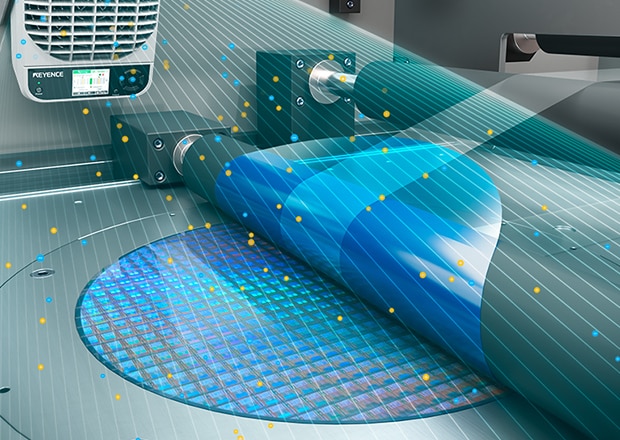
While traditional ESD prevention methods like grounding and static mats have been staples in the industry, they are not always sufficient in today’s high-speed, high-precision manufacturing environments. Grounding, for example, is often not effective against non-conductive materials that are frequently used in semiconductor manufacturing.
Similarly, static mats can provide some protection. However, they do not fully address the issue of airborne static, which can affect ICs from a distance. Ionizers, such as the KEYENCE SJ-F700, provide continuous static control for IC parts manufacturing and elimination over large areas that conventional measures might miss.
Ionizers not only neutralize charges but also prevent static from accumulating in cleanroom environments, making sure that components remain protected throughout the production cycle.
Conventional Countermeasures
- Grounding
-
- It is not effective for nonconductors.
- A connection to ground is required.
- Using Conductive Materials
-
- The components themselves cannot be changed.
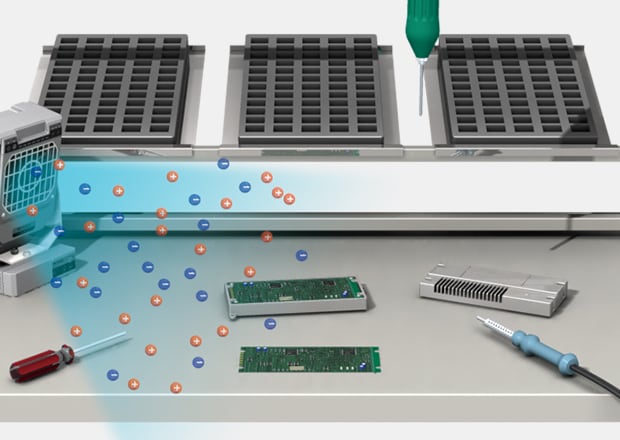
Countermeasures with Static Eliminators (Ionizers)
An ionizer enhances the effect of measures against static electricity in cell processes and improves the yield rate.
Improved Manufacturing Yield Rate
The measures against static electricity involve various factors such as improvement of employee training and thorough grounding. It is difficult to calculate the effect of just the static eliminator, but the yield rate has certainly improved.
There are other invisible effects such as improved levels of trust in the manufacturing quality.
How Ionizers Protect IC Components During Cell Processes
In cell processes, where IC components are assembled, tested, or handled in bulk, ionizers play a key role in preventing static damage by neutralizing static charges on surfaces and in the air. Ionizers protect ICs from potentially harmful static discharge. This protection is particularly important during the final stages of IC assembly, when the likelihood of ESD increases.
As ionizers continuously release positive and negative ions, they help reduce static buildup and minimize the potential for accidental discharge. This helps keep the integrity of ICs intact, supporting consistent and reliable production. Throughout that production process, ionizers play an important role in reducing ESD damage, helping ICs remain functional and reliable for their intended use.