Static Control
Static Solutions for Nonwoven Fabric Cutting
Key Takeaways
- Static builds rapidly during cutting from friction and line speed, causing unpredictable fabric handling.
- Ionizers neutralize surface charge immediately, reducing cling, flutter, and particle attraction.
- Install ionizers near blades, rollers, and conveyors to stabilize transfers and improve cut accuracy.
- Ionization reduces variability and defects but complements—does not replace—material or environmental controls.
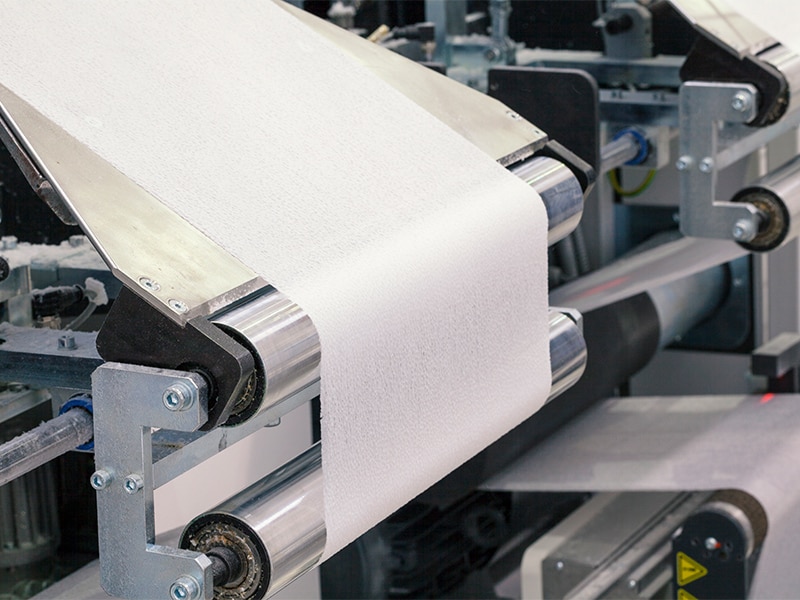
When it comes to nonwoven fabric cutting operations, static electricity is a persistent problem. As lightweight and synthetic materials move through the cutting, transfer, and stacking stages, they accumulate an electrical charge that can build up quickly. The result of this charge is unstable material behavior that complicates handling and attracts debris during its processing. Addressing nonwoven fabric cutting static electricity requires control methods that respond at a moment's notice and before the final product reaches the customer.
Challenges of Static in Nonwoven Fabric Cutting
Nonwoven fabrics are particularly susceptible to static during the cutting process because they undergo a combination of friction and speed. As the fabric comes in contact with the different blades, rollers, and guides, static electricity forms on the surface of the material. That charge doesn’t dissipate once the cutting is complete. Instead, it travels with the fabric into its next stages of production.
Other challenges in nonwoven fabric cutting include environmental ones. Air dryness shifts throughout the day, and line speeds vary between different production lines. In these conditions, static electricity accumulates faster than it can dissipate. What can start as a minor charge during the cutting process can become a much bigger issue in a matter of seconds, especially in situations where materials are separated and transferred constantly.
How Static Electricity Affects Non-woven Fabric Handling
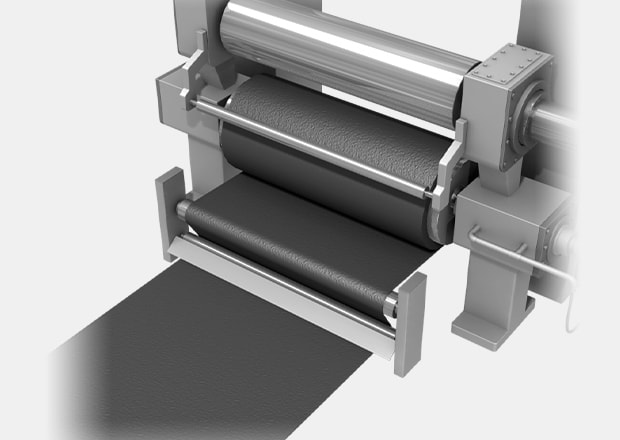
Static electricity being present means that the fabric will behave in an unpredictable way, like sheets can cling together or lift erratically as they transfer between stations. Materials like lightweight nylon webbing have a tendency to flutter when charged with static electricity. This behavior can slow production and introduce a variability that many operators have to correct for manually.
Fabrics are rarely made in a cleanroom environment, and static often attracts airborne fibers and dust toward charged surfaces. Even when debris is removed via airflow, it doesn’t necessarily mean that the static has been removed, and that debris can reattach itself almost immediately. Over time, those contaminants can build up on the fabric’s surface as well as surrounding equipment. All of these issues can negatively affect cut accuracy and surface appearance, while also affecting the consistency of the finished product.
Conventional Countermeasures
Conventional static eliminator
- The static elimination speed is insufficient.
Countermeasures with Static Eliminators (Ionizers)
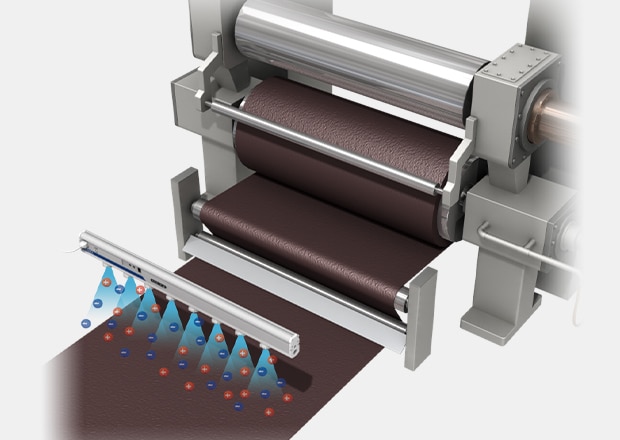
An ionizer provides an effective measure against foreign particles, which leads to a decrease in complaints.
Reduced Cost for Addressing Defective Products
- Cost of recall and disposal of defective lots: $4,000/year
- Recall cost (transportation and on-site service travel costs): $5,000/year
- Cost of process improvement: $10,000/case
How KEYENCE Ionizers Improve Fabric Quality and Production Speed
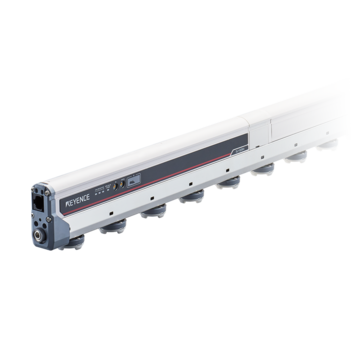
Static ionizers for nonwoven industry applications, like those from KEYENCE, are designed to respond quickly in high-speed environments. Bar ionizers like the SJ-Q Series eliminate static ten times more effectively than other conventional models. The SJ-F700 Series offers a compressed-air free static elimination option, and the SJ-E Series produces a supersonic airflow at minimal operating costs.
By neutralizing any static charge before it migrates downstream, these systems support smoother handling and cleaner separation. Rather than waiting for a static charge to decay naturally, KEYENCE ionizer solutions for fabric handling introduce balanced ions that neutralize surface charge as it forms.
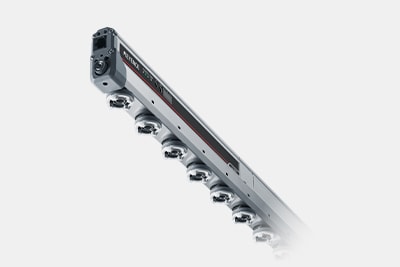
High-Accuracy High-Speed Sensing Ionizer
SJ-Q Series
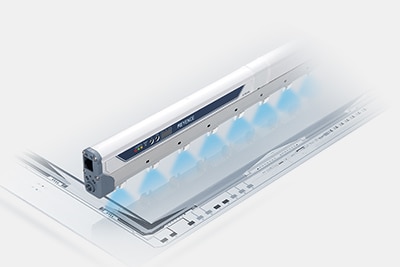
Energy-Saving High-Speed Sensing Ionizer
SJ-E Series
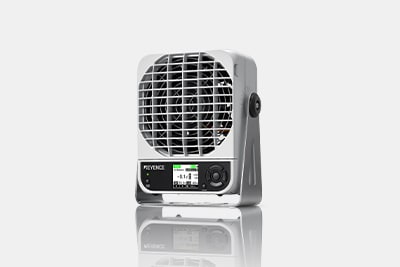
Multi-Sensor Ionizer
SJ-F700 Series
Applications: Static Control in Fabric Manufacturing
Cutting is one of the most common stages for static to influence production, and it is one of the most visible. Ionizer systems are commonly applied near blades and conveyors where static charges generate the most. Here, electrostatic elimination supports stable transfers between processes, and it also helps reduce any variability that was introduced during separation.
Static Control for Consistent Nonwoven Fabric Quality
Consistency in nonwoven production depends on fabrics behaving in a repeatable way. When static disrupts that, it means that charge levels fluctuate with the speed and the humidity on the line. Two lines can be running identical products with identical settings, but they can behave differently if static electricity is left unchecked.
By addressing nonwoven fabric static issues at the cutting and transfer stages with ionizers, any variability can be reduced. Fabric responds more uniformly from batch to batch, and any adjustments needed can be made easily without having to stop the line and reset everything. Static control measures do not replace material selection or environmental management, but they do help provide a stabilizing layer when those variables change during production.
Preventing Particle Adhesion Through Ionization
One of the most persistent effects of static accumulation during cutting is particle adhesion. After the blades pierce the fabric, small particles are released along the cutting edge. Those particles go on to cling to the charged fabric and can undermine the quality of the finished product. Those particles will remain on the fabric, even in the presence of air flow.
Without proper ionization, the smallest pieces can cause uneven surface appearance at inspection points and can build up along equipment, which can compromise the entire production line. Once the static is neutralized, the particles will disperse and, instead of following the fabric down the line, will be removed by on-the-line vacuums or other removal systems.
Contact KEYENCE to optimize your fabric production with static control solutions.