Static Control
Trapping of Protective Sheets in Cold-Rolled Coil Processing
Key Takeaways
- Static at the separation point causes protective sheet reattachment to cold-rolled coils.
- Contact/separation and low humidity increase surface charge on sheet and coil.
- Induced charge on conductive steel creates Coulomb attraction that overcomes separation force.
- Use balanced ionizers (SJ-Q Series, SJ-F700 Series) with monitoring to prevent trapping and improve safety.
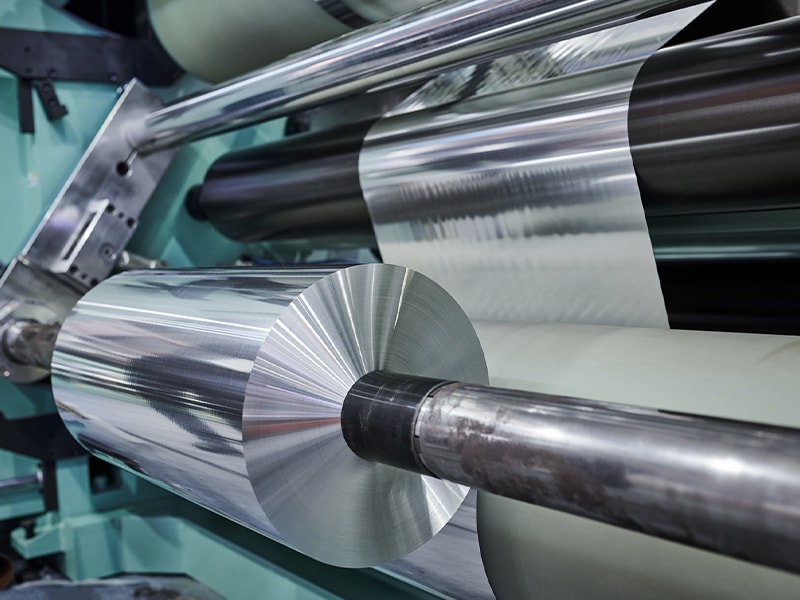
Cold-rolled coils are typically wrapped with a protective sheet prior to shipment to preserve the surface quality of the finished product. During processing, that sheet has to be removed as the coil is unwound. On many production lines, this sheet rarely releases cleanly, and instead, it clings to the steel surface or rewraps itself around the roll. This cold-rolled coil protective sheet trapping is often traced back to static electricity, which is generated at the moment of separation.
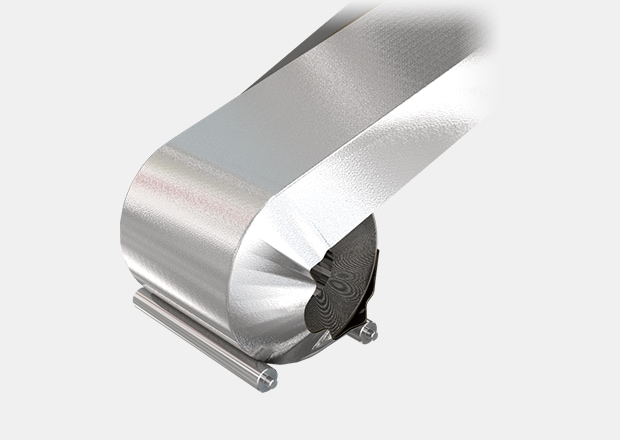
When the sheet and the steel separate, a static charge develops on both materials. If the charge is not controlled, the resulting electrostatic attraction will pull the sheet back towards the coil. When this happens, operators may need to stop the production line, peel the sheet manually, or repackage the coil.
How Static Electricity Is Generated During Coil Unwinding
Static electricity during coil unwinding is a common issue that is primarily produced by contact and separation between unlike materials. As the protective sheet peels away from the steel surface, the electrons transfer from one material to another.
Even when materials handling upstream appear stable, a wound roll can store a static charge within its layers. During the unwind process, the stored static electricity re-emerges. A coil that seems neutral when measured along a span can still carry a significant charge on its outer surface. The amount of static electric charge depends on the materials involved and any environmental conditions.
In low-humidity environments, static electricity dissipates slowly, and any voltage present can increase. As a result, the unwind location becomes a concentrated zone where electrostatic activity is the most noticeable.
Conventional Countermeasures
None
- Repeated packaging makes the work time longer.
- Workers may get an electric shock.
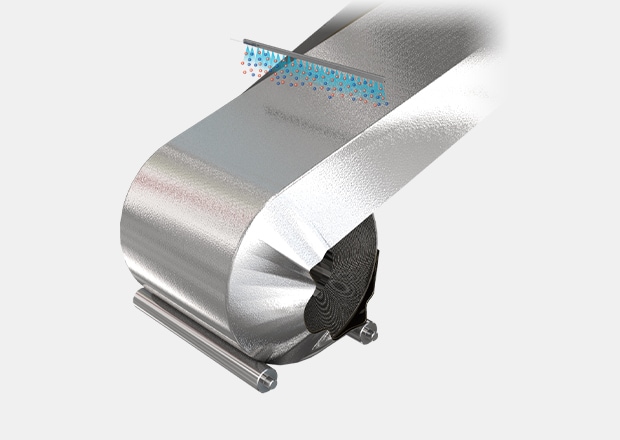
Countermeasures with Static Eliminators (Ionizers)
An ionizer eliminates the necessity for repeated packaging and shortens the work time. The work environment is also improved.
Shortened Work Time
Shortened time: 50 hours/month x time charge of $20/hour = $1,000/month
In addition, the work environment can also be improved.
Induced Charge and Coulomb Force on Steel Coils
Once the protective sheet carries its own static charge, it also carries an electric field between the sheet and the steel coil. Because steel is a conductive material, free electrons within the metal redistribute in response to that field. This redistribution creates an induced charge on the steel coil directly beneath the charged sheet.
If the sheet is negatively charged, the positive charge is farther from the steel surface closest to it. This separation of charge produces an attractive force described by the Coulomb interaction. The magnitude of this force depends on the surface charge density and the distance between materials.
Protective sheet static adhesion is an electrical interaction rather than a purely mechanical one. When electrostatic forces exceed the mechanical force separating the materials, the sheet will reattach or become trapped. In repeated cycles, this interaction can lead to a cold-rolled coil protective trapping that disrupts normal handling.
Impact of Protective Sheet Trapping on Work Time and Safety
When trapping occurs, operators often have to pause the production line to free the sheet manually. In some facilities, this repeated correction can account for hours of additional labor per month.
High surface voltage at the unwind location also presents a safety concern. When an operator contacts a charged coil, any stored energy can discharge as a shock. While many discharges can be brief, they can create discomfort and may trigger a sudden movement or reaction near rotating equipment.
Attempts to prevent having to repeatedly package steel coils by adjusting process settings will often provide limited improvement because the true cause is electrical. Without being in control of the surface charge and helping it dissipate, that existing attraction remains active. Addressing static behavior directing reduces both unplanned handling and an operator being exposed to an electrical discharge.
Eliminating Sheet Trapping with Ionizers
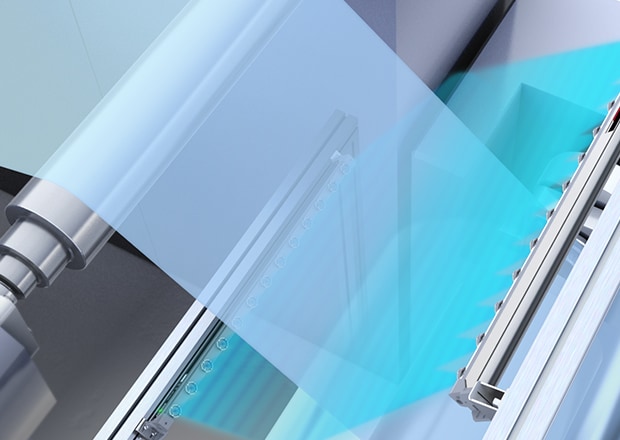
Effective static control for cold-rolled coil protection requires the neutralization of a charge where it develops, and because the protective sheet works as an insulator, grounding alone does not remove the static electricity from the sheet’s surface. Passive measures like brushes or humidity control may also not respond quickly enough for high-speed lines and can introduce further contact issues.
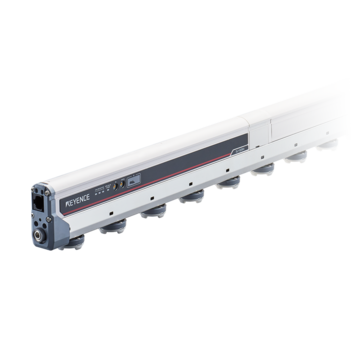
An ionizer for coil unwinding process applications emits positive and negative ions to help separate the sheet from the steel coil. Static ionizers like the SJ-Q Series from KEYENCE provide a tightly controlled ion balance within ±3 V, which helps support stable neutralization in conductive environments. Its electrical field shielding design limits the voltage fluctuation on nearby metal surfaces to help maintain consistent potential during the unwind process.
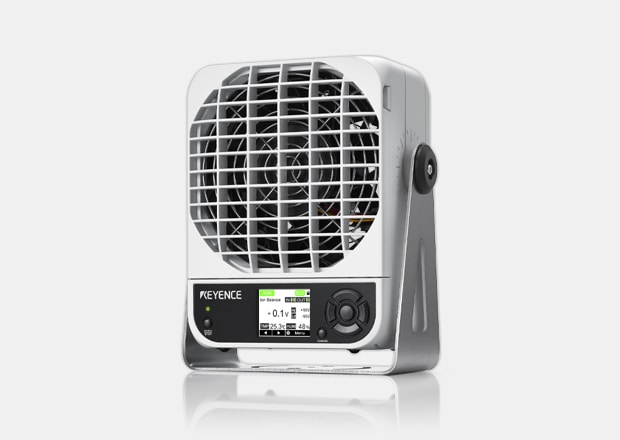
For larger coil widths or installations that require extended coverage, the SJ-F700 Series has an ion balance within ±1V across a wide elimination area of up to three meters. Automatic probe cleaning helps maintain performance without manual intervention, and the built-in monitoring functions allow for static conditions and operating status to be reviewed directly from the unit or through a connected network communication device.
When selecting an ionizer for coil unwinding process control, it is important to keep in mind the coil width, layout constraints, and desired monitoring capabilities.
Reduce repeated packaging and improve worker safety. Evaluate static electricity during your coil unwinding process today.