CMM (Coordinate Measuring Machine)
How to Select the Right Measurement System by Cost and Accuracy
Selecting a measurement system often begins with many different factors, such as budget discussions. However, the purchase price alone rarely reflects the full dimensional measurement cost over time. Cost-based measurement selection requires a clear understanding of accuracy, inspection volume, and the potential impacts that a measurement error can have on product quality.
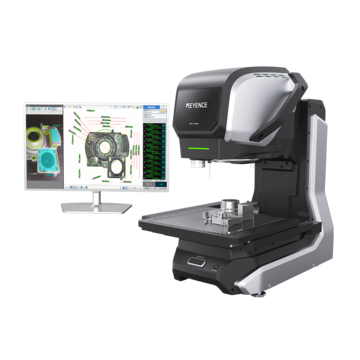
Basic tools like rulers and tape measures are the “obvious” choice for tighter budgets and are widely used on production floors for quick checks and layout work. Calipers run a close second and offer measurement resolutions down to 0.1 mm at a modest investment. Dial gauges and height gauges move into finer resolution at 0.01 mm. Micrometers are also common tools that come at a variety of price points. Beyond these tools, automated image-based systems like the IM-X1000 Series, or optical CMMs can introduce higher initial costs but can expand inspection capacity and reduce manual checks.
How to Balance Cost and Quality in Measurement System Selection
Cost and quality are directly linked to the tolerance requirements of a product. A part with a ±0.5 mm tolerance does not have the same demand as a component requiring micron-level control. For buyers selecting equipment that exceeds an actual need can inflate an investment without actually improving product outcomes. At the same time, underestimating accuracy requirements increases the risk of non-conforming parts or rejecting the good ones.
When evaluating dimensional measurement cost, consider the relationship between tolerance bands and measurement resolutions. A common guideline is that the measurement system should be capable of resolving variations in the product that fall well below what is allowed.
Production volume also influences the needed balance of cost and quality. Low-volume environments may rely on micrometers or height gauges. In contrast, high-volume manufacturing lines require the benefits of automated systems, which apply a consistent criterion across every batch of product.
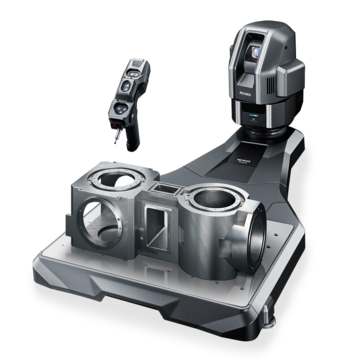
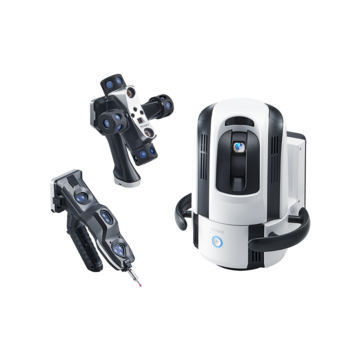
For applications that require quick dimensional verification with minimal operator input, image-based measurement platforms provide automated measurement routines and digital record capture. For portable 3D dimensional inspection across larger assemblies, these systems offer flexibility beyond the traditional bench tools.
Top Factors to Consider When Selecting Measurement Systems Based on Budget
Budgets with constraints are a big influence on buying decisions. Companies that are looking for measurement systems that support cost efficiency require more than a standard evaluation when taking into account some key features, like:
- Required tolerance and measurement resolution
- Inspection frequency and part volume
- Operator skill level and training demands
- Documentation and traceability requirements
- Floor space and environmental conditions
Manual tools are more effective in smaller and more controlled settings. However, as production lines need to move faster, the time it takes to take manual measurements can translate into higher labor costs. Automated systems help reduce the inspection cycle time and standardize evaluation criteria, which can improve consistency. Buyers must also take into consideration that cheaper equipment can restrict the scalability of both the production line and product mix.
The Hidden Costs of Low-Cost Measurement Solutions
Budget-friendly inspection strategies, like hand tools, can require buyers to prioritize lower cost without taking into account a full evaluation of the operational impact.
Operator variability affects repeatability. Two technicians using the same caliper may apply slightly different pressures or alignments, which leads to a variety of recorded results. Over time, these small differences can influence process decisions.
Documentation presents another consideration to the overall cost. Manual transcription of results introduces potential recording errors. Traceability is required in nearly every field, but reconstructing measurement history from paper logs can slow investigations in the event of an error.
Cost vs. Performance: Finding the Right Measurement System for Your Needs
For basic layout checks and non-critical dimensions, simple hand tools remain practical and cost-effective. However, when the production line has higher demands, the automated image-based systems by KEYENCE offer the solutions that can meet the need for a rapid, program-based dimensional verification. Cost-based measurement selection, ultimately, depends on matching performance requirements to the demands of the application. Evaluating dimensional measurement cost across equipment price, operator influence, and inspection time, there is a much clearer view of the long-term value.
Start saving with KEYENCE measurement solutions today!