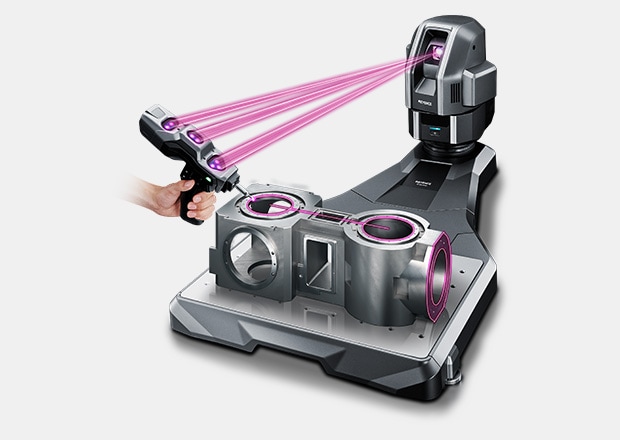
CMM (Coordinate Measuring Machine)
Vernier Height Gauges for Accurate Precision Measurements
Machinists and quality inspectors use vernier height gauges to produce accurate dimensional measurements as part of the tolerance verification process. These versatile precision measurement tools fill the gap between basic hand tools and complicated coordinate measuring devices by combining mechanical simplicity and measurement capability.
What Is a Vernier Height Gauge and How Does It Work?
A vernier height gauge works on the same graduated scale principle as a caliper but is positioned vertically on a solid base to measure part heights and vertical distances. The main scale provides the primary measurement, while the nonius gauge divides these graduations into finer increments for greater accuracy. To obtain the exact height, the measuring jaw is slid along the vertical beam until it contacts the workpiece, and both scales are read together.
The reference base of height gauges, which creates a constant datum plane for all measurements, is its primary benefit over conventional measuring instruments. Simply mount the gauge on a surface plate, zero the scale with the measuring scriber touching the plate, then measure features on your part relative to this common reference. This approach eliminates the positioning errors that occur when trying to measure heights with handheld instruments.
Vernier Calipers/Height Gauges (Depth Gauges)
Hand calipers are measuring instruments that can measure a variety of items such as length (outer shape), inner diameter, and level differences. Their use is widespread in manufacturing due to their ease of use and their ability to perform measurements with comparatively high accuracy. Recently, digital hand calipers have become increasingly popular.
The most commonly used hand calipers are M-type hand calipers and BC-type hand calipers, which are used to measure large objects.
Construction and Applications
- Length (outer shape) measurement: Close the large outer jaws on the measurement target, and then read the values from the main scale and the Vernier scale.
- Inner diameter measurement: Insert the small inner jaws inside the measurement target, and widen the jaws until there is no gap between the jaws and the target to perform the measurement.
- Level difference measurement: Insert the depth probe or a step into the hole or level difference to perform measurement.
How to Use Vernier Calipers
- 1. During measurement, grasp the main scale and move the slider with your thumb to close the large outer jaws around the target. Pushing the slider too forcefully will cause the jaws to be at an angle, which will prevent accurate measurement. Also, when measuring a cylinder, be sure to firmly close the parallel surfaces of the large outer jaws around the target.
- 2. Read the gradations on both the main scale and the Vernier scale on the hand caliper. The Vernier scale divides one gradation of the main scale into 20 gradations. In general, this enables measurements in units as small as 0.05 mm.
- 3. Read the Vernier scale from the left at the position where it overlaps with the gradation of the main scale.
Handling Precautions
- Applying more force to the slider than necessary during measurement may lead to errors caused by the large outer jaws becoming bent.
- With the scales at zero, the normal state is where no light leaks from the large outer jaws when they are closed.
- Exercise particular care when handling the small inner jaws and the depth probe, as these parts may deform easily if handled roughly.
- Periodically confirm whether the measurement accuracy has been maintained. One simple and useful method is to use a gauge block to perform measurements.
- The calibration interval for hand calipers, height gauges, and depth gauges is 6 months to 2 years.
Height Gauges and Depth Gauges
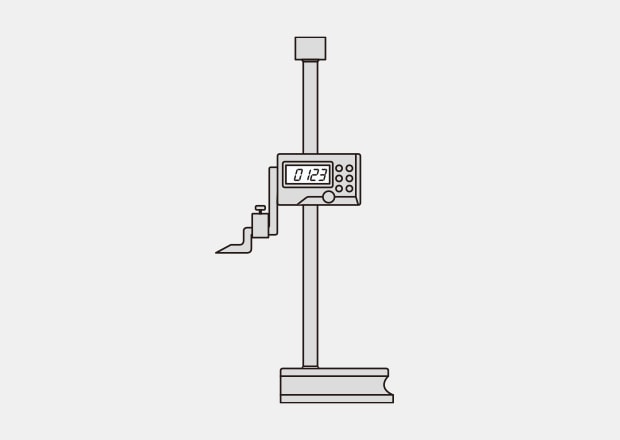
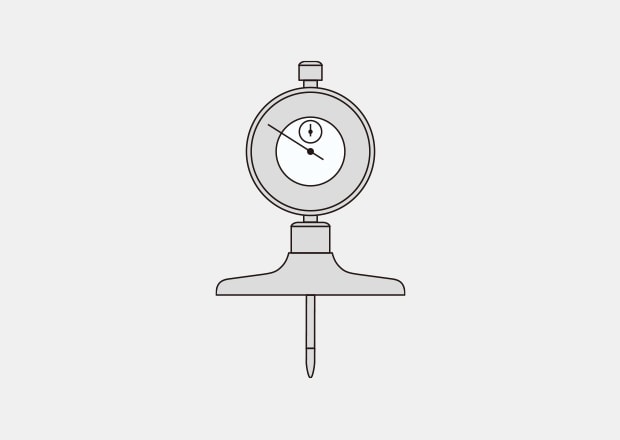
Height gauges and depth gauges can be considered relatives of hand calipers. When combined with a dial gauge, a height gauge can be used to measure height. Depth gauges, meanwhile, are used to measure level differences.
Height Gauge
Depth Gauge
Using Vernier Depth Calipers for Accurate Depth Measurements
Vernier depth calipers are specialized in measuring step heights, holes, and recesses that are difficult for other instruments to precisely reach. These types of precision measurement tools can be used to determine how far a feature is below a reference surface by extending perpendicular to the base. Lock the measurement and read both scales after positioning the base flush against the workpiece surface and extending the probe until it makes contact with the recess's bottom.
Vernier depth calipers are ideal for verifying counterbore depths, slot recesses, and other critical depth measurements when visual inspection alone is insufficient. Clean the part's base and surface before measuring to get rid of any dirt that can cause readings to be off. The vernier depth caliper provides sufficient precision for most shop floor applications and is more portable than depth micrometers.
Key Features of Vernier Height Gauges for Precision Measurement
The foundation of a high-quality vernier height gauge is a rigid vertical beam that resists deflection during use. Hardened and ground measuring surfaces ensure long-term durability and maintain flatness over thousands of measurement cycles. A locking screw holds the slider in place after you've made good contact with the workpiece, and the tiny adjustment wheel allows for controlled movement for accurate alignment.
Measurement reliability is greatly impacted by base design. Wider bases provide greater stability, especially when measuring tall parts. In order to minimize unintentional movement during measurement, certain vernier height gauges have magnetic bases that fasten to ferrous surface plates. By protecting the gauge from impacts and contamination during storage and transit between workstations, protective cases maintain accuracy.
Digital vs. Analog Vernier Gauges: Which Is Better for Your Needs?
In contrast to traditional graduated dials, digital vernier gauge versions eliminate scale reading errors by displaying measures on LCD panels. You can rapidly switch between metric and imperial units, zero the gauge at any location by pressing a button, and send data straight to statistical process control systems. With automatic shutoff features that save power in between uses, batteries usually last a year or longer.
Analog versions are initially less expensive and don’t require batteries or electronic maintenance. They function reliably in harsh environments where sensitive electronics could be damaged by metal chips, cutting fluids, or extreme temperatures. Experienced machinists often prefer analog scales for their tactile feedback and resistance to display errors. However, modern coordinate measuring systems offer automation benefits that surpass both digital and analog handheld tools for tasks requiring advanced measurement capabilities.
How to Measure Outer Dimensions Accurately
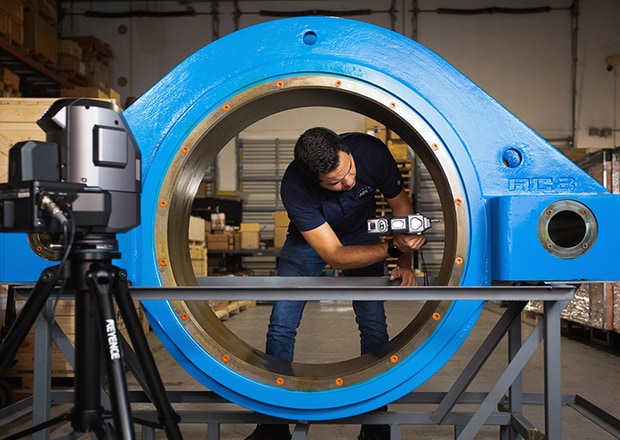
To achieve reliable results when measuring external dimensions with precision instruments, using the correct technique is essential. Before removing oils, dust, and other particles that cause measurement mistakes, clean the workpiece and measuring surfaces. Apply light, steady pressure to bring the measuring jaws into contact with the component. Insufficient pressure allows gaps that lead to low readings, while excessive force can deflect the jaws or deform softer materials.
Instead of measuring across a chord while testing cylindrical items, turn the gauge slightly while keeping in touch to determine the true diameter. To identify out-of-round situations and taper, take several measurements at various angles and places. Promptly record your findings. Understanding cost-effective inspection
techniques helps strike a compromise between operational efficiency and accuracy requirements. Regular gauge calibration against approved standards ensures that your results stay traceable.
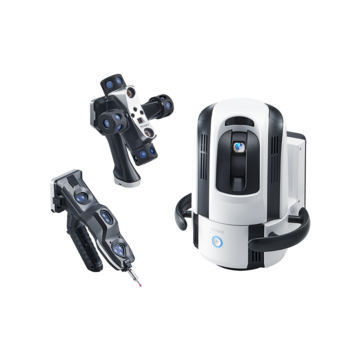
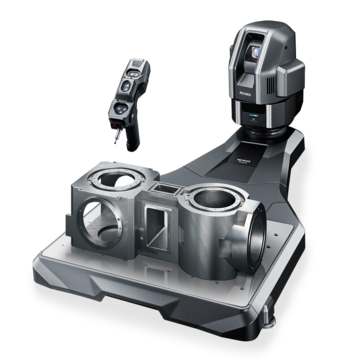
At KEYENCE, the XM-5000 Series can replace a Vernier height gauge, Vernier depth caliper, Nonius gauge, and more. It is the ultimate easy-to-use shop-floor precision measurement tool. Contact KEYENCE to learn more!

Related Products
Related Downloads
-
WM-6000 series Wide Area CMM Catalog
Brochure for the WM-6000 series Wide-Area CMM. A portable setup with a wireless handheld probe that enables users measure large parts and equipment.
-
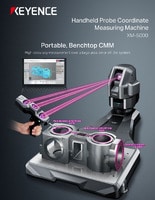
XM Series Handheld Probe Coordinate Measuring Machine Catalog
Brochure for the XM-5000 Series Handheld CMM. Portable CMM to easily and accurately measure 3D and GD&T features anywhere including the shop floor and in the machine tool.