Industrial Laser Marking Systems / Laser Markers
Laser Marking in the Defense Industry
-
Tags:
- Laser Marking , Aerospace , Laser Ablation
In the defense industry, reliable part identification and traceability are critical requirements, not just optional steps. Meeting stringent standards like MIL-STD-130 demands permanent, high-contrast marks that can withstand harsh environments throughout a product's lifecycle. This article explores why laser marking is the preferred solution for defense and aerospace manufacturing. Read on to discover the most common applications, how to choose the right laser wavelength (Fiber, UV, or CO2) for your materials, and how advanced features like 3-Axis control and built-in cameras can streamline your verification workflows and ensure compliance.
Laser Solutions for Defense Industry: Why Marking Matters
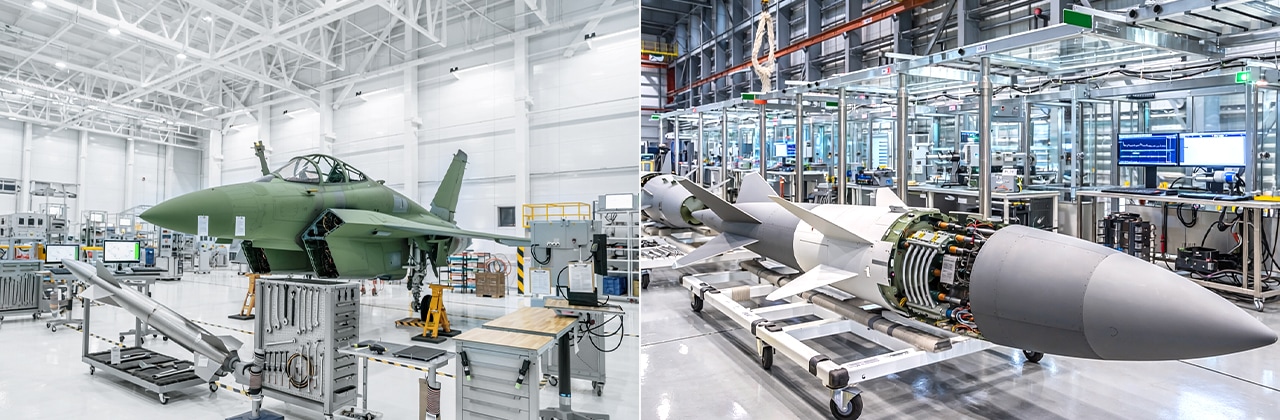
In the Aerospace & Defense supply chain, part identification is not just “nice to have.” Serial numbers, lot codes, 2D Data Matrix codes, and manufacturer identifiers enable traceability across production, maintenance, and lifecycle support. Laser marking is widely used because it can create permanent, high-contrast marks without consumables like ink or labels, and it can be integrated into cells that prioritize repeatability.
From a practical standpoint, defense programs often involve:
- Mixed materials and finishes (metals, polymers, anodized or coated surfaces)
- High product mix and frequent engineering changes
- Tight verification expectations from production and quality teams
How Are Lasers Being Used in the Defense Industry?
When engineers ask “How Are Lasers Being Used in the Defense Industry?”, marking is usually the first answer—but it is not the only one. The most common laser uses in defense-adjacent manufacturing include:
Identification and Traceability (Laser Marking/Engraving)
Typical marks include:
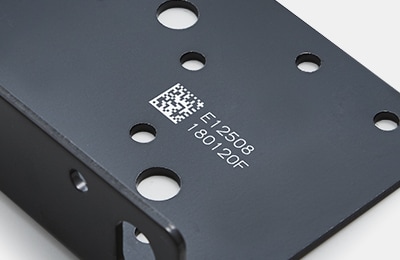
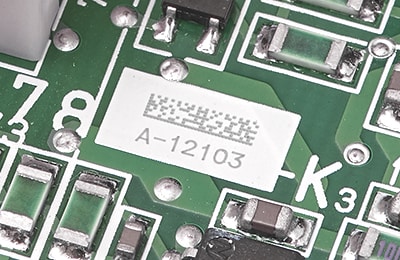
- 2D codes (often Data Matrix), human-readable serials, and manufacturer identifiers
- Part numbers, revision status, and date/lot codes
- Branding, warning icons, and functional labels
Laser Processing
Depending on the cell and material, a “laser station” may also support:
- Laser ablation (selective coating removal for contrast, bonding, or grounding paths)
- Surface texturing (functional textures or grip/adhesion improvements)
- Laser cleaning (oxide or material removal prior to joining or coating)
These applications often overlap with electronics and aerospace workflows, which is why “defense marking” is commonly addressed using platforms also suited for Laser Marking in the Aerospace Industry.
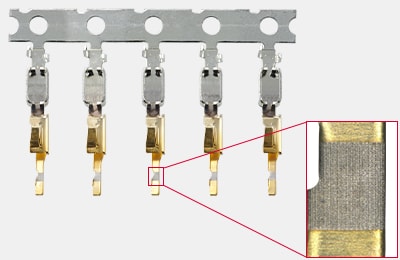
Thin film processing example: metal plated connectors
A Quick Guide to Laser Engraving
A guide to laser engraving in manufacturing terms usually comes down to how the laser interacts with the surface:
- Annealing (metals): Color change without removing significant material (useful when minimizing corrosion risk).
- Etching: Shallow material removal or surface change—often fast and readable.
- Engraving: Deeper removal for durability (e.g., harsh abrasion, repainting, or long service intervals).
- Ablation (coated parts): Removing a coating to reveal a contrasting substrate.
In practice, the best approach is the one that meets readability and durability requirements without introducing downstream risk (for example excessive depth on thin walls or a shallow mark that becomes unreadable after coating).
Laser Marking for Aerospace and Defense Compliance
Many defense programs align identification practices with recognized requirements. A commonly referenced standard is MIL-STD-130, which addresses identification marking of U.S. military property and is frequently associated with durable marking and machine readability expectations.
While compliance requirements vary by program and prime contractor, engineering teams often evaluate laser marking systems against needs such as:
- Permanence and legibility over the part lifecycle
- Machine-readable 2D codes that scan reliably at speed
- Repeatability across shifts, fixtures, and operators
- Verification workflows that support quality documentation
In real production environments, variation is unavoidable—different suppliers, coatings, heat lots, and fixture stack-ups all affect mark appearance. This is where marker capabilities such as a built-in camera (for positioning and mark confirmation) and robust focus control can help stabilize results.
Industrial Laser Marking & Engraving: Common Defense-Area Applications
Within the Military & Defense Industry, laser marking is frequently used on parts that also appear in aerospace, electronics, and general industrial manufacturing. Common examples include:
- Data plates (metal plates and tags), enclosures, and housings
- Connectors, backshells, and cable components
- Machined metal components (brackets, fittings, mounts, fasteners)
- PCBA-related items (carriers, shields, fixtures, and serialized subassemblies)
- Tools, jigs, and fixtures for traceable production support
Because many of these parts vary in height or have curved/angled surfaces, 3D part geometry is a frequent driver of scrap and rework in conventional setups. Modern systems that support 3-Axis marking can help maintain consistent mark shape and placement across stepped or uneven surfaces.
Best Laser Marking Method: CO2, Fiber, or Ultraviolet?
Selecting the best laser marking method typically starts with the material, desired mark type (etch/engrave/anneal/ablate), and production constraints.
Fiber Laser (Common for Metals)
Often chosen for:
- Stainless steel, aluminum, titanium, and many coated/anodized metals
- High-contrast, durable marks and fast cycle times
Ultraviolet (UV) Laser (Common for Delicate Materials)
Often chosen for:
- Certain plastics, films, and sensitive electronic components
- Fine features where minimizing heat input helps maintain cosmetics or function
CO2 Laser Marking (Common for Organics and Many Polymers)
Often chosen for:
- Many plastics, rubber, coatings, paper/labels, and organic materials
- High-speed marking with strong contrast on appropriate substrates
Because defense manufacturing spans metals, polymers, coatings, and mixed assemblies, it’s common for organizations to standardize on more than one wavelength across facilities.
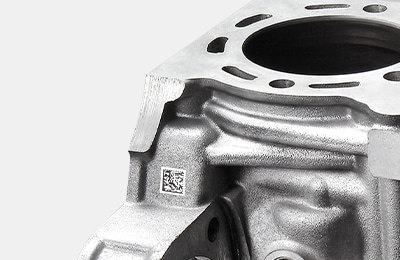
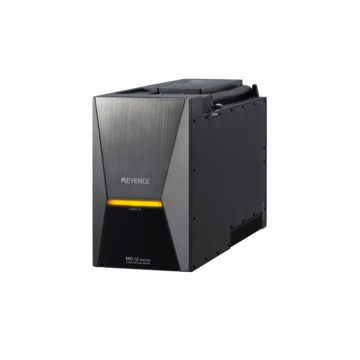
MD-X2 hybrid-fiber
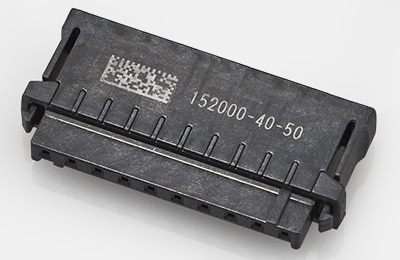
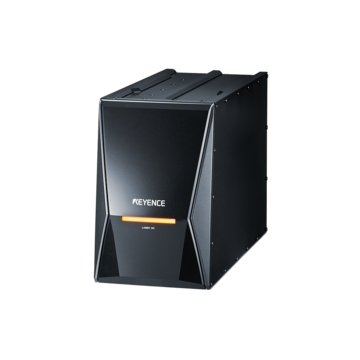
MD-U2 UV
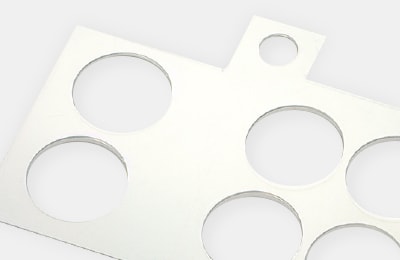
ML-Z CO2 film cutting example
Advantages of CO2 Laser Marking Systems
The advantages of CO2 laser marking are most apparent when the target materials respond well to CO2 wavelength absorption. In those cases, CO2 marking can deliver:
- High-contrast marks on many plastics and coated materials without ink or solvent
- Fast processing for characters, logos, and codes
- Good fit for packaging, labels, and polymer components that appear in defense-adjacent supply chains
That said, CO2 laser marking is not a universal solution—metals generally require different wavelengths or marking approaches to achieve durable, readable results.
Laser Marking in the Aerospace Industry (and Why It Transfers to Defense)
Many defense products share manufacturing methods, materials, and marking expectations with aerospace. As a result, laser marking in the aerospace industry often looks very similar to defense marking workflows:
- Traceability-first identification (serial/lot/revision)
- Emphasis on consistent readability and verification
- Mixed materials and coatings
- Long product lifecycles and service environments
This overlap is why a single laser marking strategy is often designed to support both aerospace & defense production lines—especially in facilities that build components serving multiple end markets.
How Laser Cutting Is Used in the Defense Industry
A huge use case for laser markers is processing, which encompasses many applications. Just a few laser processing use cases in defense manufacturing include:
- Cutting gaskets, films, and insulating materials
- Trimming polymer sheets or thin non-metallic components
- Cleaning or roughening surfaces for increased adhesion or bonding
Understanding the broader “laser processing” landscape helps teams plan cells, safety controls, and requirements more effectively.
Where KEYENCE-Specific Capabilities Fit
For manufacturing and quality engineers, the goal is usually simple: repeatable marks that scan and hold up, with minimal setup time and minimal dependence on operator technique.
A few capabilities often evaluated in this context include:
- 3-Axis marking: Enables consistent mark placement and legibility on non-flat surfaces (steps, chamfers, radii), reducing sensitivity to Z-height changes.
- Built-in camera: Used for mark positioning without fixtures (finding a feature before marking) and for reducing placement errors when part presentation varies.
- Autofocus: Stabilizes marks when part height varies by lot, fixture tolerance, or mixed-part runs.
Within KEYENCE’s lineup, systems such as MD-X2 (fiber), MD-U2 (UV), and ML-Z (CO2) are often considered when the application spans metals, plastics, and organic materials.
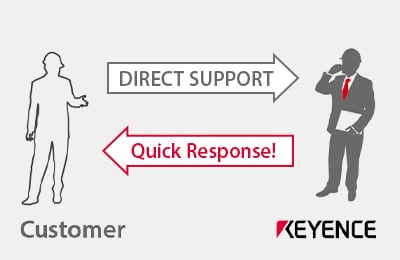
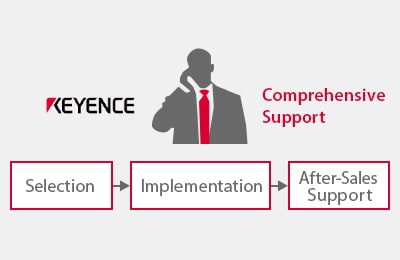
From an operations perspective, many teams also evaluate supplier support as part of risk reduction—especially when programs are schedule-driven. Factors often considered include a global direct sales model, a comprehensive support system, and logistics capabilities such as same day shipping to reduce downtime exposure.
Direct Sales Network
- Local
- Specialized Product Expert
- KEYENCE Direct
Direct Support
- On-Site Product Demonstrations
- Application Sample Testing
- Direct Phone & On-Site Support
Same-Day Shipping
Products ordered by 4:00 PM CST are shipped from our warehouse center in Chicago the same day!
Summary
- Defense marking needs commonly emphasize traceability, permanence, and scan reliability, often aligned with requirements such as MIL-STD-130.
- The “best” laser depends on material + mark type: fiber for many metals, UV for sensitive materials, CO2 for many polymers/organics.
- Capabilities like 3-Axis marking, built-in camera features, and autofocus help stabilize results across real-world part variation.

FAQ
How Does a Laser Marking Machine Work?
A laser marking machine focuses light onto a surface to alter the material and create contrast. Depending on the material and settings, the laser may lightly remove material (etch), remove more material (engrave), or remove a coating (ablate).
What Is the Difference Between a CO2 Laser and a Fiber Laser?
The main difference is the laser wavelength, which controls which materials absorb the energy efficiently.
CO2 lasers are often well-suited to many plastics, rubber, coatings, paper, and other organic materials.
Fiber lasers are commonly preferred for metals and deep engravings where high-power is necessary.