Static Control
Static Control for HDD Motor and Component Manufacturing
Key Takeaways
- Continuous part transfers generate persistent surface charge that increases dust adhesion and ESD risk.
- Grounding alone is insufficient for insulated components; ionizers neutralize charge where it forms.
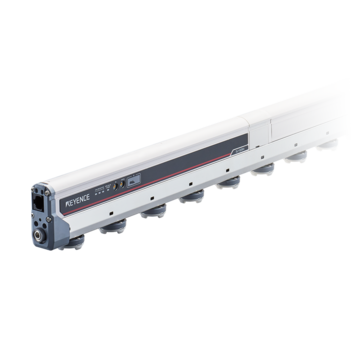
- Inline ionizers (e.g., KEYENCE SJ-Q) reduce rework and labor, keeping cleanliness consistent across stations.
- Placing compact ionizers near transfer and enclosed zones prevents contamination during high-speed assembly.
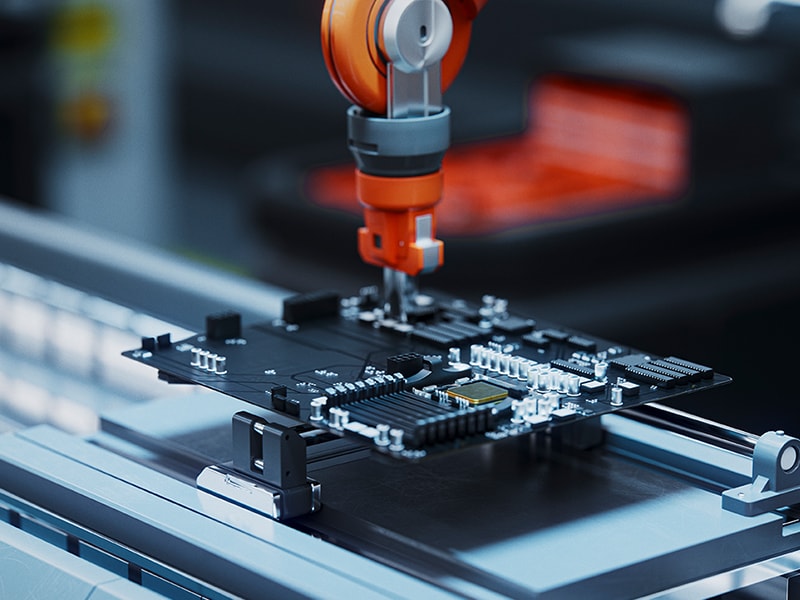
Hard disk drive (HDD) motor and component assembly rely on tight mechanical tolerances supported by sensitive electronic systems. It is here that components have to move through press-fitting, magnet placement, inspection, and transfer steps, where even minor electrostatic charge can disrupt the stability of the final product.
In these environments, static does not appear as a one-off event. It accumulates continuously as parts contact tooling, fixtures, conveyors, and air. Effective static control HDD motor assembly practices focus on managing that charge before it affects cleanliness, handling, or long-term reliability.
Why HDD Motors and Components Need Rigorous Static Control
HDD motor assembly involves small, lightweight components that are constantly moving through multiple fixtures and transfer points; however, many of these parts are electrically isolated during handling. As they contact tooling and surrounding surfaces, electrostatic charge forms and travels with the component as it moves down the line.
Cleanliness requirements in these assemblies feature particles that remain on motor components, which can affect balance or inspection results (even when they are not immediately visible), so, when static charges are present, dust is more likely to stay attached through transfer and inspection rather than release naturally. Therefore, static elimination for precision motors limits this behavior by reducing surface charge during normal line operation.

ESD Risks to Magnetic and Precision Parts
Treating ESD as a background condition instead of an occasional incident reflects how HDD motor lines actually operate. Electrostatic discharge presents a different, less visible risk during HDD motor assembly. Discharges often occur below the threshold of human perception, yet still introduce electrical stress into sensitive components—like motor drivers and adjacent circuitry—that operate with narrow tolerances. Even small ESD events can degrade performance without causing immediate failure.
This makes ESD protection in motor assembly a process concern rather than a handling guideline. Relying on grounding alone comes with its own issues, especially where parts are insulated or temporarily isolated. Static control methods have to adapt to static charge where it forms and where it moves, not only where contact occurs.
Static-Induced Contamination Risks in Rotor and Stator Assembly
Rotor and stator components are particularly vulnerable to HDD motor dust contamination when static is present, as charged surfaces attract airborne particles. Once adhered, particles often resist removal, especially when assemblies move between enclosed stations.
This contamination affects more than surface appearance, as particles trapped during press-fit or alignment can introduce imbalances. In precision motor assemblies, those deviations carry dust as well as consequences. Static control for clean motor components helps reduce the forces that pull debris onto critical surfaces, which lowers the chance that contamination travels deeper into the assembly.
Limitations of Conventional Dust Removal Methods
Air blow and manual cleaning are common when contamination appears during HDD motor assembly, particularly during inspection or transfer steps. As components move down the line, surface charge and airborne particles remain part of the process. In one example, dust that is removed at one station can reappear later, especially if that part passes through a low-airflow area.
Conventional Countermeasures
Handled by workers
- Cost rise due to increased labor cost
- Long takt time
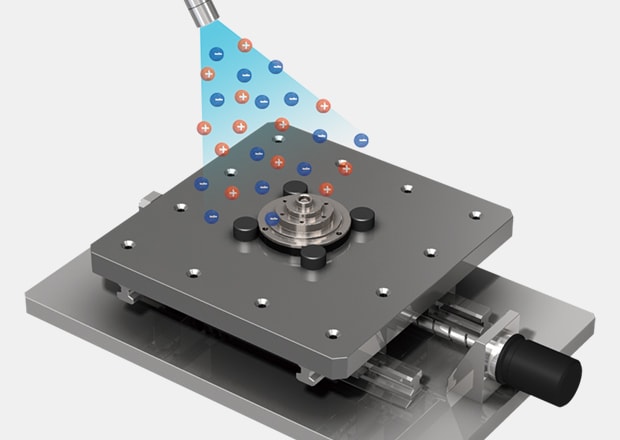
Countermeasures with Static Eliminators (Ionizers)
It reduces cost and saves takt time.
Reduced Labor Cost for Addressing the Problem
Labor cost per line $200/month × 10 lines × 12 months = $24,000/year
Although calculation of the takt time is difficult due to the relation with the previous and next lines, it has definitely been improved.
Damage to Electronic Components During Transfer of Electronic PCBs
How Ionizers Improve HDD Motor Assembly Cleanliness
Certain stages of HDD motor assembly involve components that remain electrically isolated as they move through the line. Ionizers, including the KEYENCE SJ-Q, are placed in these zones as part of normal line configuration. Surface charges and airborne particles are present throughout all the stages of production, particularly where grounding paths are limited.
When ionization is applied upstream in the process, components continue through assembly with lower surface charge levels during normal movement. Dust behavior differs across stations as parts pass through enclosed equipment and low-airflow areas. Cleanliness conditions tend to remain more consistent without adding additional handling steps.
In high-speed motor assembly environments, ionizers are positioned near process zones where static accumulates during continuous operation. Equipment such as the SJ-Q ionizer is used in these locations to introduce ionization without interfering with surrounding processes or airflow patterns.
Supporting Stable Production Through Static Control
Effective static control for clean motor components supports more than immediate defect reduction, as static conditions that stay consistent across stations can help reduce the number of variables that influence how parts are evaluated.
When static charge is managed throughout assembly, variations caused by intermittent contamination or electrical stress are less likely to mask root causes elsewhere in the process.
Static control in HDD motor assembly shapes how consistently components move and are evaluated as part of normal production flow. Static charges that are managed throughout the line, dust behavior becomes more predictable and less likely to interfere with inspection or handling. This allows static control HDD motor assembly practices to function as part of the process itself, rather than as a response layered on after issues appear.