Industrial Laser Marking Systems / Laser Markers
Laser Microprocessing for Precision Applications
Key Takeaways
- Laser microprocessing shapes, drills, or structures parts at a microscale, often measured in microns.
- Precision laser processing works without contact, so there's little risk of damaging delicate parts.
- Laser micro drilling can create holes finer than a human hair, useful for filters and nozzles.
- Material choice, wavelength, and pulse duration all shape the outcome of a microprocessing project.
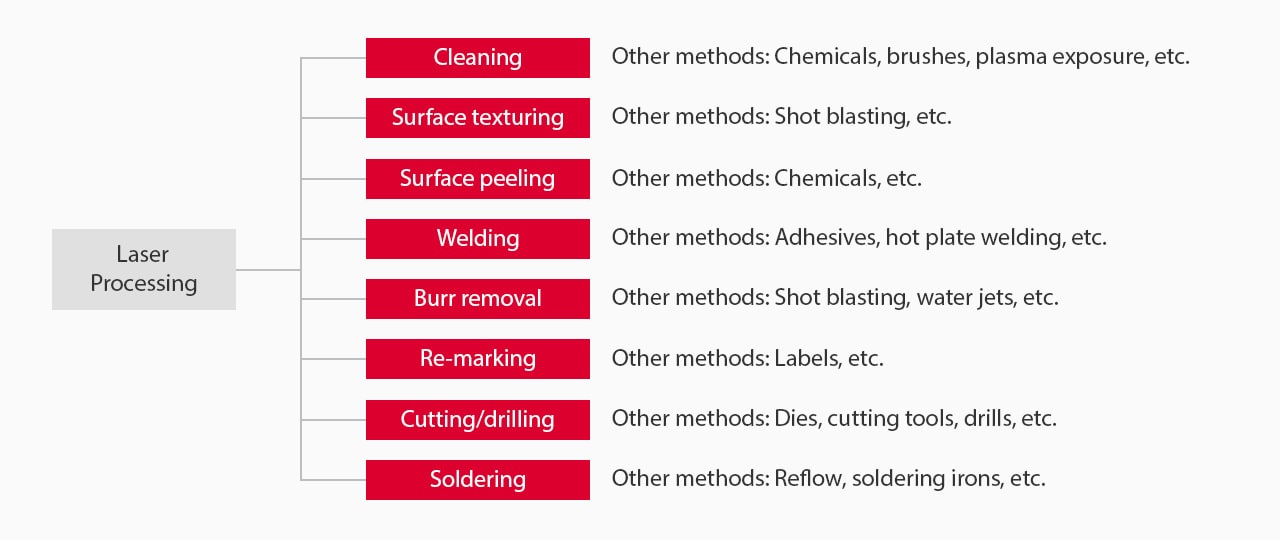
What Is Laser Microprocessing?
Laser microprocessing refers to methods that employ a concentrated beam to drill, weld, cut, or alter material on a very tiny scale—typically a few microns to a few hundred microns. There is no blade to dull or anything to break in the middle of the task, because the laser operates solely with light rather than a physical instrument contacting the part. For fragile components, where even slight pressure might cause the piece to distort or shatter, this difference is very important.
The term often gets used alongside micromachining, though the two aren't quite the same. Micromachining generally refers to removing material through drilling or cutting, while laser microprocessing is the broader term and also covers joining and surface processing. Either way, the goal stays consistent: shrink tolerances way down while keeping the process fast enough for a real production line.
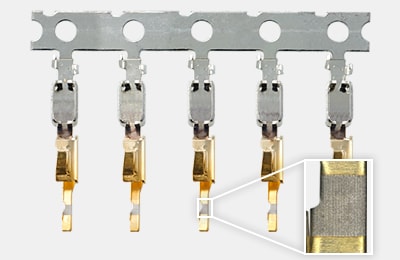
Metal plated connectors
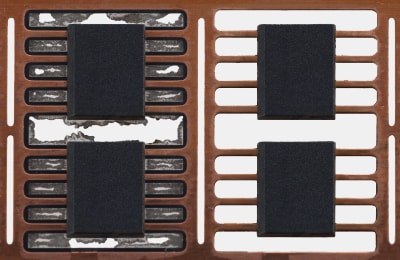
Frame ICs (burr removal)
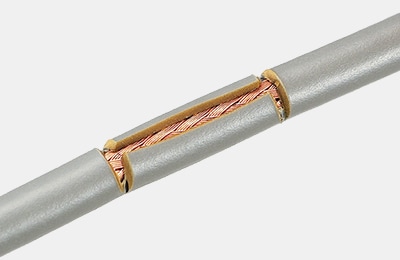
Wire sheathing cutting
How Precision Laser Processing Works
The first step in precision laser processing is to focus a beam to a point that is often smaller than a strand of hair. Enough energy is concentrated in that narrow target to melt, evaporate, or change the substance precisely where it is focused and nowhere else. Here, pulse duration is quite important. The margins remain clean because shorter pulses, particularly those measured in picoseconds or femtoseconds, transfer heat so quickly that the surrounding material hardly warms.
As important as the laser source is, motion control is equally important. While software determines where each pulse should fall, Galvo scanners quickly guide the beam over the workpiece. If the timing is slightly off, the hole or cut will not align properly. That's why so much of the value in high-precision laser processing comes down to calibration, not raw power alone.
Laser Micro Drilling and Micro Laser Drilling Applications
Laser micro drilling creates holes that are often only a few microns wide and too small to discern without magnification. Filtration screens, medical needles, and fuel injector nozzles all rely on holes this small, and mechanical drilling cannot achieve that size without shattering bits or damaging the surface.
Micro laser drilling shows up across many industries as a result. Aerospace manufacturers use it for cooling holes in turbine blades, where airflow needs control down to a fraction of a millimeter. Electronics makers rely on similar techniques for laser marking machine processes that pair drilling with fine identification marks on circuit boards. Medical device makers apply it to catheters and needle hubs, where even a slightly out-of-round hole can degrade performance.
Materials Used in High-Precision Laser Processing
Metals like stainless steel, titanium, and aluminum handle laser microprocessing well, since they absorb the beam's energy predictably and hold their shape once the job is done. Plastics and polymers can be trickier, since some materials melt or discolor under the wrong wavelength, which is part of why UV and green lasers often get chosen over infrared for this work. You can see that play out in our breakdown of UV laser marking versus pad printing on heat-sensitive plastics.
The list is completed by ceramics, glass, and ultrathin films, each with characteristics related to transparency or brittleness. A good part can be ruined by microcracks, which can be prevented by matching the wavelength and pulse width to the material.
Choosing the Right Laser Microprocessing SolutionLaser Microprocessing Solution
Selecting a system involves more than merely comparing data sheet specifications. Choose the wavelength and pulse type that are most appropriate for the substance you deal with first. A shop that deals mostly with metal components has different requirements than one that works with glass substrates or flexible circuits.
Throughput is also important. While certain operations require speed above all else, others require accuracy that can only be achieved by slowing down for additional passes. Before choosing equipment, discuss your parts, tolerances, and volume with a laser professional. This is because various facilities tend to have different requirements for laser microprocessing. Our guide on laser marking machine benefits covers the wider picture of what these systems bring to a production floor.
Processing Example
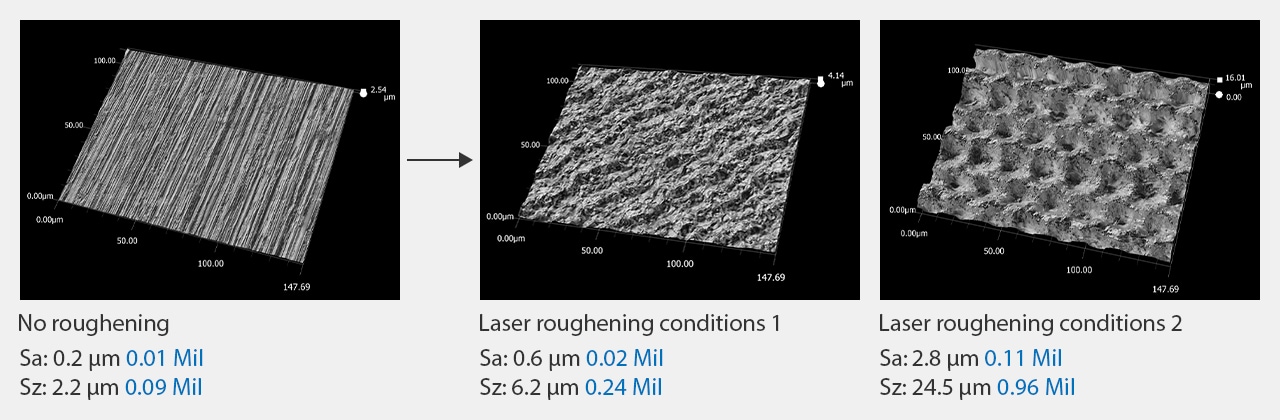
*Sa: arithmetic mean height (measurement results obtained using a KEYENCE laser microscope)]
*Sz: maximum height (measurement results obtained using a KEYENCE laser microscope)]

Frequently Asked Questions
What’s the Difference Between Laser Microprocessing and Standard Laser Marking?
While laser microprocessing targets features measured in microns, frequently on smaller or more sensitive objects, standard marking operates on a broader scale and with lower precision.
How Small Can Laser Micro Drilling Holes Actually Get?
Holes can be as tiny as a few microns across, which is far smaller than what mechanical drills can consistently create, depending on the laser and material.
Does Laser Microprocessing Work on Flexible or Thin Materials?
Since the laser doesn't exert any physical pressure that could rip or distort them, thin films, flexible circuitry, and fragile polymers are common options.