Industrial Laser Marking Systems / Laser Markers
Why Custom Laser Marking Solutions Are Essential in Modern Manufacturing
-
Tags:
- Laser Marking , Laser Labeling
Key Takeaways
- Custom laser marking systems ensure permanent, industry-compliant traceability across materials.
- Inline integration reduces handling, lowers scrap and labor, and speeds production cycle times.
- Software-linked marking automates variable data, minimizes entry errors, and enables real-time audits.
- Application-specific hardware (fiber, UV) avoids part damage and meets material and regulatory needs.
- Choose partners with industry experience, on-site support, and proven long-term serviceability.
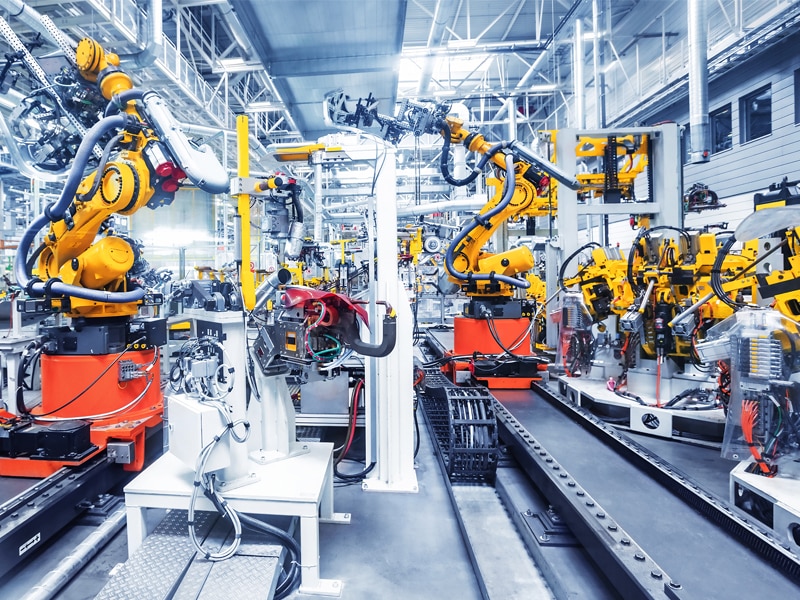
Manufacturing operations are under increasing pressure to provide faster, higher-quality products with full traceability. Seldom do off-the-shelf tools handle the particular difficulties that many production environments pose. For businesses looking to streamline their marking procedures, eliminate bottlenecks, and satisfy industry-specific compliance needs, custom laser marking solutions have become essential.
These customized solutions offer the flexibility to adjust as production demands change while integrating easily into current operations.
What Are Custom Laser Marking Systems?
Standard laser markers work well in low-volume procedures or laboratory conditions where operators physically position parts. Production operations that manufacture thousands of pieces every day need an alternative. Custom laser marking systems are developed with specific material types, manufacturing requirements, and throughput targets in mind.
During the customization process, engineers look at part geometry, material composition, cycle times, and current automation. They decide on the best equipment placement and where marking fits into the production cycle. This highlights ways to increase mark consistency and do away with manual handling.
The demands of the application determine the choice of hardware. For deep engraving on hardened steel, automotive facilities may require fiber lasers. Heat-sensitive circuit boards may need UV systems, according to electronics manufacturers. The laser source is just one element in a larger system including optics, positioning equipment, safety enclosures, and control interfaces.
Software customization matters equally. Custom laser marking solutions often pull data directly from manufacturing execution systems or quality databases. This eliminates manual data entry errors and speeds up production. The software automatically adjusts marking parameters when switching between part numbers, making changeovers nearly instantaneous.
Benefits of Integrated Laser Marking Solutions
Moving parts to special marking stations is no longer necessary with integrated laser marking systems. Automatic marking reduces handling damage, labor costs, and cycle times as parts move through the production line.
Inline marking strengthens quality control. Immediately verifying mark quality, vision systems identify flaws before parts move on to the next stage. In order to create an audit trail for rules, certain systems take pictures of every mark and save them with production data. Manufacturers are able to link particular batches or individual parts to quality problems.
Flexibility gives customized systems a major advantage. Manufacturing requirements change as new products launch, regulations shift, or volumes fluctuate. Well-designed custom systems accommodate these changes through software updates or minor hardware modifications rather than becoming obsolete.
Space optimization drives many custom integration decisions. Integrated laser marking systems take up minimal floor space because they fit into existing production lines. In certain configurations, lasers are mounted overhead or inside machine enclosures so that operators can hardly see them.
For medium-to high-volume processes, integrated techniques have a higher ROI. Even while the initial expenses are higher than those of basic standalone markers, labor savings, less scrap, and increased output quickly make the investment worthwhile.
Industries That Require Custom Laser Marking
Among all industries, automakers are subject to some of the most stringent traceability regulations. Each component that has the potential to compromise safety needs to be permanently identified and linked to manufacturing records. The range of materials found in cars, from plastic interior trim panels to aluminum engine blocks, is handled by custom marking systems. Automated laser marking solutions keep up with demanding assembly line speeds.
Both biocompatibility and traceability are necessary for the production of medical equipment. Marks must withstand sterilizing processes without fading or creating potentially bacterial surfaces. Custom solutions get around these problems by carefully regulating the marking depth and surface finish. They retain marking accuracy while integrating into cleanroom settings and adhering to strict air quality regulations.
Electronics manufacturing requires marking small components without causing thermal harm. Circuit boards for smartphones, semiconductor packages, and connector assemblies may occasionally need identification codes smaller than a millimeter. Sophisticated laser marking devices that employ precise motion control and cutting-edge optics are used for this purpose. To keep up with electronic production rates, they operate at milliseconds per mark.
Aerospace components have decades-long traceability requirements. Parts installed in aircraft must be identifiable after several maintenance cycles, exposure to extreme temperatures, and harsh chemicals. Custom marking systems provide deep, permanent markings that comply with FAA rules. The systems usually incorporate paperwork packages demonstrating compliance with aircraft quality standards.
The pharmaceutical industry relies on serialization to combat counterfeiting and enable recall management. Each package needs a unique identifier that survives distribution, storage, and handling by end users. Laser systems can mark anything from glass vials to cardboard cartons, altering parameters automatically based on material type. Integration with track-and-trace databases occurs in real time, ensuring that no product ships without correct serialization.
How to Choose the Right Custom Laser Partner
Industry experience should be at the top of your evaluation list. Suppliers who have created systems for your industry are aware of the regulatory environment, material problems, and manufacturing constraints. They provide proven answers rather than experimental approaches that necessitate considerable troubleshooting.
Technical capabilities go beyond equipment sales. The ideal partner employs application engineers who simulate marking processes, forecast outcomes, and offer the best settings. They should provide sample marking services using your actual parts and materials to identify potential concerns before purchasing.
The support infrastructure determines long-term satisfaction. Look for companies that have service experts within a few hours of your facility. Remote diagnostics can swiftly cure simple issues, but complicated ones require on-site expertise.
Industrial laser marking integration projects require coordination between multiple teams. Your partner should demonstrate experience working with automation vendors, controls engineers, and production managers. Successful integrations need clear communication and realistic timelines for testing, validation, and training.
Finally, a tailored system should provide value for ten to fifteen years. If your supplier leaves the market or is acquired, further support becomes questionable. Before making a commitment, research the company's history, financial backing, and market position.
Automation and Production Line Integration
Conveyor integration forms the backbone of most automated marking installations. Parts arrive at the marking station via belt, chain, or roller conveyors. Position sensors detect each part's arrival and trigger the marking cycle. Cycle times vary from under one second for small marks to several seconds for complex 2D codes.
Robot collaboration has expanded dramatically in recent years. Six-axis robots manipulate parts through complex orientations, presenting multiple surfaces to a stationary laser. This works well for components requiring marks on several faces or in hard-to-reach locations. The robot becomes part of the custom laser marking solutions package, programmed specifically for your part geometry.
Precise part fixtures are no longer necessary thanks to vision-guided placement. Each component's location and orientation are determined using cameras, and the software determines the required offset to correctly put markings. This flexibility facilitates transitions between various component types and permits a natural variation in how pieces arrive.
Everything is connected by data connectivity. The marking system pulls serial numbers, batch codes, and variable data from the enterprise resource planning software. It confirms that each part was properly identified by reporting the completion status back to quality systems.
During automated operations, safety systems protect both operators and equipment. From the moment someone enters the work enclosure, light curtains continue to designate cycles. Emergency stop circuits provide quick shutdown in the event of an issue, while interlocks guarantee that machine lids stay closed during laser operation.
Optimize Operations: Custom Laser Marking Solutions for Manufacturing
To conclude, the manufacturing landscape is shifting toward more customization, faster changeovers, and tighter process control. Companies that invest in custom laser marking solutions position themselves to meet these demands while being flexible as needs change. The right system gives you a competitive advantage by offering measurable improvements in quality, efficiency, and compliance.
Looking to integrate custom laser marking solutions into your production line? Contact our experts to design a fully customized solution built for your industry and throughput requirements.