3D Scanner
How to Utilize 3D Data for Virtual Reality
-
Tags:
- 3D data acquisition
Key Takeaways
- VL Series captures full‑color 360° 3D scans that convert to OBJ/3MF for metaverse use.
- STL/OBJ enables rapid import of real objects into virtual reality.
- High accuracy scans handle complex free form surfaces, reducing modeling time significantly.
- Use cases: virtual product showcases, 3D e-commerce, and prototyping.
Difference Between the Virtual Reality and XR (Cross Reality)
VR (Virtual Reality)
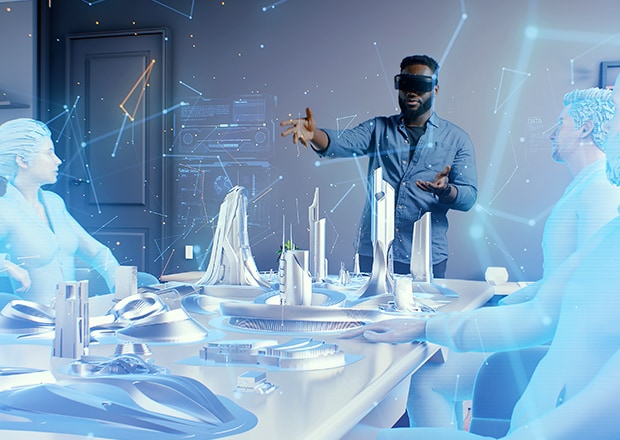
VR creates lifelike experiences inside a virtual world built with computer graphics and 3D tech. With a VR headset, users feel immersed, almost like they are actually there. Virtual reality is applied across many fields, including gaming, real estate, healthcare, education, sports, and tourism.
AR (Augmented Reality)
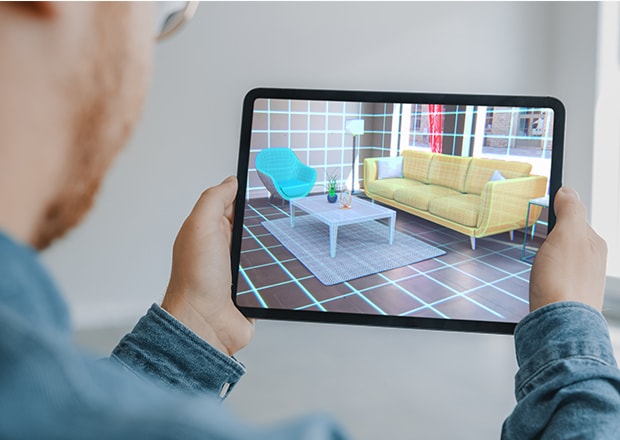
Augmented reality (AR) overlays computer-generated images onto the real world, creating the impression that virtual objects exist within the physical environment. Unlike VR, which replaces the real world with a fully virtual scene, AR enhances live real-world imagery by layering digital content on top of it, delivered through devices such as smartphones or AR glasses. Common applications include gaming, virtual try-ons for beauty, and furniture previewing for home goods.
MR (Mixed Reality)
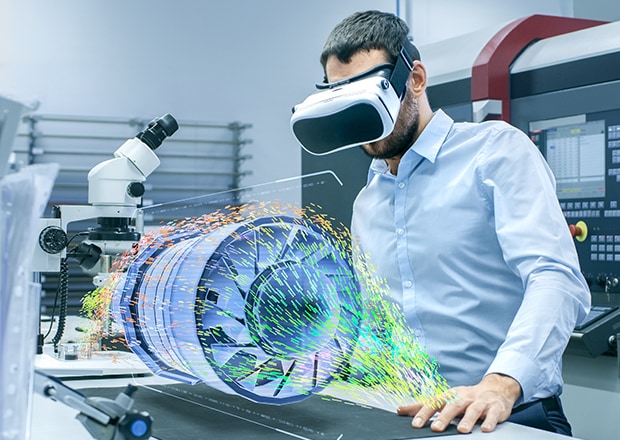
Mixed reality (MR) takes AR a step further by enabling direct interaction with virtual objects, such as rotating, manipulating, and repositioning them within the real environment. MR systems use cameras and sensors to read the physical environment and seamlessly fuse virtual content into it. Current adoption is concentrated in manufacturing and healthcare, with broader applications emerging across additional industries.
SR (Substitutional Reality)
Substitutional reality (SR) replaces or overlays pre-recorded imagery onto live footage, making nonexistent elements appear present in the real environment. Though still an emerging technology, SR shows potential in applications such as gaming and sports broadcasting.
How Virtual Reality Is Changing the Way Businesses Operate
Virtual reality is no longer a consumer novelty. Enterprises are using it to address real operational challenges across a growing number of industries. Here is a look at four areas where VR is making a measurable difference.
Virtual storefronts
Online shopping has always had one core limitation: customers cannot pick something up and examine it directly. Virtual storefronts address this by letting customers inspect 3D product models from any angle, at true scale, before committing to a purchase. In a B2B context, multiple stakeholders can walk through a virtual product together using avatars, which is particularly useful when a purchase decision involves several decision-makers across different locations.
Online events and seminars
The pandemic forced a rapid shift to virtual events, but many organizations have maintained the format because it offers genuine advantages. Attendance is not capped by venue size, and virtual environments make it significantly easier to track how participants engage with content. Technical conferences, product launches, and training programs have all found a sustainable home in virtual spaces.
Virtual offices and remote collaboration
Video calls solve the visibility problem, but they do not replicate the informal coordination that happens naturally in a shared office. Virtual workspaces come closer, offering persistent environments where team members maintain a sense of shared presence, move between spaces, and interact spontaneously. For distributed teams, this also translates to fewer commutes and a reduced real estate footprint.
Remote guidance and equipment maintenance/inspection
For industrial and technical organizations, this may be the most immediately valuable application. With AR and MR, an expert located off-site can see exactly what a field technician sees, annotate the live environment with instructions, and guide complex maintenance or inspection tasks in real time. The result is faster resolutions, fewer unnecessary site visits, and access to specialized expertise regardless of where the work is physically happening.
Benefits of Using Virtual Reality for Business
Operational visibility and process transparency
Virtual environments give teams a clearer, real-time view of work in progress. Whether through virtual offices, remote meetings, or live inspection sessions, managers and collaborators can assess task status, identify bottlenecks, and coordinate responses without being physically present. For organizations running distributed or hybrid workflows, this level of visibility meaningfully reduces the oversight gap that remote work can create.
Reducing operational costs
Shifting operations into virtual environments drives cost reduction across several categories. Virtual offices reduce expenditure on physical space, utilities, and commuting. More effective remote communication and guidance tools reduce the frequency and necessity of business travel. Over time, these savings compound as organizations scale distributed teams without proportionally scaling their facilities or travel budgets.
Creating business opportunities beyond location
Virtual spaces remove geography as a constraint on collaboration and commerce. Avatar-based environments support multi-party meetings, document sharing, and real-time cooperation in ways that phone and chat alone cannot replicate. As VR and MR platforms continue to mature, organizations that have already embedded virtual workflows are better positioned to adopt new capabilities and service models as they become available.
Challenges of Utilizing 3D Data in Virtual Environments
Building a functional virtual environment is a resource-intensive process. Beyond constructing the space itself, generating accurate 3D CG models demands significant time, specialized software, and technical expertise. For teams looking to use 3D scanned data as the foundation for these environments, the challenges compound. The quality and usability of that scan data directly determines how much additional work stands between capture and a deployable virtual asset.
Capturing Accurate 3D Data with Conventional Scanners
Many 3D scanning workflows can produce geometry data suitable for general visualization, but fall short when the target application is a detailed virtual environment. Common issues like mesh noise, incomplete surface coverage, and stitching errors between scan positions often require manual correction after capture. In some cases, the scan data cannot be used directly at all, and a 3D CG model must be rebuilt from scratch using the scan only as a dimensional reference, significantly increasing both time and labor costs.
The Color Data Gap
Geometry alone is rarely sufficient for virtual environments, where realistic appearance matters just as much as dimensional accuracy. Conventional 3D scanners typically capture shape data without corresponding color or texture information, leaving teams to source or recreate surface appearance separately. Many systems also restrict data export entirely, or produce file sizes that are difficult to work with in downstream modeling or rendering software. Taken together, these limitations create multiple friction points between raw scan output and a finished, usable 3D asset.
Solutions for Utilizing 3D Data in Virtual Environments
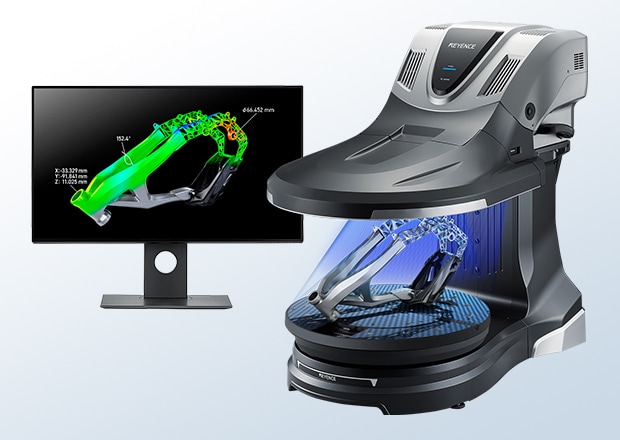
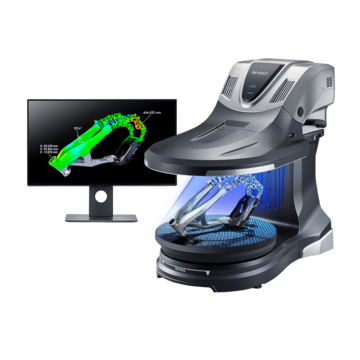
Working with 3D data for virtual reality can be hard. The KEYENCE VL Series 3D Scanner CMM makes it easier. It performs a full 360° scan on its stage in minutes and captures precise 3D shape data. Thanks to a high definition camera, it records color as well as shape. The scanner can output full color 3D files, letting you quickly build full-3D models.
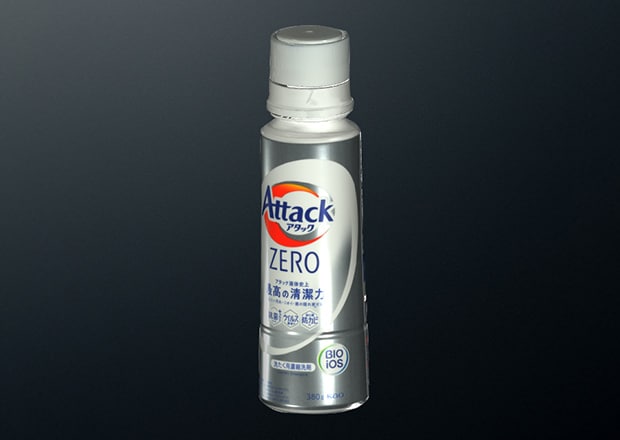
Benefit 1: Acquire color data
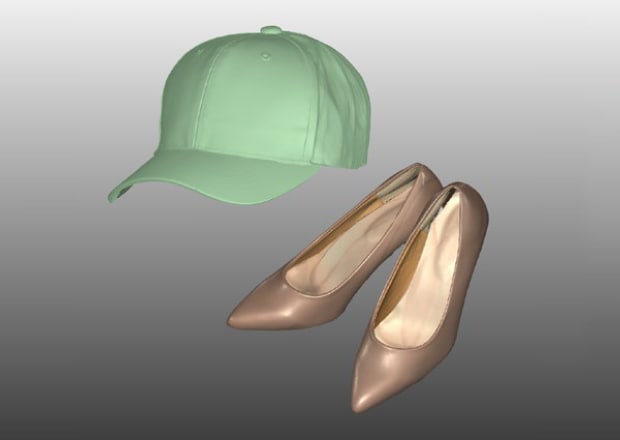
Not all 3D scanners capture color, but KEYENCE’s VL Series 3D Scanner CMM acquires high-definition color data. It can export colored 3D files in common formats such as OBJ, greatly reducing the time and effort required for post processing after scanning.
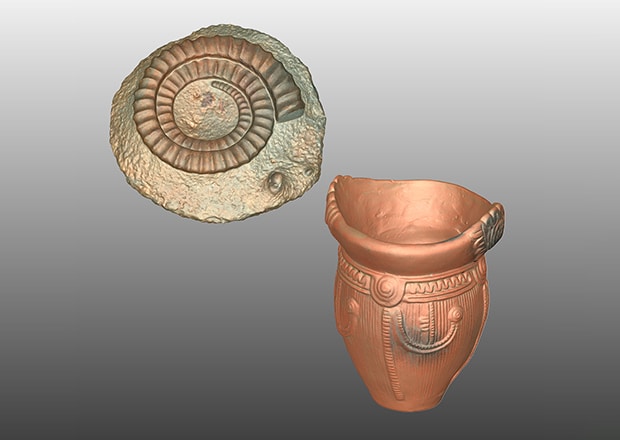
Benefit 2: Capture accurate data on complex shapes
KEYENCE’s VL Series 3D Scanner CMM works well for digitizing cultural objects like pottery and fossils. Because it scans without touching the object, it can handle fragile and complex surfaces. You can quickly capture full 3D data and use it for digital archives and other applications.
Benefit 3: Reduce the time required for model creation
Traditionally, producing full 3D models required significant time and effort. The KEYENCE VL Series 3D Scanner CMM simplifies that process. As soon as a part is scanned, it can be exported straight to a variety of formats, making model creation straightforward.
Leverage 3D Data in Virtual Environments to Drive Business
High-quality 3D data has traditionally been difficult and costly to produce, and most conventional scanners struggle with both accuracy and color capture. The KEYENCE VL Series 3D Scanner CMM addresses these limitations directly.
- A full 360° scan is completed in just minutes, keeping data capture fast and practical.
- Scans can be exported in formats like OBJ that are compatible with most virtual reality applications.
- The scanner captures both shape and color simultaneously, producing detailed, textured 3D data in a single workflow.
- Color output files can be used immediately in virtual environments without additional processing.
The result is a faster, more straightforward path from physical object to virtual asset, without the manual correction steps that slow down conventional scanning workflows.