Optical Comparator (Profile Projector)
Benefits of an Optical Inspection System for a Variety of Part Materials
Key Takeaways
- Optical inspection systems use non-contact methods and four lighting modes to accurately measure diverse materials.
- Gain faster inspection, protect parts with non-contact methods, and ensure consistent data for reliable process control.
- A single system inspects metals, plastics, and rubber by automatically switching between optimal lighting modes.
- Consolidating onto one platform reduces capital investment, simplifies operator training, and saves valuable floor space.
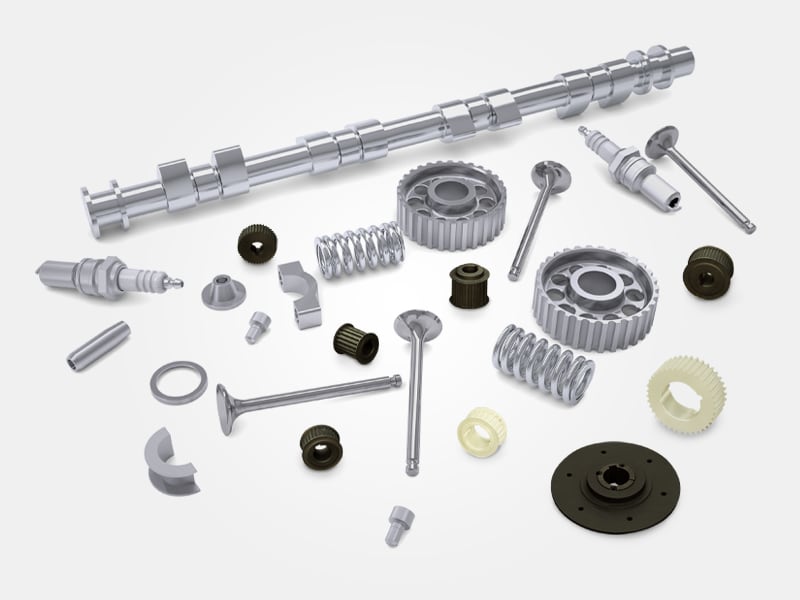
Production floors manage a steady procession of various materials. A single shift might include machined aluminum brackets, injection-molded plastic housings, rubber O-rings, and polished stainless steel components. Each material presents unique inspection challenges. Reflective surfaces bounce light and obscure edges, soft materials deform under pressure, dark plastics absorb illumination, and transparent parts seem to disappear entirely.
Through non-contact measurement and flexible lighting, an optical inspection system built for material variety overcomes these difficulties. It enables a single system to handle any material without requiring hardware modifications or reconfiguration.
Why Optical Inspection is Essential for High-Mix Part Inspection
Manufacturing with diverse materials creates inspection bottlenecks. Traditional contact systems require constant adjustments, such as different probe pressures, tip changes, and recalibration for each material type.
Non-contact optical measurement eliminates these variables. The IM-X1000 Series, for example, provides four distinct lighting modes specifically designed to handle material variety. By directing light down the camera's viewing path, coaxial lighting eliminates the mirror-like reflections that make measuring polished metals challenging. In this setting, polished stainless steel or chrome edges are seen without the harsh glare that blurs geometry.
Green ring-lighting works well on matte surfaces like painted parts, machined aluminum, and regular plastics because it delivers uniform, diffuse illumination from several directions. Shadows that could be mistaken for features are avoided by the uniform coverage.
Backlight mode creates a brilliant background by shining light behind the part. The green ring light is used for translucent/clear materials. Back lighting is good for crisp profiles/outer shape measurements.
A sharp contrast between edges and a bright background makes clear acrylic, thin films, and glass detectable.
Low-angle lighting emphasizes surface deformities such as burrs or chips, through shadow effects. Light striking at shallow angles reveals defects, markings, or texture that other modes might miss.
Switching between lighting modes requires no hardware changes. A plastic inspection housing measures under ring lighting, then a reflective metal shield automatically switches to coaxial mode without operator intervention beyond loading parts.
Key Benefits of Using Optical Inspection Systems
Users gain a number of benefits from optical inspection. Capturing complete part profiles in a single image dramatically accelerates inspection compared to point-by-point probing. A curved edge requiring multiple touch measurements is evaluated in seconds. In high-mix production, these time savings multiply across numerous part types, compounding the efficiency gains.
Another important advantage of non-contact measuring is part protection. Since there is no physical contact with finished surfaces during quality inspection, they stay immaculate. Components of medical devices that must remain sterile are assessed for contamination risks. Delicate optical components are protected from scratches, while soft rubber parts retain their original dimensions instead of showing compression from probe contact.
Data consistency improves with a material-independent measuring method. When every component is measured using the same optical image analysis, the results are directly comparable. Because changes in material do not introduce new measurement variables that can hide true manufacturing trends, statistical process control becomes more accurate and reliable.
Set-up simplicity accelerates changeovers between materials. Loading a new part type requires positioning and selecting the appropriate lighting program. There's no probe qualification, no contact force calibration, and no concern about probe tip condition. Cost savings in inspection accumulate quickly as setup time shrinks and throughput increases.
The Variety of Part Materials in Manufacturing
Metal components, such as the surface quality and optical characteristics, differ greatly. Polished stainless steel reflects like a mirror, confusing simple measurements. Raw aluminum diffuses light evenly. Brass and copper colors affect edge perception. Black anodized aluminum absorbs light, reducing contrast.
When normal white light does not produce the best contrast, programmable color illumination can help. Reliable edge detection across all metallic components is ensured by choosing lighting depending on material qualities.
Even more diversity is found in polymers. Under normal lighting, clear polycarbonate hardly disappears. Black ABS obscures edges by absorbing light. White nylon has a wide reflection. The deliberate patterns found in textured plastics should not be confused with dimensional characteristics. Transparent matrix and fibers are used in glass-filled composites, which call for distinct illumination techniques and opaque part inspection.
Rubber O-rings, gaskets, and seals are examples of elastomeric materials that contract readily under contact probes, resulting in erroneous out-of-spec readings. True geometry is captured by non-contact optical measurement in the absence of mechanical engagement.
Multiple qualities are combined in composite materials. Parts made of carbon fiber have directional surface properties. Metal inserts within plastic matrices may be included in molded composites, posing a challenge to systems that were not intended for diversity.
Transparent and translucent materials like acrylic, polycarbonate, and glass defeat many measurement approaches through light transmission. Backlight mode transforms these difficult materials into straightforward measurements by using transparency as an advantage.
How KEYENCE Optical Systems are Optimized to Dimensionally Inspect Any Part Material
The IM-X Instant Measurement System solves material diversity through intelligent lighting automation. Rather than forcing operators to understand optical theory and select appropriate illumination manually, the system analyzes part characteristics and recommends optimal lighting modes. This intelligence makes material versatility accessible to any operator, not just measurement specialists.
During a single examination, automatic lighting programs can switch between several modes. Ring lighting is used for the plastic body of a plastic assembly with metal inserts, and coaxial lighting is used for reflecting metal parts. Without the need for operator involvement, the system effortlessly transitions between modes, optimizing conditions for each material within the part.
Measurement accuracy is maintained across materials thanks to high-resolution imaging. The optical quality clearly captures edge conditions and tiny details, whether assessing glossy plastic or matte aluminum. Due to this constancy, measurement accuracy and capability are unaffected by the type of material.
Edge detection algorithms adjust based on material and lighting, recognizing that backlighting on plastic produces different characteristics than coaxial lighting on metal. This prevents false detection on textured surfaces while maintaining sensitivity to actual geometric features.
The combination of four programmable lighting modes with non-contact measurement creates genuine material versatility. Manufacturers handle production mixes that include metals, plastics, rubber, composites, and transparent materials using a single inspection platform. This consolidation reduces capital equipment investment, simplifies operator training, and eliminates the floor space that multiple specialized systems would require.
Identifying and improving quality control issues becomes more straightforward when material variables don't obscure real process variations. Consistent measurement ensures result changes reflect real manufacturing variations rather than artifacts from material differences.
Measure any material with confidence using optimized lighting and non-contact optical methods from KEYENCE today.

FAQs
How can Optical Inspection Systems Detect Dimensional Flaws on a Variety of Materials?
Advanced systems use programmable lighting that adapts to each material. Ring lighting for matte surfaces, coaxial for polished metals, low-angle for surface defects, and backlight for transparent parts are common.
What Types of Materials Benefit the Most from Optical Inspection?
Rubber and other soft materials greatly benefit from the deformation caused by contact probes. Coaxial lighting provides precise measurements for highly shiny metals. Green ring-lighting makes transparent glass and plastics measurable. Mixed-material assemblies are inspected without the need for equipment changes, and delicate polished surfaces are protected from harm.
How do KEYENCE Optical Inspection Systems Differ from Traditional Methods?
Conventional systems compromise on material kinds by using fixed lighting. Four customizable illumination settings that automatically adjust for each material are offered by the IM-X1000. This versatility with non-contact measurement means one system handles metals, plastics, rubber, composites, and transparent materials without hardware changes or reconfiguration.

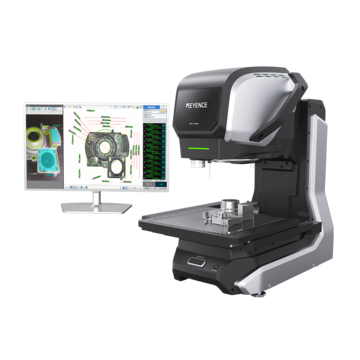
Related Products
Related Downloads
-

We asked our customers why they switched from conventional technologies to the IM Series Instant Measurement System. See how this system adds value to any inspection process.