CMM (Coordinate Measuring Machine)
Laser Trackers for Large-Scale Measurements: Enhancing Precision
Key Takeaways
- Laser trackers enable in-situ measurement of very large parts, avoiding part movement and fit limitations.
- Typical laser-tracker precision is cited as ±10–25 microns over ranges beyond 50 feet, minimizing uncertainty.
- Single-reference tracking removes cumulative error from multiple setups, improving measurement consistency.
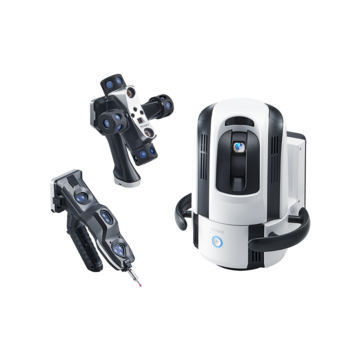
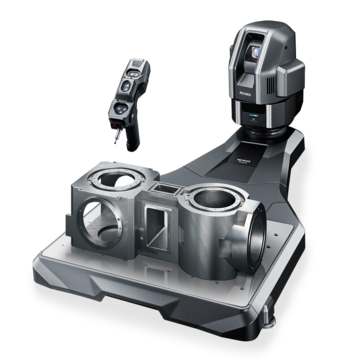
- Portable systems (KEYENCE WM Series) cut setup time, lower training needs, and let one operator replace teams.
- Direct digital export to QMS, SPC, and CAD ensures traceability and removes manual data-entry errors.
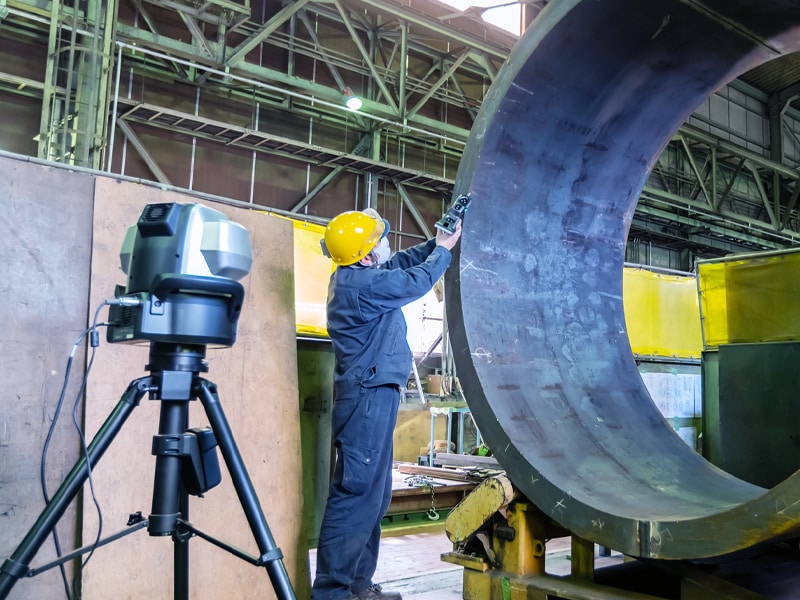
When working with huge components, like wind turbine blades, automobile assembly lines, or airplane fuselages, standard measurement equipment is insufficient. Laser trackers are currently the go-to solution for manufacturers who need to verify parameters over several dozen feet. These sophisticated instruments deliver accuracy within micrometers, even when measuring objects the size of a small building.
Why Laser Trackers Are Essential for Large-Scale Applications
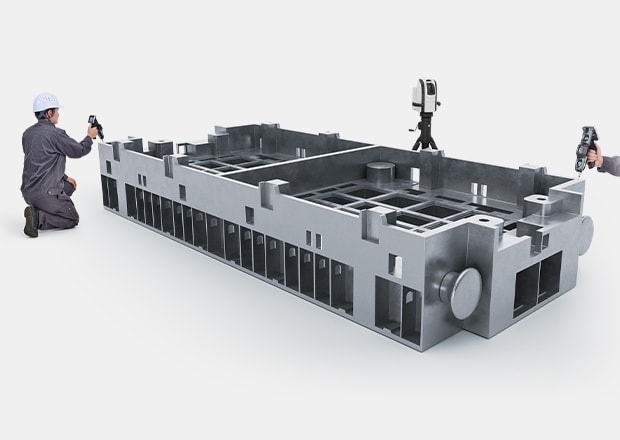
Difficulties arise in manufacturing settings due to size. A 30-foot airplane wing cannot just be put on a conventional coordinate measurement device. Moving it could cause damage or dimensional changes, and the part won't fit. Large-scale measurements require tools that come to the workpiece rather than moving the part to the instrument.
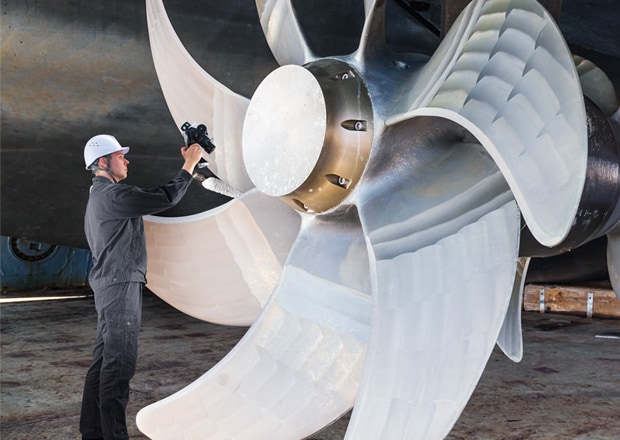
Calipers and tape measures are examples of traditional methods that lack the accuracy needed for tight tolerances. A 0.001-inch discrepancy may not seem like much on a 6-inch part, but it becomes significant when measuring across 20 feet.
The alternative to laser tracking often involves time-consuming manual methods or multiple setups with conventional CMMs. These approaches increase labor costs and introduce more opportunities for human error. Using a laser tracker, a single operator may complete tasks that would take a team days to complete in a matter of hours.

How Laser Trackers Improve Measurement Precision
The technology works by projecting a laser beam to a reflector target, then calculating the target's position in three-dimensional space. As the reflector moves across the part being measured, the tracker follows it automatically, building a complete picture of the object's geometry. This approach lets engineers inspect, align, and verify large structures without the limitations of traditional measurement equipment.
Laser trackers minimize measurement uncertainty through several key advantages. They establish a single reference point for all precision measurements, eliminating the compounding errors that occur when transferring data between multiple setups or instruments.
The interferometer inside measures distance by comparing laser light wavelengths, which remain incredibly consistent. This method delivers precision within ±10-25 microns across working ranges exceeding 50 feet.
High-quality systems automatically compensate for temperature, air pressure, and humidity by continuously monitoring conditions and adjusting calculations in real time. This maintains accuracy even as shop floor temperatures fluctuate throughout the day.
Speed provides another advantage. Laser trackers capture thousands of points per second, far faster than hand tools and traditional CMMs. This rapid data collection verifies complex geometries quickly without sacrificing accuracy, enabling better quality control without slowing production schedules.

Advantages of 3D Measurement with KEYENCE Laser Trackers
3D measurement systems have evolved significantly in recent years. KEYENCE laser tracker solutions incorporate several features that address common manufacturing challenges. The systems integrate seamlessly with existing quality workflows, reducing the learning curve for operators.
The practicality of laser trackers for daily use is mostly dependent on software. KEYENCE measurement software uses visual cues to lead operators through inspection procedures. Many routine jobs can be completed without specific metrology training. The interface presents findings in formats that are easy to interpret and indicates the precise location of where a measurement point is needed.
As more manufacturers use digital quality management systems, data portability has grown in significance. Direct exports of measurement findings are made to quality management databases, statistical process control tools, and CAD applications. Because of this link, manual data entry and the associated errors are eliminated.
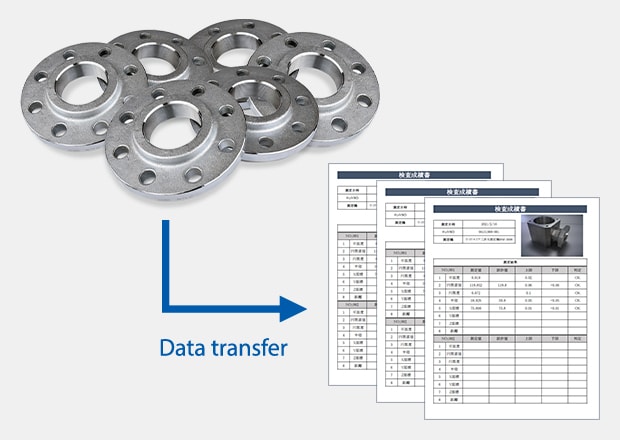
The coordinate measuring machine (CMM) family from KEYENCE includes options for various measurement needs. While fixed CMMs excel in some settings, laser trackers and portable CMMs bring comparable accuracy to the production floor where parts are made.
The Value of Portability and Ease of Use of the KEYENCE WM Series
Portability changes how quality inspection occurs. The KEYENCE WM Series demonstrates this advantage clearly. Unlike stationary measurement equipment that requires bringing parts to the instrument, these systems go wherever measurement is needed. Setup takes minutes rather than hours, and the equipment fits through standard doorways.
Portable CMM measurement capabilities mean you can verify assemblies in place. Large structures that can't be moved become measurable. You can check alignment before final assembly, catching problems when they're still easy to fix. This flexibility reduces scrap and rework by identifying issues earlier in the production process.
Ease of use extends beyond physical portability. The WM Series features intuitive controls that don't require extensive technical knowledge. Operators can switch between different measurement tasks quickly, improving throughput without adding staff. Training time decreases, and measurement consistency improves because the system guides users through proper techniques.
Get detailed information on our products by downloading our catalog.
View Catalog

Applications of Laser Trackers in Manufacturing
The manufacturing of automobiles depends on the use of non-contact techniques and contact measurements. For correct fit and finish, body panels must be precisely aligned. Laser trackers make sure welding equipment and assembly jigs haven't moved out of spec by checking their location. Parts that don't fit properly due to tooling drift cause quality problems and manufacturing delays.
Aerospace manufacturers use laser trackers throughout aircraft assembly. Wing alignment requires matching mating surfaces across spans exceeding 100 feet. Engine mounting points must align within thousandths of an inch to prevent vibration and premature wear. Understanding how laser trackers work helps engineers design inspection procedures that catch misalignments before they become expensive problems.
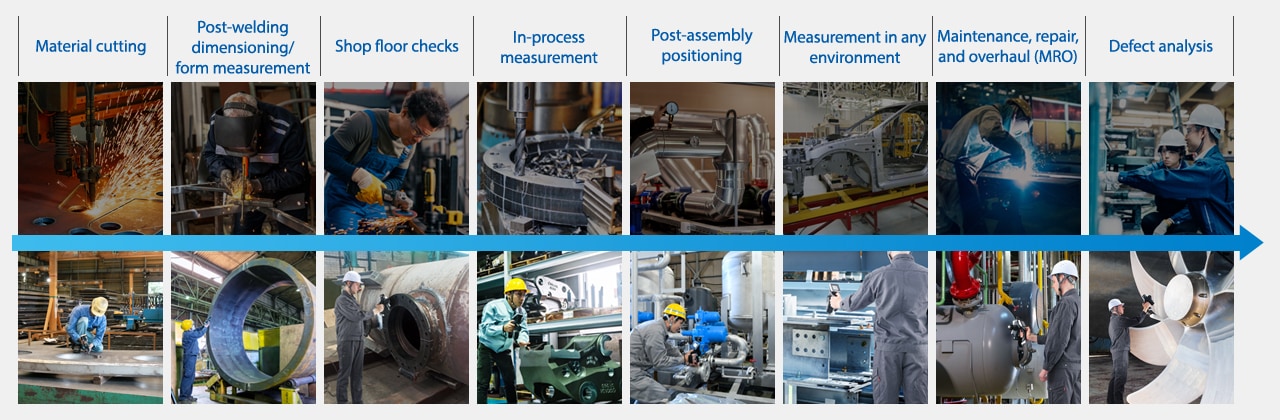
Energy sector applications include wind turbine manufacturing and installation. Turbine blades can exceed 200 feet in length. The blade's aerodynamic profile must match design specifications exactly, or energy production suffers. Laser trackers verify these profiles during manufacturing and again after installation to confirm nothing changed during transport and assembly.
Some of the hardest measuring problems are found in shipbuilding. When linked, hull parts that weigh hundreds of tons must line up exactly. The scale and intricacy provide challenges for traditional measurement techniques. Laser trackers provide the range and accuracy needed while remaining practical in shipyard conditions.
Benefits of Using Laser Trackers
Accuracy improvements translate directly to better product quality. Parts that meet specifications the first time reduce waste and rework costs. The ability to verify dimensions during production rather than after completion means problems get caught and corrected faster.
Labor efficiency increases when one operator can accomplish what previously required multiple people. The time saved on measurement allows staff to focus on analysis and problem-solving rather than data collection. Projects move faster from design through production because measurement doesn't create bottlenecks.
Documentation becomes automatic. Every measurement creates a digital record showing exactly what was measured, when, and by whom. This traceability satisfies quality management standards and provides evidence for customer acceptance. When questions arise months or years later, the data remains available for review.
Flexibility to handle various part sizes and types with a single system reduces capital equipment investment. Rather than purchasing multiple specialized tools, one laser tracker covers most large-scale measurement needs. The system adapts as products change, protecting your investment against obsolescence.
Take Control of Your Large-Scale Measurement Process Today!
Contact KEYENCE for a demo of our laser tracker solutions.

Frequently Asked Questions
What Are Laser Trackers Used for in Manufacturing?
Laser trackers measure large parts exceeding traditional CMM capacity, with applications in aircraft assembly, automotive tooling, shipbuilding, wind turbines, and heavy machinery. They verify dimensions and alignment on objects from several feet to hundreds of feet in size.
What Is the Difference Between Laser Trackers and Other Measurement Tools?
Laser trackers use interferometry to measure distance by tracking a reflector in three-dimensional space. Unlike tactile CMMs, they measure without contact across longer distances. They provide higher accuracy than laser scanners for point measurements, combining survey equipment range with laboratory precision.
How Accurate Are Laser Trackers for Large-Scale Measurements?
The precision of industrial laser trackers is usually within ±10-25 microns over distances greater than 50 feet. Even at great ranges, quality systems retain this micron-level precision; nevertheless, the precise accuracy varies depending on the tracker model, measurement distance, and other factors.