Continuous Inkjet Printers / Case Coder
Coding on Baked Goods Packaging | Inkjet Printer Solutions
Coding on baked goods packaging happens in the narrowest window on the line. Packages are sealed, conveyed, and handled almost immediately, leaving little opportunity to correct placement or clarity once a mark is applied. In that moment, baked goods inkjet coding determines whether information holds up as the product moves downstream. Continuous inkjet (CIJ) printing fits this window because codes are applied without contact while packages remain in motion.

Date Coding and Marking on Baked Goods Packaging
Cardboard
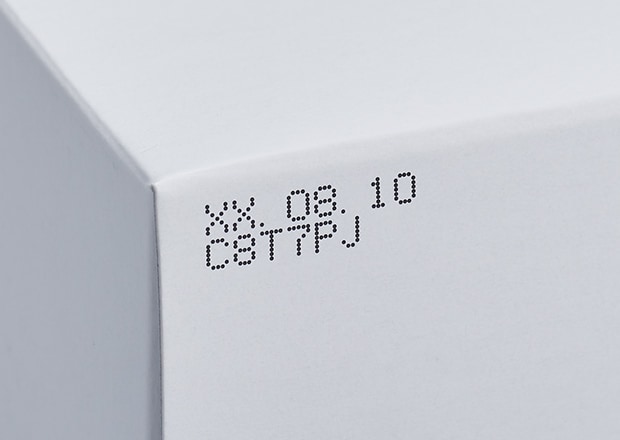
The MK-G Series prints precise, high-quality best-by dates and lot numbers on bread boxes and pastry cartons with ease.
Cartons
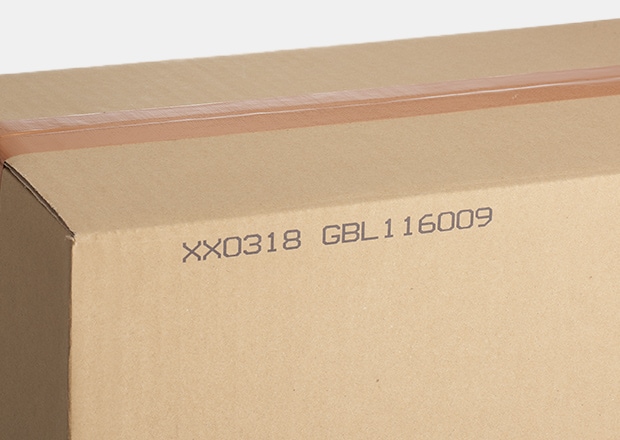
Cardboard boxes
Plastic Bags, Film, and Foil Pouches
Marking on such materials that hold baked goods can be costly. The MK-G CIJ can print on uneven surfaces without compromising ink adhesion while maintaining print accuracy.
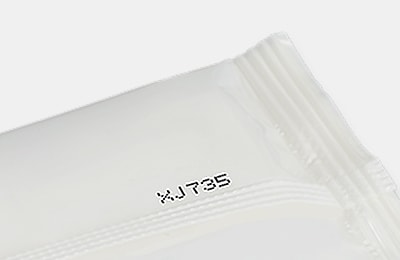
Form-filled packages
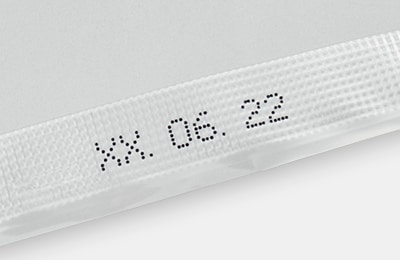
Pouches
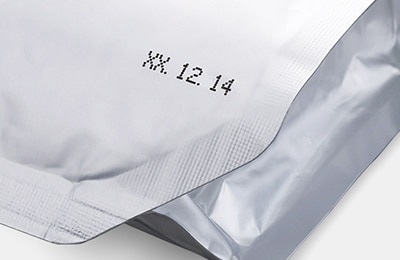
Aluminum pouches
Paperboard
The MK-G Series efficiently marks with high speed and quality to ensure durable baked goods coding for this material, including paperboard sleeves.
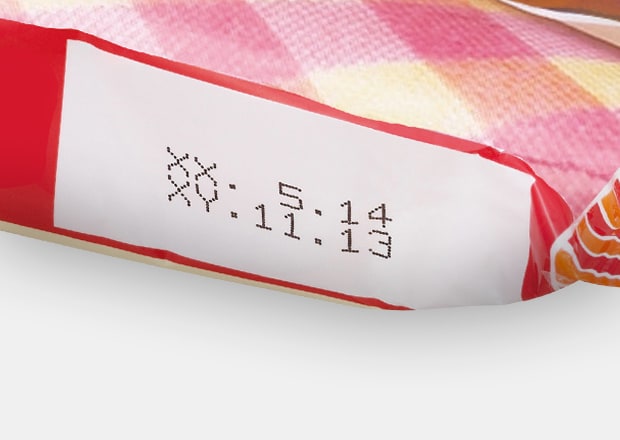
Packing film
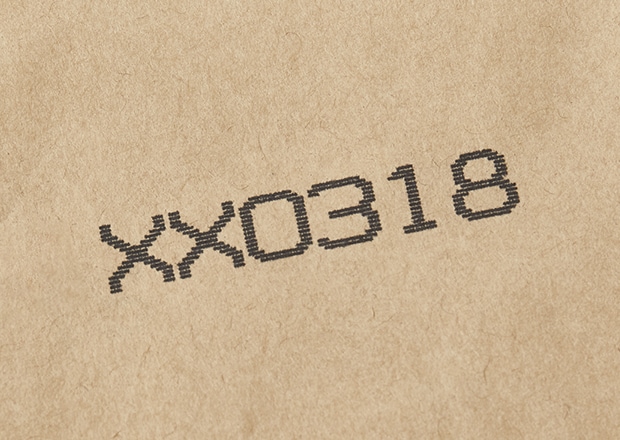
Bags
Wrappers and Clamshells
The MK-G Series excels at higher throughput and high-quality coding on containers used for pastries and other baked goods.
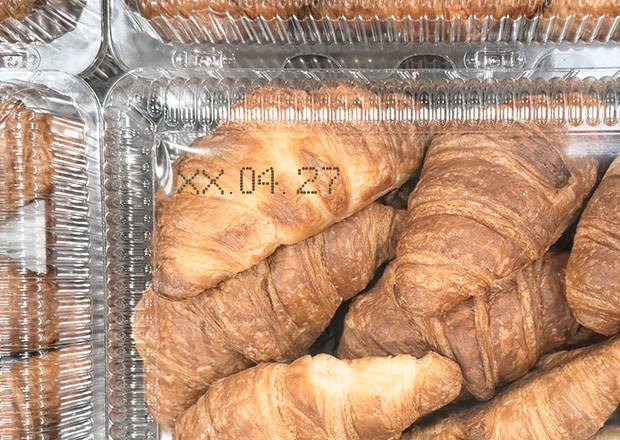
Printing example
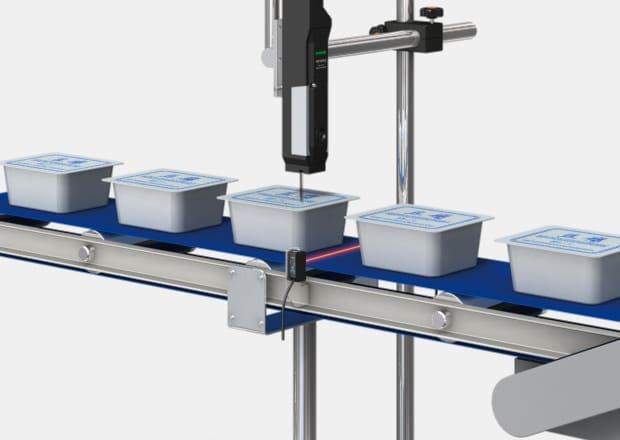
Installation example
Kwik Locks
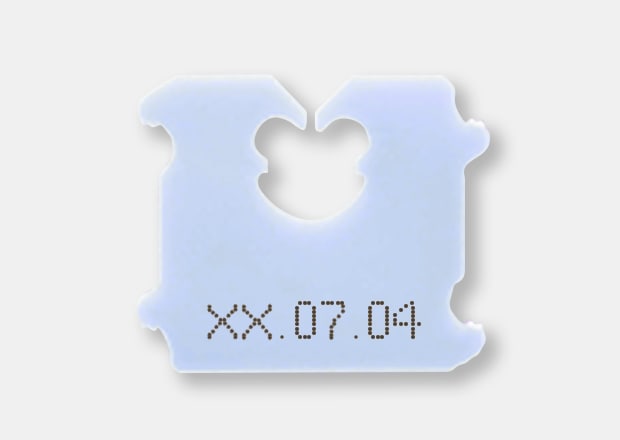
Printing example
Kwik Lock closures, such as the plastic tags used to seal bread bags, are reliably marked with non-contact printing by the MK-G Series, ensuring clear codes on small surfaces.
Common Bakery Packaging Formats
Bakery facilities often run several packaging formats on the same set of lines, sometimes within a single shift. Each format presents its own coding considerations based on surface behavior, print location, and how the package moves through the line.
- Bread bags made of polyethylene or polypropylene
- Parbake or bun film packaging
- Flow-wrapped pastries and snack items
- Cereal cartons and paperboard packaging
Baked goods packaging coding systems that accommodate these differences allow production teams to move between formats without slowing the line or adjusting processes beyond what the changeover already requires. The CC-1000 Series serves as an effective secondary packaging printer on corrugate, providing flexible, high-quality coding that ensures consistency and efficiency even as packaging formats change.
Challenges in Coding and Marking on Baked Goods Packaging
Diverse Packaging Materials
Coding on baked goods with different packaging materials can be challenging due to variations in surface texture, material composition, and the need for consistent print clarity.
Product Knowledge and Skills
Training technicians on new products can be time consuming, especially with a lack of skilled labor available to meet operational demands.
Maintenance and Troubleshooting
Repairs, maintenance, and troubleshooting are often costly and require significant resources to address and resolve.

CIJ Inkjet Solutions for High-Volume Lines
High-volume bakery lines leave little room for precise package presentation as products arrive at the coding point already sealed and often with minor variation in height or orientation. CIJ printers for baked goods are designed for that reality. Because printing happens without contact, codes can be applied while packages continue moving at production speed, even when the surface is not perfectly uniform. In practice, baked goods inkjet coding stays out of the way of throughput rather than forcing the line to slow down to accommodate printing.
Date, Batch & Barcode Printing
Date, batch, and barcode information form the operational identity of each package, as bakery date coding solutions need to have the ability to handle frequent message updates without also disrupting production. All clear character marking supports scanning and verification downstream, while consistent placement helps avoid confusion during receiving and inventory handling.
In cereal packaging marking solutions, barcodes often sit close to branding or nutrition panels. This increases the importance of controlled print placement, as when coding remains readable and stable, downstream systems can rely on that data without added inspection steps.
Print Quality on Porous and Flexible Substrates
There are a few bakery date coding solutions for different packagings. On paperboard cartons, the various coatings and fiber density affect how sharply characters form and how much contrast remains once the ink settles. On flexible films, the challenge is less about absorption and more about movement, where slight shifts can stretch or distort characters as they are printed. For cereal packaging marking solutions, this often involves maintaining contrast on coated cartons with limited print space.
Enhance code accuracy on your bakery lines to ensure crisp, clear marks on every package. Contact KEYENCE today.

FAQs About Coding in Baked Goods Packaging
Can These CIJ Coding Systems Accommodate High-Speed Production Lines for the Baked Goods Industry?
Yes, the MK-G Series continuous inkjet printers accommodate high-speed production lines by seamlessly integrating into existing setups without compromising print quality and offering quick changeovers to minimize downtime.
How Do Coding Solutions Help Minimize Product Waste and Maximize Production Efficiency in the Baked Goods Industry?
Code legibility is essential to limit the chance of rework and traceability issues. Automated coding solutions reduce errors that can result in recalls, wasted storage, and products. The MK-G Series coding system enhances these benefits with its self-cleaning functionality, advanced monitoring capabilities, and automatic ink particle optimization, which help it work in varying conditions and temperatures.
What Are the Advantages of Using Continuous Inkjet Printers over other Types of Printers for Date Coding on Baked Goods Packaging?
MK-G Series industrial inkjet printers offer versatility in printing on various materials, such as films, foils, and plastics for bulk packaging or single serve, simple integration, high-speed performance with durable markings, minimal training and downtime, and easy maintenance.
How Do Marking and Coding Solutions Handle Dusty/Powdery Environments Typical in Some Baked Goods Production Processes?
The MK-G Series with an IP55 rating for both the controller and print head ensures durability in the harshest of environments. Clear codes remain legible throughout the product's shelf life, which is why marking and coding solutions are essential for CIJs in the food and beverage industry.
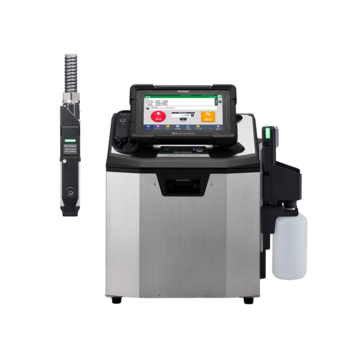
Related Products
Related Downloads
-
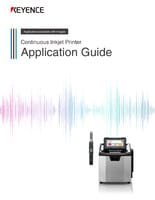
Continuous Inkjet Printer Application Guide
This guide explains continuous inkjet (CIJ) printer applications together with pictures and illustrations. It contains many installation examples in various industries divided into food, medicine, and cosmetics; electrical machinery and electronics; and automotive, metal, and others. These examples show printing on targets specific to each industry.