Continuous Inkjet Printers / Case Coder
Difference Between Hi-Res PIJ vs TIJ for Case Coding (Piezo Inkjet vs. Thermal Inkjet)
Key Takeaways
- PIJ (piezo inkjet) suits porous substrates and mixed cartons due to ink flexibility and longer throw distance.
- TIJ (thermal inkjet) is compact and low‑cost upfront, best for low‑volume, tightly positioned, smooth substrates.
- PIJ yields lower long‑term cost per mark: bulk ink, reusable heads, less frequent maintenance.
- TIJ offers higher DPI on ideal surfaces but fails when boxes shift or substrate is uneven.
- Modern PIJ systems reduce downtime with integrated cleaning, auto‑alignment, and print verification.
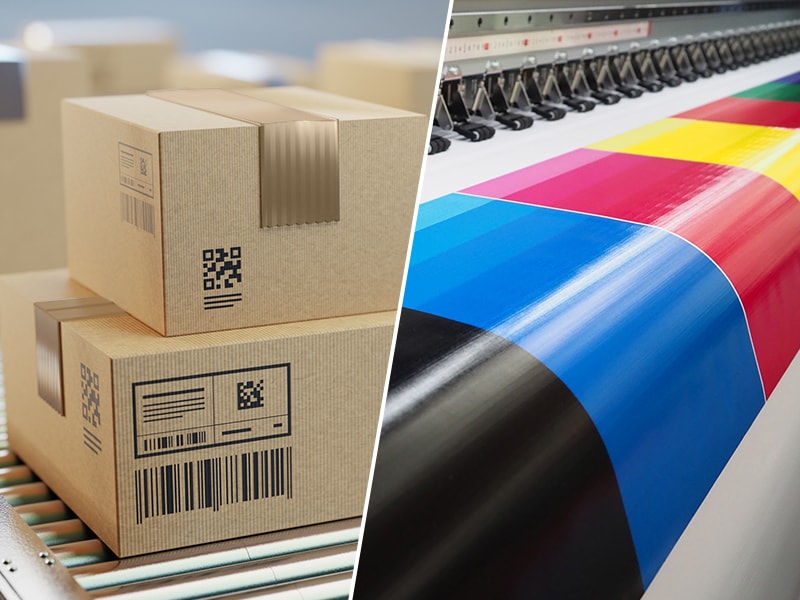
Case coding printer types play a critical role in keeping products moving, marking essential data like lot codes, expiration dates, and barcodes that scan accurately on the first try. This information must endure the challenges of shipping, storage, and handling. Whether the line handles uniform cartons or mixed packaging, the printer must consistently produce clear marks without slowing production.
Piezo and thermal inkjet technologies take different paths to that outcome, and how they handle real production demands directly impacts quality, cost, and uptime.
What Is Piezo Inkjet (PIJ) Technology?
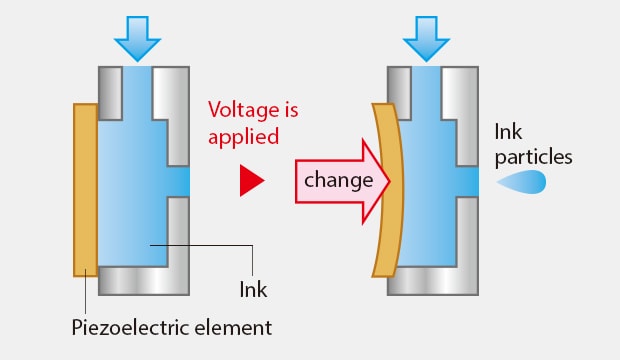
High-resolution inkjet systems, such as piezo inkjet, rely on a mechanical process built around piezoelectric crystals. When voltage is applied, these crystals flex and create precise pressure pulses that eject ink droplets onto the surface below. Unlike thermal systems, which use heat to fire ink, piezo systems generate no thermal stress, resulting in greater material flexibility, longer head life, and finer droplet control.
One of the key benefits of piezo inkjet vs. thermal inkjet in case coding is flexibility. Because no heat is involved in the ejection process, these systems support a wider range of ink chemistries, including oil-based and low-VOC options. This flexibility allows operators to code reliably on corrugated cardboard, chipboard, paperboard, and other porous materials commonly found in secondary packaging lines and common targets for case coding inkjet printers.
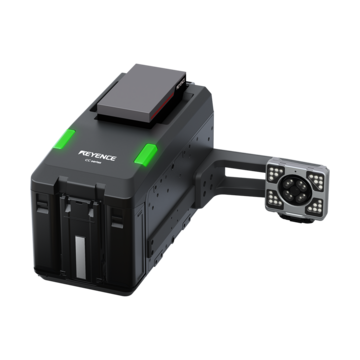
Systems like the KEYENCE CC-1000 Series are specifically designed for use with porous substrates and are not compatible with non-porous materials such as glossy-coated boxes or film-laminated cartons. If used on glossy surfaces, the ink will smear and fail to cure properly.
PIJ systems also offer a longer native print height and a longer throw distance, reducing the risk of printhead collisions and ink splashback. These are overwhelming factors for real-world case coding printer types, where box placement and vibration are rarely perfect.

What Is Thermal Inkjet (TIJ) Technology?
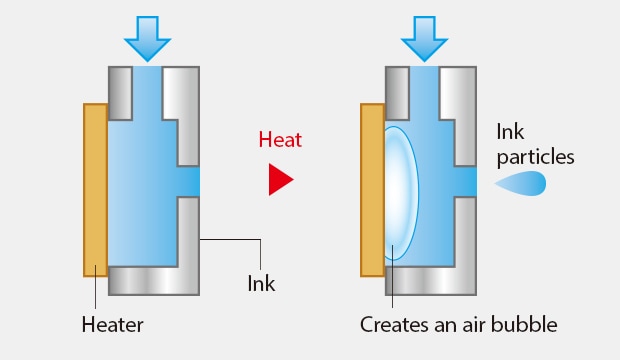
Thermal inkjet systems use heat to generate vapor bubbles that eject ink. These systems often combine ink and the printhead into a single cartridge, making them easy to replace and simple to operate. They’re commonly used in compact case coding inkjet setups where space is tight and throughput is moderate.
TIJ units are compact and lightweight, making them suitable for tight spaces or smaller production lines. They also excel at producing fine detail with high DPI, especially for alphanumeric codes or small barcodes. But that resolution advantage only holds if the target surface is stable, smooth, and positioned extremely close to the printhead. Most thermal inkjet systems require the substrate to be within a few millimeters of the nozzle, which increases the chance of misprints if boxes shift or conveyors run unevenly.
While the upfront cost of a TIJ unit is typically lower than that of a comparable PIJ system, TIJ cartridges have smaller ink capacities and shorter lifespans; every swap also includes a new printhead, which increases running costs in high-volume environments.
Cost Comparison: Initial vs. Running Costs
TIJ printers stand out for their affordability at the point of purchase. A compact footprint and self-contained cartridge design eliminate the need for bulk ink delivery, complex mounting, or multi-head synchronization. For small operations or infrequent use, that can be a significant cost advantage.
In the case of PIJ vs TIJ case coding, the long-term numbers tell a different story. The cost of consumables rises quickly when producing large characters, long messages, or barcodes. Ink usage also scales steeply with font size and print height, an important consideration for case coding.
High-resolution inkjet systems are built for throughput. Bulk ink systems or larger-capacity cartridges reduce the frequency of stops, and the heads themselves don’t need to be replaced with every refill. The result is a lower cost per print in environments where volume and uptime are critical. Add to that the reduced labor involved in maintenance and fewer consumable part swaps, and the long-term savings become clear.
Print Quality and Durability Differences
While thermal systems offer DPI ratings up to 600, high-resolution inkjet quality on porous surfaces depends on more than just a number. Case coding isn’t about printing fine art on glossy labels; it’s about how legible the mark remains on corrugated or uneven surfaces and how reliably it scans under real-world conditions.
PIJ systems, typically rated at 300–360 DPI, excel in real-world conditions. The consistent droplet control and longer throw distance allow case coding inkjet systems to print clearly. That distance helps maintain print quality even if box positioning varies slightly, reducing distortion, splashback, or streaks caused by vibration or inconsistent conveyor speeds.
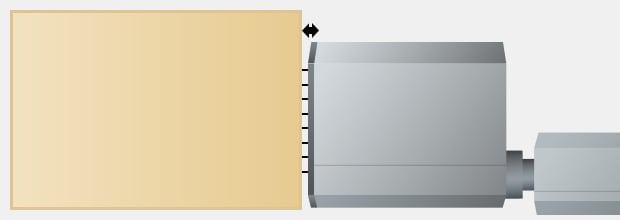
Conventional models (short working distance)

CC-1000 Series (long working distance)
Print durability also tilts the scale. PIJ units support a wider range of inks, including formulations designed for smear resistance and use on porous materials. For operations where barcodes need to stay readable through shipping and storage, PIJ has the edge.
Operational Efficiency and Maintenance
TIJ systems have very simple maintenance in light-use environments. Each cartridge change refreshes the head, and there are no filters or purge routines to manage. However, the simplicity comes with trade-offs: frequent swaps, tighter placement tolerances, and shorter cartridge life all reduce efficiency over time.
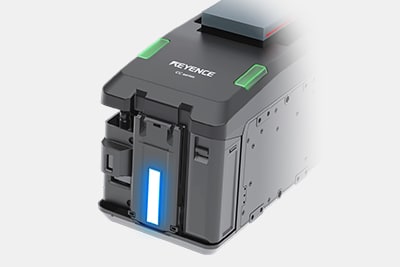
PIJ printers require a different approach. While they do involve occasional cleaning and purge cycles, especially in bulk ink setups, modern systems reduce the complexity of these tasks. The KEYENCE CC-1000 Series, for instance, includes an integrated cleaning module and one-touch head core replacement. That means no tools, no disassembly, and minimal downtime, even in high-volume settings.
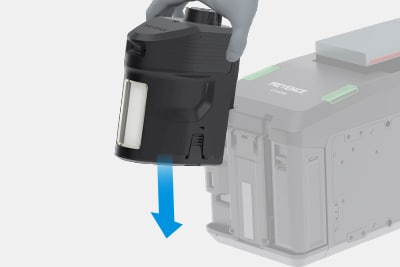
1. Attach the cleaner
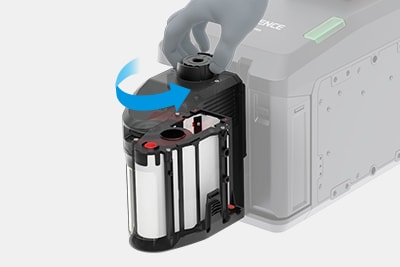
2. Rotate the dial
Industry-first: Damage-free nozzle cleaning
3. The nozzles are clean!
Speed tracking sensors, auto-alignment tools, and integrated print verification further reduce intervention time. These features make it easier to keep lines moving, particularly in unpredictable conditions where vibration, speed changes, or shifting box sizes could otherwise impact output.

Making the Right Choice Between PIJ and TIJ for Case Coding
For small operations, printing short messages on well-positioned cartons is a viable option using TIJ. It's easy to install, affordable to get started with, and performs well in controlled environments.
However, in facilities where case coding occurs at scale, where variation is inevitable and consistency is more important than perfect resolution, PIJ offers long-term advantages. From longer throw distances to better ink support and lower cost per mark, the trade-offs favor piezo inkjet vs. thermal inkjet when performance and consistency matter most.
When running costs, error prevention, and print quality on porous substrates are factored in, high-resolution inkjet becomes the better fit for most production lines, especially when every unreadable barcode or illegible mark represents a liability.
Discover why PIJ is the smart long-term choice for consistent, high-quality case coding that keeps operations moving.
Contact KEYENCE today.

FAQs
Why Does Thermal Inkjet Have Higher Running Costs Than Piezo Inkjet?
Thermal inkjet systems require frequent cartridge changes, and each replacement includes a new printhead. This not only increases the cost of consumables but also adds to downtime during changeovers, especially in high-output environments.
Which Inkjet Technology Offers the Best Print Quality for Case Coding?
While thermal systems offer higher DPI on paper, piezo inkjet delivers more consistent and reliable results on corrugated and porous materials. With greater ink flexibility and a longer throw distance, PIJ systems are better suited for producing scannable codes and graphics on uneven surfaces.
When Might Thermal Inkjet Be a Good Choice for Case Coding?
TIJ is a practical option for operations with low print volume, limited print height, and stable substrates. It’s particularly useful when space is tight, code requirements are minimal, and the cost of entry needs to stay low.