Static Control
Prevent Slug Pulling In Punching Presses With Ionizers
Key Takeaways
- Static electricity is a primary cause of slug pulling in punching presses, not just tooling faults.
- Low humidity and continuous operation let static accumulate, causing slugs to cling to tooling.
- Detection systems only alert after slug pulling; ionizers prevent adhesion at the point of separation.
- Bar-type ionizers (e.g., SJ Series) neutralize charge, improving slug release, precision, and yield.
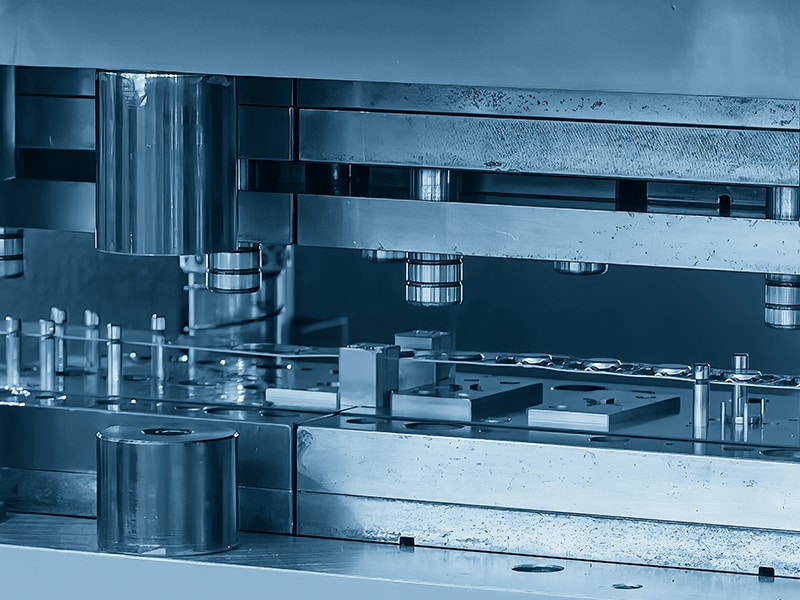
In many cases, slug (the scrap material created in punching operations) pulling can initially look like a tooling issue. However, it often manifests as a process stability problem. When scrap paper fails to drop away from punching presses cleanly, it can create defects and interrupt production. It also creates additional cleanup for operators. Static control for punching presses targets one of the most common hidden drivers behind inconsistent slug release, especially in the paper industry.
Impact of Static Electricity on Punching Press Machines
When slugs adhere to the punch face instead of falling away, the product can come out defective. Slugs can also disrupt various press cycles, increasing the risk of tool damage. While slug pulling is often treated as a mechanical or tooling issue, static electricity often plays a larger role than it appears.
In static electricity punch press environments, static charge buildup changes how scrap paper behaves when the punch face is pulling away. Slugs that are charged with static resist separation and cling to tooling surfaces. These effects increase the likelihood of paper punching press defects, especially when presses operate at high speeds or under dry conditions.
How Static Charge Builds Up During Punching Processes
Static charges are generated during the punching process as a natural result of continuous contact and separation. As paper passes through a press, the friction at the punch site transfers electrical charges to both the material and the resulting slug. Even when separated, that charge has limited paths leading to dissipation.
Environments with low humidity are amplified by this. Dry air reduces the likelihood that a charge will decay at all, allowing the static to grow and persist as production continues. Over time, the charged slugs will become increasingly attracted to other surfaces, like the punch face or other nearby metal surfaces. In these conditions, slug pulling static electricity becomes less of an occasional nuisance and more of a recurring problem.
Because punch presses operate on a continuous basis, these static charges accumulate quickly. The press may appear stable when it is first started and then, very quickly, can exhibit inconsistent slug release, which, in turn, results in debris accumulation and unplanned stops. These issues may be attributed to wear and tear or lubrication issues when the underlying cause is purely electrostatic.
Conventional Countermeasures
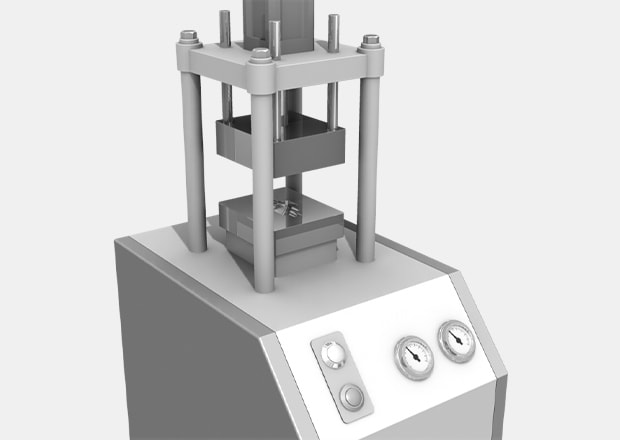
Bottom-dead-center detector
- It can only detect slug pulling, but cannot prevent its occurrence.
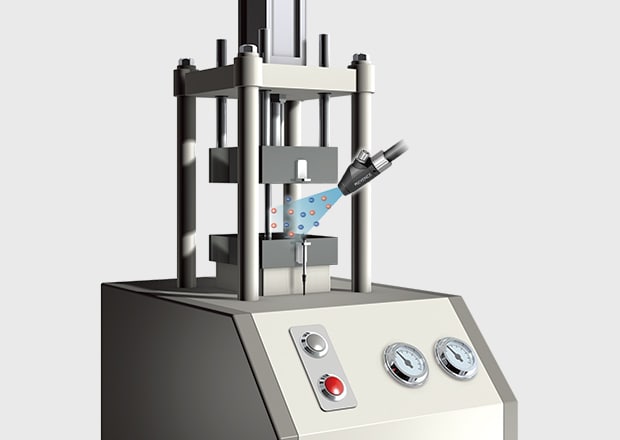
Countermeasures With Static Eliminators (Ionizers)
An ionizer can eliminate the occurrence of slug pulling and improve the yield rate.
Improved Yield Rate
Defect rate: improved by 1.5%
In addition, there are other resulting effects such as improved levels of trust.
How Ionizers Improve Punching Precision and Speed
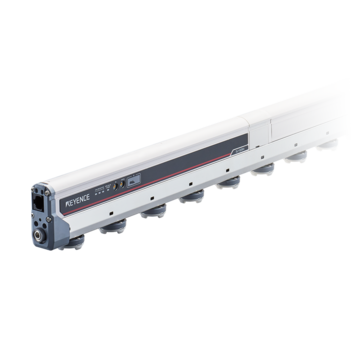
Bar-type Ionizers, like those from KEYENCE, address static at its source by neutralizing any charge before it interferes with the punching process. By introducing balanced ions into the air around the punch and die area, ionizer solutions for presses reduce surface charge on both the material and the slug as separation occurs.
In practice, ionizer placement depends on how charges develop within the press. The KEYENCE SJ-Q Series is designed for applications that need highly accurate and supersonic ionization. For presses where airflow isn’t an issue, but overall efficiency is a concern, the SJ-E Series delivers high-speed static elimination while reducing air consumption and energy usage. In areas where compressed air can’t be used, the SJ-F700 Series applies ionizing directly to the tooling area. This makes it possible to reduce slug pulling static electricity issues even in enclosed punching environments.
Ionizers help remove the static influence at the point of separation and improve the precision of each punch, while also supporting higher operating speeds without the need to change the process or retool a configuration.
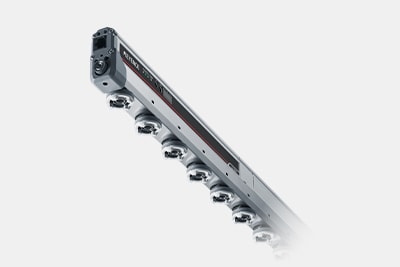
High-Accuracy High-Speed Sensing Ionizer
SJ-Q Series
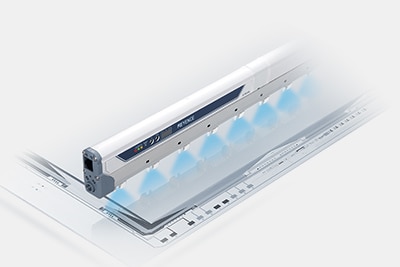
Energy-Saving High-Speed Sensing Ionizer
SJ-E Series
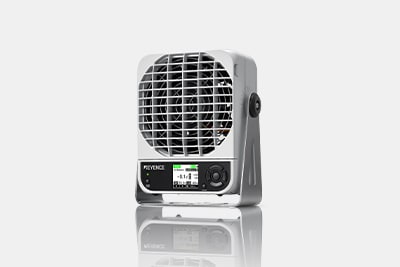
Multi-Sensor Ionizer
SJ-F700 Series
Limitations of Detection-Based Approaches
Many punching operations rely on detection systems in order to identify slug pulling in real time. However, most of these systems only detect the problem after it has occurred instead of before. Sensors, counters, and quality inspections can alert operators to missed slugs and abnormal scrap behavior, but they do not address why the problem appears in the first place.
Once a slug has adhered to the punch face, the opportunity for clean prevention has already passed. Mechanical countermeasures such as vents or air blasts can reduce the severity, but they add complexity and can introduce new maintenance down the line.
In environments where static electricity contributes to adhesion, detection alone cannot fix the process stability. Without a neutralizing charge, slug pulling may appear intermittently, which makes it difficult to diagnose and resolve. Preventing the conditions that allow slugs to happen is more effective in the long run than just identifying a problem.
Eliminating Slug Pulling With Ionization
Ionization provides a direct way to reduce static-related adhesion before it affects the punching process. Ionizers reduce the electrical attraction between slugs and tooling surfaces. This causes the slug’s behavior to shift back toward gravity-driven release rather than electrostatic attachments.
For paper products, this approach can also reduce the paper punching press defects that are tied to scrap retention. With slugs exiting the die more consistently, the tooling stays cleaner over time. Ionizer solutions for presses support the stable operation of punching equipment and help in the pursuit of fewer interruptions and higher quality products.